Helping your baby transition to sleeping independently in a crib is a milestone that brings relief to exhausted parents. This comprehensive guide explores practical strategies, backed by expert insights, to foster healthy sleep habits from early infancy through the first year.
Understanding Baby Sleep Development
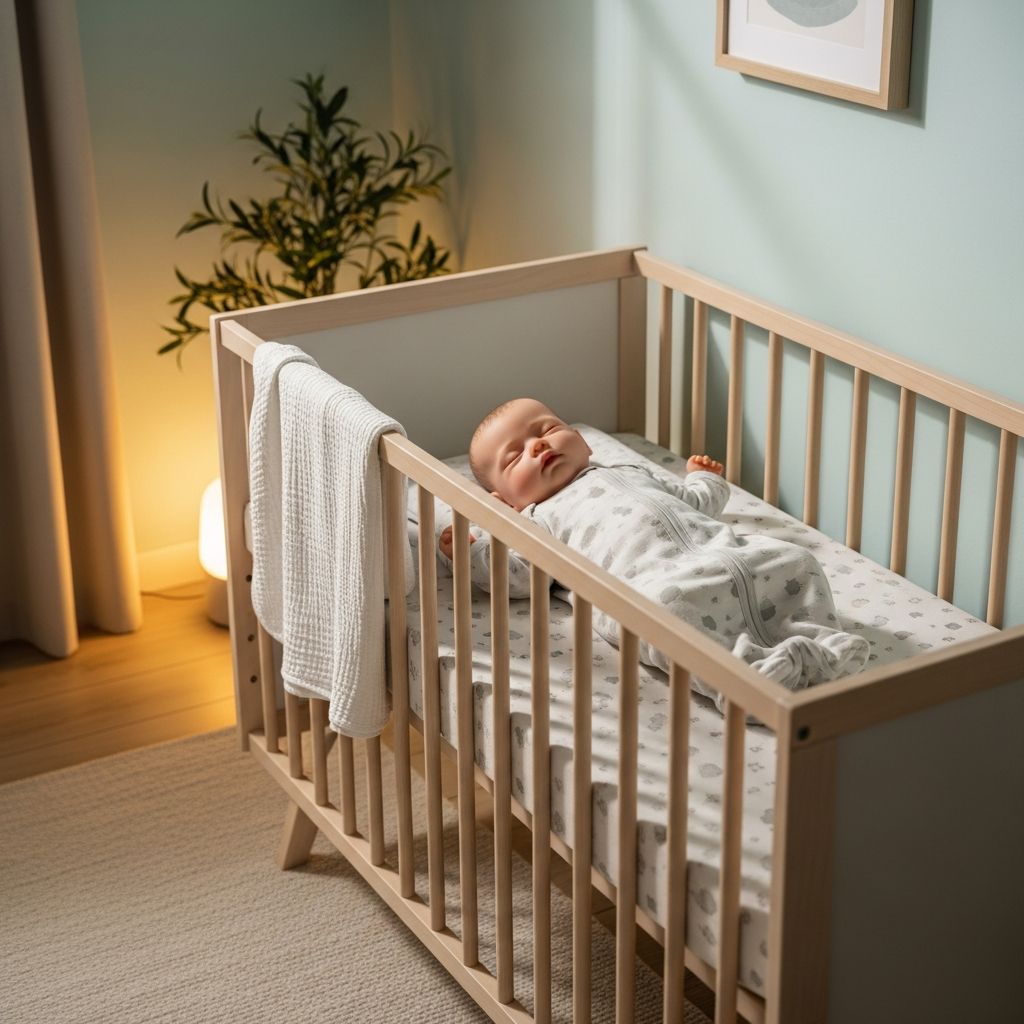
Babies’ sleep patterns evolve rapidly. Newborns sleep 16-18 hours daily in short bursts, but by 4-6 months, they can consolidate longer stretches at night. Independent crib sleeping promotes safety and self-soothing skills, reducing risks like SIDS when following AAP guidelines for a bare crib environment.
Key developmental stages include: learning to self-settle, distinguishing day from night, and forming sleep associations. Challenges arise from habits like rocking or co-sleeping, but consistent methods can realign these.
Building a Strong Sleep Foundation
Before diving into training, optimize the basics. A conducive environment and routine set the stage for success.
- Dark, Cool Room: Maintain 68-72°F with blackout curtains to mimic natural circadian rhythms.
- White Noise: Continuous sound at 50 decibels masks household noises, aiding deeper sleep.
- Consistent Bedtime Routine: Bath, book, feed, bed—repeat nightly to signal wind-down time.
Make the crib inviting during awake times with supervised play, associating it positively rather than solely with sleep.
Gradual Withdrawal Techniques
Start with methods that slowly reduce parental involvement, ideal for babies 4+ months.
Fading Approach
This gentle strategy weans sleep aids progressively. If your baby relies on rocking, begin by holding still while feeding, then transition to crib placement with patting. Over nights or weeks, diminish touch until self-settling occurs.
Pros: Low stress; Cons: Time-intensive, requiring 2-4 weeks.
Chair Presence Method
Position yourself in a chair beside the crib as your baby drowses off. Remain silent and still. Each night, inch the chair farther—first to the foot, then doorway, eventually exiting. This builds security while fading presence.
Expect 1-2 weeks; patience is key as babies may fuss seeing you nearby.
Interval-Based Check-In Strategies
These involve timed reassurance visits, teaching self-soothing with boundaries.
Progressive Waiting (Ferber-Inspired)
Place baby drowsy but awake in crib. If crying starts, wait 3 minutes (night 1), then check briefly (30 seconds verbal reassurance, no pickup). Extend to 5, then 10 minutes; increase nightly. Consistency across caregivers accelerates results.
| Night | Initial Wait | Second Wait | Subsequent |
|---|---|---|---|
| 1-2 | 3 min | 5 min | 10 min |
| 3-4 | 5 min | 10 min | 12 min |
| 5+ | 10 min | 12 min | 15 min |
This method often yields quicker results (3-7 nights) but tests parental resolve.
Physical Comfort Methods
For hands-on parents, these provide direct soothing without full dependency.
Lift and Replace Technique
Put baby down awake. If distress escalates after brief settling time, pick up to calm (hug, shush—no rocking to sleep). Return to crib calm but awake. Repeat as needed, shortening intervals over time.
Highly parental but effective for attachment-focused families; may extend 1-3 weeks due to repetition.
No-Cry Variations
Emphasize routines without tears: preemptive checks (pat/shush before cries), consistent sequences, and environmental tweaks. Extend fading by staying in-room with minimal interaction.
Addressing Common Hurdles
Sleep regressions at 4, 8, 12 months disrupt progress—teething, milestones. Revert to prior method briefly.
- Naps First: Train daytime naps in crib before night for momentum.
- Partner Alignment: Unified approach prevents confusion.
- Over-Tiredness Trap: Watch wake windows (2-3 hours by 4 months) to avoid cortisol spikes.
For refusals, ensure full feeds daytime; night feedings can fade post-6 months if weight gain supports.
Safety Priorities in Crib Training
Always prioritize AAP safe sleep: back sleeping, firm mattress, no pillows/blankets/toys until 12 months. Room-share sans bed-share for 6-12 months. Monitor via video if needed, intervening only per method.
Long-Term Sleep Success Tips
Post-training, maintain schedule. By 12 months, most achieve 10-12 hour nights. Track with apps for patterns. If persistent issues (e.g., reflux), consult pediatrician—sleep apnea or allergies may underlie.
Frequently Asked Questions
When should I start crib sleep training?
Around 4-6 months, post-4-month sleep regression, when baby shows self-soothing readiness. Earlier for some gentle methods.
Is cry-it-out harmful?
Research shows no long-term harm when done consistently and age-appropriately; cortisol spikes are short-term. Gentler options suit sensitive families.
What if my baby is older than 12 months?
Toddlers respond well to same methods, plus positive reinforcement like sticker charts for crib stays.
How long until results?
3-14 days typical; Ferber quickest, fading slowest. Persistence pays off.
Can I combine methods?
Yes, hybridize—e.g., chair with intervals—for personalization.
References
- Seven sleep training methods and what you need to know — The Mother Baby Center. 2023-07. https://www.themotherbabycenter.org/blog/2023/07/sleep-training-methods/
- Sleep Training Your Baby: When & How — Cleveland Clinic. Accessed 2026. https://health.clevelandclinic.org/when-and-how-to-sleep-train-your-baby
- Sleep Training for Babies — Sleep Foundation. Accessed 2026. https://www.sleepfoundation.org/baby-sleep/sleep-training
- The most common baby sleep training methods — Huckleberry. Accessed 2026. https://huckleberrycare.com/blog/what-are-the-most-common-sleep-training-methods
- Getting Your Baby (or Toddler) to Sleep in the Crib — Healthline. Accessed 2026. https://www.healthline.com/health/baby/baby-wont-sleep-in-crib