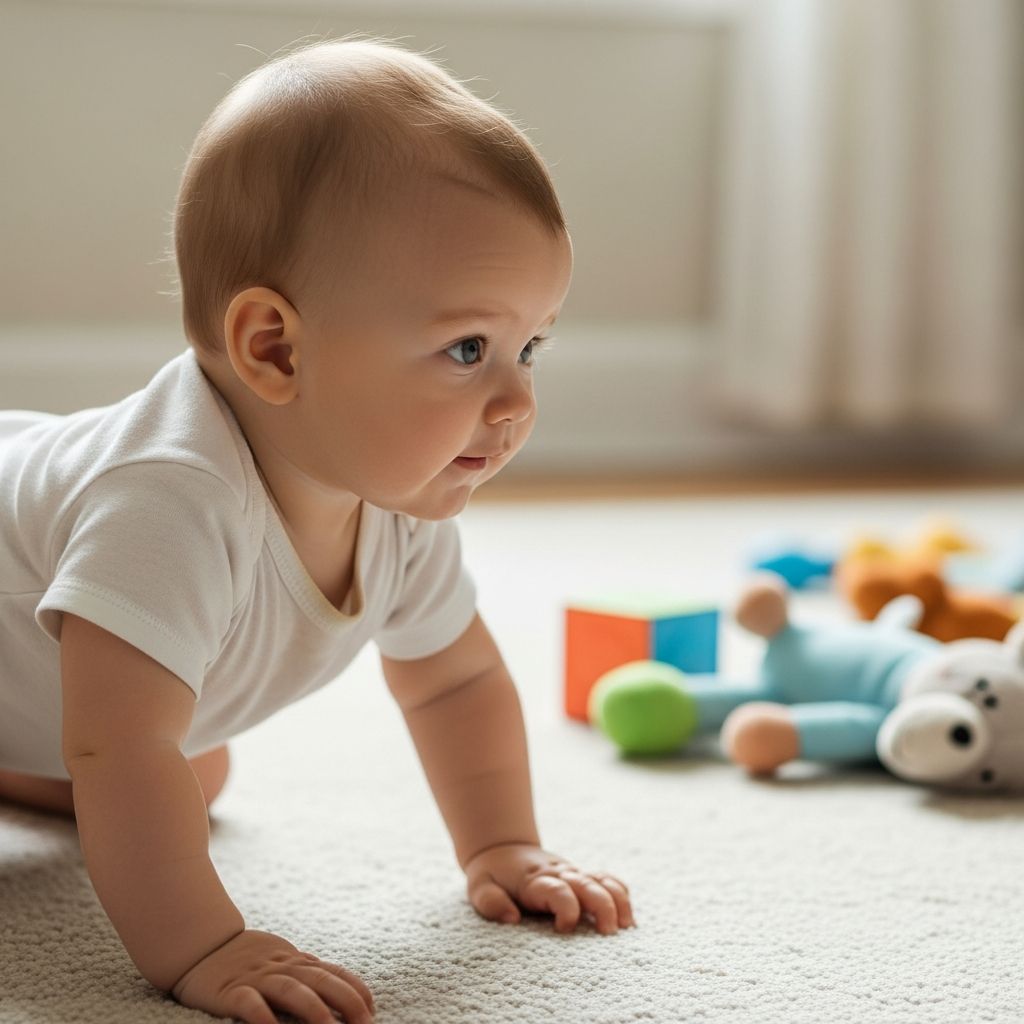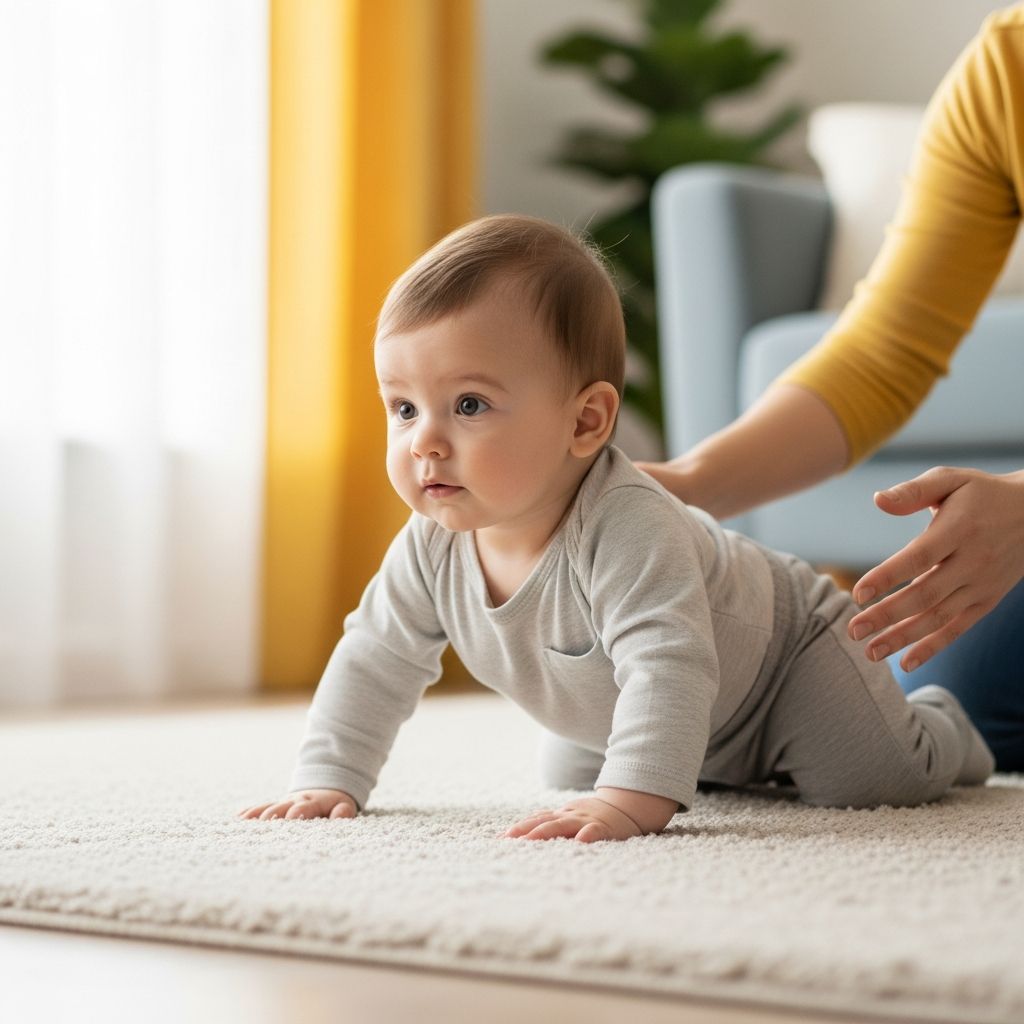
Crawling is one of the first big ways your baby discovers independence, explores the world, and builds the strength needed for walking. As a caregiver, your goal is not to force or speed up this milestone, but to create the safest, most encouraging environment for your baby to practice new skills at their own pace.
This guide explains what crawling actually involves, how to tell when your baby is getting ready, and what you can do through everyday play to gently support that exciting moment when your little one finally takes off across the floor.
Why Crawling Matters (Even If Your Baby Skips It)
Many babies crawl at some point, but not all do—and that can still be normal. Some children shuffle on their bottoms, roll to get around, or move straight from sitting to walking. Crawling itself is just one of many ways babies learn to move, but it does offer several helpful benefits along the way.
When babies work toward crawling, they build strength in the neck, shoulders, arms, and core; these muscles support later skills like standing, cruising, and walking. They also practice coordinating opposite sides of the body, learning to use one side for support while the other side moves, which supports balance, spatial awareness, and later skills like running and climbing.
- Strength development: Holding their head up and pushing through their hands builds the foundation for sitting, pulling up, and walking.
- Coordination: Moving opposite arm and leg together helps the brain organize left-right movement patterns.
- Exploration: Crawling gives babies a new way to explore, which supports curiosity, problem-solving, and confidence.
Early Signs Your Baby Is Getting Ready to Crawl
Crawling rarely happens suddenly. Most babies move through a series of smaller skills that show their body is getting closer to moving on hands and knees or another style of crawling. Watching for these little changes can help you time your support and avoid unnecessary worry.
Your baby does not need to show every sign below, and they may not follow them in order. Think of them as clues that your baby’s strength and coordination are growing:
- Better head control: Your baby can hold their head up steadily when held upright or during supervised tummy time.
- Pressing up on arms: While on their belly, they begin pushing through their forearms or straight arms to lift their chest.
- Rolling more easily: They roll from tummy to back and back to tummy, using the floor to change positions on their own.
- Pivoting on the floor: Baby spins in small circles on their tummy to face interesting toys or people.
- Rocking on all fours: They get onto hands and knees and rock back and forth, learning how to balance in this new position.
- Backward scooting: Baby pushes with their arms and accidentally moves backward while trying to reach toys in front.
If you see any combination of these signs, your baby is working hard behind the scenes. Your job is to offer safe, frequent opportunities to practice without rushing or comparing them to others.
Common Crawling Styles You Might See
Many adults picture a classic hands-and-knees crawl, but babies often invent their own ways to get across the floor. These unique techniques can look funny or “wrong” at first, but are often just your baby experimenting with what works best for their body.
Here are several movement patterns you might notice. Some babies will switch between more than one style as they grow stronger:
- Belly crawl: Baby stays low to the ground on their tummy and pulls forward using arms and sometimes one leg.
- Hands-and-knees crawl: The familiar pattern with hands and knees on the floor, moving opposite hand and knee together.
- Bear crawl: Baby keeps both hands and feet on the floor with straight knees, hips raised higher than the shoulders.
- Side or crab crawl: Baby moves sideways or backward, sometimes favoring one leg bent and the other stretched.
- Bottom scoot: Baby stays in a sitting position and uses hands and feet to shuffle across the floor.
| Movement Style | What It Looks Like | Typical Benefit |
|---|---|---|
| Belly crawl | Chest on floor, pulling with arms, pushing with legs. | Builds arm strength and body awareness close to the ground. |
| Hands-and-knees crawl | Weight shared between hands and knees, moving opposite limbs. | Strengthens shoulders, hips, and cross-body coordination. |
| Bear crawl | Hands and feet on floor, knees off ground. | Challenges balance and full-body strength. |
| Side or crab crawl | Moving sideways or backward, one side often working harder. | Shows creative problem-solving while still building strength. |
| Bottom scoot | Sitting while scooting with legs and arms. | Allows exploration when baby prefers upright sitting. |
Creating a Safe, Inviting Floor Space
Before focusing on specific activities, make sure your home gives your baby enough room and safety to practice. A baby who feels secure is more likely to explore and try new movements.
You do not need fancy equipment; a simple, open floor area that is protected and comfortable can make a big difference. A few thoughtful changes can turn an ordinary room into a mini movement gym for your baby.
Baby-Friendly Setup Checklist
- Soft but firm surface: Use a large play mat, rug, or folded blanket that cushions without being too squishy.
- Clear open space: Move low tables, hard-edge furniture, and clutter to create a wide area for rolling and scooting.
- Secure environment: Cover electrical outlets, remove dangling cords, and move breakable objects higher.
- Low-height interest points: Place safe toys, cloth books, and mirrors at floor level, just out of easy reach.
- Comfortable clothing: Dress your baby in clothes that allow easy movement and provide traction, like soft pants and bare feet.
Once this space is ready, you can start using it daily for short bursts of tummy time, play, and practice, instead of relying mostly on swings, bouncers, or seats that limit movement.
Making Tummy Time Enjoyable
Tummy time is one of the most important building blocks for crawling because it strengthens the neck, shoulders, back, and core. Many babies resist it at first, especially if they are placed on the floor and left alone. The key is to make it social, playful, and frequent in short spurts.
Tips for Happier Tummy Time
- Start with very short sessions, even 30–60 seconds, and repeat many times throughout the day.
- Lie down in front of your baby, so your face is at their level, and talk, sing, or smile to keep them engaged.
- Use a rolled towel or small pillow under their chest to help them lift their head more easily in the beginning.
- Place high-contrast pictures, soft books, or a baby-safe mirror just beyond their hands to give them something interesting to look at.
- Try tummy time on your chest while you recline, so your baby looks up at you instead of the floor.
If your baby becomes upset, gently roll them onto their back, comfort them, and try again later. Over time, their tolerance will grow as their muscles become stronger.
Simple Play Ideas to Encourage Movement
Crawling skills develop through repeated practice rather than formal exercises. Everyday playtime is the perfect chance to sneak in tiny challenges that nudge your baby forward while still keeping things fun. Think of yourself as a friendly coach cheering from the sidelines, not a drill instructor.
Games for Pre-Crawlers
- Reach and grab: While your baby is on their tummy, place a favorite toy just outside their hands. If they reach easily, move it a little farther away so they have to stretch and shift their weight.
- Rolling relay: Lay out 2–3 toys in a line and encourage your baby to roll from one to the next, gently guiding their hips if needed.
- Leg press play: When baby lies on their back, place your hands or a firm pillow at their feet for them to kick and push against, building leg strength.
Games for Babies Almost Crawling
- Mini obstacle paths: Arrange small pillows or rolled blankets to create gentle “hills” your baby can scoot or crawl over while you stay close for safety.
- Moving target: Sit a short distance away on the floor and call your baby with an excited voice, occasionally sliding backward to invite them to follow.
- Tunnel adventure: Use a cardboard box with both ends open or a play tunnel, and encourage your baby to go through by shaking a rattle at the opposite side.
- Kneeling at a low surface: Help your baby kneel with hands on a sturdy ottoman or low couch to practice bearing weight through their arms and legs.
These simple activities help your baby learn how to shift weight, reach across their body, and trust their own movements—all of which lead naturally toward crawling.
Using Everyday Routines to Support Crawling
You do not need to set aside long blocks of time every day for “training.” Instead, try weaving movement opportunities into daily moments like diaper changes, play before naps, and time on the floor after feeding. Many short practice sessions are usually more helpful—and more comfortable for your baby—than a single long one.
Ideas to Build Into Your Day
- Post-diaper exploration: After a diaper change, give your baby a minute or two on their belly on the changing pad (always supervised) to lift their head and kick.
- Floor time after feeds: Once your baby has had a break after feeding, lay them on their tummy or back on the floor and sit beside them, encouraging kicking, rolling, and reaching.
- “Follow the parent” time: Place your baby on a blanket on the floor while you fold laundry or stretch nearby, encouraging them to roll or scoot toward you.
- Evening wind-down play: Use quiet floor play instead of devices or seats to tire out muscles gently before bedtime.
These micro-moments add up quickly and keep crawling practice relaxed and enjoyable instead of feeling like a task on your to-do list.
Tools and Gear: What Helps and What to Skip
The baby aisle is full of products that promise to boost development. While some items can be convenient or fun, they are not required for crawling, and some may even reduce the amount of time your baby spends freely moving.
Helpful Items
- A large, washable play mat or thick blanket for safe floor play.
- Soft blocks, lightweight balls, and rattles that roll or make noise when pushed.
- A low, stable mirror so your baby can watch their own movements.
- Sturdy, low furniture like an ottoman or activity table for kneeling and pulling up later.
Items to Use Sparingly
- Baby seats and loungers: They can be helpful in short bursts but limit the practice your baby gets on the floor.
- Walkers that move on wheels: These can be unsafe and may encourage positions that do not support natural crawling or standing.
- Overuse of swings and bouncers: Enjoy them occasionally, but try not to let them replace daily floor time.
As a general rule, any product that holds your baby in one fixed position for long periods is less helpful for crawling than simple, supervised time on the floor.
Supporting Your Baby’s Confidence (and Your Own)
Babies sense pressure and stress, even when it is unspoken. If you are anxious about milestones or constantly comparing your child to others, both of you may enjoy this stage less. Remember that development is highly individual, and your baby’s timeline is influenced by many factors outside anyone’s control.
Focus on what you can control: the opportunities you offer, the safety of the environment, and the warmth and encouragement you provide. Celebrating small signs of progress—like reaching further, holding the head higher, or tolerating tummy time longer—can help you notice just how much your baby is actually learning.
- Respond to your baby’s effort with smiles and positive attention, not just to the final “success.”
- Offer a break when your baby shows clear signs of frustration or fatigue.
- Remind yourself that there is a wide range of normal for when and how babies crawl.
When to Talk With a Health Professional
Most babies reach movement milestones on their own schedule, but sometimes it is helpful to get a professional opinion. A pediatrician or pediatric physical therapist can observe your child and give guidance specific to your situation.
Make an appointment or mention your concerns at a regular checkup if you notice any of the following:
- Your baby seems unusually stiff or unusually floppy in their arms and legs.
- They rarely move their body, do not roll, or show little interest in reaching for toys.
- You see a strong preference for turning to only one side or using only one arm or leg.
- Your intuition tells you that something about their movement does not seem right.
Reaching out for guidance is not a sign of overreacting. It is a way to support your baby as early as possible if they do need extra help.
Frequently Asked Questions About Teaching a Baby to Crawl
Do all babies need to crawl before they walk?
No. Some babies move straight from rolling or sitting into pulling up and walking. Crawling is helpful but not an absolute requirement for healthy development. The most important thing is that your baby is making steady progress in learning to control their body and explore their environment in some way.
Is it possible to teach a baby to crawl too early?
Trying to force crawling before your baby is ready is not helpful and may lead to frustration for both of you. Instead of aiming for a specific age, focus on building the underlying skills—like head control, pushing up on arms, rolling, and rocking on hands and knees. When your baby’s body is prepared, crawling will usually emerge naturally from these building blocks.
How long should my baby do tummy time each day?
Short, frequent sessions are usually more comfortable than long ones. Many caregivers aim for a few minutes at a time, repeated throughout the day, gradually building up as the baby tolerates it. Watch your baby’s cues; if they become very upset, it is fine to stop and try again later.
What if my baby only scoots on their bottom and never crawls on hands and knees?
Bottom scooting is a common and usually normal way babies choose to move around. You can still encourage crawling-style positions by offering enticing toys while your baby is on their tummy or by supporting them in kneeling at a low surface. If you have concerns, ask a pediatrician or pediatric physical therapist to look at your baby’s overall development.
How can I keep my house safe once my baby starts crawling?
Before your baby becomes fully mobile, get on your hands and knees to see your home from their perspective. Look for small objects they could put in their mouth, sharp corners, unstable furniture, cords, and open-access areas like stairs. Securing these hazards ahead of time lets you relax more and enjoy watching your baby explore.
Helping your baby learn to crawl is less about strict training and more about offering a rich, safe environment for movement and play. With patience, flexibility, and a sense of humor, you can support this exciting milestone while building your baby’s confidence and strengthening your bond.