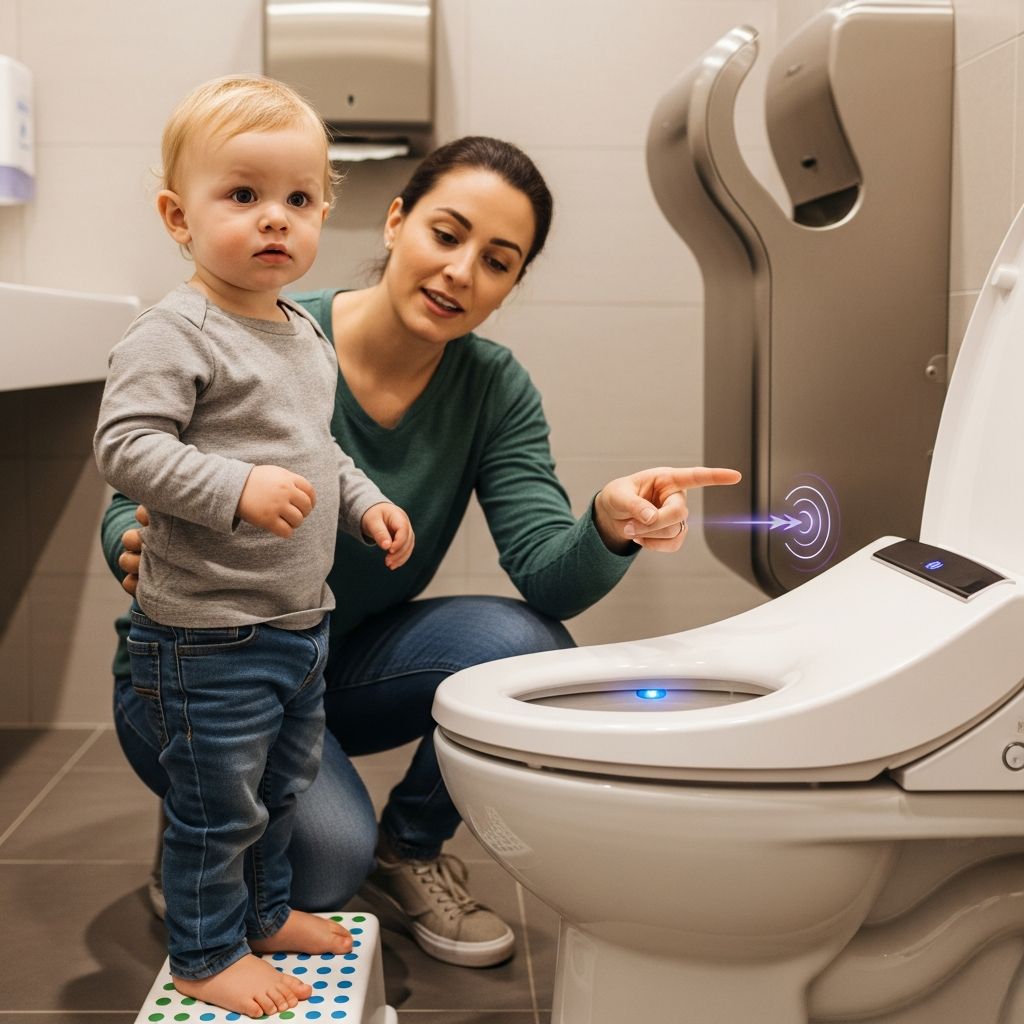
Automatic flushing toilets can turn a normal bathroom trip into a full-blown panic for many toddlers. The sudden noise, powerful swirl, and lack of control are a perfect recipe for fear—especially when a child is already working hard to master potty training. This guide walks through why these toilets feel so scary and how to support your child, without pushing too hard or pausing potty training forever.
Why Auto-Flush Toilets Feel So Terrifying to Toddlers
From an adult perspective, automatic toilets are simply convenient. To a small child, they can seem loud, unpredictable, and even dangerous. Understanding what is going on in your toddler’s mind helps you respond with patience instead of frustration.
- They are loud and sudden: Auto-flush toilets often make a sharp, echoing sound that can startle a child who is already feeling vulnerable with pants down.
- They feel out of control: The toilet decides when to flush, not the child. That loss of control is especially scary when your toddler is still learning what their body does.
- They look powerful: The strong swirl of water and fast disappearance of waste can trigger worries about being sucked in or losing something important.
- They often flush at the worst time: Sensors can misread movement and trigger mid-sit, which feels like an attack to a child already nervous about using a public bathroom.
When this fear becomes linked to potty training, a child may start avoiding public toilets, holding pee or poop, or refusing to use the potty at all away from home.
How to Tell If Toilet Fear Is Affecting Potty Training
Some kids only dislike automatic toilets; others develop full-blown toilet anxiety that spills over into home routines. Watch for signs that your child’s fear is starting to interfere with daily life or physical comfort.
| Behavior | What It Might Mean |
|---|---|
| Crying or clinging when entering public restrooms | Your child is anticipating the loud noise and feels unsafe in that space. |
| Refusing to sit on public toilets at all | The connection between toilet and fear has become very strong. |
| Sudden potty regression only away from home | Fear is environment-specific, focused on unfamiliar or automatic toilets. |
| Holding pee or poop during outings | Your child would rather be uncomfortable than use a terrifying toilet. |
| Asking repeatedly if the toilet will flush by itself | They are trying to predict and control what happens in the bathroom. |
If you recognize several of these behaviors, it is worth creating a clear plan to prevent the fear from stalling potty training altogether.
Step 1: Validate the Fear Instead of Minimizing It
Even if the fear seems irrational, it is completely real to your child. Dismissing or teasing can make them feel ashamed and more resistant, which often increases anxiety instead of shrinking it.
- Get down at eye level and name their feeling: “You look scared. That toilet made a big noise.”
- Let them know other kids are also scared of loud toilets so they do not feel alone.
- Avoid phrases like “There’s nothing to be scared of,” which can feel like you are denying their reality.
The goal is not to convince your child that they are wrong to feel afraid, but to show that you are on their side while they learn that the toilet cannot hurt them.
Step 2: Give Back a Sense of Control
Much of the fear comes from the toilet flushing without warning. Anything that lets your child feel more in charge can lower anxiety and make it easier to try again.
- Explain what the sensor does in very simple terms, like “This little red light sees movement and tells the toilet to whoosh.”
- Show them that covering the sensor can pause the flush while they are sitting.
- Let your child decide if they want to stand near the door, cover their ears, or step out of the stall before you flush.
When children learn they have options—where to stand, when to flush, how to protect their ears—the bathroom becomes less of an unpredictable threat and more of a manageable place.
Step 3: Prepare Before You Leave the House
Advance preparation takes some of the mystery away from public bathrooms. Instead of being surprised by an auto-flush toilet at the worst possible moment, you are both ready with a plan.
- Talk on the way out: briefly remind your child what might happen and what you will do to keep them comfortable.
- Pack a small “bathroom toolkit,” such as sticky notes to cover sensors, spare underwear, wipes, and a compact folding travel potty if your child is especially fearful.
- Choose bathrooms wisely: family restrooms or single-user restrooms can feel calmer than large, echoing public bathrooms.
Knowing you already have a strategy reduces your stress too, which your child will quietly pick up on.
Step 4: Protect Potty Training Progress at Home
Home is usually where children first felt successful on the potty. After a scary experience with an auto-flush toilet, you may see hesitation even on your predictable, quiet toilet at home. Keeping the home routine calm and consistent protects long-term progress.
- Stick with the same potty schedule you used before the fear showed up, but add extra reassurance.
- If your child now resists the big toilet, consider returning to a small potty chair temporarily to rebuild confidence.
- Use simple visual routines (a picture chart of steps) to make each bathroom trip feel familiar and predictable.
Avoid threatening to go back to diapers as a punishment; this can turn the bathroom into a battleground instead of a skill-building space.
Step 5: Use Gentle Exposure in Tiny Steps
Fear usually shrinks when children face it in small, tolerable doses with a trusted adult nearby. Jumping straight from “won’t enter the restroom” to “sit on the toilet and pee” is too big a leap for most toddlers.
- Start outside the restroom: Walk by the bathroom door at a quiet time, describe what is inside, and keep moving if your child resists.
- Move to standing inside: Step into the bathroom together without using the toilet, then leave after a short count.
- Approach the stall slowly: Look at the toilet from the doorway, then step back out.
- Practice sitting with clothes on: Let your child sit briefly on the toilet fully dressed, then celebrate the effort.
- Flush from a distance: When your child is ready, you can flush another stall while they stand with you by the door.
- Progress to using the toilet: Only once they tolerate the sound and space should you ask them to pee or poop there.
Expect some back-and-forth. If your child becomes extremely distressed at one step, drop back to an easier step for a few days before trying again.
Step 6: Create a Bathroom Comfort Ritual
Rituals signal safety. A simple, repeatable routine can become a comforting anchor whenever your child must face an auto-flush toilet, especially in unfamiliar places like malls, airports, or restaurants.
- Use the same short phrase every time you enter a bathroom, such as “We go in, we pee, we wash, we’re done.”
- Offer a specific job, like carrying the soap pump or choosing which stall you use.
- End each bathroom visit with a small positive action—a sticker, a high-five, or choosing a silly song for handwashing.
Over time, the ritual itself becomes familiar and soothing, helping your child feel more in control even in new restrooms.
Step 7: Tools and Tricks to Tame Auto-Flush Toilets
A few simple tools can make a huge difference in how overwhelming an automatic toilet feels. These strategies are quick to use and can easily become part of your regular bathroom routine when out and about.
- Sticky notes or tape: Placing a small piece over the sensor prevents the toilet from flushing while your child is sitting. Remove it only when they are safely off the seat.
- Noise protection: Lightweight headphones, earmuffs, or even your hands gently over their ears can soften the shock of the flush.
- Travel potty seat or insert: A familiar seat from home can help the toilet feel less foreign and unstable.
- Small step stool: When available, a sturdy step makes your child feel secure, with feet supported instead of dangling.
- Comfort object: A small toy or lovey that “comes to the bathroom to help” can give emotional support.
Most of these solutions are low-effort but signal to your child that you took their fear seriously enough to prepare.
When to Pause, When to Push Forward
It can be hard to know whether to slow down potty training or keep going when your child is very afraid of toilets away from home. The best approach usually sits between forcing and giving up entirely.
- Consider a partial pause: Continue using the potty confidently at home, while lowering expectations in public for a short period.
- Respect limits: If your child is panicking, allow diapers or pull-ups for longer outings while quietly working on exposure to auto-flush toilets at low-stress times.
- Avoid pressure: Threats, shaming, or yelling may produce one successful bathroom trip but often increase long-term resistance.
Most toddlers move forward fastest when they feel safe, understood, and gently encouraged rather than cornered into doing something that feels terrifying.
Sample Phrases to Support Your Child
In scary moments, it helps to have simple, calm words ready. Your voice and body language can communicate safety even before the words sink in.
- “That noise was really loud. I heard it too. I’m right here.”
- “The toilet only takes the pee and toilet paper. It cannot take you.”
- “We will cover the little light so it won’t flush while you’re sitting.”
- “You can step out of the stall while I flush. Tell me when you’re ready.”
- “You were brave to come into the bathroom with me. That’s hard work.”
Repeating the same phrases over time helps your child internalize the message that the toilet might be loud but is not dangerous.
Supporting Different Ages and Temperaments
Not all children respond the same way. A shy, sensitive three-year-old may need more time than an outgoing four-year-old. Tailoring your approach to your child’s personality makes your efforts more effective and less frustrating.
- Highly sensitive children: Move more slowly, keep exposures shorter, and focus heavily on noise management and predictability.
- Strong-willed children: Offer meaningful choices (which stall, who flushes) to reduce power struggles.
- Very young toddlers: Focus on keeping experiences neutral or mildly positive rather than aiming for full potty use in public right away.
Remember that temperament is not a problem to fix but a trait to work with as you support your child’s progress.
Frequently Asked Questions
Should I avoid all public bathrooms until my child is over this fear?
Completely avoiding bathrooms can actually keep the fear alive, because your child never gets the chance to learn that they can handle them. Instead of total avoidance, aim for brief, planned exposures at quieter times, using tools like sensor covers and noise protection to keep the experience as gentle as possible.
What if my child holds pee or poop for hours because they are scared?
Holding for long periods can lead to discomfort, constipation, or urinary infections, so this is a sign to adjust your approach. Offering a pull-up during longer outings, building a predictable routine of bathroom visits at home, and talking with your pediatrician if the pattern continues are all reasonable steps.
Is it okay to go back to diapers temporarily?
Returning to diapers as a calm, strategic choice can be different from using them as a threat. If your child is clearly overwhelmed, a short-term return to diapers or pull-ups during travel or big transitions can protect their sense of safety while you continue gentle practice with toilets in low-pressure settings.
How do I handle emergencies, like when we are flying or on a long car trip?
For special situations, preparation matters even more. Bring a portable potty if possible, walk your child through what airport or airplane bathrooms are like before the trip, and plan extra time so you are not rushing them into a situation they already find frightening.
When should I talk to a professional?
If your child’s fear lasts many months, keeps getting bigger, or leads to frequent accidents, severe constipation, or intense daily battles, talking with your pediatrician or a child therapist can help. They can rule out medical issues and offer more personalized strategies for anxiety and potty training.
Key Takeaways for Parents
Fear of automatic flushing toilets is extremely common and can throw off even well-established potty routines. By validating your child’s fear, restoring a sense of control, and using small, repeated exposures instead of pressure, you can help them feel safe again without undoing all the progress they have made.
- Your calm presence and predictable routines matter far more than any single bathroom disaster.
- Simple tools—sensor covers, noise protection, travel potty gear—can transform a terrifying experience into a manageable one.
- Most children, given time and gentle support, learn that even loud, unpredictable toilets cannot actually hurt them.