Halloween brings excitement for many families, but for some children, the holiday’s spooky elements can spark intense fears that disrupt enjoyment. Parents play a crucial role in helping kids navigate these emotions, transforming potential distress into positive experiences. This article explores the reasons behind these fears, identifies warning signs, and provides actionable strategies grounded in child psychology.
Understanding the Roots of Halloween Anxiety in Children
Young children’s brains process fear differently due to an immature prefrontal cortex, which struggles to distinguish fantasy from reality. The amygdala, responsible for fear responses, activates strongly during jump scares or costumed encounters, flooding the body with adrenaline. This reaction is normal but can overwhelm toddlers and preschoolers who lack the cognitive tools to rationalize pretend threats.
Sensory overload compounds the issue: flashing lights, loud noises, scratchy fabrics, and unfamiliar smells heighten arousal. Research links sensory processing sensitivities to anxiety, making crowded events feel threatening. Masks obscure facial expressions, hindering emotional reading—a challenge amplified for anxious kids scanning for danger.
Unpredictability adds fuel; novel costumes, dark houses, and ambiguous situations trigger avoidance in worry-prone children. Clinical studies confirm that uncertainty is a key anxiety trigger. For ages 4-6, fantasy play can be empowering, but younger kids may cling or cry even at friendly characters like clowns.
Spotting Signs of Fear and When to Intervene
Recognize distress through behavioral cues: nightmares, bedtime resistance, separation anxiety, or fear of the dark. Physical symptoms like stomachaches, headaches, or clinginess emerge weeks ahead. Avoidance—refusing costumes or trick-or-treating—and meltdowns signal escalation.
Not all fears require intervention; mild jitters build resilience. However, persistent phobia-like reactions, interfering with sleep or daily life, warrant attention. Experts advise against forcing exposure, as it heightens anxiety. Instead, validate feelings: “It’s okay to feel scared.”
| Age Group | Common Reactions | Normal vs. Concerning |
|---|---|---|
| 0-3 years | Crying, clinging, nightmares | Normal if short-lived; concerning if ongoing sleep issues |
| 4-6 years | Avoidance, questions about scares | Normal curiosity; concerning if total refusal of fun activities |
| 7+ years | Excitement mixed with worry | Normal thrill-seeking; concerning if panic persists post-event |
Building Emotional Resilience Before the Big Night
Preparation fosters control. Create visual schedules mapping trick-or-treat routes and timelines, reducing uncertainty. Role-play scenarios at home: practice doorbell rings and candy exchanges to normalize encounters.
Visit decorations in daylight first, discussing what to expect. Read age-appropriate Halloween books to demystify themes. Emotion coaching—naming feelings (“You seem nervous about the mask”) and brainstorming solutions—strengthens self-regulation.
- Validate first: Acknowledge fears without dismissal.
- Label emotions: Helps children process internally.
- Guide problem-solving: Empower with choices like exit signals.
Sensory-Smart Strategies for a Calmer Celebration
Mitigate overload by selecting soft, comfortable costumes and limiting accessories. Opt for well-lit paths and smaller groups. For sensory-sensitive kids, noise-canceling headphones or fidget tools provide relief.
Preserve predictability: let children choose buddies, duration, or home-based alternatives like candy handout stations. Graded exposure—starting with mild scares—builds tolerance without overwhelm.
Harnessing Play and Fantasy for Fear Mastery
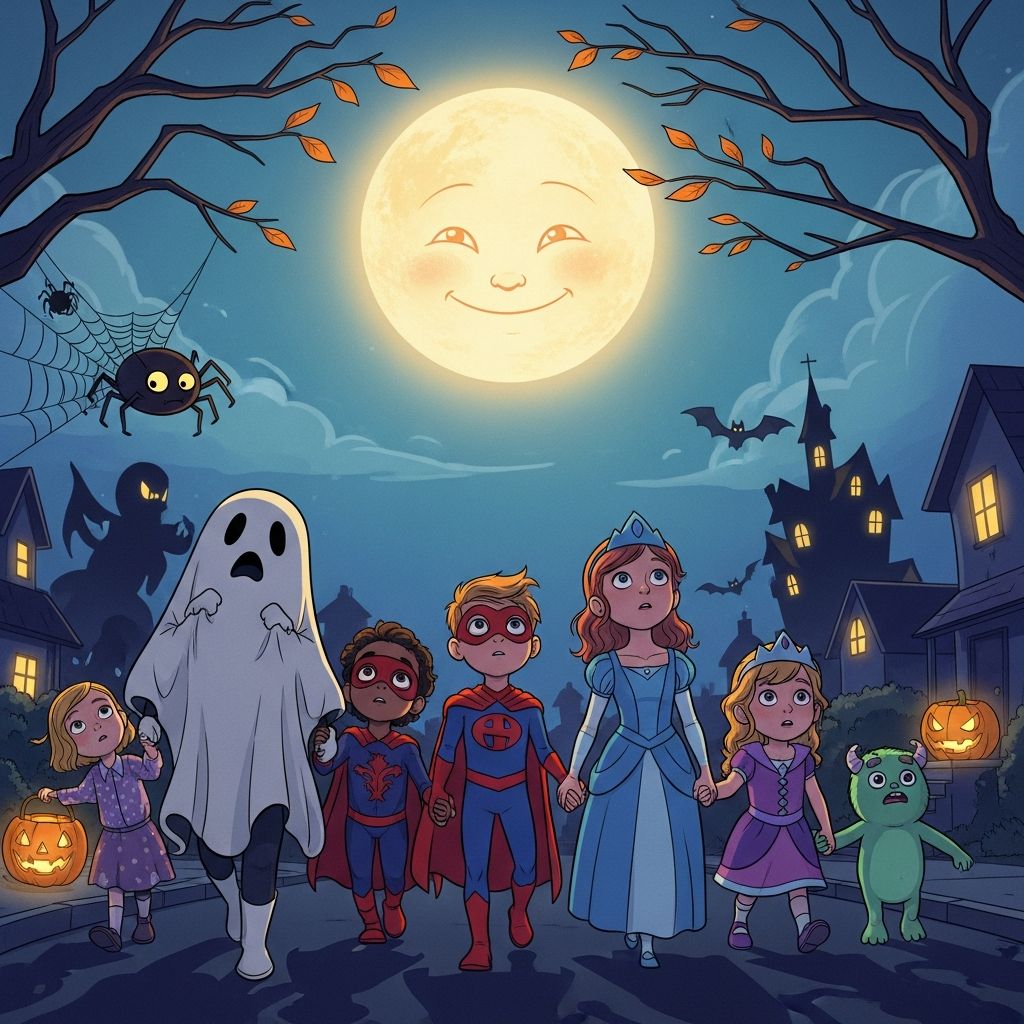
Play therapy turns terror into triumph. Encourage dress-up as “scary” figures, allowing kids to rehearse control over fears. Symbolic role-play processes big emotions, fostering resilience.
For safe thrills, preview haunted elements gradually. Around age 7-8, children grasp fun in fear, releasing dopamine post-scare for reward. Let them lead: scaring siblings builds confidence.
“Facing fear together releases oxytocin, forging bonds and turning scares into shared joy.”
Family Dynamics: Communicating Boundaries Effectively
Educate relatives on anxiety’s realities—it’s brain-based, not “just shyness.” Set expectations: no surprise scares, calm environments. Prioritize your child’s well-being over traditions.
Post-event debriefs reinforce learning: discuss what worked, celebrating small wins. This models emotional intelligence.
Long-Term Benefits of Navigating Spooky Seasons
Guided exposure teaches that anxiety passes, promoting lifelong coping. Children learn resilience, distinguishing safe fears from real threats. Halloween becomes a lab for emotional growth, blending adrenaline with achievement.
For persistent issues, consult professionals; early intervention prevents phobias.
Frequently Asked Questions
Can skipping Halloween harm my anxious child?
No, but total avoidance may reinforce fears. Opt for modified participation like daytime events to build gradual confidence.
How do I prepare a sensory-sensitive child?
Use visual aids, practice routines, and reduce irritants. Start small with familiar settings.
What if fears extend beyond Halloween?
Monitor for patterns; if interfering with life, seek child psychologist input for tailored strategies.
Is it okay for kids to enjoy scares?
Yes, around age 7+, controlled thrills teach fear management via dopamine rewards.
How to handle peer pressure for haunted houses?
Assess readiness; prepare thoroughly or choose alternatives respecting individual limits.
References
- Halloween traumatic for children — Iowa State Daily. 2013-10-28. https://iowastatedaily.com/220998/uncategorized/halloween-traumatic-for-children/
- When Halloween Can Spike Childhood Anxiety and How Parents Can Help — OCD Anxiety Centers. 2023-10-01. https://www.ocdanxietycenters.com/anxiety/when-halloween-can-spike-childhood-anxiety-and-how-parents-can-help/
- Why we love a good Halloween scare — Florida International University News. 2025-10-20. https://news.fiu.edu/2025/love-a-good-scare-the-brain-science-behind-halloween-thrills
- Fear with Kids: What’s Normal and What’s Not? — Rice Psychology. 2022-10-15. https://ricepsychology.com/fear-kids-whats-normal-whats-not/
- The Ghosts in Our Heads: Why Halloween’s Rituals of Fear and Darkness Might Be the Most Honest Form of Therapy We Have — Boston University The Brink. 2023-10-25. https://www.thebrink.me/the-ghosts-in-our-heads-why-halloweens-rituals-of-fear-and-darkness-might-be-the-most-honest-form-of-therapy-we-have/