Dogs are part of everyday life—on sidewalks, in parks, in family homes, and even in classrooms and libraries. For many children, this is wonderful. For others, especially those who are anxious or have had a scary encounter, dogs can feel overwhelming and unpredictable. As a parent or caregiver, it is possible to both respect a child’s fear and teach them the skills that keep them safe and help them grow more confident over time.
Why So Many Kids Are Scared of Dogs
Fear of dogs is common in childhood, even when a child has never been bitten. Dogs are fast, noisy, and often larger than small children, and their barks and sudden movements can feel threatening. Understanding where that fear comes from is the first step toward helping a child feel more secure.
Children may become afraid after a direct negative experience, like being knocked over or snapped at, but fear can also develop indirectly. Hearing frightening stories, watching intense dog scenes in movies, or seeing an anxious adult react to dogs can all contribute. When adults recognize these sources of worry instead of dismissing them, children feel heard and are more willing to learn.
- Some kids fear being bitten or scratched, even if they’ve never seen a bite happen.
- Others dislike loud barking, jumping, or the way dogs sniff and lick.
- Highly sensitive or anxious children may feel overloaded by a dog’s energy and enthusiasm.
- Parents’ own discomfort with dogs can unintentionally signal to kids that dogs are dangerous.
Safety First: Core Principles for Dog–Child Interactions
Before tackling fear, it helps to build a solid safety foundation. A child who understands clear rules and has practiced what to do in different situations will feel more in control, even if they still feel nervous. These safety principles apply whether you own a dog or simply encounter them in your community.
Think of dog safety as a set of non-negotiable household rules, similar to road safety or water safety. Children do not need to love dogs, but they do need to know how to behave around them to lower the risk of bites and reduce scary moments for everyone—humans and dogs alike.
Essential Dog Safety Rules for Kids
- Always ask the dog’s owner before approaching or petting any dog.
- Let the dog come to you instead of reaching over its head or face.
- Pet gently on the side of the body, chest, or shoulders, not on the face, tail, or paws.
- Never bother a dog when it is eating, chewing a bone, sleeping, in a crate, or caring for puppies.
- Do not hug, sit on, or ride a dog; most dogs do not enjoy this kind of contact.
- Move slowly and speak softly; avoid running, squealing, or waving arms near a dog.
- If a dog grabs a toy or snack, let it go—do not try to pull it back.
Understanding Dog Body Language (Kid-Friendly Version)
To a child, a wagging tail can look like a clear sign that a dog is happy and safe, but canine communication is more complex than that. Teaching children a few easy visual cues turns a mysterious animal into a creature they can “read,” which lowers anxiety and improves safety.
Children do not need a long list of technical terms. Simple, visual categories—”relaxed,” “worried,” and “leave-me-alone”—are usually enough. When kids can match what they see with what a dog might be feeling, they are better equipped to decide whether to approach or give the dog space.
| Dog Looks Like… | What the Dog Might Feel | What Kids Should Do |
|---|---|---|
| Loose, wiggly body, soft eyes, mouth slightly open | Relaxed or friendly | Ask the owner first, then let the dog come to you and pet gently if invited. |
| Tail tucked, ears back, body low or trying to move away | Nervous or scared | Give the dog space, do not follow or try to hug; just watch quietly from a distance. |
| Stiff body, closed mouth, hard stare, growling or showing teeth | Annoyed or ready to defend itself | Stay still, do not touch, and calmly move away toward an adult. |
| Barking and jumping, but body still bouncy and loose | Excited and playful, but possibly overwhelming for kids | Stand like a “tree” (still and quiet) until the dog settles or an adult helps. |
Many bites happen when adults assume a dog is “fine” because it is not growling, even though the dog is quietly signaling that it is uncomfortable. Helping both kids and grown-ups notice early signs of stress—like lip-licking, yawning in a non-tired way, or turning the head away—can prevent situations from escalating.
Supervision That Actually Works
“Supervise your child around dogs” is advice that parents hear often, but true supervision means more than being in the same room with your phone. Effective supervision is active, engaged, and ready to step in at the first hint that either child or dog is uncomfortable.
One helpful rule is to assume that children under about 10–12 years old still need an adult’s guidance with dogs, even if they seem calm and kind. Adults are better at noticing early signs of canine stress and can redirect play before it becomes rough or unsafe.
Practical Supervision Strategies
- Stay close enough to touch both child and dog, especially during playtime or when food and toys are around.
- Step in early if the dog starts to move away, stiffen, or hide; this is often a sign the dog needs a break.
- Use baby gates, playpens, or closed doors to separate dogs and young children when you cannot watch closely.
- Teach children that when the dog goes to its bed, crate, or special mat, no one is allowed to disturb it.
- Schedule “quiet times” when the dog can rest in a safe space away from kids’ noise and activity.
What to Teach a Child Who Is Afraid of Dogs
When a child is already anxious around dogs, pushing them into petting or forced contact usually makes things worse. Instead, give them a clear plan for what to do when a dog is nearby. Knowing exactly how to stand, where to look, and how to talk can transform panic into manageable nervousness.
It can help to practice these skills in a calm, dog-free environment first. Role-playing with stuffed animals, drawings, or family members pretending to be dogs allows children to rehearse without pressure and to ask questions safely.
Simple Response Plan for Kids
- When you see a dog with its owner: Stay beside your adult. If you want to meet the dog, ask your adult first, then ask the owner. If anyone says no, respect that answer.
- If a friendly dog comes up to you: Stand still with your hands by your sides, look slightly away, and let the dog sniff your shoes or legs. You do not have to pet the dog.
- If you feel scared: Move slowly behind your adult or to a safe spot like a bench or doorway, without running or shouting.
- If a dog jumps up: Turn your body slightly to the side, cross your arms gently over your chest, and wait for an adult to help.
Teaching the “Be a Tree” and “Curl Up Like a Rock” Skills
Two widely taught safety skills help children respond in the extremely rare event that a dog behaves aggressively or suddenly feels threatening. They are simple enough for even young children to remember, especially if you practice them as a short game.
Although most dogs will never seriously harm a child, learning these moves gives kids a sense of power and predictability. Instead of feeling helpless, they know there is something concrete they can do.
Be a Tree (If a Dog Approaches or Jumps)
Use this strategy when a dog is running toward a child, jumping, or being too excited:
- Stand tall and still like a tree trunk, with feet together or slightly apart.
- Fold your branches: Keep your arms still by your sides or gently crossed, not waving or pushing.
- Look at your “roots”: Gaze down at your shoes or the ground instead of staring into the dog’s eyes.
- Stay quiet and calm until the dog loses interest or an adult arrives.
Curl Up Like a Rock (If Knocked Down)
This strategy is for the unlikely situation where a child is pushed or knocked over:
- Lie on your side or curl into a ball with your knees drawn up to your chest.
- Protect your head and neck by tucking your chin and using your arms to shield your neck and ears.
- Stay as still and quiet as possible, like a heavy rock that is not interesting to the dog.
Supporting a Child After a Scary Dog Experience
Even if a child is not physically injured, a frightening moment—like a sudden bark at close range or a dog chasing them—can leave a strong emotional imprint. Children may start avoiding parks, walking routes, or houses where dogs live, and their anxiety may spread to other animals or crowded places.
How adults respond in the hours and days after an incident can shape whether the fear fades or becomes more entrenched. The goal is to take the child’s feelings seriously while gradually rebuilding a sense of safety and predictability around dogs.
Steps for Emotional Recovery
- Listen without minimizing. Phrases like “That was scary, and it makes sense that you feel nervous now” help children feel understood.
- Offer accurate information. Explain briefly why dogs sometimes bark, chase, or guard their toys without framing dogs as villains.
- Avoid making sweeping promises like “A dog will never scare you again,” which you cannot guarantee.
- Rehearse safety plans so the child knows what to do next time, turning fear into a problem-solving mindset.
- Consider professional help if the fear becomes extreme, interferes with daily life, or triggers nightmares and panic.
Gradual Confidence Building: From Across the Street to a Gentle Pet
Helping a fearful child feel comfortable around dogs works best when it happens in small, carefully planned steps. Forcing close contact or surprise meetings usually backfires, while slow exposure with lots of control and choice lets a child build genuine confidence.
Think of this as a ladder. Each step is low enough that the child can handle it with only mild nervousness, not overwhelming panic. You stay on each step until it feels boring, then move up together.
Possible Confidence-Building Steps
- Reading picture books or watching gentle, realistic videos about calm, friendly dogs.
- Creating drawings or stories where the child imagines themselves as a “dog helper” or “dog detective.”
- Watching dogs from a safe distance, such as across the street or from behind a fence, while labeling what the dogs are doing.
- Visiting a trusted friend or relative’s dog while the dog is secured behind a gate, allowing the child to observe without pressure to interact.
- Letting the child toss treats from a distance while the dog remains on leash with a calm adult handler.
- When ready, allowing brief, gentle petting on the dog’s side, with the child free to stop at any time.
Responsibilities for Families Who Own Dogs
If you share your home with a dog, your role in bite prevention is even more direct. Children often assume that a family dog is incapable of biting, when in reality, any dog can bite if frightened, injured, or repeatedly pushed past its limits. Responsible dog ownership is therefore a key part of keeping kids safe.
Your dog does not need to be perfect, but it does need support: socialization, fair rules, consistent training, and health care. These elements not only reduce the risk of aggression but also create a calmer, more predictable environment for children.
Dog Owner Checklist for Child Safety
- Schedule regular veterinary checkups, vaccinations, and pain management; discomfort can make dogs irritable.
- Use reward-based training to teach basic manners like “sit,” “stay,” and walking politely on leash.
- Give your dog daily exercise and mental enrichment so pent-up energy does not spill over into rough play.
- Teach your dog to enjoy being touched gently on different parts of its body, always going at the dog’s pace.
- Set up dog-only quiet zones where children are not allowed to follow, ensuring your pet has a safe retreat.
Healthy Ways Kids and Dogs Can Connect
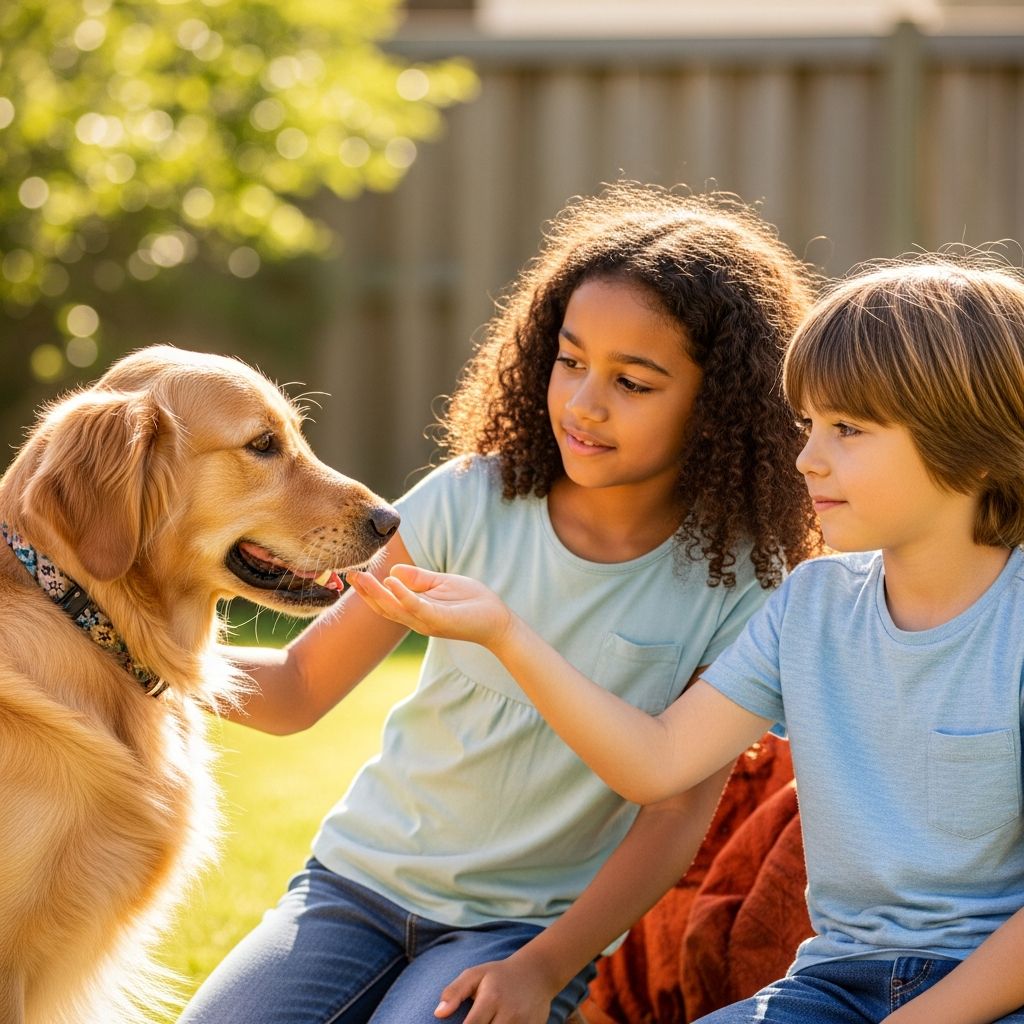
Once safety and boundaries are established, relationship-building can be deeply rewarding for both child and dog. The goal is not for every child to become a dog lover, but for those who are interested to have structured, positive ways to interact that respect both parties’ comfort levels.
Shared activities create memories and teach responsibility. When children help care for and train a dog under adult supervision, they learn empathy, patience, and nonverbal communication skills that extend beyond the human–animal bond.
Positive Child–Dog Activities
- Let children help with simple tasks like refilling water bowls or measuring out food, under supervision.
- Teach kids to toss treats for the dog to catch or find, turning training into a cooperative game.
- Encourage quiet time where the child reads aloud while the dog relaxes nearby, without pressure for physical contact.
- Use “trick training” sessions where an adult guides the dog and the child gives the cue word and reward.
- Create family rules for gentle touch, calm voices, and taking turns so the dog does not become overwhelmed.
Frequently Asked Questions About Kids and Dogs
Do I have to make my child like dogs?
No. Your responsibility is to keep your child safe and help them develop practical skills, not to force them to love animals they fear. Many children feel more at ease when told that it is okay not to be a “dog person” while still following safety rules.
Is a wagging tail always a sign that a dog is friendly?
Not necessarily. A wagging tail can mean excitement, nervousness, or frustration. Kids should learn to look at the dog’s whole body—how stiff or loose it is, where the ears are, and whether the dog is moving toward or away from them—rather than treating tail wagging alone as a green light.
Should I get a dog to help my fearful child overcome their anxiety?
Buying or adopting a dog solely to “fix” a child’s fear is risky. Caring for a dog is a long-term responsibility, and fearful children may feel trapped rather than supported. It is usually better to work on gradual exposure with other people’s well-managed dogs before considering a pet of your own.
What if other adults downplay my child’s fear?
You are your child’s advocate. If relatives or friends insist that a dog is “just being friendly” or try to push your child closer, you can calmly but firmly intervene. Setting clear boundaries with other adults models for your child that their feelings matter and that consent applies to interactions with animals too.
When should I seek professional help?
Consider consulting a pediatrician, therapist, or child psychologist if your child’s fear of dogs causes intense distress, avoidance of everyday activities, or physical symptoms like panic attacks. A qualified mental health professional can use evidence-based approaches, such as gradual exposure and coping skills training, tailored to your child’s needs.
Fear of dogs does not have to define a child’s experiences outdoors or in social spaces. With patient guidance, clear safety rules, and respect for both children’s feelings and dogs’ needs, families can build a world where kids feel capable and informed rather than helpless and scared. Whether your child eventually becomes a dog enthusiast or simply learns to coexist comfortably, the skills you teach now will support a lifetime of safer, more confident interactions with animals.