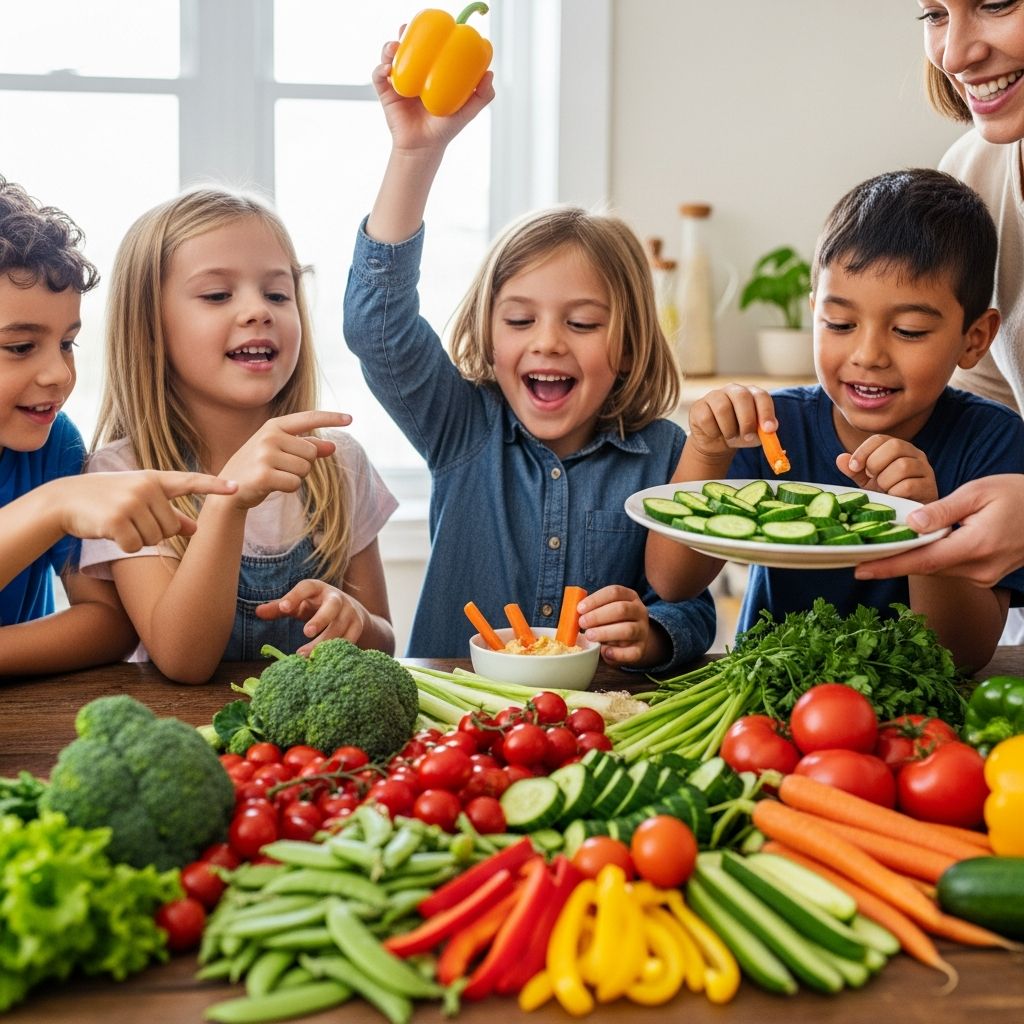
Many parents worry that their kids barely touch the vegetables on their plates. You are not alone: in many countries, most children do not meet recommended daily vegetable intakes, even though vegetables are packed with fiber, vitamins, and minerals that support growth, brain development, and long-term health. The good news is that small, consistent changes at home can make a big difference over time.
This guide explains why vegetables matter for kids, what makes them so challenging, and practical, low-stress strategies parents can use to help children actually enjoy eating vegetables.
Why Vegetables Matter So Much for Growing Kids
Vegetables do more than just “round out” a meal. When children eat enough vegetables as part of a balanced diet, research shows benefits for their bodies, brains, and long-term disease risk.
Key nutrients kids get from vegetables
Different vegetables provide different nutrients, which is why variety is important.
| Key nutrient | How it helps kids | Vegetable examples |
|---|---|---|
| Dietary fiber | Supports regular digestion, helps kids feel full, and is linked with lower risk of obesity and heart disease later in life. | Beans, lentils, peas, broccoli, carrots, potatoes with skin |
| Vitamin A | Supports normal vision, healthy skin, and immune function. | Carrots, sweet potatoes, pumpkin, dark leafy greens, red/orange bell peppers |
| Vitamin C | Helps heal cuts, supports gums and teeth, and boosts immune defenses. | Bell peppers, tomatoes, broccoli, Brussels sprouts, kale |
| Folate | Needed for making red blood cells and supporting growth. | Spinach, other leafy greens, beans, peas |
| Potassium | Helps keep muscles, heart, and nervous system working properly. | Potatoes (white or sweet, with skin), tomato products, beans, spinach |
Health benefits that start now and last into adulthood
- Healthy growth and brain development: The CDC notes that fruits and vegetables support normal growth and brain development in children and set the foundation for healthy eating patterns later in life.
- Better weight management: Vegetables are generally low in calories but high in fiber and water, which can help kids feel satisfied without overeating.
- Lower risk of chronic disease: Diets rich in vegetables are linked with reduced risk of heart disease, some cancers, and type 2 diabetes over the long term.
- Stronger lifelong habits: Eating habits formed in childhood often continue into adulthood, so building a positive relationship with vegetables early really matters.
Why Many Kids Resist Vegetables
If your child pushes peas aside or refuses anything green, it does not mean you are a bad parent or that your child will never eat well. There are real developmental and biological reasons that vegetables can be a hard sell.
- Bitterness and unfamiliar flavors: Many vegetables, especially dark greens, taste slightly bitter to children who naturally prefer sweet flavors.
- Texture issues: Some kids are extra sensitive to textures. Stringy, mushy, or mixed textures (like in stews) can feel overwhelming.
- Fear of new foods: Trying a new food can feel risky to younger children. They rely heavily on familiarity and repetition.
- Pressure backfires: When kids feel forced, bribed, or judged about eating vegetables, they may dig in their heels and refuse even more.
- Less exposure early on: If vegetables are rarely offered, kids get fewer chances to become familiar with them. Early, repeated exposure supports acceptance.
Understanding these barriers helps you choose strategies that are patient, respectful, and more likely to work over time.
How Much Vegetable Intake Do Kids Need?
Recommendations vary by age and activity level, but public health guidelines agree that vegetables should appear on kids’ plates every day as part of a balanced diet.
- Children should eat vegetables daily in a variety of types and colors — dark green, red and orange, beans and peas, starchy, and other vegetables.
- Healthy meal models typically suggest filling about half the plate with fruits and vegetables, with the remaining half coming from whole grains and protein foods, plus dairy.
- Hospital and health system guidance for families emphasizes that these nutrients help kids build strong bones and tissues, maintain focus in school, and support physical activity.
Do not worry about hitting a perfect number of servings every single day. Aim for a “vegetable habit” over the week: lots of chances to taste, see, and enjoy different veggies.
Evidence-Based Strategies to Help Kids Eat More Vegetables
Research and practical experience show that kids are more likely to eat vegetables when they have repeated exposure, some choice, and a positive atmosphere at the table.
1. Offer variety and simple choices
Studies in school-age children have found that when kids are offered two vegetable options instead of just one, they serve themselves and eat more vegetables without increasing total calories. Choice helps children feel more in control and curious.
- Put two small vegetable options on the table (for example, carrot sticks and cucumber slices) and let your child pick one or both.
- Use phrases like, “Would you like broccoli or peas tonight?” rather than “Do you want vegetables?”
- Rotate colors and types over the week: orange, green, white, red, beans, and peas.
2. Start small and repeat often
New foods often take many exposures — sometimes 10 or more — before kids accept them. Small, no-pressure tastes can gradually build comfort.
- Offer very small portions of a new vegetable alongside familiar foods.
- Let kids politely decline more, but encourage them to explore: smelling, licking, or nibbling is still progress.
- Re-offer the same vegetable on different days and in different forms (raw, roasted, with a dip) without fanfare.
3. Make vegetables look and taste appealing
Appearance and flavor matter. Children are more likely to eat vegetables that look colorful, are easy to handle, and taste good.
- Adjust texture: Try raw sticks for crunchy fans, soft roasted cubes for kids who like tender foods, or purees in soups for smooth textures.
- Add flavor: Roast with a bit of olive oil, sprinkle with mild cheese, add herbs, or serve alongside a favorite dip like hummus or yogurt.
- Use fun shapes: Cut vegetables into sticks, rounds, or simple shapes using kid-safe cutters to spark interest.
4. Build vegetables into everyday meals and snacks
Instead of reserving vegetables only for dinner, include them in different parts of the day so they become routine rather than “special.”
- Offer sliced vegetables with breakfast (like cherry tomatoes or cucumbers) alongside eggs or whole grain toast.
- Pack a small baggie of carrots, snap peas, or mini peppers in school lunches.
- Serve vegetables as the first course when kids are hungriest, such as a small salad or plate of cut veggies.
- Mix vegetables into familiar dishes, while still keeping some visible: add peas to pasta, grated carrots to tacos, or spinach to omelets.
5. Keep the atmosphere calm and pressure-free
Family dynamics at the table strongly shape how kids feel about food. Health organizations emphasize responsive feeding: parents decide what, when, and where food is served, while children decide whether and how much to eat.
- Avoid forcing bites, punishing refusals, or bribing with dessert. These tactics are linked to more resistance and less self-regulation around food.
- Use neutral language: “The broccoli is here if you’d like some,” instead of “You have to eat your vegetables.”
- Keep mealtimes relaxed, with pleasant conversation that is not all about what your child is or is not eating.
6. Let kids participate in food prep
When children help prepare vegetables, they are often more willing to taste them. Hands-on experience reduces fear and builds curiosity.
- Young children can wash produce, tear lettuce, or arrange veggie sticks on a plate.
- Older kids can help with safe cutting (using age-appropriate tools), stirring, or seasoning.
- Give small jobs names: “salad designer,” “broccoli inspector,” or “carrot mixer” to make it feel special.
7. Be a role model
Children watch what the adults around them eat. Seeing parents and caregivers regularly enjoy vegetables without complaining is one of the strongest influences on kids’ own habits.
- Serve yourself vegetables and eat them where your child can see you.
- Use simple positive comments like, “These peppers are really crunchy!” instead of focusing only on health benefits.
- Share vegetables at family-style meals so kids see that everyone has access to the same foods.
Age-Specific Tips for Introducing Vegetables
Strategies should shift slightly as your child grows. Early experience with vegetables can shape taste preferences and habits for years.
Babies and toddlers
- Once your pediatrician says it is safe, offer pureed or very soft vegetables such as carrots, peas, or sweet potatoes.
- Rotate flavors and colors instead of serving the same one every time to encourage acceptance of variety.
- Introduce vegetables even if your baby loves fruit; both are important, and a wide flavor range helps prevent an overly sweet bias.
Preschoolers
- Expect some “food neophobia” (fear of new foods) and keep portions tiny and low-pressure.
- Offer vegetables in predictable ways — for example, cut veggies and dip at snack time several days a week.
- Use stories, colors, and simple games (like counting carrot sticks) to make vegetables part of normal play, without turning them into a test.
School-age kids and preteens
- Involve them in meal planning: ask which vegetable they want on taco night or what new one they would like to try this week.
- Encourage them to help with simple recipes that showcase vegetables, like roasted potatoes, stir-fries, or build-your-own salad bowls.
- Teach basic facts about how nutrients help their bodies and sports performance: many hospitals and health groups highlight that these nutrients support focus and activity.
Common Challenges and How to Handle Them
“My child eats only one or two vegetables”
If your child currently accepts just a couple of vegetables, that is a useful starting point.
- Keep serving the accepted vegetables regularly to ensure some intake.
- Introduce new vegetables that are similar in color or texture to the ones they already like.
- Pair a tiny portion of the new vegetable with the familiar one and a safe main dish.
“My child refuses vegetables completely”
- Begin with non-eating exposure: letting your child help wash, touch, or smell vegetables without any expectation to taste.
- Offer vegetables consistently but without comment if they are refused. Your job is to keep providing opportunities.
- If you are concerned about growth, extreme restriction, or stress around eating, speak with your child’s healthcare provider or a pediatric dietitian.
Sample Day: Weaving Vegetables into Family Meals
Here is one example of how vegetables can show up throughout the day in a realistic way. Adjust to fit your family’s culture, budget, and preferences.
- Breakfast: Scrambled eggs with a small handful of chopped spinach; sliced tomatoes on the side.
- Snack: Carrot sticks with a yogurt-based dip.
- Lunch: Whole grain pita with hummus, lettuce, and cucumbers; a few cherry tomatoes.
- Snack: Whole grain crackers with cheese and a few slices of bell pepper.
- Dinner: Baked chicken or beans, brown rice, and two vegetable options (for example, steamed broccoli and roasted sweet potatoes) served family-style.
Frequently Asked Questions (FAQs)
How long does it take for a child to learn to like a new vegetable?
It can take many exposures — sometimes 10–15 or more — before a child willingly eats a new food. Offering very small amounts repeatedly, without pressure, is more effective than forcing large portions once or twice.
Is it okay to hide vegetables in foods?
Adding vegetables to sauces, soups, or baked goods can boost nutrition, but it is also important for children to see and recognize vegetables. A balanced approach is to include some “hidden” vegetables for extra nutrients while also serving visible vegetables so kids can learn to accept them.
Should I insist that my child finishes all the vegetables on their plate?
Forcing children to clear their plates can override their natural hunger cues and create negative feelings about vegetables. It is usually better to decide what foods are offered and allow your child to decide how much to eat from what is served, within reasonable family rules.
Are frozen or canned vegetables as good as fresh?
Frozen and canned vegetables can be very nutritious and are often more affordable and convenient. Look for options without added salt, sugar, or heavy sauces when possible. Using a mix of fresh, frozen, and canned vegetables is a practical way to keep vegetables on hand.
What if my child only eats fruit but no vegetables?
Fruit provides many valuable nutrients, but vegetables offer some different nutrient patterns and help children learn to enjoy a wider range of flavors. Keep serving vegetables in small amounts alongside fruits, and use the same gentle, repeated exposure strategies without comparing or criticizing your child’s choices.
References
- Vegetable variety: an effective strategy to increase vegetable choice in children — Meengs JS, Roe LS, Rolls BJ. 2012-05-01. https://pmc.ncbi.nlm.nih.gov/articles/PMC10282308/
- Good Nutrition Starts Early — Centers for Disease Control and Prevention. 2023-03-16. https://www.cdc.gov/nutrition/features/good-nutrition-starts-early.html
- Vegetable Group – One of the Five Food Groups — MyPlate.gov, U.S. Department of Agriculture. 2024-01-01. https://www.myplate.gov/eat-healthy/vegetables
- Helping Your Children Love Vegetables — Utah State University Extension. 2020-08-01. https://extension.usu.edu/nutrition/research/helping-your-children-love-vegetables
- Fruit and Vegetable Servings for Children — Children’s Hospital Colorado. 2022-07-15. https://www.childrenscolorado.org/just-ask-childrens/articles/fruit-and-vegetable-servings-for-children/
- Kids, Fruits and Veggies — Sutter Health. 2019-06-01. https://www.sutterhealth.org/health/kids-fruits-veggies