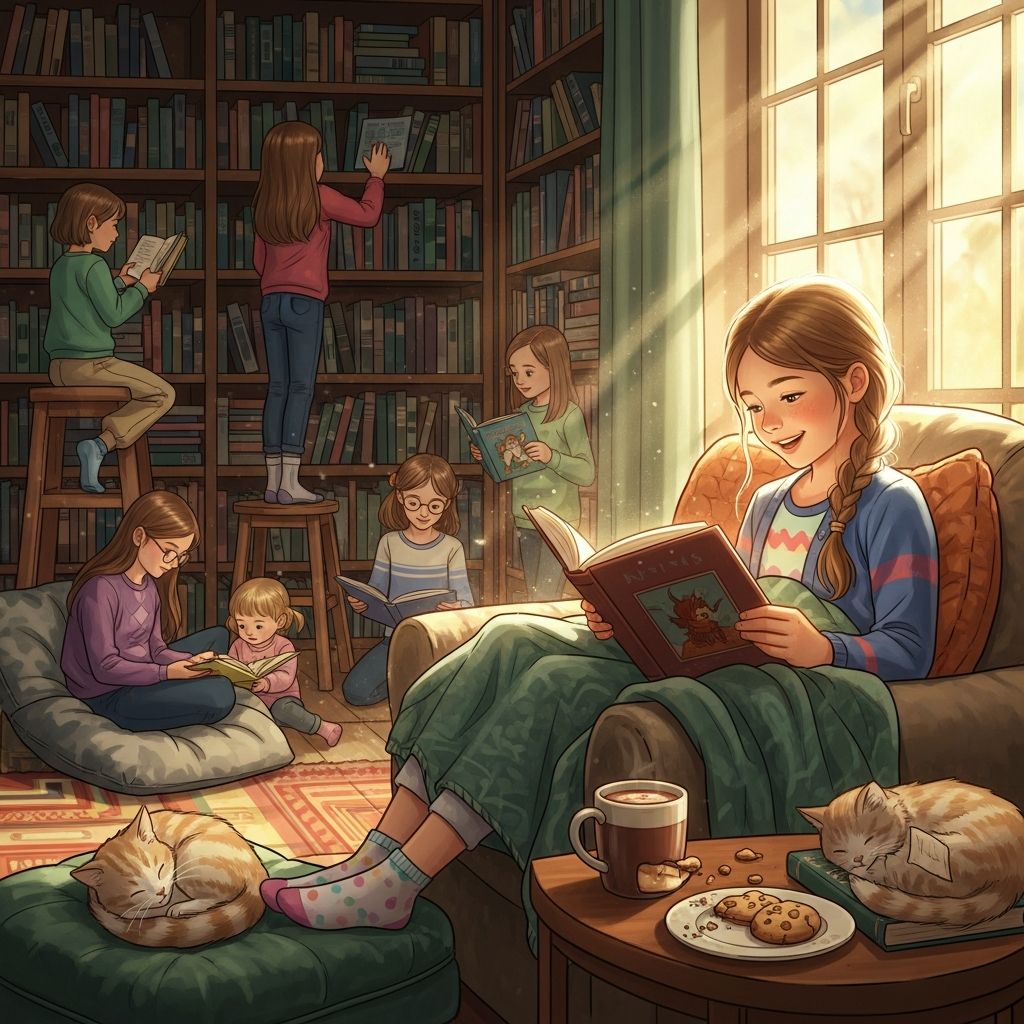
Helping a girl fall in love with reading is less about finding perfectly pink “books for girls” and more about connecting her with stories that feel exciting, relatable, and empowering. When reading is tied to pleasure, curiosity, and a sense of choice, children are far more likely to continue reading for themselves as they grow.
This guide explores how to support girls as readers at different ages, how to choose engaging books without boxing them into narrow stereotypes, and how to make reading a natural, joyful part of family life.
Why Reading for Pleasure Matters So Much
Research consistently shows that reading by choice—not just for homework—has powerful and long-lasting benefits for children.
- Stronger language and vocabulary: Children who read frequently build a richer vocabulary and better comprehension skills.
- Better academic outcomes: International assessments have found that reading for enjoyment is strongly associated with higher achievement in multiple subjects, not just language arts.
- Emotional and social growth: Stories help children explore emotions, relationships, empathy, and problem-solving in a safe way.
- Agency and identity: Characters who take risks, solve problems, and question expectations can help girls imagine wider possibilities for themselves.
For girls, who often navigate complex messages about appearance, behavior, and ambition, access to varied, high-quality stories can be especially powerful.
Moving Beyond “Books for Girls” vs. “Books for Boys”
It is tempting to search for books that are marketed specifically to girls, but that approach can unintentionally limit what a child believes she is “allowed” to enjoy.
- Avoid rigid labels: Studies on gendered marketing show that labeling toys and books by gender can narrow children’s interests and skills.
- Offer a wide range of genres: Mystery, fantasy, science fiction, sports, historical fiction, graphic novels, nonfiction—none of these genres belong to one gender.
- Focus on themes, not covers: Ask what she likes in a story (adventure, friendship, humor, animals, puzzles) instead of relying on color-coded or gender-coded packaging.
- Make space for unexpected choices: A girl who adores sports statistics or outer space deserves as many books in those areas as a girl who loves ballerinas or baking.
The goal is not to avoid traditionally feminine stories, but to give girls enough variety that they never feel boxed in.
Choosing Books by Stage, Not Just by Age
Every child develops at a different pace, but it helps to think about reading in stages. Use the following table as a flexible guide, adjusting for each girl’s interests and reading ability.
| Stage | Approx. Age | What She Often Enjoys | What Helps Most |
|---|---|---|---|
| Story Listener | 3–6 | Picture books, rhyme, repeated phrases, familiar characters | Reading aloud daily, talking about pictures, acting out stories |
| Early Reader | 6–8 | Short chapters, funny series, highly illustrated books | Lots of choice, reading together, patience with rereading |
| Confident Chapter Reader | 8–11 | Series fiction, fantasy, mysteries, school stories | Matching difficulty to interest level, talking about plots |
| Tween & Young Teen | 11–14 | More complex themes, friendships, identity, graphic novels | Respecting privacy, previewing tough topics when needed |
| Older Teen | 14+ | YA and adult crossover books, romance, social issues | Treating her as a partner in choosing and discussing books |
Ideas for Engaging Books at Different Ages
Specific titles will change over time, but certain types of books tend to appeal to many girls at each stage.
1. Young Listeners (Roughly 3–6)
At this stage, the goal is to connect books with warmth, attention, and delight.
- Rich picture books: Stories with expressive illustrations and clear, simple plots invite conversation.
- Repetition and rhyme: Rhythmic language helps children remember and join in with the reading.
- Strong emotions in safe settings: Being scared, excited, or sad inside a story helps children process big feelings.
- Nonfiction about real-world interests: Animals, vehicles, space, oceans—girls at this age are often intensely curious about how things work.
Let her handle the books, turn pages, and make choices—even if she chooses the same story every night for a week.
2. Early Readers (Roughly 6–8)
These readers are working hard to decode words; the content should feel like a reward, not extra work.
- Short chapter series: Lighthearted series with recurring characters give a sense of progress without overwhelming text.
- Hybrid books: Stories that mix text with comics-style panels or plentiful illustrations provide visual support.
- Funny, slightly mischievous characters: Humor goes a long way in motivating hesitant readers.
- Books about school, pets, and family: Familiar settings help keep the focus on decoding rather than world-building.
Many children at this stage benefit when adults continue reading slightly harder books aloud, while they independently read easier material. This bridges the gap between listening comprehension and reading skills.
3. Confident Chapter Readers (Roughly 8–11)
Once reading becomes more automatic, the goal is to keep momentum going by feeding their growing tastes.
- Series with depth: Trilogies and longer series help readers build stamina and attachment to characters.
- Adventure and fantasy: Many girls enjoy high-stakes plots with magic, quests, or big mysteries.
- Books about friendship & belonging: As peer relationships grow more complex, books exploring loyalty, conflict, and inclusion resonate strongly.
- Accessible nonfiction: Biographies, science books, or narrative nonfiction can connect to school topics or personal passions.
Offer a mix of lighter and more challenging reads, making it clear that rereading beloved favorites or mixing “easy” and “hard” books is perfectly acceptable.
4. Tweens & Young Teens (Roughly 11–14)
Tweens often sit between children’s books and full young adult fiction. They crave complexity but may not be ready for all mature themes marketed to older teens.
- Relatable contemporary stories: Books about changing friendships, family pressures, and school dynamics feel immediately relevant.
- Speculative and fantasy worlds: Stories with magic, dystopian societies, or alternate universes can be a safe way to explore real-world issues.
- Graphic novels: Visual storytelling can be just as deep and literary as text-only novels and often hooks reluctant readers.
- Quiet novels about identity: Books that center questions of culture, gender, creativity, and values can feel deeply personal.
Whenever possible, preview books that address intense topics (self-harm, abuse, explicit sexual content) and decide together how comfortable your family is with them at a given age.
5. Older Teen Readers (14+)
By high school, many girls read across boundaries: YA, adult fiction, memoir, poetry, graphic novels, and long-form nonfiction.
- Complex YA novels: Books that handle nuanced themes—justice, mental health, romance, systemic inequality—invite critical thinking.
- Nonfiction with a point of view: Essays, investigative journalism, and memoirs can help teens connect current events with personal values.
- Classics and retellings: Modern adaptations of older stories often provide an accessible entry to more challenging classic texts.
- Genre-blending books: Romance-mystery hybrids, historical fantasy, or literary thrillers may particularly appeal to experienced readers seeking something fresh.
At this stage, treat your reader as a partner. Ask for her recommendations. Share what you are reading. Respect her decision to abandon books that do not hold her attention.
Supporting Different Reading Personalities
Not all girls relate to books in the same way. Some devour a novel in a day; others prefer dipping in and out of shorter pieces. Adjust your approach based on the personality in front of you.
The Voracious Reader
- Keep a steady supply of books available—library holds, used book sales, e-books, and audiobooks.
- Encourage variety, including nonfiction and diverse voices, so her reading life does not become too narrow.
- Offer shelves and reading nooks where book piles are welcomed, not scolded.
The Reluctant or Stalled Reader
- Try high-interest, low-text options like graphic novels, magazines, or short stories.
- Use paired reading: you read one page, she reads the next, to reduce fatigue.
- Honor other hobbies and avoid framing reading as morally superior to sports, art, or games; instead, show how reading supports those interests.
- Check vision and hearing when reading struggles are persistent; physical factors sometimes play a role.
The Sensitive Reader
- Ask what types of stories feel overwhelming (injustice, illness, violence) and respect her limits.
- Look for books where characters cope realistically but the story ultimately offers reassurance and hope.
- Preview endings if needed; knowing that things will be okay can make intense scenes more manageable.
Creating a Reading-Friendly Home
Girls are more likely to view reading as normal and appealing when they see it happening all around them.
- Model reading: When adults read for pleasure, children are more likely to do the same.
- Scatter books everywhere: Keep a small basket in the living room, a few in the car, and some by the bed.
- Use small, predictable routines: Ten minutes after dinner, or a chapter before bed, can be surprisingly powerful.
- Limit pressure: Emphasize enjoyment over speed, level, or how “smart” a book is.
Finding and Evaluating New Books
Because publishing changes quickly, it helps to know where to look for trustworthy recommendations instead of relying on marketing alone.
- Librarians and teachers: School and public librarians are trained to match books with readers and can suggest titles based on the topics your child loves.
- Awards lists: National and regional children’s book awards highlight quality literature each year.
- Professional review journals: Publications that review children’s books (often used by librarians) can provide age guidance and note sensitive content.
- Own-voices and diverse authors: Make an intentional effort to include stories written by people from a wide range of backgrounds and cultures. This both validates some readers’ identities and broadens others’ perspectives.
l
When evaluating a specific book for your reader, ask:
- Is the reading level comfortable, a stretch, or frustrating?
- Do the main characters make meaningful choices, or are they mostly passive?
- Are stereotypes being reinforced or challenged?
- Will this story leave her feeling informed, entertained, moved, or inspired in some way?
Common Concerns Parents Have About Their Daughters’ Reading
Many parents worry about how, what, or how much their daughters read. The questions below come up frequently.
Frequently Asked Questions (FAQs)
Q: My daughter only wants to reread the same series. Is that okay?
A: Rereading is normal and often beneficial. It builds fluency, comfort, and deeper understanding of character and plot. You can gently expand her range by saying, “When you finish this one again, let’s also choose something new to try,” but there is no need to forbid old favorites.
Q: She prefers graphic novels. Should I push traditional chapter books instead?
A: Graphic novels are legitimate literature that demand complex visual and verbal skills. Many feature sophisticated plots and themes. Rather than replacing them, offer chapter books with similar topics or humor alongside her favorite comics-style stories.
Q: How much should I worry about reading levels?
A: Levels can be a helpful tool for educators but should not dictate everything a child reads. Aim for a mix: books that feel comfortably easy, some at her instructional level (where mild support helps), and occasional stretch texts that you read together. Obsessing over level numbers can reduce motivation.
Q: What if she wants to read books with intense or mature themes?
A: Look at the specific book rather than assuming all titles in a category are the same. Read reviews, skim key scenes, and consider her temperament. When you allow a challenging book, stay available to talk about it. Research suggests that discussing what children read deepens both comprehension and critical thinking.
Q: My teen says she “hates reading” even though she loved books as a kid. What changed?
A: Often, reading becomes tangled with school pressure, grading, and time scarcity. Try reintroducing pleasure reading with zero assignments attached: short, funny books; audiobooks she can listen to while doing chores; or titles connected to her hobbies, fandoms, or future goals. Remind her that even occasional, enjoyable reading still “counts.”
References
- PIRLS 2021 International Results in Reading — International Association for the Evaluation of Educational Achievement (IEA). 2023-05-16. https://www.iea.nl/publications/study-reports/international-reports-iea-studies/pirls-2021-international-results-reading
- National Literacy Trust Research: Children and Young People’s Reading — National Literacy Trust. 2023-07-05. https://literacytrust.org.uk/research-services/research-reports/children-and-young-peoples-reading-in-2023
- Let Toys Be Toys: Gendered Marketing and Its Effects — Let Toys Be Toys / Fawcett Society briefing drawing on academic research. 2020-03-01. https://lettoysbetoys.org.uk/gendered-toys-and-books-research-summary/
- Vision Screening for Children 36 to <72 Months: Recommendation Statement — U.S. Preventive Services Task Force. 2017-09-05. https://www.uspreventiveservicestaskforce.org/uspstf/recommendation/vision-in-children-ages-6-months-to-5-years-screening