Many three-year-olds are physically ready to use the potty but emotionally stuck, especially when they feel scared to sit down, relax, and let pee or poop come out. This article offers a gentle, step-by-step approach to help your anxious child feel safer and more confident, without pressure or power struggles.
Why Potty Time Can Feel So Scary
For adults, using the bathroom is routine, but for a toddler, it is a huge developmental shift that can feel overwhelming. Your child is being asked to notice internal body cues, walk to another room, sit on an unfamiliar seat, and release something from their body into a loud, flushing bowl.
Common reasons a three-year-old may be afraid to pee or poop on the potty include:
- A previous painful experience, such as constipation or a hard stool that hurt.
- Fear of falling into the toilet or being flushed away.
- Noise sensitivity to flushing or bathroom fans.
- Discomfort with the size, shape, or feel of the potty or toilet seat.
- Feeling pressured, watched, or judged during toilet attempts.
- General anxiety around change, new routines, or loss of diapers.
Understanding that your child is scared, not stubborn, changes the entire approach. Instead of asking, “How do I make her do it?” the question becomes, “How do I help her feel safe enough to try?”
Mindset Shift: From Training to Supporting
When a child cannot relax enough to pee, pushing harder nearly always backfires. What looks like “refusal” is usually a nervous system that is too tense to let go, much like trying to fall asleep while someone is standing over you telling you to relax.
Helpful mindset shifts include:
- From performance to comfort: At first, the goal is not getting pee in the potty; it is helping your child feel calm in the bathroom.
- From deadlines to readiness: Bodies learn toileting best when they feel safe, not when surrounded by pressure or timelines.
- From control to partnership: Your child’s body belongs to them; your role is guide, not boss. You set up routines, but they decide when to release.
When parents focus on relationship and regulation instead of outcomes, children sense that safety and cooperation start to grow.
Creating a Calm, Child-Friendly Bathroom
The physical environment can either increase or reduce anxiety. A few small changes can make the bathroom feel like a friendly, predictable place instead of a cold, echoey room that signals pressure.
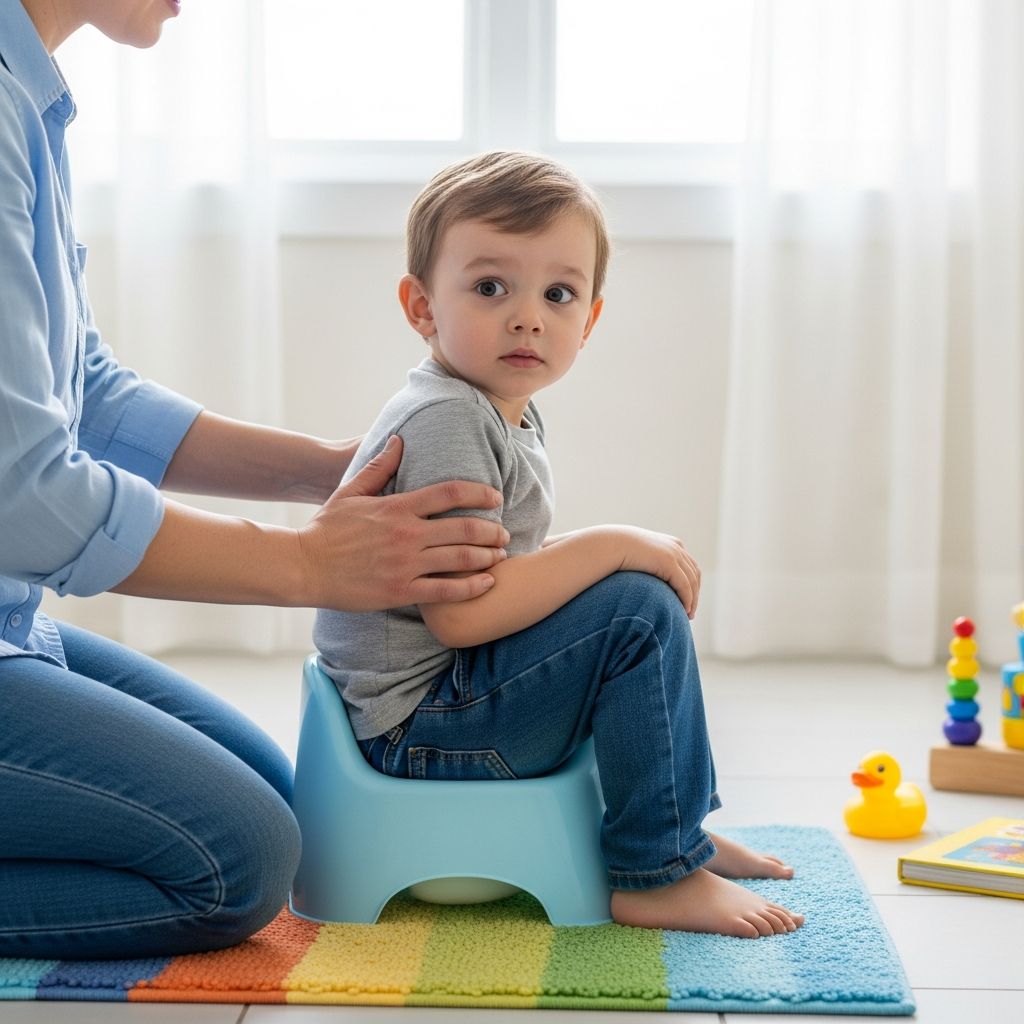
- Use a stable potty chair or a child seat with a secure step stool so feet are supported.
- Keep the light soft if your child is sensitive; consider a nightlight or lamp.
- Have a basket with a few special books or quiet toys reserved only for potty time.
- Place a small rug so the floor feels warm and cozy under bare feet.
- Agree ahead of time about flushing: you can promise not to flush until they leave the room, or let them control the flush handle when ready.
Present the bathroom as “your special potty corner” or “your quiet bathroom reading spot,” not as a performance stage where they are constantly evaluated.
A Gentle, Step-by-Step Potty Confidence Plan
If your three-year-old is tense or terrified, trying to jump straight to full potty use can overload them. Instead, break the process into small steps, letting your child master one stage at a time before moving on.
Stage 1: Rebuild Safety Around the Bathroom
At this stage, the goal is not to get them to pee on the potty at all. The goal is to help them feel okay simply being around the bathroom without stress.
- Invite, never drag, your child to “keep you company” while you use the toilet.
- Talk in a relaxed, matter-of-fact way about pee and poop as normal body functions.
- Allow your child to flush for you, or stand by the door if they prefer distance.
- Read short stories or sing songs together in the bathroom without asking them to sit.
Stay in this stage for days or weeks if needed. Progress is measured in less tension and more neutral or positive moments, not in dry pants.
Stage 2: Sitting Practice With No Pressure to Go
Once your child can enter the bathroom without distress, practice sitting in a way that feels almost like play. The secret is to separate sitting from actually having to pee or poop.
- Start with very short “sit and read” times, even 20–30 seconds.
- Let your child sit fully clothed first, then in underwear, and only later with a bare bottom.
- Use silly timers, songs, or counting games to mark how long you sit together.
- Celebrate cooperation with small, non-food rewards like stickers or extra story time, if that motivates them, but keep praise low-pressure and genuine.
If your child says “no,” respect the no and try again later. Forcing them to sit while crying usually increases fear rather than resolves it.
Stage 3: Linking Sitting to Natural Pee Times
After your child is comfortable sitting on the potty, you can begin to time sits around moments when pee is likely, without making success the only acceptable outcome.
- Invite them to sit after waking, after meals, or after drinking fluids.
- Say something like, “Let’s give your pee a chance to come out if it wants to,” instead of “You need to pee now.”
- Encourage relaxation with deep breathing: smell the imaginary flower, blow out the imaginary candle.
- If nothing comes, end the sit on a positive note: “Your body isn’t ready yet. That’s okay. We’ll try again another time.”
Successes will eventually happen, but your child needs many low-pressure practice runs to trust that trying is safe.
Stage 4: Transitioning Away From Diapers
Once a child occasionally pees or poops on the potty with minimal fear, you can gradually reduce diaper use. Do this thoughtfully to avoid overwhelming them.
- Start with bare-bottom time in a contained, easy-to-clean area at home.
- Next, use soft, comfortable underwear during times when you can stay relaxed about accidents.
- Keep diapers or pull-ups for sleep or long outings until daytime use is reliable.
- Avoid shaming language; instead, say, “Accidents happen when we’re learning. We’ll clean this up together.”
Consistency matters, but so does flexibility. If anxiety spikes, it is okay to slow down or temporarily step back.
Sample Scripts to Ease Potty Fears
Words can either intensify fear or help a child feel understood and safe. These example phrases can be adapted to your voice and your child’s personality.
- Validating feelings: “You really don’t like sitting on the potty. It feels scary right now. I’m here with you.”
- Normalizing the process: “Every body makes pee and poop. Your body is learning something new, just like when you learned to climb or ride your scooter.”
- Inviting, not forcing: “Do you want to bring your teddy to show him how we sit on the potty for one song?”
- Reinforcing autonomy: “Your pee comes out when your body is ready. The potty is just a safe place for it to go.”
- Handling accidents calmly: “Your pants got wet. Let’s get you dry and comfy. Next time we’ll give the potty another try.”
A calm tone matters more than perfect wording. The message your child needs is: “You are safe, you are not in trouble, and we will figure this out together.”
Supporting Your Child’s Body: Comfort and Health
Emotional safety is essential, but physical comfort is equally important. If peeing or pooping has ever hurt, your child will be understandably reluctant to try again.
- Offer water regularly throughout the day to keep urine less concentrated.
- Serve fiber-rich foods, such as fruits, vegetables, and whole grains, to help prevent constipation.
- Check with a pediatrician if your child strains, has hard stools, complains of belly pain, or seems to be withholding poop.
- Teach a relaxed posture on the potty: feet flat or on a stool, knees slightly higher than hips, body leaning slightly forward.
When the body feels comfortable and predictable, the mind can rest, making it easier to let go of pee or poop without bracing in fear.
When Parents Feel Stressed or Pressured
It is normal for parents to feel anxious when potty learning takes longer than expected or when daycare, relatives, or preschool policies add pressure. Your stress, however, often gets absorbed by your child.
- Notice your own thoughts: Are you catastrophizing (“She’ll never train!”) or comparing to other children?
- Give yourself permission to move at your child’s pace rather than an ideal timeline.
- Agree with your parenting partner on a shared approach to avoid mixed messages.
- Communicate calmly with caregivers or schools about where your child is in the process and what supports help them.
A child who senses that potty use is tied to parental approval, shame, or conflict will often resist more strongly. Protecting the relationship is always more important than rushing the skill.
Practical Potty Routine Example
The following routine is just one illustration of how a day might look when you are supporting a fearful three-year-old. You can adjust the frequency and timing based on your child’s needs.
| Time of Day | Parent Action | Desired Child Experience |
|---|---|---|
| Morning wake-up | Invite child to bring a favorite toy to “sit together for one song” on the potty, no pressure to pee. | Associates potty with connection and brief, predictable sits. |
| After breakfast | Offer water and a second short sit, reading a page or two from a special bathroom book. | Links full bladder and relaxed sitting without expectations. |
| Mid-morning play | Give a gentle reminder: “In a few minutes, we’ll give your pee a chance to come out in the potty.” | Prepares the child mentally, avoids abrupt interruptions. |
| After lunch | Offer another sit, using breathing games or silly faces to keep it light. | Reinforces that the bathroom is a safe, even playful, place. |
| Pre-bath or bedtime | Last calm sit of the day, focusing on winding down rather than achievement. | Ends the day with a low-pressure, predictable toilet experience. |
The key is consistency with flexibility: you offer regular opportunities, but you do not force participation or stay locked in a battle if your child resists.
Frequently Asked Questions
What if my three-year-old still refuses to sit at all?
When a child refuses even to sit, the fear is usually very high. In that case, step further back and remove all potty demands for a short period, perhaps one to two weeks. Focus only on rebuilding connection and bathroom comfort by inviting them to keep you company, letting them handle the flush handle at a distance, or simply playing nearby.
After that break, reintroduce tiny goals, such as touching the potty, placing toys on it, or sitting a stuffed animal there, before asking your child to sit themselves. Progress can be slow, but small victories lay the groundwork for later success.
Should I reward my child for using the potty?
Rewards can motivate some children, but they can also unintentionally increase pressure if the child feels like they are failing when they cannot go. If you use rewards, keep them small and focused on effort, such as sitting calmly or trying, rather than only on producing pee or poop.
Many families find that special time, hugs, verbal appreciation, or choosing the next story are more sustainable than elaborate sticker charts or gifts. Whatever you choose, avoid taking rewards away for accidents or fear—that turns the process into a test instead of a learning journey.
Is it okay to take a full break from potty training?
Yes. For a very anxious child, a full, pressure-free break can be the reset everyone needs. You can return temporarily to diapers or pull-ups while you focus on reducing fear, supporting physical comfort, and strengthening your relationship.
Taking a break is not failure; it is data. It simply means your child’s emotional readiness is not matching the original plan, and you are wise enough to adjust rather than escalate the struggle.
When should I talk to a pediatrician or specialist?
Consult your child’s doctor if your child has chronic constipation, blood in stool, frequent urinary accidents after seeming trained, severe withholding, or intense distress that is not easing over time. Physical discomfort, urinary tract infections, or other medical issues can complicate potty learning and should be ruled out.
You may also want professional guidance if potty battles are damaging your parent–child relationship or if your own anxiety feels overwhelming. Support for you is also support for your child.
What if preschool requires my child to be trained?
Preschool policies can create pressure, but your child’s emotional wellbeing still needs to come first. Reach out to the school to explain exactly where your child is in the process and ask what accommodations are possible, such as pull-ups, frequent bathroom reminders, or extra staff assistance.
If the environment cannot adapt and your child is very fearful, consider whether a later start or a more flexible program might be a better fit. Meeting a developmental milestone through fear and shame rarely results in long-term confidence.
Final Thoughts: Safety Before Success
Helping a three-year-old who is afraid to pee on the potty is less about finding the perfect potty-training method and more about restoring a sense of safety. When a child feels secure, respected, and unhurried, their body gradually relaxes enough to cooperate.
Progress may look like tiny steps—standing in the doorway, sitting for ten seconds, peeing once after a story—and that is okay. Each step is evidence that your calm presence and gentle approach are doing exactly what they are meant to do: teaching your child that their body is safe, their feelings matter, and they can handle this new skill in their own time.