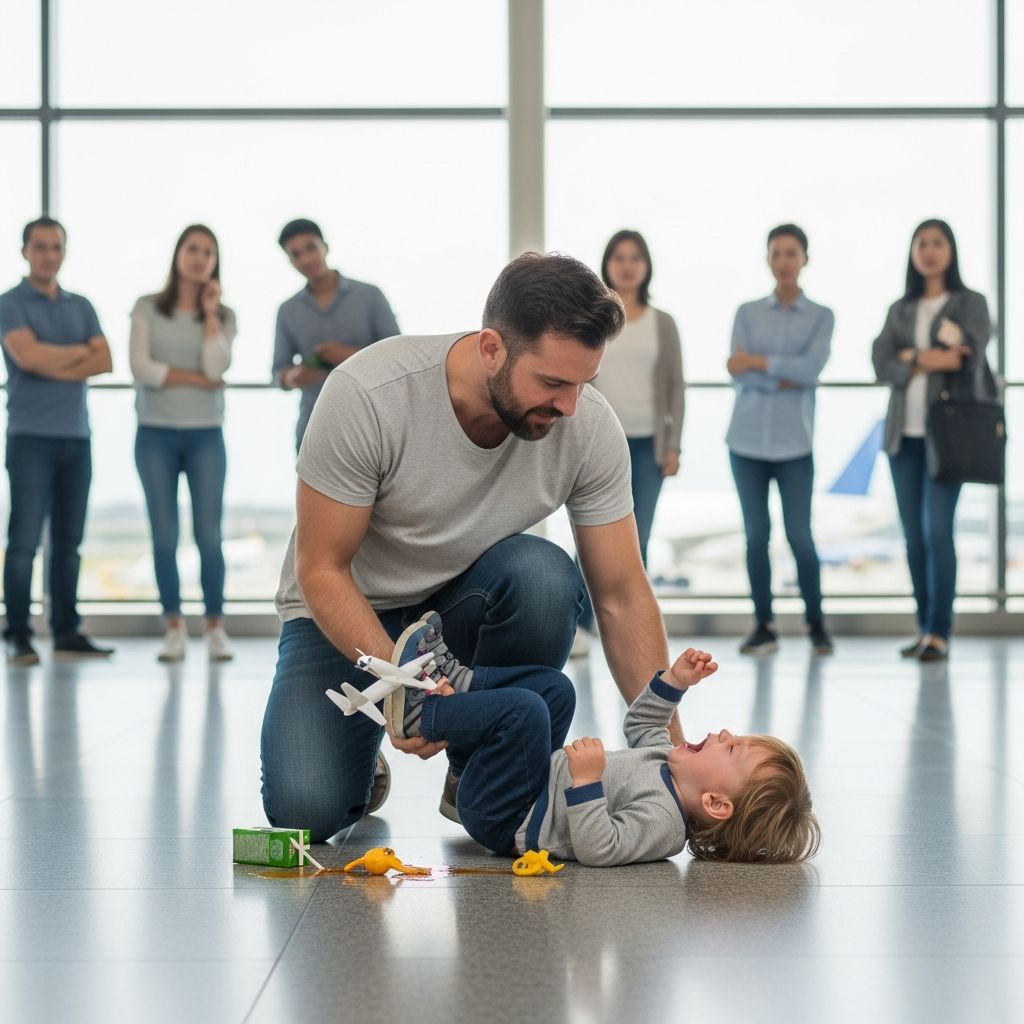
In the bustling chaos of an airport terminal, where patience wears thin and expectations run high, one father’s experience with his young child’s emotional outburst became a poignant reminder of the unspoken pressures on modern parents. This incident not only tested his resolve but also illuminated the broader challenges of navigating toddler behavior in public spaces.
Understanding the Roots of Toddler Emotional Outbursts
Toddlers, typically aged 1 to 3 years, possess brains that are still maturing, particularly in areas responsible for emotional control and rational thinking. When overwhelmed by stimuli like crowded environments, unfamiliar noises, or disrupted routines, their ‘downstairs brain’—the emotional, reactive center—takes over, sidelining logical responses. This neurological reality explains why seemingly minor triggers can escalate into full-blown meltdowns.
Research from child development experts emphasizes that these episodes are not acts of defiance but signals of distress. For instance, an 18-month-old might express discomfort through cries or resistance because they lack the vocabulary to articulate feelings. Airports amplify this: echoing announcements, rushing crowds, and anticipation of travel create sensory overload, pushing children beyond their limits.
A Father’s Raw Encounter Amid Airport Chaos
Picture a weary dad managing his toddler alone before a flight. The child, exhausted from travel preparations, refuses to enter the stroller, dissolving into tears and protests. Onlookers stare, some with sympathetic glances, others with visible irritation or whispered criticisms. The father, focused on comforting his son, feels the weight of judgmental eyes, amplifying his stress.
This scenario mirrors countless parental stories where public venues become arenas for unsolicited opinions. The dad’s internal monologue—questioning his parenting, feeling isolated—highlights a common emotional toll. Yet, his choice to prioritize connection over silencing the outburst demonstrated intuitive empathy, staying present without scolding or pleading.
The Sting of Stranger Scrutiny on Parents
Public judgment often stems from unrealistic expectations. Society romanticizes calm, compliant children, ignoring developmental stages. Parents report heightened anxiety in such moments, fearing their child appears ‘spoiled’ or themselves incompetent. This scrutiny can lead to shame, prompting reactive behaviors like over-apologizing or giving in to demands.
Studies on parental stress reveal that perceived judgment correlates with elevated cortisol levels, mimicking fight-or-flight responses. For fathers, societal stereotypes of stoic authority figures intensify this, making vulnerability feel like failure. However, reframing these incidents as normal fosters resilience.
| Common Public Judgments | Reality Based on Development |
|---|---|
| “Control your kid!” | Toddlers lack impulse control; brain maturation incomplete until age 5+. |
| “You’re too lenient.” | Meltdowns signal overload, not poor discipline. |
| “He should know better.” | Emotional regulation develops through co-regulation with caregivers. |
Empathetic Strategies for Managing Public Meltdowns
Effective handling begins with preparation and presence. Before entering high-stimulation areas, set simple expectations: “We’re going to the airport; it might be loud, but Mommy/Daddy is here.” This primes the child without overwhelming them.
- Observe and Validate: Kneel to eye level, acknowledge feelings: “I see you’re upset; this place is noisy.” Validation de-escalates by showing understanding.
- Maintain Calm: Your steady demeanor models regulation. Breathe deeply to avoid matching their intensity.
- Redirect Gently: Offer choices like a favorite toy or snack, avoiding power struggles.
- Exit Gracefully: If needed, step away to a quieter spot for reset.
Distraction tools prove invaluable: small toys, books, or games shift focus without rewarding the tantrum. Consistency matters—never cave to demands during outbursts, as it reinforces the behavior.
Building Long-Term Emotional Resilience in Children
Beyond immediate response, these moments teach vital skills. By empathizing without rescuing, parents help children integrate emotions, strengthening neural pathways for self-regulation. Over time, repeated calm interventions build a child’s ‘upstairs brain’ capacity.
At home, practice scenarios: role-play ‘no’ responses or waiting turns. Positive reinforcement for successes—like praising calm sitting—encourages repetition. Experts advocate for routines that include emotion naming: “You seem frustrated; let’s breathe together.” This vocabulary empowers toddlers.
Empowering Parents Against Societal Pressures
To combat judgment, cultivate an internal locus of control. Remind yourself: strangers lack context. Many empathize silently; vocal critics often project their frustrations. Online communities and parenting forums normalize these experiences, reducing isolation.
Fathers, in particular, benefit from support networks challenging ‘perfect dad’ myths. Sharing stories demystifies parenting, fostering solidarity. Professional resources, like pediatric guidelines, affirm that tantrums peak around age 2 and decline with development.
Practical Tools and Preventive Measures
Proactive planning minimizes risks:
- Schedule travel during nap times or with snacks handy.
- Use noise-canceling headphones for sensory-sensitive kids.
- Pack a ‘calm kit’: fidget toys, weighted blanket snippets, chews.
- Pre-flight routines: potty breaks, movement bursts.
For frequent flyers, apps tracking meltdowns help identify triggers like hunger or fatigue. Parental self-care—short mindfulness sessions—bolsters endurance.
| Age Group | Peak Tantrum Triggers | Recommended Interventions |
|---|---|---|
| 12-18 months | Sensory overload, separation | Holding, soothing words |
| 18-24 months | Frustration, limits testing | Validate + redirect |
| 2-3 years | Independence pushback | Choices, natural consequences |
Frequently Asked Questions (FAQs)
What should I do if my toddler has a tantrum in a crowded airport?
Stay calm, validate their feelings verbally, and find a quiet corner. Prioritize connection over quick fixes—modeling composure teaches more than words.
How can I avoid giving in to tantrums in public?
Set expectations beforehand and use firm, consistent ‘no’s without negotiation. Reward calm behavior later to reinforce positives.
Why do strangers judge parents during child meltdowns?
Many hold outdated views of discipline, ignoring toddler brain science. Focus on your knowledge of development to build confidence.
At what age do tantrums typically decrease?
Most peak at 18-24 months and lessen by age 3-4 as language and self-control improve, with consistent parenting.
Are public tantrums a sign of bad parenting?
No— they’re normal developmental milestones. Effective responses turn them into growth opportunities.
Lessons from the Airport: Turning Pain into Purpose
The dad’s story transcends personal hurt, urging parents to embrace vulnerability. By focusing on the child amid judgment, he exemplified responsive parenting. Such experiences cultivate deeper bonds, proving that true strength lies in empathy over perfection.
Ultimately, airports and beyond are microcosms of life’s unpredictability. Equipped with knowledge and tools, parents can navigate them, transforming potential embarrassments into testimonials of love and growth.
References
- Public Tantrums (Why They Happen and How to Avoid Them) — Janet Lansbury. 2018-07-01. https://www.janetlansbury.com/2018/07/public-tantrums-why-they-happen-and-how-to-avoid-them/
- How do I handle toddler tantrums in public places? — Upwards. 2019-09-30. https://upwards.com/post/how-do-i-handle-toddler-tantrums-in-public-places-666
- How to Handle Toddler Tantrums in Public — Nurtured First. N/A. https://nurturedfirst.com/toddler/public-toddler-tantrums/
- Public Displays of Disaster: What to Do When Your Child Loses It Outside the Home — Zero to Three. N/A. https://www.zerotothree.org/resource/public-displays-of-disaster-what-to-do-when-your-child-loses-it-outside-the-home/
- How to Prevent and Handle Public Tantrums With Calm, Confidence — Positive Parenting Solutions. N/A. https://www.positiveparentingsolutions.com/public-tantrums/