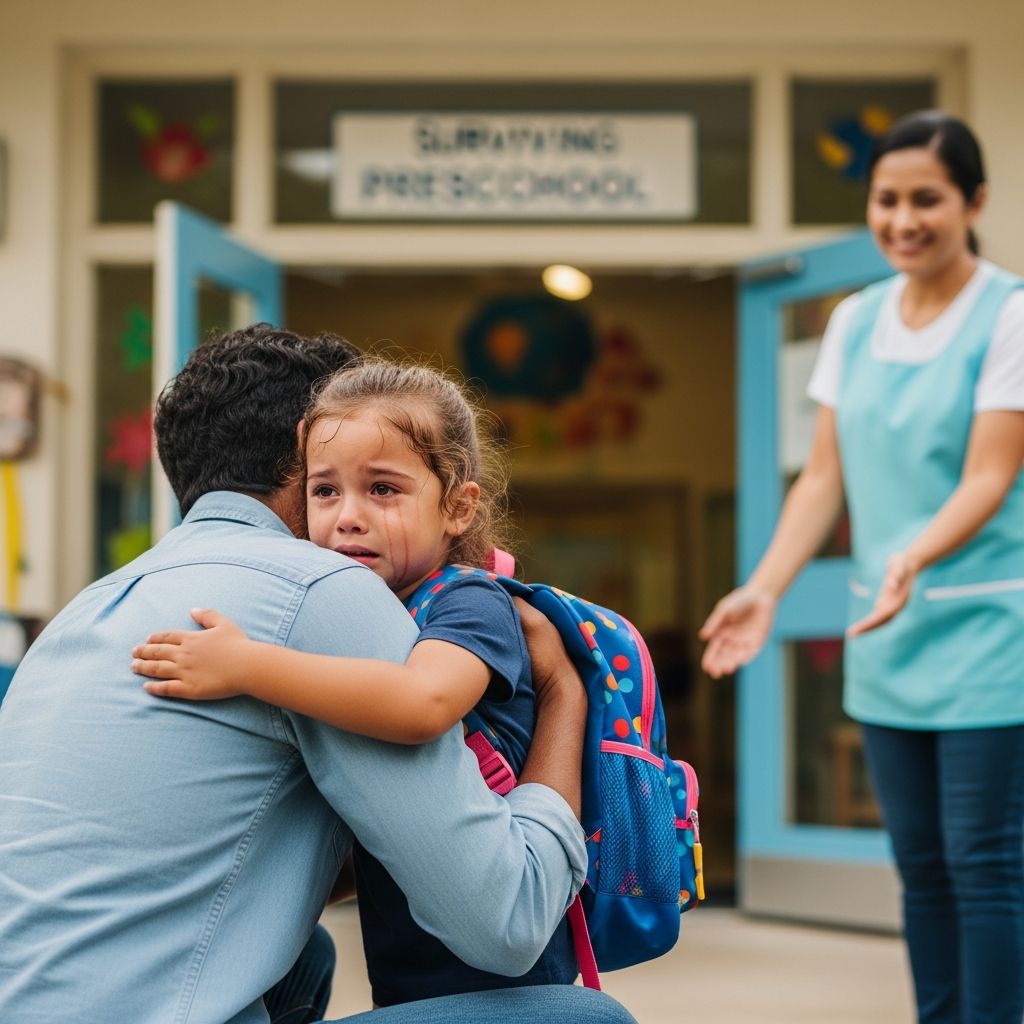
Preschool is often described as a joyful milestone, but many families discover that the reality can involve tears, clinging, and heartache at morning drop-off. When your child sobs as you walk away, it can feel like you are doing something wrong as a parent. In truth, separation tears are a normal response to a big change and, with support, most children adapt beautifully.
This guide walks through what is happening beneath the tears, how to prepare your child and yourself, and what to do in the moment when drop-off is really hard. It is written to be practical and kind, so you can protect both your child’s sense of safety and your own peace of mind.
Understanding What’s Really Going On
When a child cries at preschool drop-off, it is usually not a sign that preschool is a bad idea. Instead, it is a sign that the child’s attachment system and nervous system are working exactly as designed. Your child’s brain is wired to stay close to caregivers, and separation temporarily feels unsafe until new routines and relationships become familiar.
Think of drop-off not as a test of toughness, but as a slow building of trust: trust in the school, trust in the routine, and trust that you always come back. When you view it this way, your goal shifts from “make it stop” to “help my child feel safe enough to cope.”
Common Reasons Children Struggle at Drop-Off
Every child is different, but there are several common threads that tend to show up when preschool drop-off is tearful. Recognizing what might be underneath your child’s behavior can help you respond more effectively instead of feeling blindsided every morning.
- Fear of the unknown: New rooms, new adults, and new routines can feel overwhelming, especially for children who like predictability.
- Strong attachment to caregivers: A deeply attached child often shows their biggest feelings at goodbye, precisely because they feel safest with you.
- Sensitivity to sensory input: Loud classrooms, bright lights, and lots of movement can be overstimulating, making separation feel more intense.
- Previous stressful changes: Moves, new siblings, illness, or other transitions can make any new separation harder to tolerate.
- Developmental leap: Periods of rapid growth in language, motor skills, or independence sometimes come with clinginess and mood swings.
Before School Starts: Laying a Gentle Foundation
Preparation does not eliminate every tear, but it gives your child a mental map and a sense of control. When children know what to expect, their brains do not have to work as hard to scan for danger, and they can invest more energy in curiosity and play. A few small steps before the first day can make a big difference.
- Visit the space together: Walk around the building, peek into the classroom, and find the bathroom and cubbies. Treat it like a casual adventure, not an emotional exam.
- Practice mini separations: Do short, predictable stays with trusted relatives or sitters where you clearly explain when you will leave and when you will be back.
- Talk about preschool through play: Use dolls, stuffed animals, or simple drawings to act out going to school, saying goodbye, playing, and being picked up again.
- Anchor with a visual routine: Create a simple picture chart that shows the steps of the morning from waking up to arriving at preschool.
A Morning Routine That Calms, Not Rushes
Rushed mornings increase stress for everyone and leave very little room for connection. Children often cling more when they feel that you are already half-gone in your mind. Building a predictable routine supports a calmer nervous system for both parent and child.
| Time | Action | Connection Cue |
|---|---|---|
| Wake-up | Gentle wake, cuddles, brief snuggle in bed or on couch | Eye contact, soft voice, a simple “Good morning, I’m so glad to see you.” |
| Breakfast | Unhurried meal and simple chat about the day | Ask one fun question: “What do you hope to play with today?” |
| Getting dressed | Offer two choices of clothes or shoes | Let the child decide between the two to build a sense of control. |
| Before leaving | Five minutes of focused one-on-one play | Set a timer and tell your child, “This is our special play time before school.” |
| In the car / on the way | Simple ritual such as a song or gratitude game | Repeat the same short routine so it becomes familiar and predictable. |
Designing a Goodbye Ritual That Works
A clear, consistent goodbye ritual is one of the most powerful tools you have for easing preschool separation. Children are less distressed when they know exactly how long goodbyes will last and what will happen. A ritual also reminds your child, through repetition, that goodbyes are followed by reunions.
Your ritual does not need to be elaborate; it just needs to be predictable. Think of it as a tiny script that signals: “We are connected, this is safe, and I will be back.”
Ideas for Simple Goodbye Rituals
- A hug, a high-five, and a short phrase you use every day, such as “I love you, you’re safe here, I’ll see you after snack time.”
- A “pocket kiss” where you pretend to put a kiss into your child’s pocket or hand for them to hold during the day.
- A quick window wave or door wave in the same spot every morning.
- A tiny drawing or symbol you mark on their hand as a reminder that you are thinking of them.
What to Say When Your Child Is Crying
When faced with big tears, many adults feel torn between comforting and getting out quickly. It helps to have a few phrases in mind that are both warm and firm. The goal is to validate the feeling while calmly holding the boundary that school is happening and that you will be leaving.
Here are elements you can mix and match to create your own authentic language:
- Validate: “It’s really hard to say goodbye.”
- Normalize: “Lots of kids feel nervous when something is new.”
- Reassure safety: “Your teacher will take care of you. You are safe here.”
- Predict reunion: “I will come back after rest time, and we’ll read a book together.”
- Remain confident: “I know you can do this, even while you’re feeling sad.”
Speak briefly and calmly, then follow through with your goodbye ritual. Lengthy explanations or negotiations usually increase anxiety because they signal that you are unsure. Your quiet confidence is often more soothing than any specific sentence.
Staying Regulated Yourself
It is difficult to be calm and steady when your child seems desperate for you to stay. Parents sometimes carry intense guilt, worry that they are damaging the relationship, or feel judged by other adults. Your emotional state, though, has a powerful impact on how your child experiences the separation.
Supporting your own nervous system is not selfish; it is essential. When you are grounded, you can be both kind and clear, which communicates safety more effectively than any “perfect” script.
Quick Regulation Tools for Parents
- Take a few slow exhales before unbuckling your child from the car seat.
- Place your hand on your heart and remind yourself, “Feeling upset doesn’t mean this is wrong. We’re both learning.”
- Limit rushing by building in extra time, even if it means simpler breakfasts or fewer morning tasks.
- After drop-off, do something small but nurturing for yourself, such as a short walk or a warm drink.
Cooperating With Teachers and Caregivers
Your child’s preschool team can become valuable partners in smoother drop-offs. Share information about what comforts your child, while also listening to their perspective about what they observe after you leave. In many cases, children stop crying within minutes once engaged in play, even when goodbyes were intense.
Consider asking teachers simple questions: How long does the crying typically last? What activities or toys help my child settle? Would a specific staff member consistently meeting my child at the door help? Collaborating allows everyone to respond in a consistent, predictable way that builds trust for your child.
Comfort Objects, Photos, and Little Bridges From Home
Transitional objects—small items that connect home and school—can play a quiet but powerful role in easing separation. They act like emotional bridges between two important spaces in your child’s life. Be sure to coordinate with the preschool so that the item is allowed and practical in the classroom environment.
- A small stuffed animal or blanket that can stay in a cubby or backpack.
- A laminated family photo placed in your child’s locker or on their classroom hook.
- A simple bracelet or keychain that you both wear to “match” during the day.
- A tiny note or drawing with a heart or smiley face tucked into the lunch box.
When Tears Keep Returning
Some children adapt quickly after a few days of consistent routines. Others seem to cycle through progress and setback: three easy mornings followed by a week of tears, or renewed clinginess after an illness or vacation. This pattern is frustrating but usually normal. Each new round of practice offers another chance for your child’s brain to learn that separation and reunion are safe.
Look for slow, subtle growth rather than expecting a straight line. Shorter crying spells, quicker engagement with activities, or fewer physical complaints in the morning all count as progress. Celebrate those small steps with your child—not as pressure, but as encouragement: “You felt nervous and still played today. That was brave of you.”
Red Flags: When to Look Deeper
Most preschool drop-off struggles fall within the wide range of typical adjustment. However, it is wise to take a closer look or consult a professional if certain patterns appear. Trust your instincts if something feels off, even if other people minimize your concerns.
- Crying or panic that remains just as intense for many weeks without any shorter or calmer moments.
- Severe changes in sleep, appetite, or behavior at home that persist beyond the first adjustment period.
- Complaints of stomachaches, headaches, or other physical symptoms most mornings that are not explained by a medical condition.
- Reports from school that your child rarely engages in play or seems distressed for most of the day.
If these signs appear, consider talking with your pediatrician, a child therapist, or a school counselor. Their role is not to label your child negatively, but to help untangle what is happening and offer tailored support.
Supporting Siblings and the Whole Family System
A hard drop-off rarely affects just one child. Siblings may feel jealous of the attention, scared by the crying, or worried about what will happen when it is their turn to attend preschool. Naming what everyone is noticing can lower the emotional temperature for the whole family.
Consider simple ways to involve siblings and partners in the process:
- Explain in simple terms that the preschooler is practicing saying goodbye, and that big feelings are allowed.
- Give siblings small “helper” roles in the morning, such as handing over a backpack or choosing a song for the ride.
- Rotate which adult handles drop-off and which handles another special routine, like bedtime, to balance connection.
Frequently Asked Questions About Tearful Preschool Drop-Offs
Is it harmful to leave while my child is crying?
Crying alone is not harmful; it is a way for your child to express distress. What matters is that the separation is predictable, the caregivers are responsive, and reunions are warm and consistent. Over time, those repeated experiences teach your child that feelings can be intense and still end in safety.
Should I sneak out to avoid a meltdown?
It is usually better not to disappear without a goodbye. Sneaking away may prevent a brief outburst, but it can undermine your child’s sense of trust. A short, predictable goodbye ritual—even if it triggers some tears—helps build a reliable pattern your child can understand.
How long should I stay at the classroom door?
Most children do best when goodbyes are loving but brief. Lingering for a long time often creates a cycle where the child repeatedly escalates to keep you from leaving. A clear, practiced routine—arrive, connect, say goodbye, and go—tends to feel more manageable in the long run.
What if my child is fine at school but melts down at pickup?
It is very common for children to “hold it together” at school and release all of their pent-up feelings as soon as they see you. This does not mean they had a terrible day; it usually means they trust you with their hardest emotions. A calm, accepting response at pickup can be a powerful anchor.
How can I tell if the school is a good fit?
Beyond normal tears, pay attention to how staff respond to your child’s distress, how willing they are to communicate with you, and how your child gradually behaves over time. A supportive environment will show patience, consistency, and genuine care, even on the hardest mornings.
Helping Your Child Build Long-Term Coping Skills
Preschool drop-off challenges are not just something to endure; they are also an opportunity for your child to learn resilience. With your support, your child can develop internal tools for handling nervousness and change that will serve them far beyond the preschool years. The key is to pair structure with empathy so that bravery never feels like abandonment.
- Teach simple calming strategies, such as taking two slow breaths, squeezing a favorite toy, or asking the teacher for a hug.
- After school, reflect briefly on how they coped: “You felt sad, then you played blocks. Your feelings moved, and you kept going.”
- Share age-appropriate stories or books where characters feel nervous about school and find ways to manage.
- Model your own coping out loud: “I missed you today and I did my work, and now we are back together.”
With time, consistency, and compassion—for your child and for yourself—those wrenching drop-off mornings typically soften into routine goodbyes. The tears you see now are not a sign that preschool is a mistake; they are a sign that your child cares deeply about you and is learning, step by step, that love can stretch across the hours you are apart.