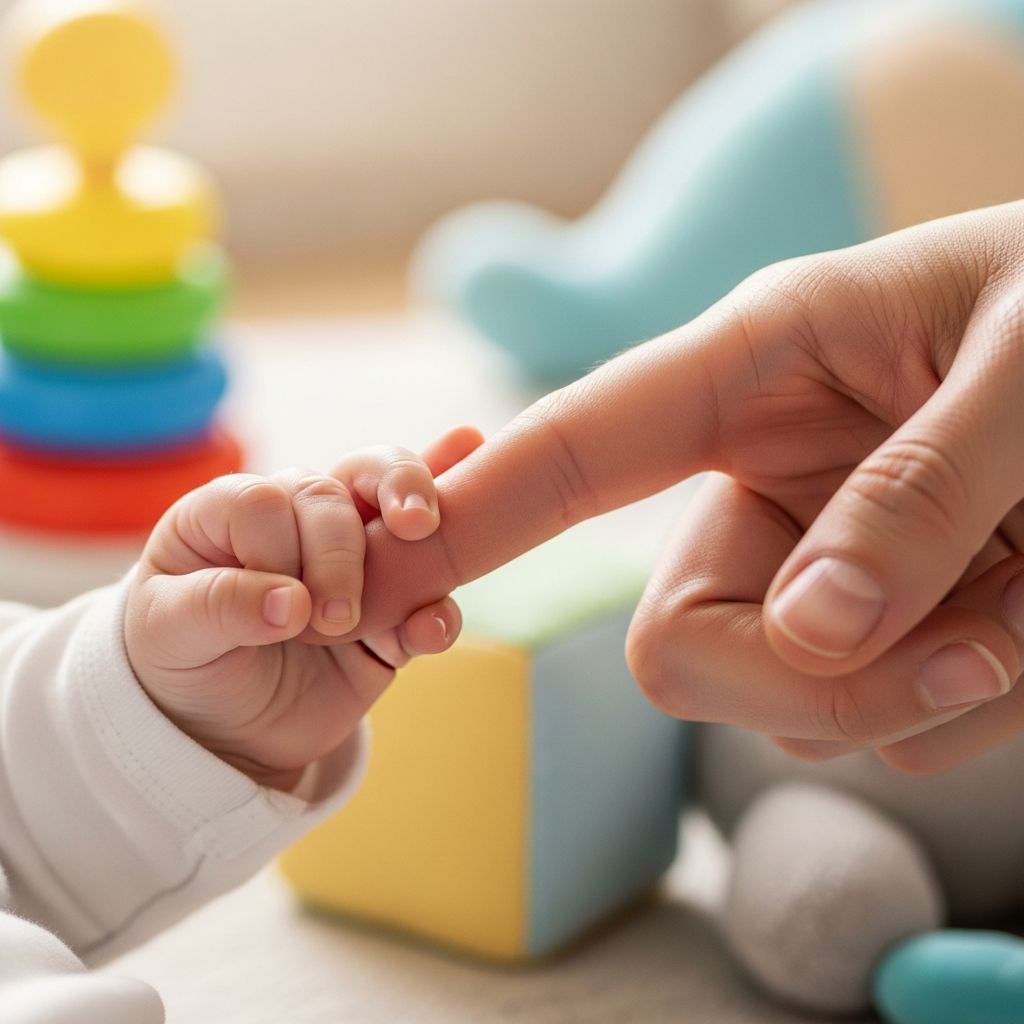
At some point in the first year, many caregivers discover that their sweet, squishy baby has a surprisingly strong grip. Glasses are yanked, hair is pulled, shirts are clawed at, and soft cuddles turn into tiny wrestling matches. This phase can be confusing and painful, but it is also deeply rooted in your baby’s development and curiosity.
Understanding The “Grabby” Phase
Grabbing is one of the most important ways babies explore their world. Before they can talk or walk, their hands do most of the investigating. They reach, pull, squeeze, and sometimes pinch because they are learning what things feel like, how cause and effect works, and how people respond.
For many babies, grabbing is also about connection. Your body, hair, and clothes are familiar, comforting, and always nearby, so they naturally become favorite targets. That does not mean you have to tolerate painful behavior; it simply means the behavior is not malicious or “naughty,” even when it really hurts.
Common Reasons Babies Grab, Pinch, And Pull
Different babies grab for different reasons, and the motive can even change from moment to moment. Looking at what happens before and after the grabbing can help you respond in a way that actually works.
- Sensory exploration: Babies are discovering textures, temperatures, and shapes. Hair, skin, and clothing all feel different and are incredibly interesting to a developing brain.
- Comfort and bonding: Touching your chest, neck, or face can be a self-soothing habit and a way to stay close to you, especially during feeds or while falling asleep.
- Curiosity and novelty: Glasses, jewelry, buttons, and zippers move, shine, or jingle, making them irresistible targets for tiny hands.
- Communication: Before speech, a baby may grab to say “Look at me,” “Pay attention,” or “I need something.” The behavior may increase if it reliably gets a big reaction.
- Teething and oral needs: Many babies want to pull objects toward their mouths, including clothing and body parts, when gums are sore or they crave oral input.
- Fatigue, overstimulation, or frustration: When a baby is tired, overwhelmed, or unable to express a feeling, grabbing can show up as a quick-release behavior.
When Is Grabbing Typical And When To Worry?
For most infants and young toddlers, grabby hands are a completely normal part of development. The behavior usually increases around the time they gain better hand control and fades as language and self-regulation grow.
| Pattern | Usually Typical | Worth Discussing With A Professional |
|---|---|---|
| Intensity | Occasional strong grabs or pinches, mostly during excitement, feeds, or play. | Very forceful grabbing that leaves frequent bruises or cuts, even with calm redirection. |
| Frequency | Happens in certain situations (tired, bored, on your lap). | Happens constantly across many settings and is difficult to interrupt. |
| Response to limits | Slowly improves with repeated gentle boundaries and redirection. | Does not change at all over time, even with consistent responses. |
| Other development | Reaching other milestones (eye contact, babbling, motor skills) on schedule. | Significant delays, lack of eye contact, or other behaviors that concern you. |
If your instincts are nudging you, it is always reasonable to bring up any worry with your pediatrician, especially if the behavior seems intense, rigid, or part of a bigger pattern that feels “off.” Early guidance can offer reassurance and, when needed, extra support.
Protecting Your Body While Staying Calm
You are allowed to protect your body. Loving your baby does not mean accepting pain, bruises, or ripped-out hair. In fact, calmly setting limits teaches your child that other people’s bodies matter and boundaries are real.
- Plan your positioning: If your baby always grabs your necklace during feeds, consider sitting in a different chair, wearing a higher neckline, or draping a soft scarf so your skin is less exposed.
- Secure vulnerable items: Remove earrings, long necklaces, and loose glasses when holding a very grabby baby, especially in busy or crowded places.
- Use your hands as shields: If you see the grab coming, gently place your hand between your baby’s hand and your hair, chest, or face and calmly redirect.
- Prepare simple phrases: Having a short line ready, such as “I won’t let you hurt my body” or “Ouch, that’s too rough,” keeps your response consistent and calm.
- Step away if needed: If you feel your own frustration rising, it is okay to put the baby safely down for a moment and take a few breaths.
Teaching Gentle Hands: Step-By-Step
Babies learn through repetition and consistency. A clear, predictable response each time they grab teaches more effectively than long explanations. Think of it as a simple three-step rhythm you repeat over and over.
Step 1: Pause And Acknowledge
Instead of yelping or dramatically reacting, take a breath and use a steady voice. You can name what just happened in a short, neutral way.
- Keep your tone calm and your words brief.
- Avoid laughing (which can look like a fun game) or shouting (which can be scary but still attention-grabbing).
Step 2: State The Boundary
Your baby may not understand every word, but they will feel the clarity in your tone and body language. Use the same phrase each time so it becomes familiar.
- Example phrases: “That hurts,” “Not my hair,” “Hands stay gentle.”
- Keep phrases positive when possible by telling them what to do instead of only what not to do.
Step 3: Redirect The Hands
Right after stating the boundary, gently move your baby’s hands away and offer something more appropriate to grab. Over time, this pairing is what creates change.
- Physically guide their hand to a toy, blanket, or safe object they can squeeze or chew.
- If you are holding them, you might lower them to your lap or the floor so the source of temptation (your hair, chest, or face) is out of easy reach.
- When you see a gentle touch, comment warmly: “Soft hands, thank you.” Positive feedback helps gentle behavior return.
Smart Redirection Ideas For Grabby Hands
Having alternatives ready can turn a painful moment into simple redirection. Aim for items that satisfy the same need your baby is expressing with the grab.
- For sensory seekers: Offer crinkly cloth books, textured balls, silicone teethers, or a soft brush they can stroke.
- For babies grabbing jewelry and clothing: Wear baby-safe necklaces or bracelets designed to be pulled and chewed, so your body is not the main attraction.
- For teething: Keep a rotation of chilled teething toys or washcloths in the fridge that can be quickly swapped in when you feel the grab start.
- For attention and interaction: Start a hand game (pat-a-cake style), a high-five routine, or a simple finger puppet show so hands are “busy with you” in a safe way.
- For boredom: Change the view—move rooms, step outside, or let your baby explore a safe household basket (wooden spoon, soft cloth, large plastic cup).
Creating A Gentle Boundaries Routine
Babies learn fastest when the same behavior leads to the same outcome every time. That does not mean perfection—just a predictable pattern that your baby can start to rely on.
Here is a simple routine many caregivers find useful:
- Notice the cue: Watch for early signs like wide eyes, reaching hands, or a familiar lean toward your hair or chest.
- Block and label: Gently block the grab, say your boundary phrase, and keep your facial expression calm and steady.
- Offer an alternative: Introduce a toy, teether, or game and help your baby engage with it for a few moments.
- Change the environment if needed: If grabbing continues, shift positions, stand up, or move your baby to the floor or a play mat.
- Reinforce the gentle behavior: When you see softer hands or a different choice, respond with warmth, smiles, or a few special words.
Supporting Yourself Emotionally
Being grabbed, pinched, or clawed at all day is draining, especially if you are also tired, touched-out, or recovering from birth. Feeling annoyed or even angry in those moments does not mean you are a bad parent; it means you are human.
- Normalize your frustration: Remind yourself that many caregivers struggle with this phase. You are not alone and not failing.
- Build in touch breaks: When possible, hand your baby to another trusted adult, use a safe play space, or take a short walk alone to reset your nervous system.
- Adjust your expectations: Because repetition is necessary, improvement is usually slow and gradual. Aim for progress, not instant change.
- Seek connection: Sharing your experiences with other parents, online or in person, can lighten the emotional load and provide new ideas.
Practical Situations And How To Handle Them
Grabby behavior often appears in the same contexts over and over. Planning ahead for those specific moments makes it easier to stay calm and consistent.
During Nursing Or Bottle-Feeding
- Offer a dedicated “feeding toy” or small lovey only used during feeds so hands stay focused.
- Wear a nursing necklace or bracelet that can be safely pulled, twisted, or chewed.
- If grabbing intensifies when your baby is tired, try adjusting the schedule so feeds happen before they are completely exhausted.
When Being Held Or Carried
- Use carriers or slings that keep your baby’s hands closer to their own body rather than free near your hair and face.
- Position your baby slightly to the side instead of directly front-facing so your most vulnerable areas are not right in reach.
- Keep one hand gently guiding or resting on their hands during transitions, like standing up or sitting down.
Around Other Children And Caregivers
- Explain to older siblings that the baby is still learning and that it is okay to say “no” and move away if it hurts.
- Ask grandparents or friends to use the same simple phrases and redirection steps so your baby receives consistent messages from everyone.
- Supervise closely when your baby is near other small children or pets, since curious hands can easily grab tails, ears, or hair.
Gentle Discipline For The Youngest Babies
Discipline for babies is less about punishment and more about guidance. At this age, your role is to prevent harm, model respect, and shape habits through repetition rather than consequences.
- Avoid shaming or scolding: Harsh words or angry tones can be confusing and overwhelming without teaching the baby what to do instead.
- Skip complicated lectures: Long explanations are more for your own release than for your baby’s understanding. Keep words short, clear, and kind.
- Use natural, logical outcomes: If your baby cannot keep hands gentle while being held, the natural outcome might be moving to the floor to play where grabbing is less likely.
- Focus on what you can control: You can control your own response, the environment, and the alternatives you offer—not your baby’s impulses.
Quick Reference: Do’s And Don’ts For Grabby Babies
| Do | Don’t |
|---|---|
| Stay as calm and consistent as you reasonably can. | Yell, scare, or shame your baby for grabbing. |
| Use a short phrase and the same response each time. | Change your reaction dramatically from day to day. |
| Redirect hands to safe, interesting alternatives. | Expect your baby to simply stop without anything else to do. |
| Protect your own body and comfort levels. | Ignore your own pain or pretend it does not matter. |
| Ask for help and take short breaks when needed. | Try to push through endless touching without rest. |
Frequently Asked Questions
Is my baby being aggressive on purpose?
No. Babies do not yet have the impulse control, empathy, or understanding needed to intentionally hurt others in the way adults think of aggression. What looks like “meanness” is usually curiosity, excitement, or frustration plus underdeveloped motor control.
Will responding calmly “spoil” my baby?
Responding with calm boundaries does not spoil babies. You are teaching that other people’s bodies matter while still providing safety and connection. Over time, a baby who experiences consistent, gentle limits is more likely to respect boundaries, not less.
How long does this grabby phase last?
The most intense phase usually lasts a few months, often peaking when your baby first masters reaching and gripping strongly. As other skills—like crawling, walking, and using words—develop, most children naturally move on from constant grabbing to other forms of exploration.
What if my baby laughs when I say “ouch” or “no”?
Laughter at this age does not mean your baby is enjoying your pain. It may be a reaction to your animated face, tone, or the sudden change in energy. Try softening your facial expressions, shortening your words, and immediately redirecting their hands to a safe object.
When should I talk to a professional?
Consider speaking with your pediatrician or another qualified professional if the grabbing is extremely intense, does not improve at all with consistent limits, interferes with daily routines, or if you notice other developmental differences that concern you. Trust your inner sense—if something feels off, it is worth a conversation.
Key Takeaways For Tired Caregivers
- Your baby’s grabbing is usually a normal developmental behavior, not a character flaw.
- You are allowed to have and enforce boundaries around your own comfort and pain.
- Calm repetition—short phrase, gentle block, redirection—is your best long-term tool.
- Prepared environments and objects make it easier to guide hands toward safer options.
- Seeking support for yourself is as important as shaping your baby’s behavior.
This phase will not last forever, even if the days feel long. With simple tools, patience, and a focus on gentle boundaries, you can protect your body, support your baby’s development, and keep your relationship at the center of it all.