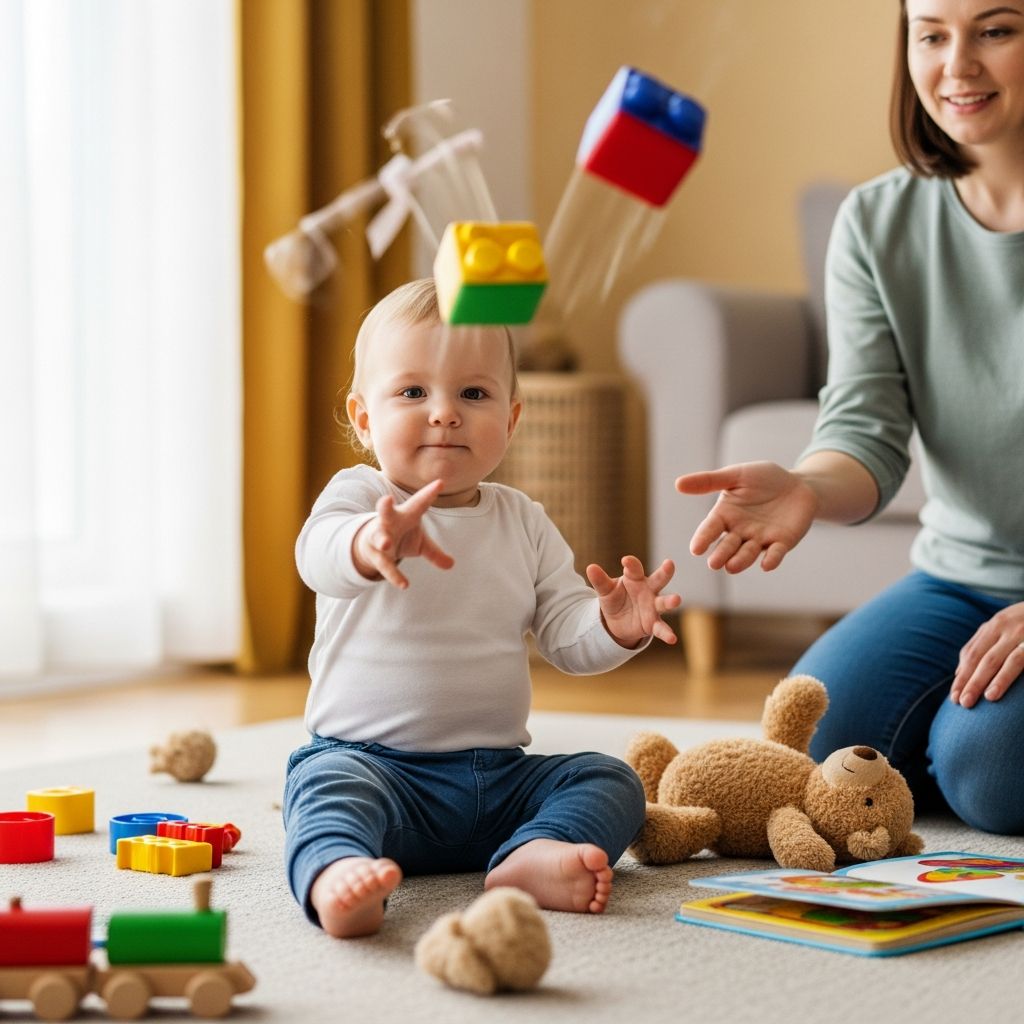
When a 14-month-old gleefully tosses food, cups, toys, and anything else they can reach, it can feel like a daily battle between order and chaos. Yet this frustrating phase is also a powerful stage of brain development, learning, and emotional growth. With the right approach, you can protect safety, reduce the mess, and actually strengthen your relationship at the same time.
What “Throwing Everything” Really Means
Throwing at this age is much more than “bad behavior.” It is a form of exploration, communication, and emotional release. Your toddler is not plotting to annoy you; they are testing their new abilities and your responses to them. Understanding what throwing communicates helps you respond with skill rather than sheer frustration.
Most 14-month-olds throw because they are learning cause and effect, exploring gravity, experimenting with your reactions, and managing big feelings with the tiny amount of self-control they currently have. Seen this way, throwing is a signal, not a moral failing.
Common Reasons Toddlers Throw Objects
Different motives can look similar on the surface. A cup tossed from the high chair could be a game, a protest, or a plea for connection. When you know the “why” behind the behavior, your response becomes far more effective and less emotional.
- Curiosity: Your child wants to see what happens when something drops, bounces, breaks, or splashes.
- Motor practice: Throwing builds arm strength, hand–eye coordination, and body awareness.
- Attention: A dramatic reaction from you can turn tossing into a reliable way to get noticed.
- Communication: A child with limited words may throw to say “I’m done,” “I’m bored,” or “I’m upset.”
- Emotion release: Overwhelm, fatigue, or frustration can spill out as throwing, especially late in the day.
Normal Development vs. Red Flags
It helps to distinguish typical exploratory throwing from patterns that may need extra attention. Most toddlers move through this phase with consistent guidance, but parents sometimes worry they are “creating a monster” or missing a serious problem.
| Typical, Developmental Throwing | Signs To Monitor or Discuss With A Professional |
|---|---|
| Throwing mostly soft or nearby objects during play or meals. | Frequently aiming hard or heavy objects directly at people or pets. |
| Laughing or watching closely to see your reaction. | Appearing detached, unusually intense, or repeatedly aggressive. |
| Stopping or slowing when given calm, consistent limits. | Escalating even after many weeks of steady guidance. |
| Using throwing alongside other play and interests. | Spending long periods almost only throwing or crashing objects. |
| Gradually improving by age 2–3 with practice and language growth. | Combined with delayed language, lack of eye contact, or other developmental concerns. |
Trust your instincts: if something feels “off,” noting specific examples and discussing them with a pediatrician or child development professional is wise. Early reassurance or support is always more helpful than silent worrying.
Staying Calm When Everything Is Flying
Even the most patient caregiver has a limit, and a fork narrowly missing your face can push you past it. While you cannot control everything your toddler does, you can control the tone you bring to the situation. That tone becomes your child’s model for how to handle frustration.
- Pause before reacting: Take a breath, unclench your jaw, and plant your feet. A two-second pause can prevent yelling.
- Use a neutral face and voice: Dramatic reactions can unintentionally reward the behavior with excitement.
- Remind yourself: “This is a normal phase. My job is to guide, not to win.” That mental shift reduces the power struggle.
- Plan a script: A simple phrase like “Not for throwing. I’ll help” is easier to say calmly when you are stressed.
Setting Clear, Kind Limits
Limits are not the opposite of love; they are one of the clearest ways love shows up in daily life. Toddlers feel safer when they know that certain lines do not move, especially around safety and respect for people.
At 14 months, limits must be short, concrete, and paired with action. A child this young will not change behavior because of a long lecture, but they will learn through consistent, calm follow-through.
- State the rule simply: “We don’t throw at people,” or “Food stays on the tray.”
- Combine with gentle action: Move the object out of reach, shift your child’s hand, or change their position.
- Repeat, don’t argue: Use the same brief phrase instead of escalating the volume or number of words.
- Follow through consistently: If the rule is “If you throw the cup again, the meal is done,” keep that promise calmly.
Redirecting Throwing Into Safe Play
Saying “no” over and over is exhausting for everyone. A more sustainable approach is to create clear “yes” channels: safe ways your toddler can do what their body is craving without hurting people or breaking belongings.
Redirection works best when it is concrete, immediate, and appealing. Instead of just stopping the behavior, you show your child what to do with that urge.
Ideas for Safe Throwing Outlets
- Soft balls tossed into a laundry basket or box.
- Beanbags thrown at a soft target on the wall or couch.
- Rolled socks tossed into a bucket during laundry time.
- Balloons batted back and forth for a gentler throwing sensation.
- Outdoor play with leaves, pinecones, or foam balls where distance is safer.
When redirecting, you might say something like, “Ouch, blocks can hurt. Blocks are for building. Balls are for throwing—let’s throw these!” Then guide their hand to the new activity and show obvious delight when they use it.
Making Mealtimes Less Messy
High-chair throwing can feel like a personal challenge to your authority, especially after cooking a meal. In reality, it often means your toddler is full, tired, overstimulated, or simply fascinated by what falls and splats.
With some simple routines and environment tweaks, you can reduce the volume of flying food and help your child learn that mealtime has a clear beginning and end.
Practical Mealtime Strategies
- Serve small portions: Offer just a few bites at a time to limit what can be thrown at once.
- Watch for “all done” cues: Turning away, arching back, or consistently throwing may mean the meal is over.
- Teach a signal: Model a simple sign or phrase like “All done” while removing the plate when they seem finished.
- Stay neutral about floor food: If something is tossed, briefly pick it up or leave it, but avoid dramatic reactions.
- End the meal calmly: After repeated throwing, say, “Food is for eating. Looks like you’re done,” and take the tray away.
Supporting Big Feelings Behind the Throwing
Sometimes the object is not the point at all; it is the emotion behind the throw that needs attention. A toddler without many words may hurl a toy because they cannot explain that their block tower fell or that you just took away something important to them.
Responding to the feelings—rather than only the behavior—teaches your child that all emotions are welcome, even when some actions are not.
- Describe what you see: “You are so mad that the puzzle won’t fit.” This helps them connect feelings to words.
- Offer a safe outlet: A pillow to push, a soft toy to squeeze, or your arms for a hug if they want it.
- Hold the limit: “I won’t let you throw the truck. Trucks stay on the floor,” while you gently block or remove it.
- Stay close: Your calm presence while they cry or rage shows that emotions can be survived, not feared.
Shaping Behavior With Positive Attention
Behavior that consistently earns attention tends to grow. If your toddler mainly gets intense eye contact, firm tones, and physical engagement when they throw, the throwing is likely to continue—whether or not the attention is “positive.”
Instead, deliberately shine your spotlight on the behavior you want more of. This does not mean ignoring unsafe behavior; it means balancing correction with generous recognition of small successes.
- Notice when your child sets an object down gently and describe it: “You put the block in the box. That’s so gentle.”
- Celebrate safe throwing games: “You’re throwing the ball into the basket! Your arms are so strong.”
- Offer hugs, smiles, and brief specific comments when they follow a limit, even if it took a few tries.
- Use playtime to connect so they do not need misbehavior to feel seen.
Tailoring Your Response to Different Situations
Not all throwing is equal. The same child might throw for fun in the morning and from overwhelm at bedtime. Adjusting your response to the context makes your guidance more humane and more successful.
| Scenario | Likely Need | Helpful Adult Response |
|---|---|---|
| Playful throwing of soft toys in the living room. | Movement, game, shared joy. | Join briefly with a safe target game, then transition to another activity when energy winds down. |
| Throwing hard blocks at a sibling. | Boundary-testing or frustration. | Block the throw, move the blocks, state the rule, and redirect to soft balls or a calmer solo activity. |
| Food repeatedly thrown from the high chair after a few bites. | Fullness, boredom, or fatigue. | End the meal with a brief explanation; offer a different sensory activity or rest instead of more food. |
| Throwing at the grocery store when asked to sit in the cart. | Overstimulation, need for control. | Give a small job (holding a list, putting items in the cart), keep the trip short, and use a few simple rules. |
Protecting Yourself and Siblings
Safety comes first. Compassion for your child’s stage does not require tolerating genuine risk. Creating a safer environment and predictable consequences keeps everyone more relaxed.
- Remove particularly dangerous objects from reach during vulnerable times, like late afternoons.
- Use gates or play yards to define a secure play zone when you cannot be directly involved.
- Teach siblings to move away and call you, rather than retaliating, if they become targets.
- When injury risk is high, end the activity, give a brief explanation, and allow a reset in a calmer space.
Taking Care of Yourself in This Phase
Parenting through constant messes and mini-battles is draining. Your ability to stay calm, set limits, and respond creatively depends heavily on your own rest, support, and emotional reserves.
Self-care at this stage is not luxurious; it is practical. Small, consistent choices can make you far more resilient when the next cup goes flying.
- Lower the bar in other areas: simpler meals, fewer chores, or less screen-free perfectionism for a season.
- Ask for concrete help from partners, friends, or family, such as cleanup support or a short solo break.
- Share the story with another adult who understands so you feel less alone and more lighthearted.
- Remind yourself that this phase will pass; your calm consistency is building the foundation for future cooperation.
Frequently Asked Questions About Toddler Throwing
1. Is it my fault that my toddler throws everything?
No. Throwing is a typical part of toddler development, not proof that you have failed as a parent. Your child’s brain is wired at this age to practice new motor skills and explore how the world works, which naturally includes dropping and tossing objects.
Your influence shows up in how you respond. Calm boundaries, safe outlets, and patient repetition will gradually shape more appropriate behavior over time.
2. Should I punish my 14-month-old for throwing?
Harsh punishment is not effective for a child this young because they lack the impulse control and understanding to connect a delayed or intense consequence with their action. What they learn most clearly is that strong emotions are dangerous or that your love is unpredictable.
Instead of punishment, focus on immediate, gentle limits and redirection. Ending an activity, moving a toy out of reach, or transitioning to a different space are more age-appropriate ways to communicate “this behavior has a consequence.”
3. How long does this throwing phase last?
The most intense throwing stage often spans from around the first birthday into the middle of the second year, but the exact timeline varies. As language, understanding, and self-control grow, most children naturally throw less frequently and more purposefully.
Consistent responses, opportunities for safe physical play, and support for emotional expression can all shorten the most challenging part of the phase and set the stage for better self-regulation later on.
4. What if my toddler laughs when I say no?
Laughing at your firm tone can feel infuriating, but it does not mean your child is being deliberately disrespectful. More often, they are unsure what to do with the intensity of your reaction or they see it as part of a game.
Try softening your facial expression, reducing your words, and calmly following through instead of increasing the drama. Over time, your steady actions will communicate the limit more clearly than any speech.
5. When should I talk to a professional about my child’s throwing?
It can be helpful to seek advice if your child frequently aims hard objects at people, seems unusually aggressive or disconnected, or shows other developmental concerns such as limited eye contact, few gestures, or very little interest in people. Trust your observations; you know your child best.
Bringing specific examples and patterns to a pediatrician or child development specialist allows them to give more tailored guidance and reassurance or to suggest further evaluation if needed.
Seeing your 14-month-old throw everything can be maddening, but it is also a clear window into a brain that is busy wiring new skills and a heart that needs steady, warm guidance. By combining firm, loving limits with safe outlets and emotional support, you help your child move from chaos toward self-control—one tossed spoon at a time.