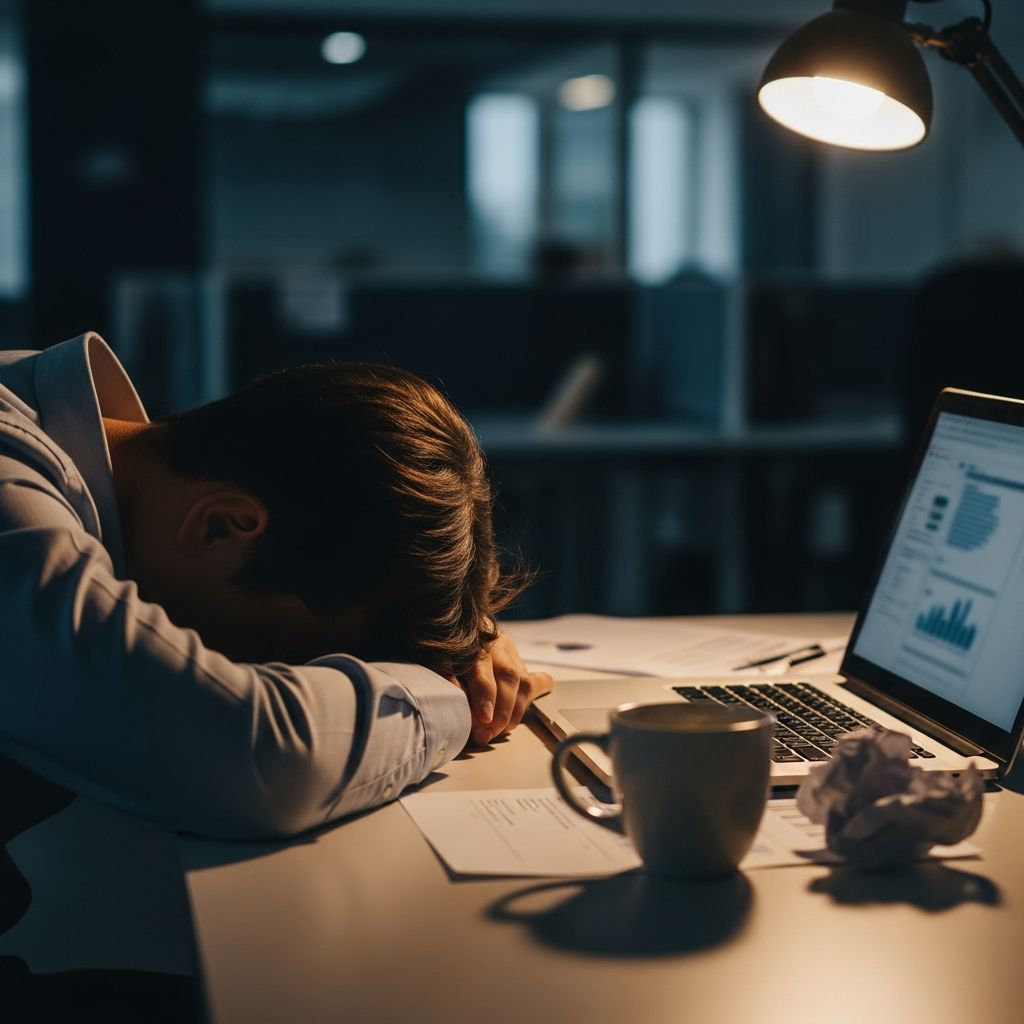
Going to work after a night of terrible sleep is sometimes unavoidable, especially for new parents, shift workers, caregivers, and people under heavy stress. You cannot fully “hack” biology, but you can learn to minimize the damage, get through the day more safely, and protect your long-term health.
This guide explains what sleep loss does to your brain and body, why it crushes job performance, and what you can practically do today—and over the long term—to cope.
Why Sleep Loss Hits Work Performance So Hard
Sleep is not a luxury; it is a core biological need that keeps your brain and body functioning normally. The U.S. National Heart, Lung, and Blood Institute notes that ongoing sleep deficiency impairs how well you think, react, work, learn, and get along with others. Harvard sleep researchers similarly warn that chronic sleep loss is linked with obesity, diabetes, cardiovascular disease, and even early mortality.
What Happens After a Short Night of Sleep?
Even a single night of poor sleep can cause noticeable changes the next day:
- Slower thinking and reactions – Neurons become overworked, impairing attention, decision-making, and coordination.
- Foggy memory – It becomes harder to hold and process information, follow conversations, or keep track of details.
- Emotional volatility – You may feel more irritable, stressed, or emotionally reactive, which strains workplace relationships.
- Microsleeps – Brief, uncontrollable lapses into sleep lasting seconds, which can be extremely dangerous when driving or operating machinery.
When One Bad Night Becomes a Pattern
Chronic sleep deprivation—regularly getting less than the recommended 7–9 hours per night—has deeper health consequences. The UK Health Security Agency highlights links between ongoing short sleep and high blood pressure, heart disease, diabetes, and increased vulnerability to infection. The American Heart Association also points to associations between insufficient sleep and stroke, obesity, and Alzheimer’s disease.
In other words, “powering through” on little sleep day after day is not just uncomfortable; it is physically dangerous.
The Hidden Safety Risks of Working Tired
Feeling tired is only part of the problem. When you are sleep-deprived, you often underestimate how impaired you really are. Research shows that after many hours awake, people feel “okay” even when their judgment, reaction time, and coordination are significantly reduced.
| Sleep Situation | Likely Effects at Work | Key Risks |
|---|---|---|
| One short night (4–5 hours) | Sleepiness, lapses in attention, irritability | Minor mistakes, poor decisions, conflict with coworkers |
| ~17 hours continuously awake | Notably impaired judgment and coordination | Errors while driving, using tools, or handling data |
| 24+ hours awake | Cognitive impairment comparable to intoxication | Serious safety incidents, poor risk assessment |
Because you may not notice how compromised you are, it is essential to build in protective routines for those days you know you are sleep-deprived.
Morning: Stabilize Yourself Before Work
You cannot magically become well-rested, but you can make smart choices before your shift begins.
1. Do a Quick Self-Check
Spend two minutes honestly assessing your state:
- Are you having trouble focusing your eyes or reading simple text?
- Do you feel waves of sleepiness or catch your head nodding?
- Would you feel safe driving a long distance right now?
If the honest answer is “no,” you are likely at higher risk of microsleeps and slow reactions, which can be dangerous in safety-sensitive roles.
2. Make a Transportation Decision
For days you are severely sleep-deprived, consider alternatives to driving:
- Public transit, taxi, or rideshare
- Carpooling with a well-rested colleague or partner
- Working remotely if your role allows it
This is especially important if your job also involves driving, heavy machinery, or precision work.
3. Use Caffeine Strategically
Caffeine can temporarily improve alertness, but it cannot fully reverse the effects of sleep loss. To minimize crashes and nighttime disruption:
- Have a moderate dose (for many adults, about 80–200 mg) in the morning.
- Avoid large caffeine doses or energy drinks, which can cause jitters and rebound fatigue.
- Stop caffeine at least 6 hours before bedtime to avoid further sleep disruption.
At Work: Managing Tasks When You’re Running on Empty
When you are short on sleep, the goal shifts from maximum productivity to safe, sustainable functioning. This means adjusting expectations and changing how you organize your day.
4. Reorder Your To-Do List
Sleep deprivation strongly affects concentration, memory, and complex thinking. Restructure your tasks accordingly:
- Do essential, simple tasks first while your caffeine is working and your alertness is highest.
- Delay non-urgent complex work (strategic planning, detailed analysis, creative problem-solving) until you are rested.
- Break big tasks into small, clearly defined steps and checklists to compensate for reduced working memory.
5. Double-Check Anything Safety-Critical
Because reaction time and decision-making are impaired, build redundancy into important work:
- Ask a colleague to review calculations, emails, or decisions that have major consequences.
- Use written checklists for procedures, especially those you usually “do on autopilot.”
- Slow down when handling hazardous equipment or sensitive data.
6. Schedule Short, Frequent Breaks
The Sleep Foundation notes that chronic tiredness erodes creativity, focus, and motivation at work. On low-sleep days, micro-breaks act like a reset:
- Every 60–90 minutes, take a 3–5 minute break away from screens.
- Stand, stretch, or walk to a window or down the hallway.
- If possible, get brief exposure to natural daylight, which can boost alertness.
7. Eat for Steady Energy, Not Quick Highs
Sleep loss can push you toward sugary snacks and heavy comfort food, which may cause energy crashes. To keep your energy more stable:
- Prioritize protein and fiber (eggs, yogurt, nuts, beans, whole grains, vegetables).
- Aim for smaller, more frequent meals rather than one huge lunch.
- Drink water regularly; mild dehydration can worsen fatigue and headaches.
8. Communicate (Selectively) About Your Fatigue
If your lack of sleep could affect safety or reliability, consider a brief, professional heads-up to a trusted supervisor or teammate:
- Explain that you are tired, not that you are incapable.
- Request support for double-checking critical tasks or adjusting deadlines where possible.
- Avoid oversharing personal details if you do not feel comfortable.
Emergency Measures: When You’re Approaching Your Limits
There are moments in the workday when fatigue becomes overwhelming. Recognizing those points early can prevent accidents and mistakes.
9. Use Controlled Power Naps (If Possible)
Even very short naps can reduce sleep pressure and improve alertness for a few hours. Where your workplace allows it:
- Nap for 10–20 minutes during a break or lunch.
- Set an alarm and lie somewhere safe and quiet.
- Combine a small coffee followed by a quick nap; caffeine kicks in as you wake, providing an extra boost.
Avoid longer naps (over 30–40 minutes) during the workday, as waking from deep sleep can cause intense grogginess.
10. Recognize When You Should Not Be Working
If you experience any of the following, you may be too impaired to continue safely:
- Repeated microsleeps (eyes closing, head dropping)
- Inability to keep track of simple instructions
- Near-miss incidents with equipment, vehicles, or tools
- Feeling disoriented or confused about where you are in a task
In safety-critical roles, this is the time to stop, inform someone, and step away if at all possible.
After Work: Protecting Your Next Night of Sleep
Surviving one rough day does not matter if you repeat the same pattern every night. What you do after work can either deepen the sleep debt or help you recover.
11. Avoid the “Revenge” Late Night
When you have had a bad day, it is tempting to stay up late scrolling, gaming, or watching TV to reclaim some “me time.” Unfortunately, this only increases sleep debt and impairs you again tomorrow. Sleep experts emphasize the importance of consistent sleep schedules—going to bed and waking at about the same times each day—to improve both sleep and daytime performance.
12. Create a Simple Wind-Down Routine
Even when you are exhausted, stress and screen exposure can keep your brain wired. To make it easier to fall asleep:
- Set a bedtime alarm to remind you to start winding down.
- Dim lights and avoid bright screens 30–60 minutes before bed.
- Do a calming activity: reading paper books, light stretching, or gentle breathing exercises.
13. Keep Naps Short and Early (If You Must Nap After Work)
If you are dangerously tired after work, a brief nap may be necessary. To avoid ruining the coming night of sleep:
- Limit after-work naps to 20–30 minutes.
- Avoid napping within 3–4 hours of your planned bedtime.
Long-Term: When Working Tired Becomes the Norm
If you frequently go to work sleep-deprived, it is time to address the underlying causes. Chronic sleep deficiency is associated with hypertension, high cholesterol, diabetes, heart disease, and mental health problems like anxiety and depression.
14. Audit Your Sleep Barriers
Common obstacles include:
- Shift work or very early/late hours
- Childcare and caregiving responsibilities at night
- High stress, rumination, or anxiety at bedtime
- Heavy use of caffeine, alcohol, or screens in the evening
- Untreated sleep disorders such as insomnia or sleep apnea
15. Improve Sleep Hygiene Where You Can
Evidence-based sleep habits include:
- Keeping a regular sleep schedule (including weekends when possible).
- Creating a dark, quiet, cool bedroom environment.
- Limiting caffeine late in the day and alcohol close to bedtime.
- Reserving bed for sleep and intimacy, not work or endless scrolling.
16. Talk to a Professional if Problems Persist
If you consistently struggle to sleep or feel rested, discuss it with a healthcare provider. The Cleveland Clinic notes that chronic sleep deprivation can lead to high blood pressure and lipid problems, among other issues, and that treating underlying conditions (like sleep apnea) is key to recovery.
Mental health professionals can also help if stress, anxiety, or depression are keeping you awake; poor sleep and mental health problems often reinforce each other.
Frequently Asked Questions
Is it ever safe to pull an all-nighter before work?
An all-nighter before work is rarely safe, especially if your job involves driving, physical labor, or critical decision-making. After 17–24 hours awake, your judgment, reaction time, and coordination are significantly impaired, even if you feel “wired.”
Can I make up for lost sleep on weekends?
Sleeping in on weekends can reduce some immediate sleepiness, but it does not fully erase the health and performance effects of repeated short sleep during the week. A more effective strategy is to prioritize consistent, adequate sleep every night whenever your circumstances allow.
What is better before work: one extra hour of sleep or getting up early to prepare?
In most cases, the extra hour of sleep is more beneficial. Sleep supports attention, memory, emotional control, and safe decision-making, all of which affect how well you can use your preparation time at work.
When should I worry that my sleep problems are serious?
You should seek medical advice if poor sleep persists for weeks, if you snore loudly or stop breathing during sleep, if you regularly fall asleep unintentionally during the day, or if fatigue is harming your work, relationships, or mood.
Does exercise help if I am already exhausted?
Gentle movement (like walking or light stretching) can temporarily boost alertness and mood, but intense late-night workouts close to bedtime may make it harder to fall asleep. Aim for regular daytime exercise to support long-term sleep quality and health.
References
- The Link Between Sleep and Job Performance — Sleep Foundation. 2024-02-15. https://www.sleepfoundation.org/sleep-hygiene/good-sleep-and-job-performance
- What Happens When You Don’t Sleep for a Day? — Fatigue Science. 2021-06-10. https://fatiguescience.com/blog/what-happens-when-you-dont-sleep-for-a-day
- Is lack of sleep affecting your work? — UK Health Security Agency. 2018-01-30. https://ukhsa.blog.gov.uk/2018/01/30/is-lack-of-sleep-affecting-your-work/
- The Effects of Sleep Deprivation on Your Body — Healthline. 2023-03-09. https://www.healthline.com/health/sleep-deprivation/effects-on-body
- Sleep Deprivation and Deficiency: How Sleep Affects Your Health — National Heart, Lung, and Blood Institute. 2022-11-01. https://www.nhlbi.nih.gov/health/sleep-deprivation/health-effects
- Why Sleep Matters: Consequences of Sleep Deficiency — Harvard Medical School, Division of Sleep Medicine. 2019-05-01. https://sleep.hms.harvard.edu/education-training/public-education/sleep-and-health-education-program/sleep-health-education-45
- The dangers of sleep deprivation — American Heart Association. 2020-06-05. https://www.heart.org/en/news/2020/06/05/the-dangers-of-sleep-deprivation
- How Sleep Deprivation Affects Your Mental Health — Columbia University Department of Psychiatry. 2021-03-18. https://www.columbiapsychiatry.org/news/how-sleep-deprivation-affects-your-mental-health
- Sleep Deprivation: What It Is, Symptoms, Treatment & Stages — Cleveland Clinic. 2022-08-24. https://my.clevelandclinic.org/health/diseases/23970-sleep-deprivation