Finding head lice on your child can be stressful, itchy, and a little embarrassing, but it does not mean your child is dirty or unhealthy. Head lice are common among school-age children worldwide, and with a calm, organized approach you can clear them safely and effectively.
Understanding Head Lice Before You Start
Knowing what you are dealing with makes treatment much less intimidating. Head lice are tiny insects that live on the scalp, feed on small amounts of blood, and lay eggs (nits) close to the hair root.
| Term | What It Means | What It Looks Like |
|---|---|---|
| Adult louse | Fully grown insect that moves quickly and feeds on the scalp. | About the size of a sesame seed, grayish or brown. |
| Nymph | Immature louse that has recently hatched. | Smaller and lighter than adults; difficult to see. |
| Nit (egg) | Egg firmly attached to the hair shaft near the scalp. | Tiny, oval, yellowish or white speck that does not flake off. |
Head lice spread mostly through direct head-to-head contact rather than through the environment, and they do not jump or fly.
Step 1: Confirm That It Really Is Lice
Many parents mistake dandruff or hair product residue for nits. Before you launch into treatment, take time to check carefully.
Signs That Suggest Head Lice
- Persistent itching of the scalp, especially behind the ears and at the nape of the neck.
- A tickling or crawling feeling on the scalp.
- Small red bumps or sores from scratching.
- Visible nits attached to hair, usually within 6–10 mm of the scalp.
How to Check the Head Effectively
- Choose a bright area near a window or use a strong lamp.
- Part the hair into small sections with a comb or clips.
- Look closely at the roots of the hair, especially around the ears and the back of the neck.
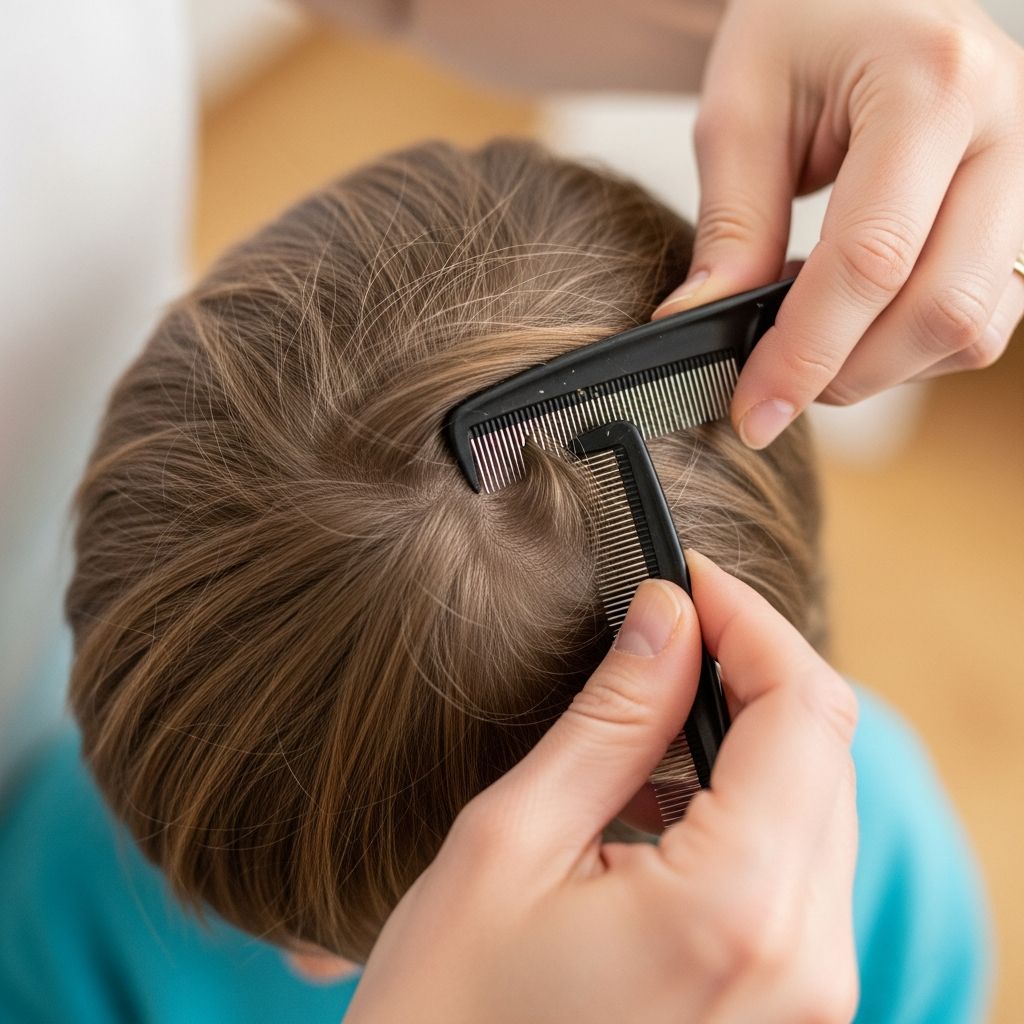
- Use a fine-toothed lice or “nit” comb on damp, conditioned hair to help expose lice and nits.
If you are not sure, you can continue with a thorough combing routine for a few days. Wet combing both detects and treats head lice, and is recommended by health authorities as a first-line approach in many cases.
Step 2: Choose Your Main Treatment Strategy
You can effectively treat head lice using either a non-chemical combing approach, a medicated product, or a combination of both. The best method depends on your child’s age, your time, and any previous treatments.
Option A: Wet Combing (Medication-Free)
Wet combing involves systematically combing wet, conditioned hair with a special lice comb to remove lice and nits. It can be used alone or along with other treatments.
Why Wet Combing Works
- Makes lice easier to see and slower to move.
- Physically removes lice and many eggs without insecticides.
- Suitable for pregnant people, young children, and those sensitive to chemicals.
Wet Combing: Step-by-Step Routine
- Wash the hair with regular shampoo and rinse.
- Apply a generous amount of conditioner to lubricate the hair.
- Detangle with a regular comb.
- Using a fine-toothed nit comb, start at the scalp and pull all the way to the end of the hair in small sections.
- After each pass, wipe the comb on a white paper towel or rinse it in water so you can see what you remove.
- Continue until you have covered the entire scalp thoroughly.
- Repeat the process every 2–3 days for about 2 weeks to catch newly hatched lice.
Option B: Medicated Lice Products
If wet combing alone feels too time-consuming or does not fully solve the problem, medicated treatments can help. Over-the-counter products often contain permethrin or pyrethrins, while prescription options are available for resistant cases.
Using Over-the-Counter Treatments Safely
- Choose a product specifically labeled for head lice and follow all instructions exactly.
- Most permethrin- or pyrethrin-based products can be used on children 2 months or older, but always check the label first.
- Apply only to the scalp and hair as directed, not to the entire body.
- Rinse with plain water, not with shampoo, unless the instructions say otherwise.
- Repeat the treatment 9–10 days later if the product advises it, to kill lice that hatch after the first application.
- Continue to use a nit comb every 2–3 days for 2–3 weeks to remove any remaining nits.
When Prescription Treatments May Be Needed
In some areas, head lice have developed resistance to older medications. If you have followed instructions for an over-the-counter product and still see live lice after the recommended period, contact your child’s healthcare provider. They may prescribe alternative treatments specifically designed for resistant lice.
Option C: Supportive and Home-Based Approaches
Some families prefer to combine evidence-based medication or wet combing with additional methods designed to make lice easier to remove.
- Dimethicone-based products: These silicone-based gels coat and suffocate lice rather than poisoning them, and are less likely to lead to resistance.
- Oils and suffocation methods: Some people use olive oil or similar products to slow lice so they can be combed out more easily, although research is mixed on how well they work long-term.
- Essential oils: Certain essential oils have shown some effectiveness when used with combing, but they may cause allergic reactions and should never be used undiluted or ingested.
Always patch-test oils on a small area of skin and avoid these approaches in very young children unless you have medical advice.
Step 3: Clean the Environment Without Overdoing It
Head lice live on people, not in the house. They survive only about one to two days away from the scalp and nits cannot hatch at normal room temperature. This means you can keep cleaning reasonable and skip extreme measures.
What You Should Clean
- Bedding and clothing used by the affected person in the previous 1–2 days.
- Hats, scarves, hair accessories, and recently used towels.
- Combs, brushes, and hair tools that have been in direct contact with the hair.
Simple Cleaning Methods That Work
- Machine wash washable items in hot, soapy water at at least 130°F (54°C) and dry on high heat.
- Items that cannot be washed (like stuffed animals) can be sealed in a plastic bag for two weeks to ensure any lice die.
- Soak combs and brushes in hot, soapy water for 5–10 minutes or in very hot water (at least 130°F) to kill lice.
- Vacuum floors, carpets, and upholstery where the affected person has rested, but routine housecleaning is usually sufficient.
What You Can Skip
- Fumigating sprays or foggers in your home.
- Special cleaning treatments for pets—animals do not get or spread human head lice.
- Washing every single item in the house; focus only on what was in recent close contact with the infested person.
Step 4: Monitor Progress and Avoid Common Mistakes
Lice treatment is not a one-day project. Consistent follow-up is crucial to prevent a new wave of lice from hatching and starting the cycle again.
How to Tell If Treatment Is Working
- The child is scratching less after a few days.
- You no longer see live, moving lice during combing sessions.
- Only empty nit shells (often lighter and farther from the scalp) remain, and their number is decreasing.
Continue to check the head every 2–3 days for 2–3 weeks. This timeframe allows you to catch lice that hatch after treatment but before they mature and lay new eggs.
Mistakes That Keep Lice Coming Back
- Not repeating a medicated treatment when the product instructions say to.
- Stopping combing too soon because you do not see lice for a day or two.
- Using too little product or leaving it on for less time than recommended.
- Sharing combs, brushes, hats, or helmets while treatment is ongoing.
- Using harsh or unsafe home chemicals like kerosene or insect sprays on the scalp—these can be dangerous and are not recommended.
How to Talk to Your Child (and Others) About Lice
Lice infestations can feel embarrassing, especially for older children. How you talk about it can make a big difference in their stress level.
Reassuring Your Child
- Explain that lice are very common among children and not a sign of being dirty.
- Describe the treatment steps in simple, calm language so they know what to expect.
- Plan distractions during combing (a movie, audiobook, or special toy).
- Offer praise for sitting still and cooperating; treatment can take time.
Informing School or Caregivers
- Check your school’s lice policy and follow any specific rules.
- Notify close contacts (like playmates or sleepover hosts) that you have discovered lice so they can check their children too.
- Focus on facts rather than blame; lice spread easily and quickly in group settings.
Preventing Future Lice Infestations
While you cannot completely guarantee your child will never get lice again, a few habits can reduce the risk, especially during outbreaks.
Everyday Prevention Tips
- Encourage children to avoid head-to-head contact during play, sports, or selfies.
- Remind them not to share combs, brushes, hats, hair accessories, headphones, or helmets.
- Keep long hair tied back in braids or buns when there is a known lice outbreak at school.
- Perform quick routine checks of your child’s scalp during high-risk periods, such as after camp or sleepovers.
What Does Not Prevent Lice
- Shampooing more frequently than usual.
- Using random household chemicals or insecticides on the scalp.
- Relying solely on unproven natural sprays or oils without regular checks and combing.
Frequently Asked Questions (FAQs)
Do I need to cut my child’s hair short to get rid of lice?
No. Cutting hair is not required. Very long or thick hair can make combing more time-consuming, but lice can be successfully treated on any hair length with a proper combing routine and/or medicated treatment.
When can my child go back to school?
Many health authorities advise that a child can return to school after the first appropriate treatment has been completed, as long as active lice are being addressed and you are following a treatment plan. Check your local school policy, as some schools still have stricter “no-nit” rules.
Are head lice dangerous?
Head lice are annoying and can cause itching and skin irritation, but they do not spread serious diseases. The greatest risks are skin infections from intense scratching and the stress families feel while dealing with them.
Can I use lice products on babies?
Most over-the-counter lice treatments are approved only for children 2 months or older, and some are for even older ages. For infants and very young children, speak to a healthcare provider before using any medicated product and consider relying on careful wet combing.
What if the lice just won’t go away?
If you see live lice a week after using an over-the-counter product exactly as directed, or after several thorough combing sessions, consult a healthcare provider. They can check for resistant lice, rule out other scalp conditions, and discuss prescription treatments or professional lice removal services.
References
- Home remedies for head lice: What works? — Healthline (Cynthia Cobb, DNP, APRN, WHNP-BC, FAANP, medical review). 2024-01-23. https://www.healthline.com/health/lice-home-remedies
- 6 best home remedies for lice — MedicalNewsToday. 2019-01-16. https://www.medicalnewstoday.com/articles/325844
- Head lice: Diagnosis & treatment — Mayo Clinic. 2023-05-01. https://www.mayoclinic.org/diseases-conditions/head-lice/diagnosis-treatment/drc-20356186
- Head lice and nits — NHS (UK National Health Service). 2023-08-18. https://www.nhs.uk/conditions/head-lice-and-nits/
- How to get rid of head lice — Scripps Health. 2016-09-27. https://www.scripps.org/news_items/4316-how-to-get-rid-of-head-lice
- What’s the best way to get rid of drug-resistant head lice? — Baystate Health. 2021-10-18. https://www.baystatehealth.org/articles/treatment-for-drug-resistant-head-lice
- Head Lice: Signs, Symptoms & Treatment — Cleveland Clinic. 2023-03-08. https://my.clevelandclinic.org/health/diseases/10824-head-lice