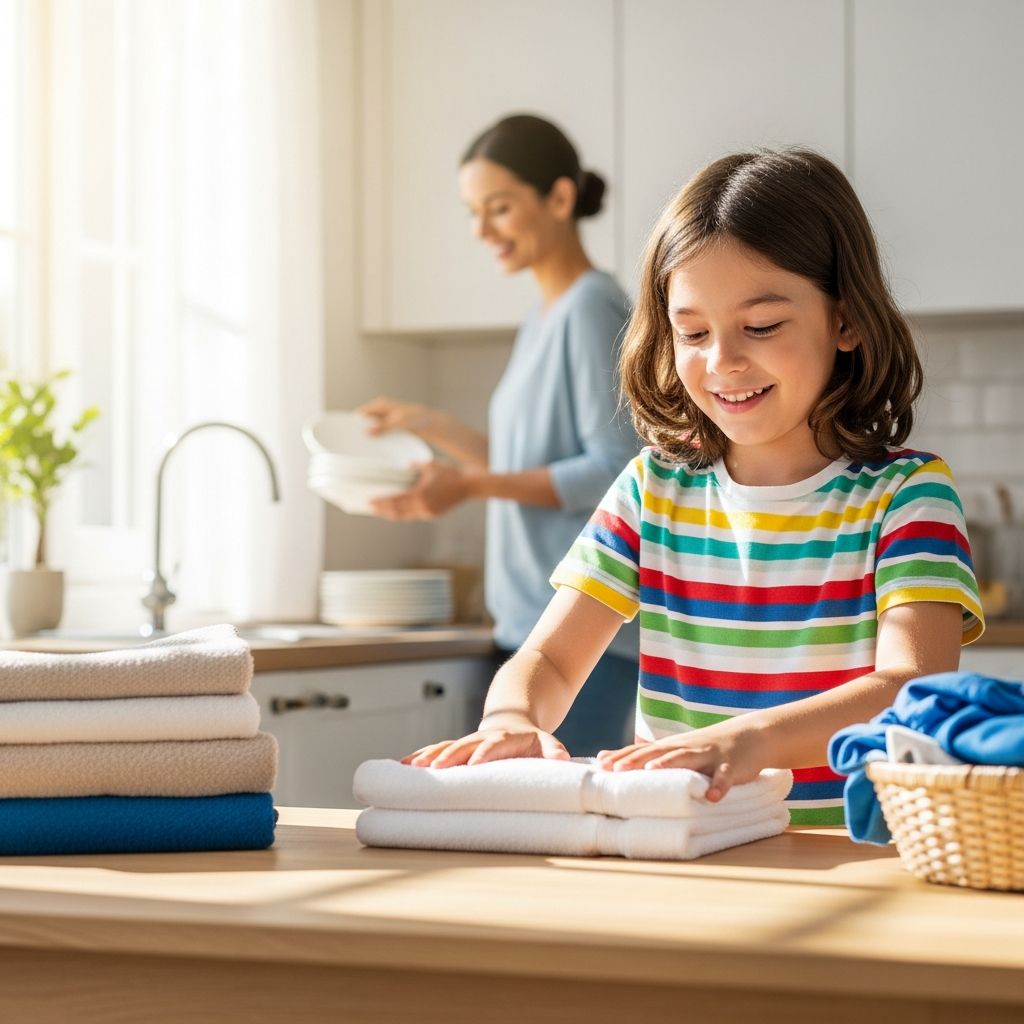
Household tasks are essential for teaching children responsibility, independence, and teamwork. When families establish clear routines, children learn valuable life skills while contributing to a harmonious home environment. This guide explores practical approaches to introduce tasks naturally, making them part of daily life without constant nagging or conflicts.
Building a Foundation for Family Contributions
Starting early with simple responsibilities helps children view helping out as a normal part of family life. Parents who model these behaviors demonstrate that everyone pitches in, creating a culture of mutual support. Research from child development experts emphasizes that consistent involvement in home duties boosts self-esteem and prepares kids for adulthood.
Begin by observing what tasks suit your child’s age and abilities. For instance, even young children can participate in basic activities that match their developmental stage. This not only lightens the parental load but also instills a sense of accomplishment. Over time, as children master these, they gain confidence to tackle more complex jobs.
Age-Suitable Responsibilities for Growing Kids
Assigning tasks based on developmental milestones ensures success and minimizes frustration. Tailor expectations to what children can realistically handle, gradually increasing complexity as they mature.
- Toddlers (Ages 2-3): Sorting toys into bins, wiping spills with a cloth, or placing items in the dishwasher safely.
- Preschoolers (Ages 4-5): Setting the table with plasticware, folding washcloths, matching socks, or sweeping small areas with a child-sized broom.
- School-Age (Ages 6-8): Loading laundry, vacuuming rugs, wiping counters, or helping prepare simple meals like sandwiches.
- Tweens (Ages 9-12): Cleaning bathrooms, sorting recyclables, mowing lawns, or managing personal laundry cycles.
These examples draw from practical family experiences where age-matched duties lead to higher compliance and skill-building. Adjust lists to your household needs, ensuring no one feels overwhelmed.
Visual Tools to Streamline Daily Routines
Visual aids transform abstract expectations into concrete plans. A prominent chore chart serves as a constant reminder, allowing kids to track progress independently. For younger ones, incorporate images or icons to represent tasks like ‘make bed’ or ‘wipe table,’ making it engaging and accessible.
Create a reusable weekly board where family members select duties. This fosters ownership—children cross off completed items, experiencing immediate satisfaction. One effective method involves daily ‘morning routines’ listed visibly, covering essentials like dressing and tidying bedrooms. Families report that after initial guidance, independence grows rapidly, shifting from 75% parental involvement to just 5%.
| Day | Sample Tasks for Kids | Visual Aid Idea |
|---|---|---|
| Monday | Clean bedroom, load washer | Picture of sorted toys, laundry basket icon |
| Tuesday | Sweep kitchen, make beds | Broom graphic, bed-making photo |
| Wednesday | Vacuum rugs, wipe tables | Vacuum illustration, spray bottle image |
| Thursday | Fold towels, sort clothes | Stacked towels pic, clothing piles |
| Friday | Clean bathroom mirrors, pack lunches | Mirror wipe drawing, lunchbox icon |
Such charts promote fairness by rotating tasks, preventing resentment among siblings. Digital versions or jars with task cards offer variety for families preferring flexibility.
Training Methods That Stick
Effective training goes beyond assignment— it involves hands-on guidance. Start by working alongside your child, demonstrating each step slowly. For example, show how to fold laundry or set a table, narrating actions to build understanding.
Progress to supervised practice: let them lead while you offer gentle prompts. Use a three-step approach: model first, explain during joint effort, then release for solo completion. Persistence pays off; initial resistance fades as routines solidify. Interactive modeling, like role-playing ‘waiter’ for table-setting, makes learning memorable.
- Announce the demonstration: “Watch me dust the shelves—it’s quick and keeps things neat.”
- Perform the task visibly, highlighting key techniques.
- Discuss observations: “What did you notice about how I reached high spots?”
- Have the child try, providing feedback on strengths first.
- Practice together until mastery.
This structured process, supported by family testimonials, ensures skills transfer to independence.
Making Contributions Enjoyable and Rewarding
Infuse fun to shift mindsets from drudgery to delight. Turn tidying into games: “Let’s race to pick up 10 toys!” or play music during dusting sessions. Family challenges, like collective completion for movie night, build team spirit without individual bribes.
Positive reinforcement amplifies motivation—notice efforts specifically: “I appreciate how you organized those bins neatly.” Avoid over-rewarding; intrinsic pride from checkmarks or stickers suffices. Consistency in daily micro-tasks, like bed-making, creates habits that extend to weekends spontaneously.
Overcoming Common Hurdles
Resistance often stems from unclear expectations or overload. Counter by keeping loads light and consistent—daily five-minute jobs beat weekend marathons. Distract yourself during their efforts; accept ‘good enough’ to encourage persistence.
For siblings, rotate duties weekly to ensure equity. Collaborate as a team: clean together rather than dictate from afar, boosting energy and buy-in. If forgetfulness arises, use alarms or signs as family-agreed reminders, not parental nagging.
Fostering Long-Term Accountability
Link home duties to broader values like community service. After mastering indoor tasks, involve kids in family volunteering, reinforcing giving back. This holistic approach cultivates responsible adults who view contributions as normal.
Track progress monthly; celebrate milestones like a chore-free zone. Adapt as kids grow—teens might handle budgeting groceries or car maintenance. Families using these strategies report reduced arguments and smoother homes.
Frequently Asked Questions
What if my child refuses tasks initially?
Stay calm, model consistently, and use short sessions. Persistence with positivity turns reluctance into routine within weeks.
Should I use rewards for chores?
Opt for non-material incentives like family time over tangible prizes to build internal motivation.
How do I handle uneven sibling abilities?
Assign by age and skill, rotating for fairness, and use charts to visualize equity.
Can chores start too early?
No—even toddlers benefit from simple helping, developing motor skills and pride early.
What about weekends?
Keep routines flexible; spontaneous asks work once weekdays are habitual.
References
- Habit Training: Household Chores for Kids — Treehouse Schoolhouse. 2023-05-15. https://treehouseschoolhouse.com/blog/habit-training-household-chores
- Raising Helpful, Responsible Kids Begins with Chores — Doing Good Together. 2022-08-10. https://www.doinggoodtogether.org/dgt-newsletter/helpful-kids-chores
- A Beginner’s Guide to Teaching Kids To Do Chores — Babywise Mom. 2021-11-20. https://www.babywisemom.com/child-doing-chores/
- Engaging Children in Household Chores — Confident Parents Confident Kids. 2023-07-20. https://confidentparentsconfidentkids.org/2023/07/20/engaging-children-in-household-chores/
- How To Make Chores Fun: Age Appropriate Chores Guide — Cadence Education. 2024-03-12. https://www.cadence-education.com/blog/family-resources/age-appropriate-chores/
- Don’t Give Up—How to Get Your Kids to Do Chores — Let Grow. 2023-09-05. https://letgrow.org/how-to-get-kids-to-do-chores/