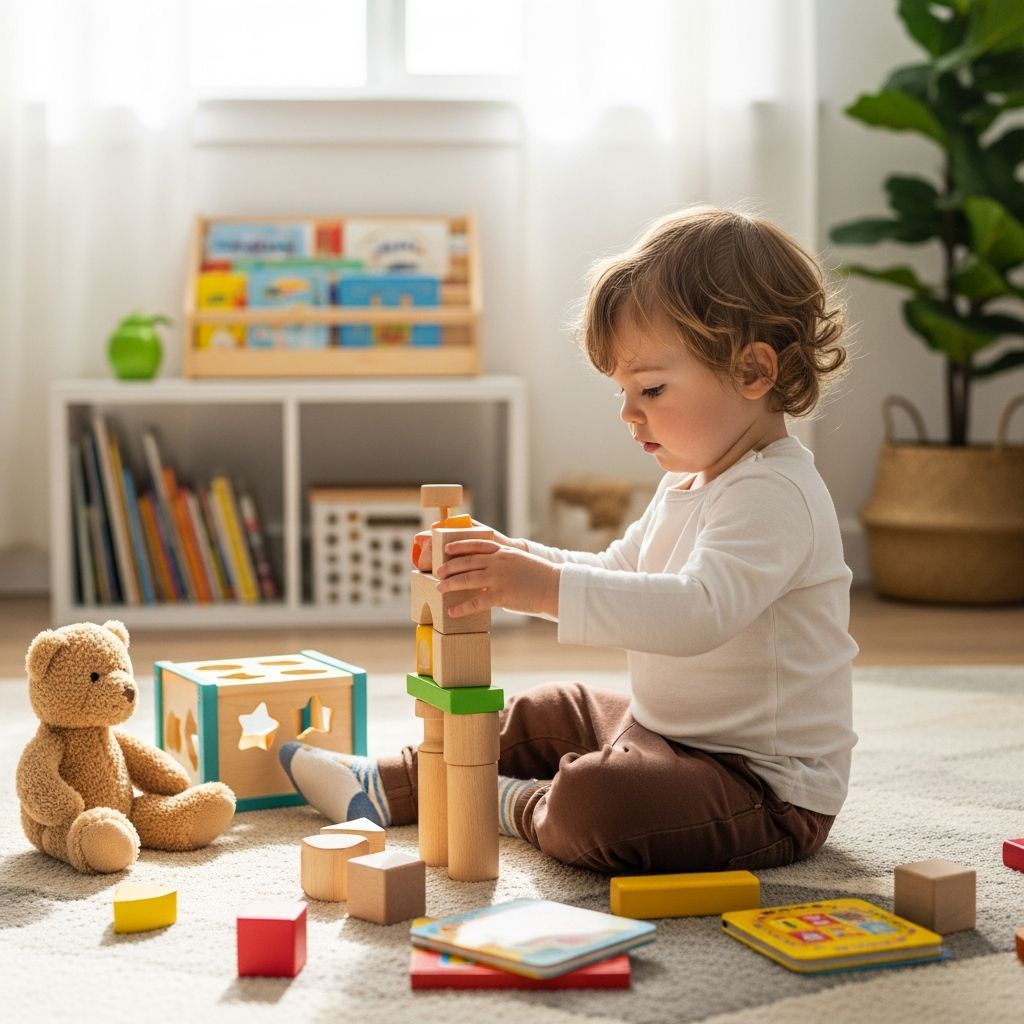
Independent play, where children engage in activities without constant adult intervention, is a cornerstone of early childhood development. For toddlers aged 1-3, this form of play builds essential skills like creativity, focus, and emotional regulation. By creating opportunities for solo exploration, parents can nurture autonomy while carving out moments for their own tasks.
Why Solo Play Matters for Young Children
Solo play allows toddlers to process emotions, experiment with ideas, and master motor skills at their own pace. Research shows that children in environments with fewer toys sustain longer, more imaginative sessions, leading to deeper cognitive growth. Unlike structured activities, unstructured solo time fosters resilience and problem-solving, as kids learn to overcome challenges independently.
From a developmental standpoint, the American Academy of Pediatrics emphasizes unstructured play’s role in building executive function—skills like planning and self-control that predict long-term success. Toddlers practicing solo play often show improved language skills, as they narrate their actions aloud, and better social competence, from modeling observed behaviors.
Designing the Perfect Play Environment
A dedicated, safe play area is foundational. Opt for a “yes space”—a childproofed zone free of hazards where toddlers can roam freely without constant supervision. This might be a gated corner of a room stocked with accessible, age-appropriate items.
- Keep it contained: Use low shelves for easy access, ensuring everything is within reach for little hands.
- Minimize distractions: Separate screens and complex gadgets to promote active engagement over passive consumption.
- Ensure safety: Soft flooring, rounded edges, and visibility from nearby areas allow peace of mind.
Limit toy variety to 4-6 items at a time. Studies demonstrate toddlers play more creatively and persistently with fewer options, avoiding decision paralysis. Rotate selections bi-weekly to maintain novelty without overwhelm.
Selecting Toys That Spark Imagination
Focus on open-ended toys that invite endless possibilities rather than those dictating play scripts. These promote divergent thinking, where one item transforms into multiple roles.
| Toy Type | Examples | Benefits |
|---|---|---|
| Building Tools | Wooden blocks, stacking cups | Enhances fine motor skills and spatial awareness |
| Sensory Items | Nesting shapes, fabric scraps | Stimulates tactile exploration and sorting |
| Pretend Play | Animals, pots/pans | Fuels storytelling and role-playing |
| Nature Finds | Pinecones, shells (supervised) | Connects to real-world curiosity |
Avoid battery-operated toys that limit interaction to buttons. Instead, passive items like blocks encourage active creation, aligning with Montessori principles of child-led discovery. For toddlers, simple transfers—pouring beans between bowls—build concentration for 5-15 minute bursts.
Building a Daily Routine Around Play
Incorporate dedicated solo play slots into your schedule, treating it like any essential activity. Start with 10-15 minutes post-nap or snack, when energy peaks.
- Announce the plan: “Playtime now—I’ll be right nearby folding clothes.”
- Model briefly: Demonstrate a simple setup, then step back.
- Use timers: A gentle 15-minute buzzer signals transition without abrupt ends.
- Extend gradually: As comfort grows, increase to 30 minutes.
Balance with family time; routines provide security, letting toddlers anticipate and embrace independence. Track progress in a journal to celebrate milestones, like sustained 20-minute focus.
Your Role: Proximity Without Interference
Stay visible but hands-off. Toddlers under 3 crave a secure base—your presence reassures without dictating.
- Sit 3-5 feet away, occupied with your task (e.g., reading).
- Resist fixing mishaps; let them stack/fall/retry.
- Offer sparse praise: A thumbs-up sustains momentum without breaking flow.
Practice “touchbacks”: Check in verbally after 5 minutes, then extend distance. This builds trust in their capability, reducing calls for help. If frustration arises, empathize briefly—”Tough tower!”—then redirect gently.
Age-Specific Strategies for Success
Tailor approaches to developmental stages for optimal engagement.
1-2 Years: Sensory Foundations
Short sessions with dump-and-fill activities. Examples: Rice bins, pom-poms in muffin tins. Goal: 5-10 minutes of self-directed manipulation.
2-3 Years: Imaginative Leaps
Introduce themes like “farm” with animals and vehicles. Expect 10-20 minutes; narrate less, observe more.
Overcoming Common Hurdles
Challenge: Boredom sets in quickly. Solution: Refresh rotations; introduce one novel item weekly.
Challenge: Constant interruptions. Solution: Childproof meticulously; use white noise for focus.
Challenge: Resistance to starting. Solution: Pair with transitions, like post-meal wind-down.
Parental guilt fades with practice—view solo play as a gift to their growth, not neglect.
Long-Term Benefits and Family Impact
Beyond immediate relief, consistent solo play cultivates lifelong learners. Children gain confidence, reducing separation anxiety and easing preschool transitions. Families benefit from calmer evenings and modeled self-reliance.
Experts note enhanced empathy too; solo players often share more generously after recharging. Track family wins: More reading time for you, deeper sibling bonds.
Frequently Asked Questions
What if my toddler cries for me during play?
Reassure calmly: “I’m here, keep building!” Gradually increase distance. Persistence pays off in days.
How many toys are ideal for a session?
4-6 open-ended ones. Research confirms longer, richer play.
Can screen time replace solo play?
No—screens hinder imagination. Limit to rare treats.
Is independent play safe for 1-year-olds?
Yes, in a yes space. Always earshot proximity.
How long until they play 30 minutes alone?
Weeks of consistency; every child varies.
References
- 5 ways to support your toddler’s independent play — Motherly. 2023. https://www.mother.ly/child/child-learn-play/how-to-encourage-independent-play-in-toddlers/
- How to Encourage Independent Play — COPA Kids. 2024-05-15. https://copakids.com/es/child-healthcare-news/how-to-encourage-independent-play-and-why-its-good-for-development/
- How to Encourage Independent Play — Katherine Martinko, Substack. 2023-11-20. https://katherinemartinko.substack.com/p/how-to-encourage-independent-play
- 10 Ways To Encourage Independent Play — The Parenting Junkie. 2022. https://www.theparentingjunkie.com/10-ways-to-encourage-independent-play/
- 5 Ways Encourage Independent Play (Toddlers & Preschoolers) — YouTube (Montessori at Home). 2023-06-10. https://www.youtube.com/watch?v=eNgZwbSJT18
- Encouraging Independent Play — Montessori in Real Life. 2019-07-23. https://www.montessoriinreallife.com/home/2019/7/23/encouraging-independent-play
- Best Ways to Encourage Independent Play — Janet Lansbury. 2022-12. https://www.janetlansbury.com/2022/12/best-ways-to-encourage-independent-play/