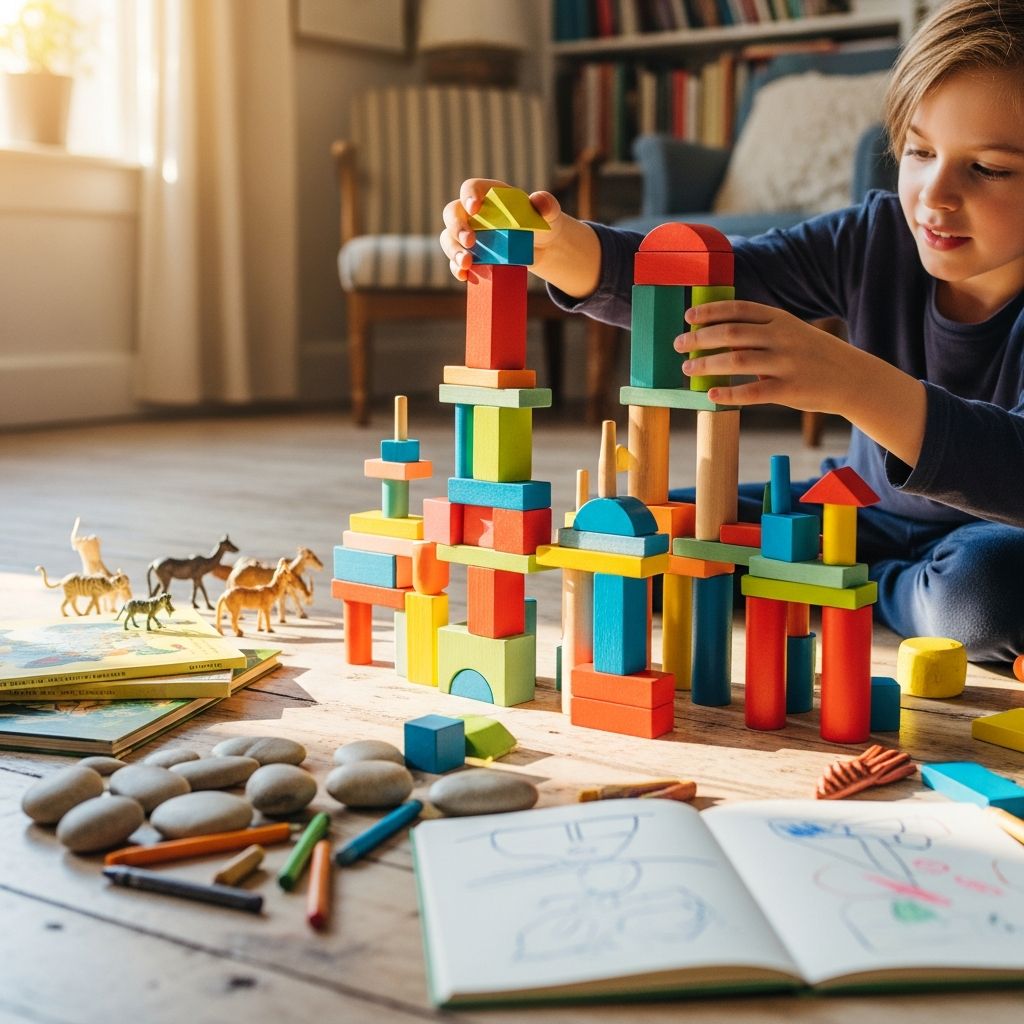
Many parents feel torn between getting things done and being their child’s full-time playmate. Encouraging independent play bridges that gap, giving children space to grow while freeing parents from constant entertainment duty.
Independent play is not about pushing children away; it is about gently supporting their natural ability to focus, imagine, and experiment on their own. With the right mindset and a few practical strategies, most children can learn to enjoy pockets of self-directed play each day.
What Independent Play Really Means
Independent play is any time a child chooses and leads their own activity without needing an adult to direct, entertain, or constantly participate. The adult stays available and responsive, but the child is in charge of what happens during play.
This does not require the child to be physically alone; it simply means the adult is not driving the play. A toddler building blocks next to a parent who is folding laundry is still engaging in independent play.
Why Independent Play Matters
- It helps children practice decision-making and problem-solving in low-stress situations.
- It builds frustration tolerance as children learn to work through small challenges on their own.
- It strengthens focus by allowing longer engagement with a chosen activity.
Core Benefits for Children and Parents
When children learn to play on their own, they experience deep developmental benefits while parents gain breathing room and a more sustainable daily rhythm. Everyone in the family eventually feels the difference.
| For Children | For Parents |
|---|---|
| Stronger creativity and imagination as they invent stories, games, and characters. | More time to complete essential tasks without constant interruptions. |
| Improved confidence from solving small problems and mastering new skills. | Reduced pressure to be a “24/7 entertainer” for their child. |
| Better emotional regulation from managing boredom, frustration, and waiting. | Space to recharge mentally, making it easier to be patient and present later. |
| Growing sense of autonomy and identity: discovering what they truly enjoy. | Opportunities to model calm, purposeful behavior while the child plays nearby. |
Shifting Your Mindset First
A common barrier to independent play is parental guilt: the belief that a “good” parent should join every game or quickly fix every hint of boredom. In reality, brief, connected moments plus healthy stretches of self-directed play usually support children far better than constant entertainment.
Another mindset shift is viewing boredom as a doorway, not a danger. When a child says, “I’m bored,” it often means they are on the edge of creating something new, and they need time, calm support, and simple tools rather than immediate rescue.
Foundations of Successful Independent Play
Children play most confidently when they feel safe, seen, and connected. A foundation of emotional security makes it easier for them to separate a little and explore on their own.
- Connection first: Short, fully present moments together before asking for solo play make children far more willing.
- Predictable routines: Knowing when play, meals, and rest happen helps kids settle into independent activities.
- Realistic expectations: Minutes count; expecting long stretches too early leads to power struggles.
Age-Appropriate Expectations
Every child is unique, but rough ranges can help guide expectations. These are not rigid rules, just gentle benchmarks to consider while watching your own child’s cues.
| Age | Approximate Independent Play Span | Notes |
|---|---|---|
| 6–18 months | 5–10 minutes at a time | Needs close physical proximity and frequent check-ins. |
| 18 months–3 years | 10–20 minutes | Best with simple, open-ended toys and familiar spaces. |
| 3–5 years | 20–40 minutes | May move between activities during one independent play block. |
| 5–8 years | 30–60 minutes | Can handle projects, imaginative worlds, and early hobbies. |
Designing a Play-Ready Environment
Setting up the space thoughtfully is one of the most powerful ways to support independent play. The easier it is to see, reach, and clean up toys, the less help a child needs and the more capable they feel.
Keep Toys Simple and Accessible
- Choose open-ended toys such as blocks, dolls, vehicles, art supplies, and pretend kitchen items.
- Limit the number of choices visible at one time so the space does not feel overwhelming.
- Use low shelves or labeled bins, so children can find and put away items without adult help.
Create Safe, Clearly Defined Zones
- Set aside a safe corner or area where the child knows they are free to explore.
- Remove obvious hazards so you can supervise from a short distance instead of hovering.
- Include a soft spot (rug, mat, beanbag) where they can read, build, or line up toys.
Step-by-Step Guide to Building Independent Play
Independent play grows gradually, like any other skill. Instead of expecting a child to suddenly entertain themselves, think in terms of small, repeatable steps.
Step 1: Start With a Connection Ritual
Begin with a few minutes of fully engaged, face-to-face play. This could be reading a short book, building a quick tower together, or playing a silly game that reliably gets your child laughing.
- Put distractions aside and give undivided attention during this time.
- Signal clearly when this shared time starts and ends, perhaps with a simple phrase or a short song.
Step 2: Gently Hand the Lead to Your Child
Once connection is established, invite your child to continue the play while you shift your role. Instead of disappearing, move from active partner to nearby supporter.
- Say something like: “You keep building while I start dinner. I’ll be right here.”
- Stay in the same room at first, doing a quiet task, and casually comment on what you notice your child doing.
Step 3: Expand Distance and Time Slowly
When your child manages a few minutes without needing constant engagement, begin to increase either the time or your distance—but not both at once. This gentle expansion preserves their sense of safety while stretching their independence.
- Use a timer for young children, starting with 3–5 minutes of independent play and slowly increasing.
- Practice short transitions like moving to the next room while continuing to respond if they call out.
Step 4: Protect Daily Independent Play Windows
Consistency turns independent play from a battle into a normal part of the day. Building predictable windows of solo play teaches the child what to expect and reduces protests over time.
- Schedule independent play after times of connection, such as breakfast or outdoor play.
- Keep the routine the same most days, even if the length varies.
Handling Typical Challenges and Setbacks
Even with a thoughtful plan, most families encounter bumps along the way. Understanding common patterns helps you respond with patience rather than frustration.
“Play With Me!” Every Two Minutes
Constant requests for attention can signal that the child feels unsure, disconnected, or overwhelmed by choices. Reassuring the child you are near, while staying firm in your boundary, allows them to adapt gradually.
- Briefly reconnect: a hug, eye contact, a quick comment about their play, then gently redirect.
- Offer one or two simple choices instead of many: “Blocks or cars while I finish this email?”
Big Feelings or Meltdowns When You Step Away
Some children protest loudly when a parent shifts attention. This may reflect separation anxiety, a hard day, or a need for more connection before stretching independence again.
- Pause and acknowledge the feeling: “You really wish I could keep playing. That’s hard.”
- Offer a clear boundary with warmth: “I need to cook, and you can play here with your blocks. I’ll check on you when the timer dings.”
Children Who Prefer Screens Over Toys
When screens dominate, real-world play can feel slow and uninteresting at first. Expect a short adjustment period if you are reducing screen time to make room for independent play.
- Gradually shift from passive screen time to interactive play, reducing minutes step by step.
- Introduce inviting setups, like a toy animal “zoo” or a pretend restaurant, to spark curiosity.
Sample Independent Play Routines
Every family’s schedule looks different, but simple routines can make independent play feel manageable. Here are a few ideas you can adapt to your situation.
Morning Routine Example (Toddler)
- 5–10 minutes of snuggles and a short book after waking.
- Parent sets out 2–3 toys: blocks, a small car track, and a basket of books.
- Child plays nearby while the parent prepares breakfast, with occasional brief comments about what the child is doing.
Afternoon Routine Example (Preschooler)
- 10 minutes of shared playtime after lunch, such as building a tower together.
- Set a 15-minute timer for “quiet play time,” while the parent reads or does a task in the same room.
- Gradually extend this to 20–30 minutes as the child becomes more comfortable.
Weekend Routine Example (School-Age Child)
- Family plans the day together, including a “project block” where the child chooses an activity (LEGO build, craft, story writing).
- Parent checks in every 20–30 minutes, asking open questions about the project instead of taking over.
- At the end, the child shares what they created, strengthening motivation for next time.
Supporting Different Temperaments
Children bring their own personalities into play. Some jump eagerly into solo projects, while others need more reassurance and structure.
For Highly Sensitive or Anxious Children
- Keep independent play close to you at first, perhaps at a small table next to your work area.
- Use very short goals, like 3 minutes, and celebrate small successes to build confidence.
For Very Active or Easily Distracted Children
- Offer sensory or movement-based play: playdough, building, toy tools, or obstacle “courses.”
- Rotate toys regularly to keep interest fresh and avoid clutter that fragments attention.
Practical Phrases to Encourage Independence
Language shapes how children view themselves and their abilities. Simple, consistent phrases can signal trust in their capacity to play on their own.
- “You’re really good at coming up with games. I’ll be in the kitchen if you need me.”
- “You can try a few ideas first, and if you’re still stuck, I’ll help you brainstorm.”
- “I see you working hard on that tower. Look how many blocks you’ve balanced.”
- “You can decide what to play with while I finish this call.”
Frequently Asked Questions
Is independent play the same as ignoring my child?
Independent play is not about withdrawing love or attention; it is about staying emotionally available while allowing your child to take the lead. You remain responsive, set reasonable limits, and step in when safety or strong emotions require it.
What if my child never seems to play alone?
Some children need more preparation and smaller steps. Start with very short intervals, stay close by, and focus on building connection and safety before expecting longer stretches.
How much independent play is “enough”?
There is no universal target. Even 10–20 minutes a couple of times a day can significantly boost a child’s confidence and focus, especially when combined with warm, engaged time together.
Should siblings always play together instead?
Sibling play is valuable, but solo play offers different benefits. A healthy balance of shared and individual play helps children practice cooperation while also discovering their personal interests.
What if independent play leads to messes?
Some mess is part of learning, but you can set clear boundaries. Limit play to a defined area, offer easy-to-clean materials, and involve your child in simple cleanup routines at the end of playtime.
Bringing It All Together
Encouraging independent play is a gradual process built on connection, clear routines, and realistic steps. When children feel safe and trusted, they naturally grow into more confident, curious, and self-directed players.
Over time, these small daily moments of solo play help children develop skills that will support them for life—focus, resilience, creativity, and a deep sense of “I can do this myself.” Parents, in turn, gain more calm, more time, and a more sustainable way of being present without feeling constantly depleted.