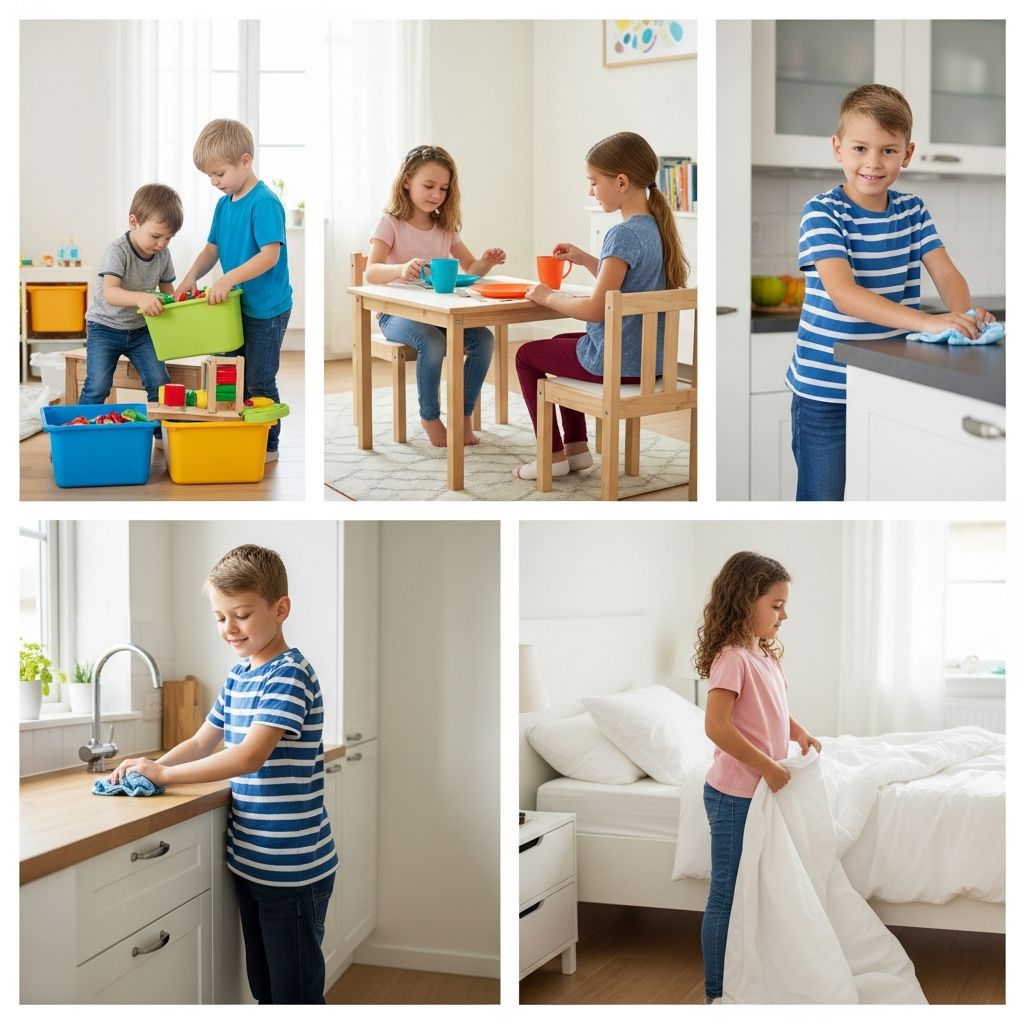
Promoting self-reliance in children lays the foundation for confident, capable adults. By introducing responsibilities matched to their developmental stage and establishing predictable daily patterns, parents can help kids gain essential skills like decision-making, resilience, and accountability.
Why Independence Matters for Child Development
Independence fosters critical growth across multiple areas. It enhances cognitive abilities through problem-solving, strengthens emotional regulation by allowing kids to manage feelings, and builds social competence via interactions with peers and family. According to the Centers for Disease Control and Prevention (CDC), encouraging exploration and responsibility in teens supports healthy autonomy, reducing reliance on parents for basic needs. Physically, tasks involving movement improve motor skills and stamina, while emotionally, facing natural outcomes of choices teaches resilience.
Research from child development experts emphasizes that children who master age-suited duties early develop higher self-esteem and better adapt to challenges. This approach not only eases parental load but equips children with tools for lifelong success, from handling schoolwork to navigating relationships.
Core Principles for Cultivating Self-Reliance
Effective strategies revolve around balance: providing guidance without over-control. Key principles include offering choices within limits, allowing safe failures for learning, and praising persistence rather than perfection. Modeling these behaviors yourself—such as verbalizing your decision process—demonstrates real-world application.
- Choice within boundaries: Let toddlers select between two outfits to build agency without overwhelming them.
- Natural consequences: If a child forgets a toy outside, let weather damage serve as a lesson in responsibility.
- Effort-focused feedback: Highlight dedication, like “You kept trying until you got it!” to boost motivation.
Developmental Stages and Matching Responsibilities
Tailor tasks to a child’s age to ensure success and gradual challenge. Below is a table outlining suitable activities by stage, drawing from expert recommendations for progressive skill-building.
| Age Group | Key Skills | Example Tasks | Benefits |
|---|---|---|---|
| 2-4 Years (Toddlers) | Fine motor, basic choices | Putting toys away, choosing snacks, dressing with help | Builds coordination, sense of control |
| 5-7 Years (Early School Age) | Problem-solving, routines | Setting table, simple cleaning, packing school bag | Instills accountability, time management |
| 8-10 Years (Middle Childhood) | Planning, empathy | Helping cook, pet care, laundry sorting | Develops resilience, community mindset |
| 11-13 Years (Pre-Teens) | Complex decisions, stamina | Managing schedules, biking errands, budgeting allowance | Enhances self-discipline, independence |
| 14+ Years (Teens) | Advanced autonomy | Job hunting, meal planning, driving practice | Prepares for adult responsibilities |
Start small and increase complexity as proficiency grows. Visual aids like checklists for routines help young ones track progress independently.
Integrating Routines to Reinforce Habits
Consistent daily structures provide security and predictability, essential for autonomy. Morning sequences—bathroom use, dressing, breakfast—teach sequence and self-care. Bedtime rituals like brushing teeth and reading promote winding down and literacy. Family meals encourage manners and conversation, strengthening bonds.
Limit screen time to scheduled slots to prioritize active engagement. These patterns reduce decision fatigue, allowing mental energy for creative play and responsibilities.
Strategies to Boost Problem-Solving Abilities
Empower children to tackle issues themselves for lasting confidence. Pause before intervening; ask open questions like “What could you try next?” to guide thinking. Use storytelling or role-play to simulate scenarios, building foresight.
- Provide time for self-resolution in safe situations.
- Introduce tools like picture cards for solution brainstorming.
- Teach when seeking help is appropriate, normalizing it as a strength.
Observational learning shines here—narrate your problem-solving aloud to model critical thinking.
Creating Safe Spaces for Exploration and Growth
Design environments that invite discovery. Indoors, child-height shelves with toys promote access and tidying. Outdoors, supervised play on climbers or bikes builds physical stamina and risk assessment.
Encourage empathy through community activities like volunteering, fostering social autonomy and pride in contributions. For children with unique needs like ADHD, adapt with sensory tools or movement breaks to support focus and emotional growth.
The Power of Positive Reinforcement and Resilience
Praise specific efforts to internalize growth mindset: “Your patience with that puzzle was impressive!” Reflect post-task: “What worked well? What to adjust?” This self-assessment builds metacognition.
Embrace mistakes as teachers. Natural consequences, paired with support, teach accountability without shame. Promote healthy habits—exercise, nutrition, sleep—to sustain energy for independence.
Common Challenges and Solutions
Resistance may arise; counter with patience and smaller steps. If frustration peaks, break tasks into chunks. Track progress visually to celebrate milestones, maintaining motivation.
For busier families, integrate chores into routines, like folding laundry during TV time. Consistency trumps perfection—small daily wins compound.
Frequently Asked Questions (FAQs)
What if my child refuses tasks?
Offer limited choices (e.g., “Fold now or after snack?”) and use timers for structure. Praise compliance to reinforce positively.
How do routines help with school transitions?
They build predictability, easing anxiety and focusing energy on learning.
Can independence harm safety?
Age-match activities and supervise initially. Gradual release ensures safe skill-building.
What’s the role of play in this?
Unstructured play hones creativity, social skills, and decision-making essential for autonomy.
How to adapt for special needs?
Use visuals, sensory supports, and short sessions tailored to attention spans.
Long-Term Benefits of Early Autonomy Training
Children raised with these methods enter adulthood with robust self-efficacy. They handle stress better, form healthier relationships, and pursue goals independently. Parental investment now yields dividends in capable, happy offspring.
Implement gradually, adjusting to your family’s rhythm. The result: thriving children ready for life’s adventures.
References
- How to Encourage Independence in Your Child: Expert Tips — Interborough. 2023. https://www.interborough.org/how-to-encourage-independence-in-your-child/
- 6 Tips for Fostering Independence and Autonomy in Children — FA Academy. 2023. https://faacademy.org/6-tips-for-fostering-independence-and-autonomy-in-children/
- Growing Independence: Tips for Parents of Young Children — Northern Pennsylvania Children’s Medical Center. 2023. https://www.npcmc.com/parenting-tips/Growing-Independence
- How to Teach Kids Life Skills to Promote Independence and Confidence — Confident Parents Confident Kids. 2023-04-06. https://confidentparentsconfidentkids.org/2023/04/06/how-to-teach-kids-life-skills-to-promote-independence-and-confidence/
- 5 Strategies for Parents to Promote Independence and Emotional Growth for Children with ADHD — Columbia Pediatric Therapy. 2023. https://www.columbiapedstherapy.com/blog-posts/5-strategies-for-parents-to-promote-independence-and-emotional-growth-for-children-with-adhd
- Tips for Encouraging Independence — Centers for Disease Control and Prevention (CDC). 2023. https://www.cdc.gov/parenting-teens/tips-encouraging-independence/index.html
- Encouraging Independence — Mount Sinai Parenting Center. 2023. https://parenting.mountsinai.org/parent-guide/encouraging-independence-2