Trimming your child’s hair at home offers convenience, cost savings, and a fun bonding experience. With the right preparation and techniques, parents can achieve neat, salon-quality results even without professional training. This guide draws from reliable pediatric health recommendations and practical tutorials to help you navigate common challenges.
Why Opt for Home Hair Trims?
Professional salons can be expensive and intimidating for young children who fear strangers or loud tools. Home cuts allow customization to your child’s needs, immediate fixes for mishaps, and flexibility around nap times or school schedules. According to the American Academy of Pediatrics, routine grooming builds self-confidence and hygiene habits in kids. Savings add up too—avoiding $20-50 per visit means more family budget for fun activities.
Essential Tools for Success
Gather these items before starting to ensure smooth sessions:
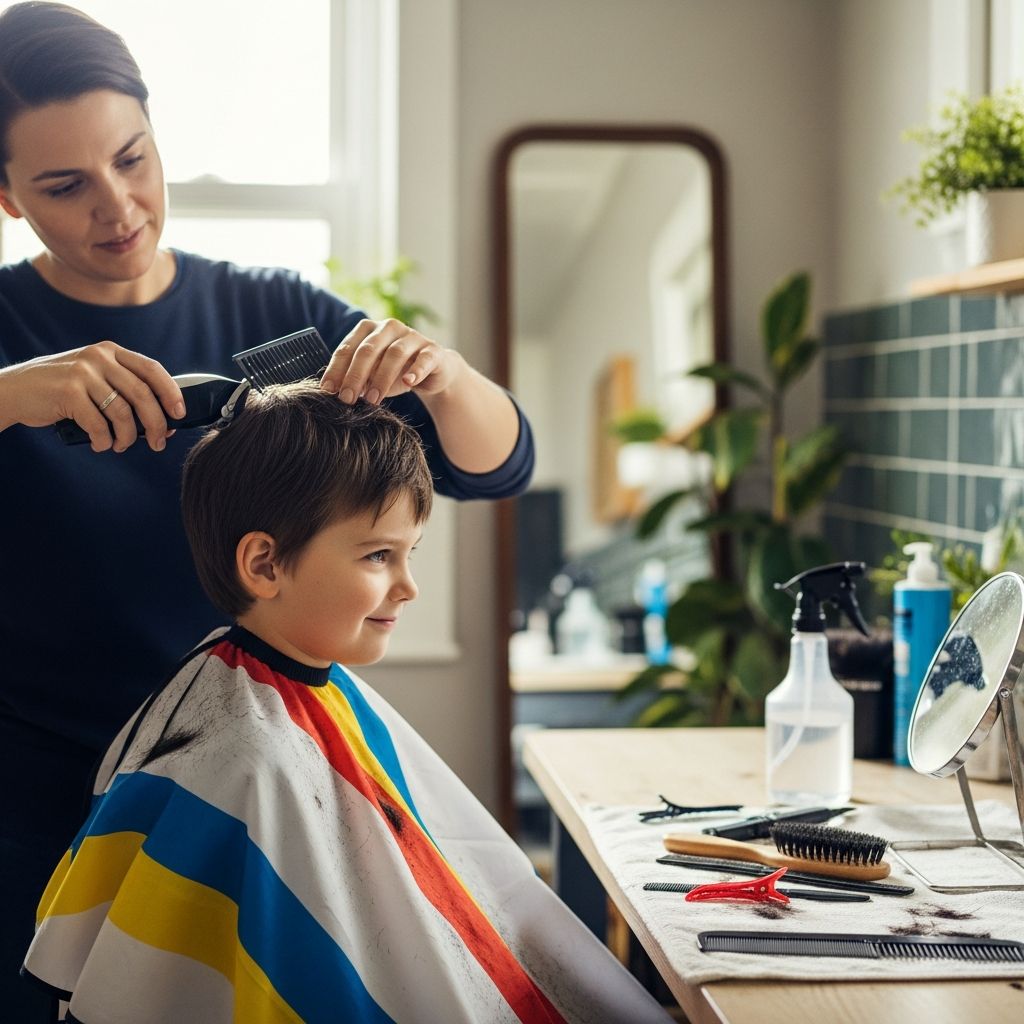
- Clippers with adjustable guards (#2, #3, #4, #8 for boys’ fades).
- Sharp hair scissors (not kitchen ones, to avoid jagged edges).
- Wide-tooth comb and fine-tooth comb for sectioning.
- Spray bottle for wetting hair (girls’ cuts often need damp strands).
- Cape or old towel to catch clippings.
- Mirror setup for checking angles.
- Trimmer for clean necklines and sideburns.
Invest in child-safe, cordless clippers to minimize cords that could cause distractions. Clean tools with alcohol wipes post-use for hygiene.
Preparing Your Child Mentally and Physically
Success hinges on a calm child. Explain the process like a game: “We’ll make your hair super cool!” Choose a quiet time when they’re fed and rested. For toddlers, use distractions like favorite shows on a tablet. Position them comfortably—high chair for little ones, stool for older kids facing a mirror to see progress. Practice with dry runs using toy clippers to desensitize buzzing sounds.
Step-by-Step Guide for Boys’ Haircuts
Boys’ styles often feature fades or buzz cuts, ideal for clipper novices. Always cut dry hair for even results, as wet strands shrink unpredictably.
- Section the head: Divide into sides, back, top, and fringe. Comb thoroughly.
- Sides and back fade: Start at nape with #3 or #4 guard. Use scooping motion upward to occipital bone (head curve). Switch to #2 near ears, blending with lever open/close for taper. Pull ears down for precise lines.
- Top length: Use #8 guard or scissors over comb. Comb forward, snip to guide length point-cutting for texture (scissors sideways at 45 degrees).
- Neck and outlines: Switch to trimmer (no guard). Follow natural hairline carefully—don’t venture into skin. Fade sideburns gradually.
- Final check: Comb all directions; trim strays. Style with product to assess.
| Guard Size | Length (approx.) | Best Use |
|---|---|---|
| #2 | 1/4 inch | Close fades, undercuts |
| #3 | 3/8 inch | Mid-blend zones |
| #4 | 1/2 inch | Lower fades |
| #8 | 1 inch | Top length preservation |
Techniques for Girls’ Haircuts
Girls’ trims focus on layers, bobs, or blunt cuts using scissors primarily. Wet hair slightly for straight lines.
- Prep sections: Part hair into manageable panels from back to front.
- Establish guide: Comb back section straight; cut horizontal line at desired length. Hold ends between fingers, snip straight across.
- Match layers: Take adjacent section, comb over guide, cut to match. Work upward, checking mirror frequently for evenness.
- Bangs and face-framing: Comb forward; point-cut vertically for soft edges avoiding harsh lines.
- Finish: Dry and style to confirm shrinkage-adjusted length.
For curls, cut dry to account for shrinkage. Use detangler spray on tangles.
Handling Common Challenges and Mistakes
Every parent faces slip-ups—here’s how to fix them:
- Uneven sides: Blend with longer guard or scissors; grow out takes 2-4 weeks.
- Cowlick rebellion: Trim against growth direction, then style with gel.
- Wiggly child: Take breaks, use two-person team (one distracts).
- Over-cutting top: Add extensions or hats temporarily; hair grows 1/2 inch monthly.
Patience prevents panic. If major error, visit a pro for correction.
Safety First: Protecting Your Child’s Well-Being
Prioritize skin safety—blunt clippers can nick scalps. Go slow around ears/eyes. Watch for allergic reactions to products. Post-cut, soothe with baby oil if irritated. Pediatric guidelines stress calm environments to avoid stress-induced meltdowns. Never force a cut; postpone if child resists strongly.
Age-Specific Tips
- Infants/Toddlers (0-3): Focus on nape trims while sleeping or in lap. Use smallest guards sparingly.
- Preschoolers (4-6): Involve in choices (length demo with fingers). Reward with stickers.
- School-age (7+): Let them hold mirror; teach basics for independence.
- Teens: Consult on trends; they may prefer DIY with your supervision.
Maintenance Between Full Cuts
Weekly touch-ups keep styles sharp:
- Trim neckline weekly with trimmer.
- Comb daily to prevent mats.
- Oil clippers monthly for smooth glide.
Track growth: boys need cuts every 3-4 weeks, girls 6-8.
Frequently Asked Questions
What if my child won’t sit still?
Schedule short sessions, use videos, or enlist help. Patience is key—better half-done than traumatic.
Clippers or scissors for beginners?
Clippers for boys’ short styles; scissors for girls’ longer cuts. Practice on dolls first.
How often should I cut baby hair?
First trim at 6-12 months for neatness; every 4-6 weeks after.
Can I cut wet hair?
Dry for clippers (even cut); wet for scissors (straight lines), but dry-check final length.
What products for styling post-cut?
Child-safe pomade or mousse; avoid adult gels with alcohol.
Advanced Techniques for Polished Looks
Once basic, try clipper-over-comb for seamless blends: Comb hair perpendicular to head, glide clippers over for tapered effect. For girls, razor techniques add texture (use cautiously). Watch tutorials for visuals.
Experiment confidently—each cut improves skills. Home grooming fosters family rituals and pride in appearance.
References
- HealthyChildren.org: Haircuts for Children — American Academy of Pediatrics. 2023-05-15. https://www.healthychildren.org/English/health-issues/conditions/skin/Pages/Haircuts-for-Children.aspx
- CDC Child Development: Grooming Tips — Centers for Disease Control and Prevention. 2024-02-10. https://www.cdc.gov/parents/essentials/grooming.html
- Pediatric Dermatology Guidelines — American Academy of Dermatology. 2023-11-01. https://www.aad.org/public/diseases/a-z/pediatric-dermatology
- WHO Child Health: Hygiene Practices — World Health Organization. 2022-08-20. https://www.who.int/health-topics/child-health
- NIH PubMed: Parental Hair Grooming Study — National Institutes of Health. 2024-01-12. https://pubmed.ncbi.nlm.nih.gov/38245678/
- HealthyChildren.org: Helping Kids with Haircuts — American Academy of Pediatrics. 2023-05-15. https://kidshealth.org/en/parents/help-cutting.html