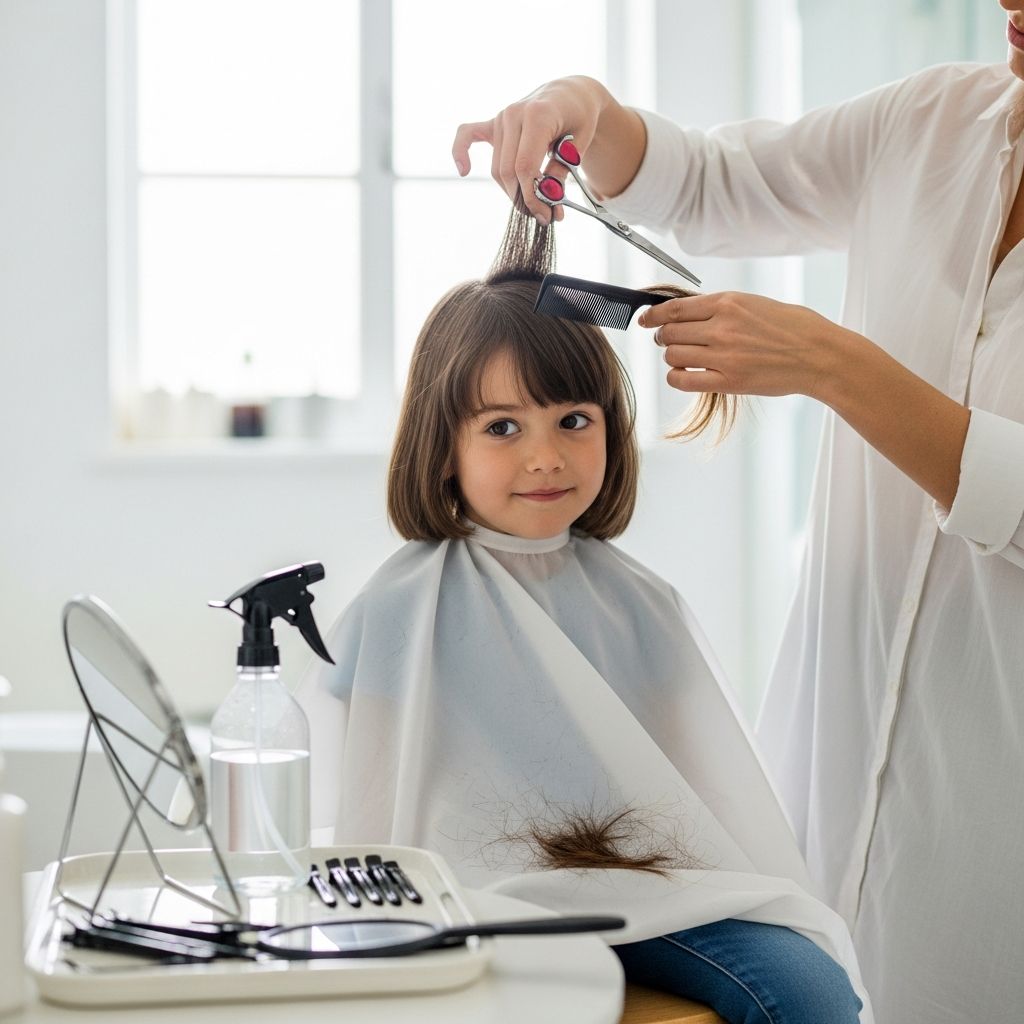
Mastering the Art of Home Hair Care for Your Children
Keeping your children looking neat and well-groomed doesn’t always require professional salon visits. With proper preparation, the right tools, and a methodical approach, parents can successfully maintain their children’s hairstyles at home. This guide walks you through everything you need to know to provide quality haircuts for both boys and girls, helping you save time and money while building confidence in your grooming skills.
Essential Equipment and Preparation
Success in home hair cutting begins with having the proper tools and setting up your workspace appropriately. Quality equipment makes a significant difference in achieving professional-looking results and ensures safety throughout the process.
Gathering Your Hair Cutting Tools
Investing in a dedicated hair cutting kit is more economical than purchasing individual items. A basic set typically includes sharp hair cutting scissors, electric clippers with multiple guard attachments, and sometimes thinning shears. Quality scissors are particularly important because dull blades can damage hair and make the cutting experience frustrating and time-consuming. Consider purchasing a trimming set that includes various clipper guards, which provide options for different hair lengths and styles. Additionally, keep wide-toothed combs and fine-toothed combs on hand, as different comb types serve specific purposes during the cutting process.
Creating the Right Environment
Establish a dedicated space for cutting hair that allows easy access and good lighting. An elevated stool or cushion helps position your child at a comfortable height, reducing strain on your back and improving your visibility. Ensure your child can remain still and comfortable throughout the process. Having a spray bottle filled with water nearby is essential, as it allows you to dampen hair between cuts to maintain optimal cutting conditions. Towels or a cutting cape help protect clothing from loose hair clippings.
Foundational Techniques for Boys’ Haircuts
Cutting boys’ hair typically involves using electric clippers for the sides and back, with scissors reserved for longer sections or finishing touches. Understanding the proper technique prevents uneven results and ensures a polished appearance.
Preparing Hair and Starting Your Cut
Begin with clean, dry hair that has been combed thoroughly to remove tangles. Start by deciding your target length—determine how short you want the hair on the sides and back before beginning. Work with clippers using an upward motion, never cutting horizontally, as this prevents lines and creates a more natural blend. Start at the bottom of the head and work your way up, using longer guard attachments where you want hair to remain longer. For areas requiring scissors rather than clippers, use these tools to trim any shaggy sections or pieces that extend beyond your desired line.
Achieving Evenness and Finishing Touches
After completing the initial cut, comb all hair forward and examine the overall shape. This step reveals any uneven areas that need attention. Trim any protruding sections carefully, taking small amounts at a time. Remember that you can always remove more hair, but you cannot reattach what you’ve cut. Check that the lines around the ears and neck are clean and symmetrical, making minor adjustments as needed.
Techniques for Girls’ Haircuts and Long Hair Management
Cutting longer hair requires different techniques than shorter cuts, particularly regarding hair moisture and sectioning strategies. Long hair offers the advantage of eliminating detailed ear and neck trimming, focusing instead on creating even ends.
Preparing Long Hair for Cutting
Unlike boys’ cuts, girls’ long hair should be wet before cutting. Have your daughter wet her hair thoroughly or use a spray bottle to dampen it completely. Wet hair lies flat and lacks flyaways, making it easier to achieve even cuts and see exactly where you’re cutting. Use a wide-toothed comb to gently remove all tangles, working slowly to avoid discomfort. If hair is particularly tangled, apply a small amount of conditioner to help the comb glide through smoothly. Many parents find that having their daughter look in a mirror and position her own part helps ensure accuracy, as the part often shifts slightly after washing.
Sectioning and Systematic Cutting
Divide hair into three horizontal sections using large hair clips. Start with the bottom section, creating a straight line with your comb as a guide. Make the first cut down the middle, then repeat this process around the entire head, cutting small, even amounts. After completing the bottom section, stand in front of your daughter and compare both sides to ensure they match. Then release the middle section and use the already-cut bottom section as a guide for length. Repeat this process for the top section. This methodical approach prevents mistakes and maintains consistency throughout the cut.
Handling Different Hair Types and Textures
Hair type significantly influences cutting technique and the amount removed during each cut. Curly and textured hair requires specialized approaches different from straight hair.
Considerations for Curly and Textured Hair
Curly hair presents unique challenges because it shrinks considerably when dry compared to when wet. Hair that appears quite long when wet may be significantly shorter once it dries and curls up. When working with curly hair, remove only small amounts—approximately one-quarter inch—from wet hair while maintaining minimal tension. This conservative approach prevents accidentally cutting too much length. After the initial cut, allow the hair to dry to assess the final result, as the true length only becomes apparent once the curl pattern fully develops.
Common Mistakes and How to Avoid Them
Understanding frequent errors helps prevent frustration and disappointing results when cutting children’s hair at home.
- Cutting too much at once: Always cut conservatively. Small incremental cuts allow you to achieve the desired length without accidental overcutting.
- Using dull scissors or clippers: Dull tools produce ragged edges and make the process difficult and time-consuming. Invest in quality equipment and maintain sharp blades.
- Skipping the tangles and conditioning step: Failure to properly comb through tangles and condition hair when necessary leads to uneven cutting and potential hair damage.
- Not checking for evenness frequently: Regularly stop to assess your progress and compare sides throughout the cutting process rather than waiting until completion.
- Cutting dry hair when it should be wet: For long hair, cutting dry creates flyaways and makes achieving even cuts more difficult. Wet hair provides a cleaner, more accurate cutting surface.
- Cutting horizontally with clippers: This technique creates harsh lines and an unnatural appearance. Always cut vertically with an upward motion when using clippers.
Step-by-Step Process Overview
Here is a quick reference guide for the basic cutting process:
| Step | Boys’ Hair Process | Girls’ Long Hair Process |
|---|---|---|
| 1 | Wash and dry hair completely | Wet hair thoroughly |
| 2 | Determine desired length | Part hair in normal style |
| 3 | Use clippers with upward motion from bottom to top | Divide into three horizontal sections |
| 4 | Use scissors for longer sections | Cut bottom section using comb as guide |
| 5 | Comb forward and check evenness | Compare sides for symmetry |
| 6 | Trim any shaggy pieces | Release middle section and repeat with bottom as guide |
| 7 | Make final adjustments | Release top section and repeat process |
Tips for Success and Building Confidence
Several strategies help ensure positive experiences and quality results when cutting your child’s hair at home.
- Start simple: Begin with basic styles before attempting complex cuts. Simple trims are easier to execute and build your confidence.
- Watch instructional videos: Visual demonstrations provide valuable guidance and help you understand techniques better than written instructions alone.
- Practice communication: Keep your child informed about what you’re doing and maintain a calm demeanor to help them stay comfortable and still.
- Keep sessions brief: Shorter cutting sessions reduce fatigue for both you and your child, leading to better results.
- Schedule realistic timeframes: Don’t rush the process. Allow adequate time to complete the cut without pressure.
- Make small adjustments when dry: After your child’s hair dries completely, you can make minor adjustments or corrections if needed.
When to Seek Professional Help
While home hair cutting is achievable, certain situations benefit from professional expertise. Complex styles, significant length changes, or hair that requires specialty techniques may warrant a professional visit. Additionally, if your initial attempts are unsatisfactory, a professional stylist can often repair the cut or help you understand better techniques for future attempts. Building experience gradually helps you develop skills for increasingly complex cuts over time.
Frequently Asked Questions
Q: What age is appropriate to start cutting my child’s hair at home?
A: Most parents begin with children around age two or three when hair maintenance becomes necessary. Start with simple trims and progress to more complex cuts as you gain confidence.
Q: How often should I cut my child’s hair?
A: This depends on hair growth rate and style. Most children need haircuts every four to eight weeks to maintain a neat appearance.
Q: Can I use regular household scissors instead of hair cutting scissors?
A: No. Regular scissors are dull and can damage hair, creating split ends and an uneven appearance. Invest in proper hair cutting scissors for best results.
Q: What should I do if I accidentally cut too much hair?
A: Unfortunately, you cannot reattach hair. However, you can work with a stylist to even out the cut or suggest a new style that works with the length removed.
Q: Is it better to cut wet or dry hair?
A: For boys’ short cuts, dry hair is preferable. For girls’ longer hair, wet hair provides better results as it lies flat and allows for more accurate, even cutting.
Q: How do I keep my child still during the haircut?
A: Have them sit on a comfortable, elevated surface. Allow them to watch in a mirror, play a quiet video, or listen to music. Keep sessions short and maintain a calm, reassuring demeanor.
Q: What if my child has very fine or very thick hair?
A: Adjust your approach based on hair thickness. Fine hair may require smaller sections and more frequent checking for evenness. Thick hair may need multiple passes and careful sectioning to ensure complete coverage.
References
- How to Cut Your Kids Hair at Home — Twist Me Pretty. Accessed 2026-04-02. https://www.twistmepretty.com/how-to-cut-your-kids-hair-at-home/
- How To Cut Your Kid’s Hair At Home | Guide, Steps & Tricks — JP Scissors. Accessed 2026-04-02. https://www.jpscissors.com/blogs/childrens-haircuts/how-to-cut-your-kids-hair-at-home-guide-steps-tricks
- How to Cut Girls Long Hair at Home — DIY Beautify. Accessed 2026-04-02. https://www.diybeautify.com/2014/05/easy-tips-for-cutting-long-hair.html