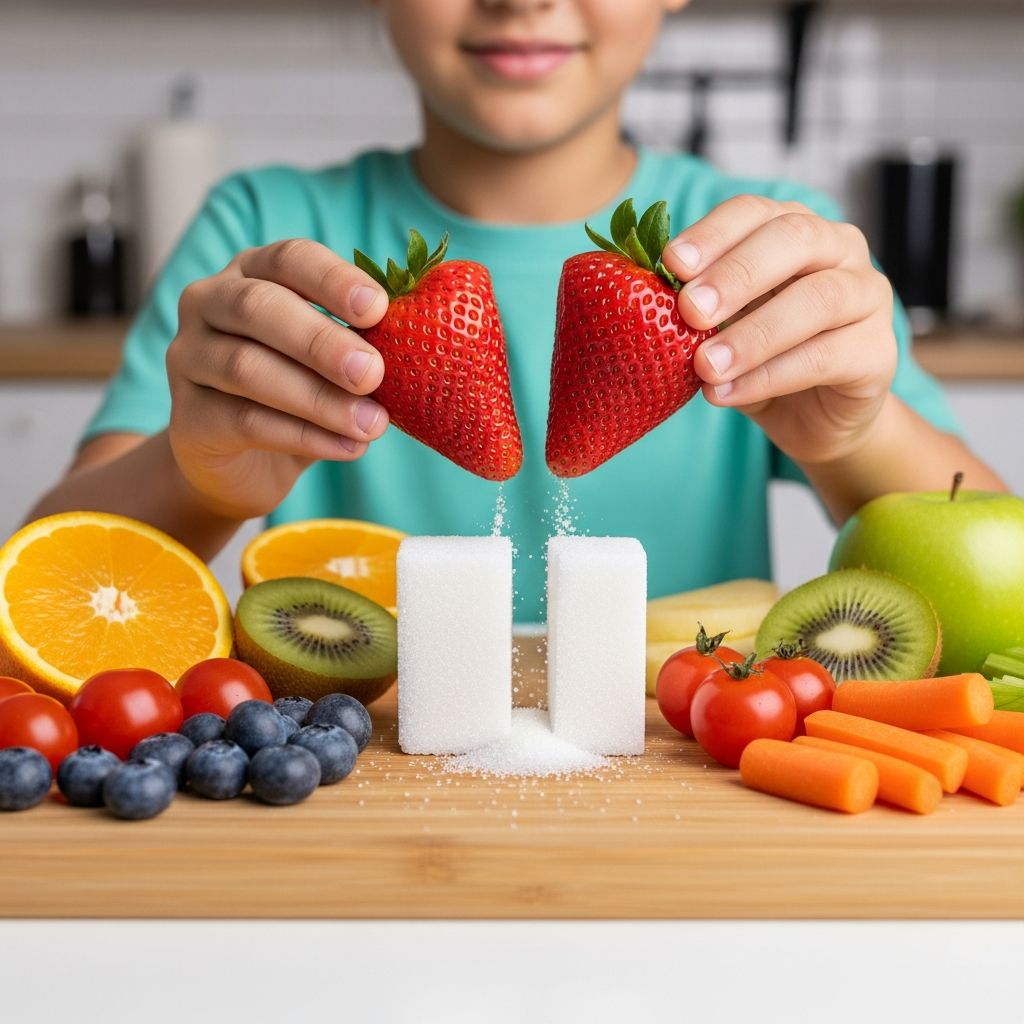
Excessive sugar consumption among children poses significant health risks, including obesity, type 2 diabetes, and dental issues. Health authorities recommend limiting added sugars to under 25 grams daily for kids aged 2-18, equivalent to about 6 teaspoons. This guide offers fresh, actionable approaches to make this shift seamless and sustainable for families.
Understanding Added Sugars and Daily Limits
Added sugars differ from natural ones in fruits or milk; they are incorporated during processing or preparation. Common culprits include sodas, candies, and even savory items like sauces. For children under 2, avoid added sugars entirely to foster preferences for natural flavors.
Establishing a daily sugar cap empowers families. For instance, track intake via apps or labels to stay within bounds. Visual aids like a ‘sugar jar’—where families ‘add’ teaspoons—teach portion awareness engagingly.
Revamp Beverages for Big Impact
Beverages often deliver the bulk of kids’ sugar load. Swap sugary drinks for water, plain milk, or unsweetened teas. Limit 100% juice: none for under 1s, 4 oz for 1-3 year-olds, 4-6 oz for 4-6, and 8 oz for 7-14.
- Dilute juice with water progressively to wean tastes.
- Infuse water with fruits like lemon or berries for flavor without calories.
- Opt for sparkling water with a splash of real fruit juice occasionally.
These changes cut sugar dramatically while keeping hydration fun.
Smart Snack Overhauls with Protein Pairs
Snacks can be nutrient-dense without sweetness overload. Pair fruits or veggies with proteins and fats for satisfaction and blood sugar stability.
| Sugary Usual | Healthier Swap | Benefits |
|---|---|---|
| Yogurt cup with fruit | Plain yogurt + fresh berries | Less added sugar, probiotics, fiber |
| Granola bar | Apple slices + nut butter | Natural sweetness, protein, sustained energy |
| Fruit snacks/gummies | Cheese stick + grapes | Calcium, no processed sugars |
| Sweetened cereal | Whole grain toast + avocado | Fiber, healthy fats |
Grain snacks like crackers should cap at 5g added sugar per serving; yogurts at 2.5g. Roasting veggies like sweet potatoes enhances natural sugars via caramelization.
Recipe Tweaks for Sweeter Success
Modify home cooking gradually. Reduce recipe sugars by 25-50%; mashed bananas or applesauce substitute seamlessly. Experiment with spices—cinnamon, vanilla—for depth without calories.
- Bake muffins with pureed carrots or zucchini.
- Use coconut products (unsweetened shreds, flour) in treats.
- Homemade dressings: vinegar, mustard, herbs over sugary store-bought.
Stevia or monk fruit sweeten naturally if needed, aiding taste bud adjustment.
Label Mastery: Spot Hidden Sugars
Over 50 names disguise sugar: high-fructose corn syrup, dextrose, maltose. Check ‘added sugars’ on nutrition facts—aim under 25g daily. Processed foods like ketchup, bread, or yogurt hide surprises.
Prioritize whole foods: fresh produce, nuts, whole grains. Fiber mitigates sugar effects.
Family Involvement Builds Habits
Model choices—kids mimic parents. Shop and cook together; let them pick produce colors for ‘rainbow power’ (nutrients per hue).
Introduce ‘sugar budgeting’: allocate grams daily, like 10g granola bar leaves 15g. Visual picks from 4 treats teach moderation. Neutral language avoids battles: ‘Water today?’ vs. ‘No soda.’
Non-Food Rewards and Full Eating
Ditch sugar rewards; use playtime, stickers, hugs. Serve treats with meals to blunt spikes. Allow fullness cues—no clean-plate pressure.
Age-specific: under 2, zero added sugar; school-age, budget via math games.
Adapting Tastes Over Time
Taste buds renew every 2 weeks—cut added sugar for 1-4 weeks to prefer natural flavors. Avoid artificial sweeteners; they hinder adjustment. Progress: milk chocolate to dark, then fruit-dipped.
Health Wins Beyond Weight
Less sugar aids focus, sleep, immunity—even slim kids risk metabolic issues like high blood pressure. Water-focused school programs boost intake, cutting juice reliance.
Frequently Asked Questions
What if my child craves sweets?
Offer fruit first; pair with protein. Gradually decrease portions while increasing whole food exposure. Patience retrains preferences.
Is fruit juice okay?
Limit strictly: more sugar than whole fruit, less fiber. Treat, not daily drink.
How to handle parties?
Pre-eat balanced snack; let choose one treat. Focus on fun activities.
Can I use natural sweeteners?
Prefer whole food sources first; stevia/monk fruit sparingly during transition.
What about sports drinks?
Water suffices for most; limit to intense activity, under 8 oz sweetened weekly.
Implement these for vibrant, energetic kids. Consistency yields lifelong health.
References
- 4 tips to cut down on kids’ summertime sugar binge — UT Southwestern Medical Center. 2023-07-12. https://utswmed.org/medblog/reduce-added-sugar-kids/
- Food as Medicine: Limiting Sugar in the Diet — Children’s Hospital of Philadelphia. 2024-01-15. https://www.chop.edu/health-resources/food-medicine-limiting-sugar-diet
- 19 Tips for Managing Sugar — Kids Eat in Color. 2023-05-20. https://kidseatincolor.com/19-tips-for-managing-sugar/
- How to Reduce Added Sugar in Your Child’s Diet — American Academy of Pediatrics. 2024-02-10. https://www.healthychildren.org/English/healthy-living/nutrition/Pages/How-to-Reduce-Added-Sugar-in-Your-Childs-Diet.aspx
- How to keep sugar out of kids’ diets: One pediatrician’s mission — Stanford Medicine. 2020-02-25. https://med.stanford.edu/news/insights/2020/02/how-to-keep-sugar-out-of-kids-diets-one-pediatricians-mission.html
- The Importance of Limiting Your Child’s Sugar Intake — Millennium Pediatrics. 2023-11-08. https://www.millenniumpediatrics.com/post/the-importance-of-limiting-your-childs-sugar-intake
- 6 Ways to Reduce Your Child’s Sugary Snacking — MouthHealthy (ADA). 2024-03-05. https://www.mouthhealthy.org/nutrition/child-snacking-tips