The Art of Designing Easter Baskets That Leave Lasting Impressions
Easter baskets represent more than just containers filled with candy and trinkets; they embody the spirit of celebration and the effort parents invest in creating magical holiday moments for their children. Crafting a memorable Easter basket requires thoughtful consideration of your child’s interests, developmental stage, and the balance between entertainment and meaningful gifts. The most successful baskets combine surprise elements with practical items that will genuinely engage children long after Easter Sunday has passed. By approaching basket assembly with intentionality, you can transform a simple holiday tradition into a cherished memory that your children will anticipate year after year.
Understanding Your Child’s Preferences and Age Considerations
The foundation of any successful Easter basket begins with understanding what resonates with your specific child. Toddlers and preschoolers respond well to sensory items, colorful toys, and small interactive objects that capture their attention. School-age children typically enjoy a broader range of activities, from building sets to books and creative supplies. Teenagers appreciate more sophisticated items such as tech accessories, trendy snacks, or experience-based gifts like movie tickets or gaming credits. Before assembling your basket, reflect on your child’s current obsessions, hobbies, and developmental needs. This personalized approach transforms the basket from a generic holiday offering into a carefully curated collection that demonstrates how well you know and appreciate your child.
Beyond Candy: Expanding Your Gift Palette
While traditional Easter baskets overflow with chocolate and sugary treats, contemporary basket design embraces a more diverse range of items that provide lasting value and entertainment. Consider incorporating toys that encourage imaginative play, educational materials that align with school interests, or craft supplies that foster creativity. Small building sets, puzzle games, and STEM-related activities offer intellectual engagement that extends well beyond Easter morning. For children interested in arts and crafts, include quality supplies like specialty markers, colored pencils, or paper suitable for their chosen medium. Books remain timeless basket fillers, particularly when you select titles aligned with your child’s reading level and interests. Practical items such as cozy socks, hair accessories, or a new water bottle can also find their place in a well-rounded basket.
Incorporating Healthier Snacking Options
Modern parents increasingly seek to balance the festive nature of Easter with nutritional considerations. Rather than filling baskets exclusively with chocolate and candy, integrate snacks that satisfy cravings while supporting healthy eating habits. Dark chocolate contains beneficial antioxidants and serves as a more nutritious alternative to milk chocolate. Dried fruits such as raisins, cranberries, and dried cherries provide natural sweetness along with fiber and vitamins. Trail mix combines nuts and seeds with dried fruits for sustained energy and important nutrients. Fresh fruit items like mandarin oranges or grapes offer refreshing alternatives to processed sweets. Whole grain snacks, including baked chips, pretzels, and popcorn, deliver satisfying flavors without excessive sugar content. Granola bars and nut varieties contribute healthy fats that support brain development and sustained satiety. This balanced approach teaches children that holiday celebration and nutritious eating are compatible rather than mutually exclusive.
The DIY Container Revolution: Creating Personalized Baskets
Traditional wicker baskets remain popular, but contemporary Easter basket assembly embraces creative alternatives that add personality and uniqueness to your presentation. Crafting your own basket container allows for complete customization in terms of size, color, and design aesthetic. Several accessible methods exist for creating distinctive containers without requiring advanced craft skills.
Fabric wrapping offers a simple yet elegant solution for transforming basic wicker baskets. Select a bright dish towel, decorative scarf, or patterned fabric that complements your chosen color scheme. Position the fabric diagonally beneath your basket, then bring opposite corners together to tie a knot at the handle’s top. Tuck excess fabric into the basket interior and secure the sides with additional knots for a polished appearance. This five-minute transformation creates a cohesive, sophisticated look.
Rope-based construction appeals to those seeking a rustic aesthetic. Begin by spiraling cotton rope in increasingly larger circles, using hot glue to secure each turn. Continue building upward in layers until reaching your desired basket height. This no-sew approach creates textured walls that become even more visually interesting when treated with diluted fabric dye in pastel or vibrant shades. The resulting basket combines visual interest with structural integrity.
Yarn wrapping transforms simple wire baskets into colorful statement pieces. Threading fluffy yarn through basket openings creates texture and warmth. Alternating yarn colors produces striking striped effects that add visual sophistication. Securing the yarn with simple knots at the basket’s back ensures durability while maintaining an attractive front appearance.
Felt flowers elevate standard baskets with artistic flair. Creating floral arrangements from felt sheets and hot glue produces professional-looking accents without requiring sewing skills. Roses, ranunculus, and simple petal designs offer variety in form and color. Complementing the arrangement with felt leaves and small decorative elements creates dimension and visual appeal.
Paper-based construction provides budget-friendly alternatives for families assembling multiple baskets. Brown paper bags transformed into bunny-shaped containers offer charm and economy. Cutting bags to create ear shapes, filling with treats, and tying the ears together creates an instantly recognizable Easter figure. A pom-pom glued to the center serves as a playful tail accent.
Repurposing household items extends sustainability while maintaining creative possibilities. Mason jars decorated with Easter-themed stencils and paint become charming containers. Toilet paper rolls can be transformed into basket structures through rolling and assembly techniques. Even basic plastic containers, dollar store boxes, or coolers serve as functional bases for creative decoration and filling.
Strategic Basket Assembly and Organization
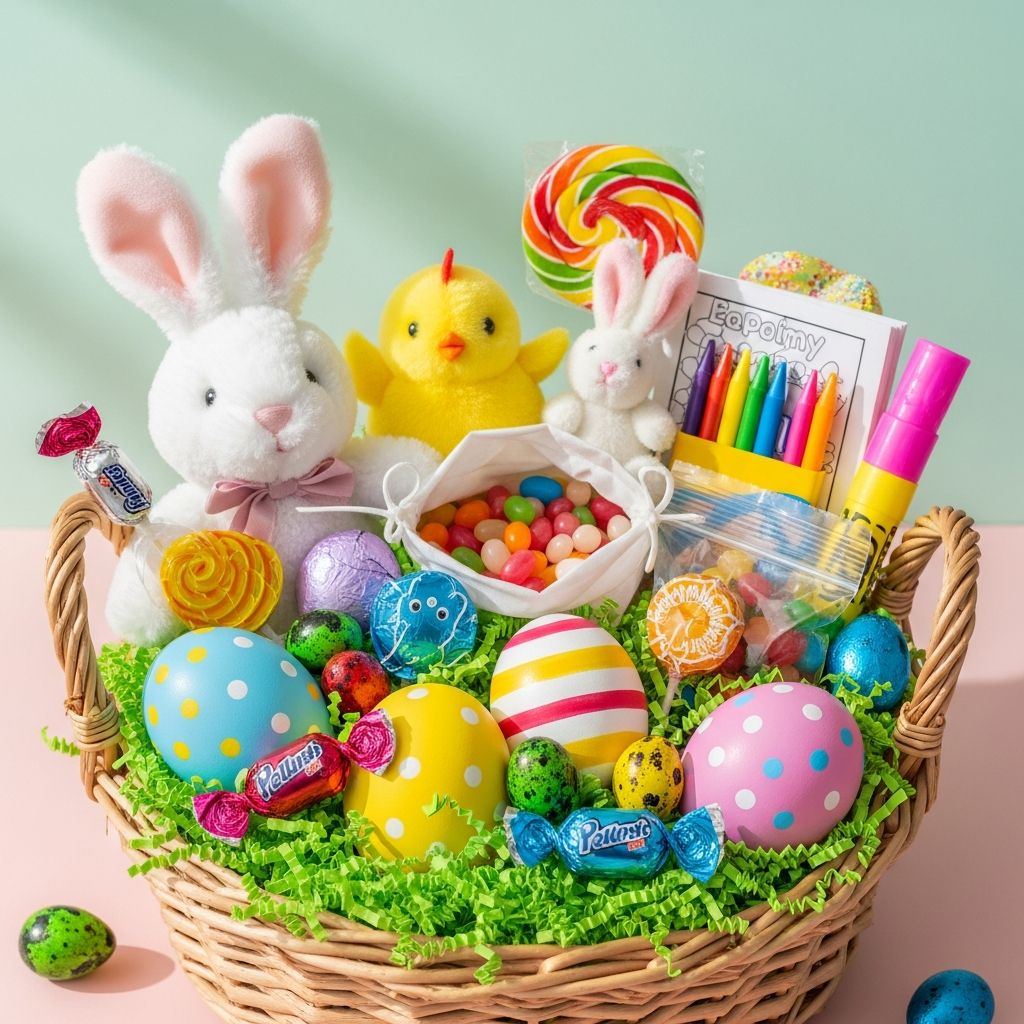
The presentation of basket contents significantly influences the overall impression. Rather than randomly placing items, consider a thoughtful organizational approach that creates visual interest and makes contents easily accessible. Arrange larger items around the basket’s perimeter, creating structure and stability. Position medium-sized items in central areas, using them as anchor points for decorative filler. Small treasures nestle in remaining gaps, creating surprise discovery moments.
Filler materials serve both practical and aesthetic functions. Traditional options like plastic grass or paper shredding cushion items while providing color contrast. Contemporary alternatives include crinkled tissue paper, fabric scraps, or even shredded newspaper for an eco-conscious approach. Some parents prefer minimalist presentations without filler, allowing basket contents to showcase themselves. Experimenting with layering transparent cellophane or tulle over the finished basket adds an elegant finishing touch.
Color coordination and thematic consistency elevate basket aesthetics. Selecting items that complement each other through color palette or theme creates a cohesive gift presentation. A sports-themed basket might combine athletic-themed toys, books about favorite athletes, and sporty accessories. A creative-focused basket could feature art supplies, craft books, and inspiration items. This intentional curation transforms the basket from a collection of individual items into a unified presentation that reinforces your understanding of your child’s interests.
Budget-Conscious Basket Building Without Compromising Quality
Creating memorable Easter baskets doesn’t require substantial financial investment when approached strategically. Dollar stores offer surprising quantities of quality items including toys, books, coloring supplies, bath products, and decorative elements. These venues provide particular value for small toys, activity books, and craft materials that expand basket contents without significant expense.
Discount retailers and end-of-season sales present opportunities for acquiring quality items at reduced prices. Shopping post-holiday sales captures items at substantial markdowns, allowing year-round accumulation of basket materials. Outlet stores specializing in toys, books, or craft supplies often feature prices below traditional retail.
Secondhand sources including thrift stores, online marketplaces, and community swap groups provide gently used items at fraction costs. Many children’s toys, books, and games available through these channels remain in excellent condition while costing considerably less than new versions.
Homemade treats and gift certificates for experiences prove both economical and personally meaningful. Baking cookies, brownies, or other treats that your child enjoys demonstrates effort and care. Gift certificates for activities like movie nights, ice cream outings, or park visits provide experiences that children often value more than material items.
Combining purchased items with handmade elements creates baskets that feel special without excessive spending. Hand-decorated containers, personal notes, or simple craft projects add sentimental value that commercial items cannot replicate.
Personalizing Baskets to Reflect Individual Identity
The most memorable Easter baskets reflect genuine knowledge of the child receiving them. Incorporating items related to specific interests whether sports, art, reading, gaming, or science communicates that you recognize and value what matters to them. Including an item addressing a new or developing interest shows attentiveness to their evolving personality.
Personalization extends to the container itself through monogramming, custom decorations, or color selections aligned with your child’s preferences. Some families include handwritten notes or cards with personal messages that children treasure for years. Photos of previous Easters or inside jokes represented through decorative choices add intimate touches.
Age-appropriate personalization matters significantly. Young children appreciate colorful, whimsical designs and items featuring favorite characters. School-age children often respond to items reflecting emerging independence and developing interests. Teenagers appreciate more sophisticated personalization through trendy items, popular brands, or experience-based gifts that align with their social interests.
Sustainability and Environmental Consciousness
Contemporary Easter basket design increasingly incorporates environmental awareness through material selection and waste reduction. Choosing reusable containers rather than disposable options reduces waste while creating items that serve purposes beyond the holiday season. Cloth baskets, wooden boxes, or decorative containers used for Easter can store toys or supplies afterward.
Prioritizing sustainable gift items benefits both environment and child development. Toys made from renewable materials, books printed on recycled paper, or games with minimal packaging contribute to reduced environmental impact. Many sustainable items actually encourage less consumption-focused play patterns, promoting creativity and imagination over accumulation.
Natural decorative materials and biodegradable filler options replace plastic alternatives. Paper-based products, natural raffia, and plant-based materials provide aesthetic appeal without environmental burden. Even gift wrapping paper can be replaced with fabric scraps or newspaper in creative presentations.
Creating Multi-Sensory Easter Basket Experiences
Beyond visual appeal and practical contents, engaging multiple senses creates more memorable experiences. Scented items such as fragranced soaps, lotions, or candles (where age-appropriate) add olfactory dimensions. Textured items including plush toys, soft socks, or fabric-based games provide tactile engagement. Auditory elements might include small musical instruments, audio books, or games with sound components. This multi-sensory approach creates richer, more engaging experiences that children remember and discuss with others.
Q: What is an appropriate budget for Easter baskets?
A: Easter basket budgets vary widely depending on family circumstances and preferences. Budget-conscious approaches create meaningful baskets for $15-25 by leveraging dollar stores, sales, and homemade elements. Moderate budgets of $30-50 allow for quality items and varied contents. More elaborate baskets might range from $50-100 or beyond. The memorable quality of a basket depends far more on thoughtful item selection aligned with the child’s interests than on total spending.
Q: How far in advance should I plan Easter basket assembly?
A: Planning begins ideally 4-6 weeks before Easter, allowing time for sales shopping and item accumulation. However, baskets can be assembled successfully with 1-2 weeks preparation by focusing on readily available items. Last-minute assembly remains possible using dollar stores and discount retailers, though advance planning typically yields more cohesive and personalized results.
Q: Are there age-specific recommendations for Easter basket contents?
A: Yes, age considerations significantly impact appropriate items. Toddlers benefit from sensory toys, soft books, and safe manipulative toys. Preschoolers enjoy interactive toys, simple puzzles, and colorful craft supplies. School-age children appreciate building sets, books, active toys, and creative materials. Teenagers respond well to trendy items, tech accessories, experience-based gifts, and sophisticated snacks.
Q: How can I make Easter baskets exciting for older children and teenagers?
A: Shift focus from novelty items toward gifts reflecting developing identity and interests. Include trendy snacks, entertainment options, experience certificates, tech accessories, or items related to hobbies and sports. Consider collaborative basket creation where older children have input on contents, transforming the experience into something they actively anticipate.
Q: What makes a DIY basket container worthwhile compared to purchased containers?
A: DIY containers allow complete customization for aesthetic preferences, color coordination with home décor or clothing, and personal touches that purchased containers cannot provide. The creation process itself becomes part of family tradition and Easter preparation. Homemade containers often prove more sustainable and memorable than disposable alternatives.
References
- 40 Easy Easter Basket Crafts for Kids and Adults — Good Housekeeping. 2024. https://www.goodhousekeeping.com/holidays/easter-ideas/g480/easter-basket-crafts/
- How to Build a Healthier Easter Basket — Healthy Family Project. 2024. https://healthyfamilyproject.com/tips-building-healthier-easter-basket/
- Easter Basket Ideas for Kids: Ultimate Gift Guide — Amanda Warren Blog. 2026. https://amandawarrenblog.com/blog/2026/3/16/create-the-ultimate-easter-basket-for-your-child-unforgettable-ideas-for-a-joyous-and-memorable-celebratio-