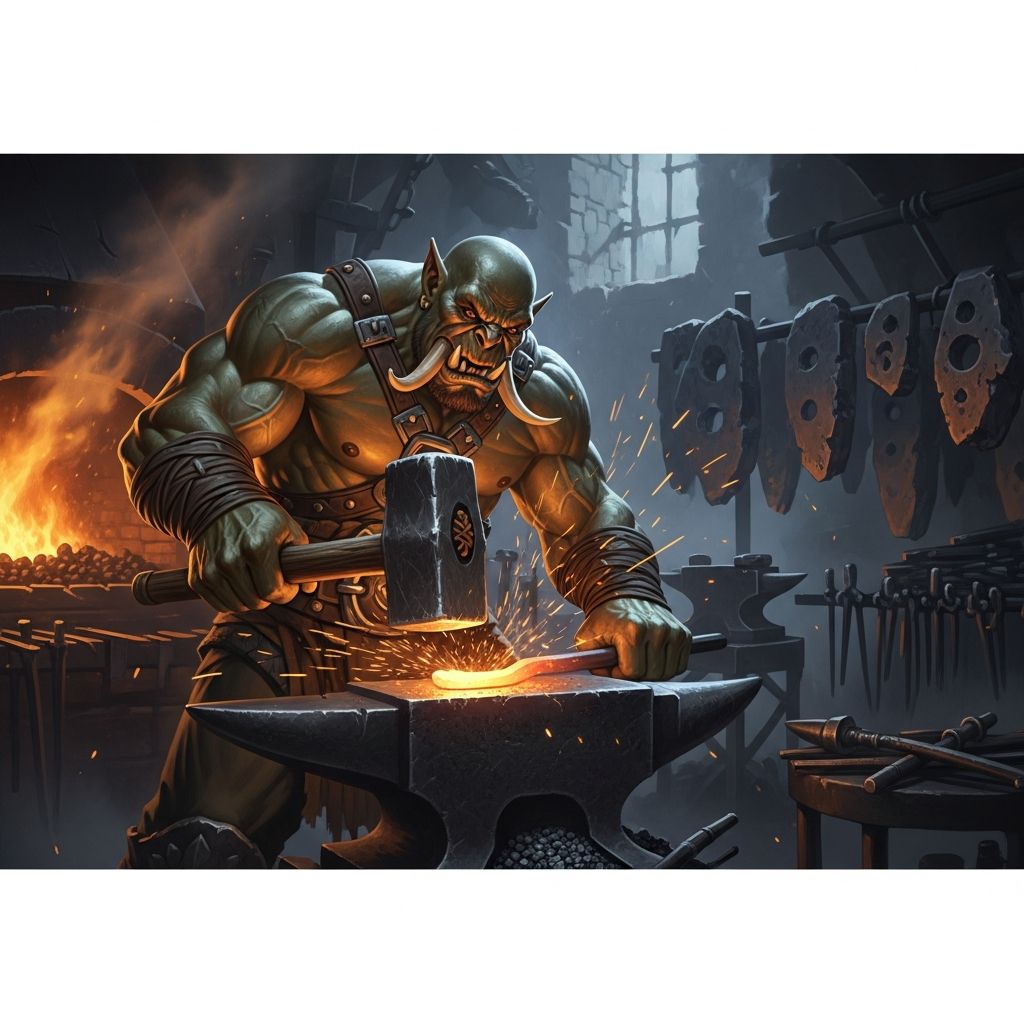
Orc names should sound like they were shouted on a battlefield, carved into rusted steel, or whispered in a smoke-filled war tent. This guide shows how to build brutal and believable orc names for novels, D&D campaigns, video games, and any other fantasy world you create.
What Makes an Orc Name “Feel” Orcish?
Before generating lists of names, it helps to understand what makes a name sound like it belongs to a savage, warlike people. The right name does more than label a character; it communicates culture, history, and temperament.
Most orc names share a few common traits: harsh consonants, punchy syllables, and sounds that are easy to bark in anger or chant in unison. Think less about elegance and more about impact.
- Harsh sounds: Lots of k, g, r, z, and hard t or d.
- Short and strong: One or two syllables for common warriors, slightly longer for leaders.
- Heavy vowels: Deep “a,” “o,” and “u” sounds emphasize power and weight.
- Easy to shout: Names should be quick to yell across a battlefield or arena.
Core Principles for Crafting Orc Names
Instead of memorizing specific names, focus on patterns and building blocks. Once you understand how these pieces fit together, you can improvise countless names on the fly.
Use Strong Consonant Clusters
Orcish phonetics often lean on consonant pairs and trios that feel rough in the mouth. Combine them at the start or end of a name to make it feel more feral.
- Common clusters: gr, kr, dr, zg, gh, sk, urg, ork, zug, thr.
- Place clusters at the beginning for impact (e.g., “Gr-“, “Kr-“).
- Use them at the end to create a growling finish (e.g., “-gash”, “-drog”).
Favor Heavy, Open Vowels
Deep vowels like “a,” “o,” and “u” give orc names a weighty, chesty quality. High, light vowels (“i,” “e”) can still appear but usually as accents, not the dominant sound.
- Masculine orc names often emphasize “a” and “o”: Gor, Brak, Zogar.
- Feminine orc names lean into “a” and “u”: Urga, Drazha, Kulnara.
- Mixing vowels can create distinct clans or dialects.
Keep Common Warriors Short
Rank-and-file orcs usually have blunt, efficient names. Long, flowing names feel more at home in elven courts or scholarly halls, not in smoky war camps.
- One- or two-syllable names work best for basic soldiers.
- Reserve three syllables for shamans, chieftains, or legendary heroes.
- Use length as a quick storytelling cue for status.
Building Orc Names from Simple Parts
You can assemble orc names like forging a weapon: choose a base, add an edge, then finish with a flourish. Breaking names into simple components makes it easy to stay consistent across a tribe or campaign.
Common Name Components
| Component Type | Examples | Common Feel |
|---|---|---|
| Prefixes | Gor-, Krag-, Zul-, Drog-, Ur-, Brak- | Immediate impact; sets tone of strength or brutality |
| Roots | -gar-, -ruk-, -mog-, -tar-, -zul-, -nak- | Central sound; defines overall flavor of the name |
| Suffixes | -gash, -drog, -thar, -nakh, -zug, -mok | Gives a growling end; can hint at titles or deeds |
| Honorifics / Clan Bits | -skull, -breaker, -fang, -blood, -maw | Describe reputation, role, or trophies |
Step-by-Step Name Forging
Use this simple process to craft new names whenever you need them.
- Pick a strong prefix that fits your culture (e.g., “Gor”, “Zul”).
- Add a root that rolls easily after the prefix (e.g., “-nak”, “-ruk”).
- Decide if the name needs a suffix for extra growl (e.g., “-drog”).
- Optionally attach a title or clan epithet for flavor (e.g., “Skull-Eater”).
For example, starting with “Gor” plus “-nak” could become Gornak, while extending it with “-drog” yields Gornakdrog, a name more fitting for a warlord or ancient hero.
Masculine Orc Name Ideas and Patterns
Male orc names tend to be blunt and aggressive, evoking iron, blood, and raw strength. Use the patterns below as inspiration, then mix and match elements to create your own.
Short, Brutal Warrior Names
- Brak – One-syllable, heavy consonants; perfect for reckless berserkers.
- Goruk – Deep vowels and a hard “k” ending for a shield-bearing grunt.
- Thrag – Ideal for an arena champion or pit fighter.
- Zorg – Suits a brutal enforcer or low-ranking captain.
- Drukk – Double consonants emphasize force and stubbornness.
Names for Chieftains and Warlords
Leaders often have longer names or attached titles that reflect victories, scars, or infamous deeds.
- Kragdrom Skull-Taker – A tribal chief known for collecting trophies.
- Urgoth Bone-Crusher – A warlord feared for brutal close combat.
- Zulgar Iron-Maw – A commander renowned for siege warfare.
- Drakmor the Unbroken – A survivor of countless failed executions.
- Ghorzul Banner-Burner – Famous for humiliating enemy legions.
Feminine Orc Name Ideas and Patterns
Female orc names can be just as harsh as male names, but often include slightly longer or flowing sounds, hinting at cunning, ferocity, or commanding presence.
Warriors, Hunters, and Champions
- Urga – Simple, strong, and perfect for a frontline fighter.
- Brakka – Double consonants and a sharp ending for a battle-scarred veteran.
- Drazha – Hissing “zh” sound suggests a ruthless duelist.
- Korula – Slightly softer, fitting a skilled archer or scout captain.
- Thurnakra – Suits a gladiator queen or clan champion.
Mystics, Shamans, and Matriarchs
Spiritual leaders and elders often carry longer, more rhythmic names that echo in ritual chants.
- Zulnara Ash-Speaker – A seer who reads omens in war camp fires.
- Morgrasha Bone-Weaver – A shaman who binds spirits into fetishes.
- Urkulda Storm-Mother – Revered as the bringer of thunder and rain.
- Graklira Shadow-Tongue – Whisperer of curses and forbidden names.
- Durnasha Blood-Oracle – Delivers prophecies after ritual combat.
Clan Names, Titles, and War Epithets
Orcs rarely exist in isolation. Their names are woven into clan identities, battlefield titles, and stories of raids or betrayals. Attaching epithets can instantly make a character feel rooted in a wider culture.
Designing Orc Clan Names
Clan names often draw from animals, weapons, terrain, or body parts. They should reflect what the clan values most: strength, ferocity, endurance, or cunning.
- Bloodtusk Clan – Reveres boars and ritual scarification.
- Ironfang Tribe – Specializes in metalwork and heavy armor.
- Ashmaw Horde – Associated with burned lands and siege warfare.
- Stonefist Kin – Known for unyielding defense and stubborn pride.
- Skullriver Warband – Leaves battlefields littered with remains.
Crafting War Titles and Epithets
Add a title after a given name to hint at deeds, reputation, or notorious habits. These can be earned, mocked, or self-proclaimed.
- Goruk the Red-Handed – Never washes blood from his hands.
- Urga Wolf-Breaker – Once defeated a dire wolf bare-handed.
- Kragdrom Fire-Eater – Survived a magical inferno.
- Drazha Night-Stalker – Prefers ambushes under moonless skies.
- Zulgar Gate-Smasher – Famous for breaching fortress walls.
Aligning Orc Names with Your World’s Lore
Names are more than sound; they are clues to culture, religion, and history. Decide what orcs represent in your setting, then let that shape the naming style.
Brutal Barbarians vs. Disciplined Warriors
Do your orcs live as chaotic raiders, or as a proud warrior society with strict traditions? The answer affects how polished their names feel.
- Chaotic hordes: Short, jagged names; many nicknames and crude epithets.
- Organized legions: Cleaner structure; inherited family elements or rank-based titles.
- Religious fanatics: Repeated sacred syllables or references to deities and omens.
Dialect and Regional Variation
Creating regional accents and dialects adds depth to your world. Different tribes might twist the same root sounds in unique ways.
- Mountain orcs might favor “gr,” “dr,” and “kr” clusters.
- Swamp orcs might use more “gh,” “zug,” and “muk” sounds.
- Desert orcs could prefer breathy or drawn-out endings like “-ahar” or “-ulaar.”
Using Orc Names in RPGs and Stories
Once you have a pool of names, consider how to reveal them in play or narration. A good introduction can cement the name in your audience’s mind.
Quick Tips for Game Masters
- Keep a shortlist of 10–20 pre-forged names for unexpected encounters.
- Vary length and style to distinguish lowly grunts from elite champions.
- Use epithets to mark recurring villains and memorable allies.
Tips for Fiction Writers
- Introduce the full name once, then use a shortened version in dialogue.
- Let characters earn epithets over the course of the story.
- Show cultural weight: rituals where orcs rename themselves after great victories or defeats.
Example Orc Name Sets by Role
The lists below group names by archetype. Use them as inspiration, tweak them, or strip them for parts to build your own versions.
Frontline Grunts and Raiders
- Bruk, Gorn, Thrak, Zogg, Durk
- Mokar, Gruld, Kruz, Ornak, Zurg
Elite Guards and Champions
- Grakthur, Zulmok, Dravnor, Khorzug, Brundrak
- Urkdar, Thurgrom, Malgoth, Krundak, Zorvash
Shamans and Dark Priests
- Vorzul, Ashnagh, Ghulmar, Durnakha, Mogresh
- Orzura, Thurnasha, Kulgaroth, Zulgrem, Urmara
Scouts, Rogues, and Assassins
- Skarn, Rukash, Vargiz, Drusha, Zelnok
- Korvash, Grivra, Thazruk, Moksha, Ulkaz
SEO-Friendly FAQs About Orc Names
How do you come up with a good orc name?
Start by choosing a few strong consonant sounds, like “gr,” “kr,” or “zug,” then combine them with heavy vowels such as “a” and “o.” Keep the result short and punchy for common warriors, adding epithets or longer endings only for leaders, shamans, or legendary figures.
Should orc names be short or long?
Most orc names work best when they are one or two syllables, especially for basic soldiers or minor characters. Reserve longer names and multi-part titles for important NPCs, major villains, or powerful clan leaders to signal status and reputation.
Can orc names sound different between tribes?
Yes. Treat different tribes or regions as having their own dialects, each with preferred sounds and letter combinations. This lets you distinguish mountain orcs from swamp orcs or desert orcs simply by how their names are built.
How do I make female orc names sound fierce?
Use the same harsh consonants and heavy vowels found in male orc names but allow slightly longer or more rhythmic structures. Adding titles related to battle, leadership, or spiritual power helps maintain a sense of ferocity without making the name feel delicate.
Is it okay to reuse orc name elements?
Reusing roots, prefixes, and suffixes can actually strengthen the sense of a shared culture. Just vary how you combine the elements so individuals feel distinct while still clearly belonging to the same people or bloodline.
With a handful of rough consonants, deep vowels, and a sense of tribal culture, you can forge orc names that roar off the page or table. Use these patterns as a starting point, then twist, break, and recombine them until your orcs feel uniquely your own.