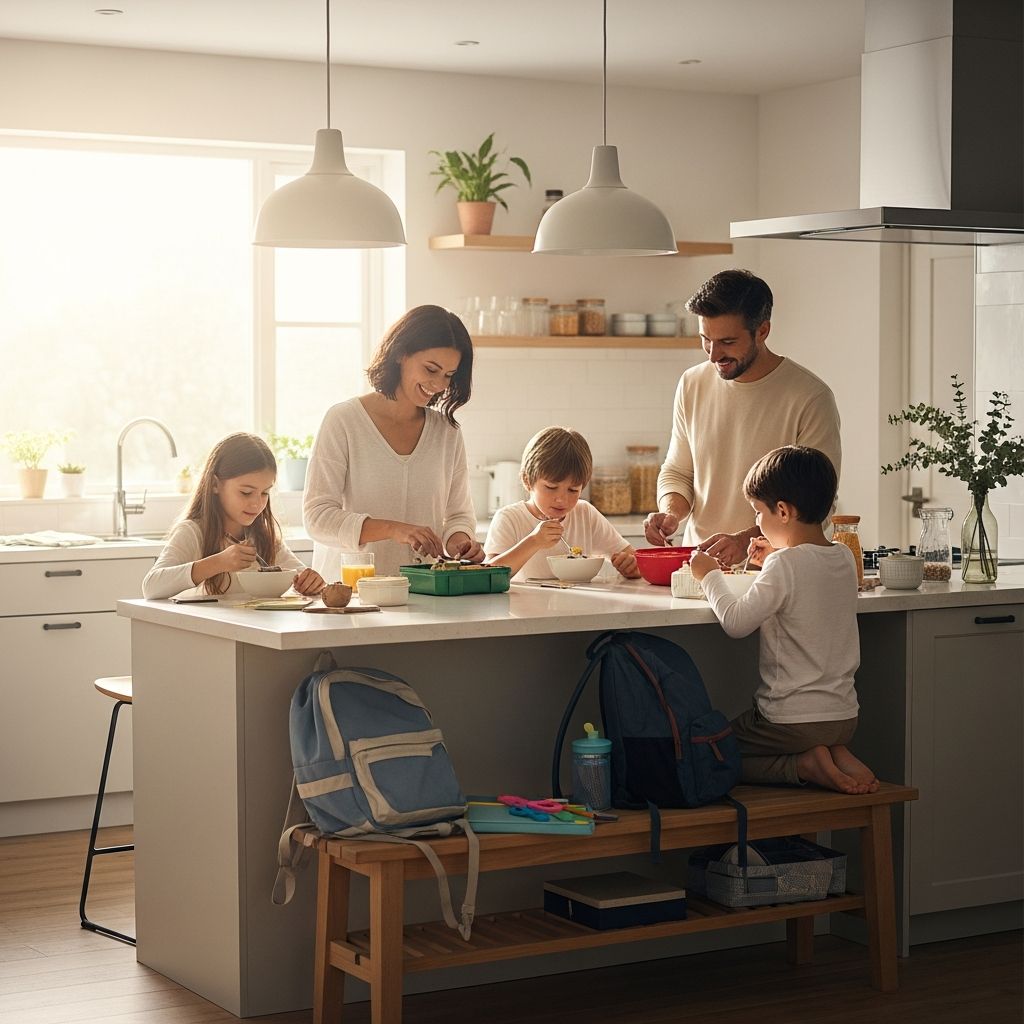
The school morning can feel like controlled chaos—alarm clocks blaring, clothes scattered across bedroom floors, lunches hastily thrown together, and constant reminders to “hurry up!” For many families, getting out the door on time feels like an achievement worthy of celebration. The good news is that with strategic planning and intentional routines, you can transform these hectic mornings into organized, manageable experiences that set a positive tone for the entire day. The key lies not in perfection but in preparation and realistic expectations about what truly matters in those early hours.
The Foundation: Establishing Evening Rituals That Pay Dividends
Perhaps the most significant shift parents can make is recognizing that successful mornings begin the night before. Rather than scrambling to find shoes, pack backpacks, and select outfits while the clock ticks away, investing 20-30 minutes in evening preparation can eliminate the majority of morning conflicts and delays. This approach fundamentally changes the dynamic by removing decision-making and searching from the morning equation entirely.
When children participate in selecting their clothing the previous evening, you accomplish multiple objectives simultaneously. First, you eliminate the common wardrobe crisis where nothing seems acceptable or can be found. Second, you reduce parental decision-making burden during morning hours when patience tends to be in short supply. Third, you give your child a sense of autonomy and control over their appearance, which can improve their willingness to cooperate during the actual getting-dressed phase. Allow enough flexibility for children to exercise personal preference while maintaining any necessary parameters regarding appropriateness or school policies.
The same principle applies to backpack organization. Instead of discovering missing homework or permission slips during breakfast, establish a nightly backpack ritual where children review assignments, pack necessary materials, and place their bags in a predetermined location. This designated “departure zone” near your front door or garage serves as a central hub for all departure essentials—backpacks, jackets, shoes, and any activity-specific equipment needed after school.
Creating Your Family’s Departure Command Center
Organization specialists consistently recommend establishing a dedicated space that consolidates all items needed for the school day. This departure zone functions as your family’s launchpad, preventing the frantic last-minute searches that add stress and delay. What makes this system effective is consistency and accessibility—every family member should know exactly where to look and what belongs in this space.
Consider incorporating these elements into your departure zone:
- Clear, labeled bins or hooks for each child’s backpack
- Shoe racks positioned at eye level for easy selection
- Seasonal outerwear hung in a dedicated section
- A small table for last-minute items like lunch boxes or permission slips
- A whiteboard listing the day’s departure time and any special requirements
By concentrating these items in one accessible location, children develop independence in gathering their belongings while parents maintain visibility over what’s actually leaving the house. This system works particularly well for families with multiple children, as it eliminates confusion about whose items belong to whom.
The Power of Realistic Timing and Early Rising
Many families operate under perpetually compressed timelines, with wake-up times calculated down to the exact moment needed to barely make the school bus or drop-off deadline. This approach creates a house on constant high alert, where any minor delay triggers a domino effect of stress and rushing. Rather than accepting this as inevitable, consider the strategic advantage of waking up 15-20 minutes earlier than your current minimum threshold.
This buffer time serves multiple psychological and practical purposes. For parents, it provides those quiet moments before the household awakens—time for coffee, a shower, or simply mental preparation for the day ahead. Research in child development emphasizes that children who have adequate time to wake gradually and transition into their day experience lower cortisol levels and reduced anxiety compared to children who are rushed from the moment their eyes open. Additionally, when waking children with time to spare, you eliminate the need for repeated reminders and the associated conflict that accumulates during rushed mornings.
During these expanded morning hours, children can complete tasks at a sustainable pace rather than racing against an impossible clock. They’re more likely to listen to instructions, cooperate with transitions, and make better decisions about their behavior when they don’t feel pressured by time constraints.
Simplification as a Path to Success
The breakfast portion of the morning routine frequently becomes a bottleneck, with parents attempting to prepare elaborate meals while children remain unmotivated to eat. Rather than fighting against this dynamic, embrace simplicity by designing breakfast options that are quick, nutritious, and largely self-service. This approach serves multiple functions: it reduces your workload, teaches children responsibility, and ensures kids actually eat something nutritious before school.
Effective breakfast options include:
- Overnight oats prepared in individual jars the evening before
- Yogurt parfait stations with fruit and granola
- Smoothie ingredients pre-portioned in freezer bags
- Whole grain toast with nut butter and banana
- Breakfast burritos assembled ahead and reheated as needed
- Granola bars, nuts, and dried fruit for grab-and-go options
By setting up a breakfast station where children can serve themselves, you accomplish several important goals. Kids feel empowered by having choices, breakfast happens faster, and you’re freed to handle other morning tasks. Pediatric research consistently demonstrates that children who eat breakfast—even something simple—perform better academically and behaviorally throughout the school day, making this investment in morning meal preparation genuinely valuable.
Visual Systems and Task Management for Different Ages
Children process information differently based on developmental stage, and morning routines function most smoothly when communication strategies match these developmental needs. Younger children benefit from visual schedules that depict each morning task using pictures or icons, allowing them to follow the sequence independently while reducing reliance on verbal reminders.
Older elementary and middle school children often respond well to checklist systems, particularly when they can mark off completed tasks. This approach builds a sense of accomplishment while providing clear structure. Some families successfully use timers—both visual and auditory—to help children understand time passage and stay on schedule without constant parental prompting.
High school students might respond better to systems that emphasize independence and responsibility, such as setting their own alarms, managing their own backpack preparation, and using phone reminders for specific deadlines or requirements unique to their schedule.
Strategic Organization Systems That Reduce Daily Decisions
For families with multiple children, color-coding systems provide immediate visual clarity about whose items belong to whom. Assigning each child a specific color for their backpack, lunch box, water bottle, and calendar space dramatically reduces confusion and the associated questions about “whose is this?” Similarly, investing in a quality label maker and marking everything—clothing, school supplies, equipment—dramatically improves the return rate of lost items and provides another organizational layer.
Creating a family command center in a central location—kitchen wall, hallway, or office area—consolidates important information that affects morning routines. This center might include:
| Component | Purpose | Example |
|---|---|---|
| Master Calendar | Track all activities, special events, and early/late days | Color-coded by child, shows sports, lessons, special dress days |
| Task Checklist | Daily morning requirements visible to all family members | Eat breakfast, pack backpack, brush teeth, grab jacket |
| Important Documents | Centralizes permission slips, schedules, contact information | Filed by child or by type, easily accessible |
| Reminder Board | Flags items needed on specific days | “Monday: PE kit,” “Wednesday: Library books” |
This consolidated command center prevents the common situation where important information gets lost among various notebooks, papers, and digital notifications.
Managing Bathroom Traffic and Personal Hygiene
In households with multiple children or single bathrooms, bathroom time frequently becomes a bottleneck that triggers cascade delays throughout the morning. Organizing bathroom spaces so children can quickly locate and grab necessary items—toothbrushes, hair supplies, face wash—prevents the repetitive calls for parental assistance. Divided storage containers, labeled drawers, or tiered organizers on lower shelves make items accessible without requiring adult intervention.
Some families establish bathroom schedule rotations, while others find success with timers that encourage efficient use of shared space. The specific approach matters less than establishing clear expectations about bathroom access and duration that all family members understand and accept.
Strategies for Staying on Track and Managing Distractions
Screen time—television, tablets, gaming devices—represents perhaps the most significant distraction during school mornings, frequently causing time to evaporate while children remain absorbed in entertainment. Rather than engaging in power struggles about screen time, many successful families establish the simple rule that screens remain off-limits until after school departure is complete. Once this boundary is consistently maintained, children adapt their expectations and morning flow improves noticeably.
Using timers for specific tasks helps children understand time progression and maintain momentum. Ten minutes to get dressed, fifteen minutes for breakfast, five minutes for final checks—these bounded timeframes prevent dawdling without constant parental nagging. Some families find success with periodic alarms set to signal transitions between tasks, particularly effective for children who struggle with time perception or task switching.
Rather than broad reminders to “hurry up,” specific, action-oriented instructions—”brush your teeth for two minutes,” “put on your shoes”—provide clearer direction. Some families playfully use recorded messages in children’s own voices as prompts, a technique that often proves more effective than adult reminders because children respond positively to their own recorded instructions.
Building in Flexibility for Unexpected Circumstances
Despite meticulous planning, unexpected situations inevitably arise—spilled juice, lost shoes discovered missing, unexpected bathroom emergencies, or weather-related delays. Rather than treating these as failures of your system, build in cushion time that accommodates minor disruptions without derailing the entire morning. This cushion exists primarily to preserve your sanity and maintain a generally calm atmosphere rather than allowing one problem to trigger a cascade of stress.
Additionally, keeping a “just-in-case” emergency kit in your vehicle—containing basic snacks, water, wet wipes, a change of clothes, and simple first aid supplies—means that forgotten items or minor accidents don’t require immediate returns home. This preparation supports morning confidence and reduces anxiety about potential problems.
Adjusting Expectations to Match Reality
Parenting experts consistently recommend that parents prioritize essential morning outcomes over perfectionist goals. The genuine necessities for a successful school day are relatively modest: children need to have clothes on, something nutritious in their stomachs, and clean teeth. Everything beyond these basics—perfectly styled hair, matching socks, completed homework, organized backpacks—represents valuable but secondary objectives that can be sacrificed on particularly challenging mornings.
By clearly identifying which tasks are genuinely non-negotiable and which represent the “nice-to-have” category, parents can maintain proportionate stress levels and focus energy on what actually matters. This reframing often dramatically reduces morning conflict because parents stop demanding perfection in every domain and instead celebrate the achievement of completing essential tasks.
The Long-Term Value of Consistent Routines
Research on child development and family functioning demonstrates that consistent morning routines provide benefits extending far beyond simply arriving at school on time. Children who experience predictable, organized mornings develop stronger executive functioning skills, reduced anxiety about transitions, and improved resilience in managing time-bound tasks. When routines become genuinely automatic rather than requiring constant enforcement, children gradually require less parental direction and eventually manage significant portions of their morning independently.
This gradual progression toward independence represents the ultimate goal—not micromanaging every aspect of the morning but creating systems that eventually enable children to manage their own preparation with minimal parental intervention. As these habits solidify, families often find that morning stress diminishes significantly and the quality of interactions between parents and children improves because mornings no longer revolve around conflict and rushing.
Frequently Asked Questions
Q: What should I do if my child consistently refuses to cooperate during morning routines?
A: Resistance often signals that either expectations exceed your child’s developmental capacity or that they lack genuine understanding of consequences. Try breaking tasks into smaller steps, using visual supports, ensuring adequate sleep time, and calmly explaining why timely departure matters. Consistency is crucial—enforcing the same expectations daily helps children internalize routines more effectively.
Q: How can I manage mornings when my children have different school start times?
A: Stagger preparation based on departure times, with the child leaving earliest completing their routine first. Create separate departure zones if possible, or establish a system where each child is responsible for gathering their own items by their specific deadline. This approach teaches time management while preventing earlier departures from disrupting the later child’s routine.
Q: Should I wake my teenager or expect them to use an alarm?
A: This depends on your teen’s reliability and your household circumstances. Many families find success holding teenagers accountable for waking themselves while maintaining consequences if they oversleep. Others prefer occasional wake-up assistance to ensure students start the day successfully. The approach matters less than consistency in whatever system you choose.
Q: What’s the best way to handle mornings when multiple family members share one bathroom?
A: Establish a firm bathroom schedule with time limits, set timers to enforce adherence, organize bathroom supplies so items are easily accessible without assistance, and consider staggering wake times so bathroom use is distributed across a longer period rather than concentrated into 20 minutes.
Q: How do I prevent forgotten items like permission slips and special equipment?
A: Set recurring phone reminders for items required on specific days (PE kit on Tuesdays, library books on Thursdays). Create a pre-departure checklist that specifically mentions these items. Some families designate a specific shelf or container where these special items are placed the evening before departure.
References
- How to Create a Back-to-School Morning Routine That Works — Jacksonville Mom. Retrieved from jacksonvillemom.com
- 8 School Day Hacks That Will Transform Your Mornings — Parent.com. Retrieved from parent.com
- How to Make School Mornings Easier for You and Your Kids — University of Utah Health, Healthy Kids Zone. 2025. Retrieved from healthcare.utah.edu
- School Mornings Without the Stress — Child Mind Institute. Retrieved from childmind.org
- 8 Tips to Streamline Your Back-To-School Morning Routine — The Home Edit. Retrieved from thehomeedit.com