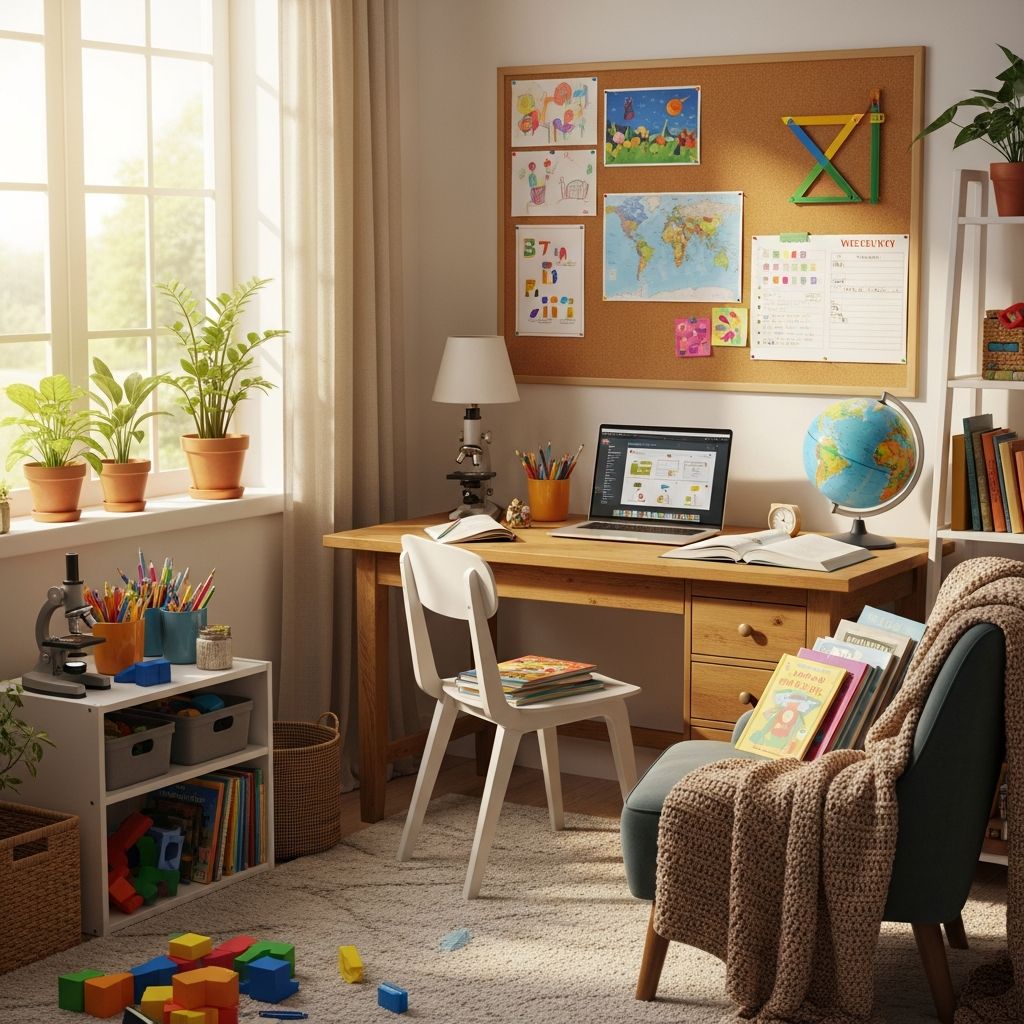
Setting up a dedicated homeschool space can significantly enhance your child’s learning experience by providing structure, minimizing distractions, and fostering focus. This guide offers fresh insights into designing a practical and motivating area tailored to your family’s needs, drawing from proven organizational strategies.
Selecting the Perfect Location in Your Home
The foundation of a successful homeschool setup begins with choosing the right spot. Prioritize areas with ample natural light, as it promotes alertness and reduces eye strain during extended study sessions. Avoid high-traffic zones like kitchens where cooking noises or household chores could interrupt concentration.
For families with limited square footage, multifunctional spaces such as a dining nook or living room corner work well. Push furniture to create defined boundaries, ensuring the area feels purposeful yet integrated into daily life. Consider acoustics too—quiet rooms with soft furnishings help dampen echoes and maintain a calm atmosphere.
- Natural light sources: Position desks near windows but use sheer curtains to prevent glare.
- Quiet proximity: Select spots away from TVs, speakers, or play areas to eliminate auditory distractions.
- Accessibility: Keep the space near restrooms and snack stations for practical convenience without constant movement.
In smaller homes, opt for underutilized areas like a basement alcove or attic loft, transforming them with portable lighting and rugs for coziness.
Essential Furniture for Comfort and Productivity
Invest in sturdy, ergonomic pieces that support long hours of sitting and working. A spacious table or desk provides room for notebooks, laptops, and projects, preventing cramped postures. Adjustable chairs with back support are ideal, allowing children to maintain good alignment without discomfort.
Front-facing bookshelves encourage spontaneous reading by displaying covers attractively, turning literature into an inviting option rather than a chore. Modular units offer flexibility—rearrange as your children’s ages and needs evolve.
| Furniture Type | Key Features | Benefits |
|---|---|---|
| Work Table/Desk | Flat surface, 4+ feet wide, stable legs | Allows spreading materials, supports group work |
| Chairs | Ergonomic, adjustable height, cushioned | Promotes focus, prevents fatigue |
| Bookshelf | Front-facing, multi-tiered | Boosts reading habits visually |
| Storage Units | Rolling carts, cubbies | Easy access, clutter control |
Avoid overly plush seating that invites napping; firm options like task chairs strike the right balance between comfort and alertness. For shared spaces, folding tables save room when lessons end.
Smart Organization Strategies to Eliminate Chaos
A clutter-free environment sharpens young minds by reducing visual overload. Implement the principle of ‘a place for everything’ using labeled bins, drawers, and shelves to teach responsibility. Involve children in labeling activities, combining art with literacy practice for ownership.
Vertical storage maximizes floor space: wall-mounted racks for supplies, over-door pockets for papers, and high shelves for less-used items. Rolling carts enable quick transitions between subjects, ideal for dynamic schedules.
- Daily bins: Assign per-child containers for workbooks and pencils, cleared nightly.
- Supply zones: Group markers, glue, and scissors in clear trays for independence.
- Digital rotation: Schedule laptop/tablet use to ensure equitable access.
For multi-age families, color-code materials—blue for math, green for reading—to streamline retrieval and instill order. Regular purges keep only essentials, preventing accumulation.
Designing Specialized Learning Zones
Divide your space into subject-specific stations to promote deep focus. Each zone equips children for targeted tasks, rotating as lessons progress.
Creative Arts Corner
Dedicate a low table or floor mat to paints, clay, and paper. Bean bags or cushions allow flexible positioning, sparking imagination without rigid setups. Store tools in nearby totes for swift cleanup.
Quiet Reading Nook
Cozy up with floor pillows, a rocking chair, and window access for soft light. Stock with age-appropriate books, fostering self-directed exploration. Minimize decor to enhance immersion.
Math and Workbook Area
A large, distraction-free table with lamp lighting suits calculations and writing. Position away from windows to curb wandering eyes. Include manipulatives like blocks in adjacent drawers.
These zones adapt to small spaces by overlapping functions—use a single table with rotating bins.
Technology Integration Without Overload
Balance screens with hands-on tools. Designate a tech station with charging hubs and stands for tablets, enforcing time limits via schedules. Headphone splits allow shared devices without arguments.
Secure web filters protect against distractions, while educational apps enhance lessons. Keep non-essential gadgets stored elsewhere.
Personalizing with Motivation Boosters
Infuse personality through child-chosen posters of maps, alphabets, or inspirational quotes, avoiding overload. Rotating displays of completed work build pride and track progress.
Plants add life, improving air quality and mood. Flexible whiteboards for brainstorming double as decor.
Daily Routines for Sustained Success
Begin each day resetting the space: toys binned, surfaces wiped. End with tidy-up rituals, reinforcing habits. Weekly deep cleans maintain functionality.
Adapt as needs change—toddlers need safe play nearby, teens prefer privacy.
Frequently Asked Questions
What if I have no extra room for homeschooling?
Use dining tables or corners with screens/folders for separation; rolling storage keeps it contained.
How do I keep young kids engaged in the space?
Incorporate play zones with puzzles and games alongside desks for seamless transitions.
What’s the best way to store art supplies?
Clear bins on low shelves or carts allow easy access and quick storage.
Should I buy expensive furniture right away?
Start with household items; upgrade as budget allows for durability.
How to minimize screen distractions?
Store devices in designated boxes outside hours; use timers.
Adapting for Growing Families
As children age, expand with study carrels or quiet pods. Multi-child setups benefit from tiered shelving and shared whiteboards for collaboration. Monitor what works, tweaking seasonally.
This holistic approach ensures your homeschool space evolves, supporting academic growth and family well-being.
References
- How to Set Up a Homeschool Classroom: Ideas, Tips & Essentials — GoLoadUp. 2023. https://goloadup.com/blog/guides/homeschool-classroom-ideas/
- How to Organize Your Homeschool Room — Classical Conversations. 2023. https://classicalconversations.com/blog/how-to-set-up-a-homeschool-room/
- The First-Timer’s Guide to Setting Up a Homeschool Room — Okay Relax. 2023. https://okayrelax.com/setting-up-a-homeschool-room/
- How Should I Set Up My Homeschool Room? — Flooring America. 2023. https://www.flooringamerica.com/blog/homeschool-room
- A Practical and Simple Homeschool Room – Setup Tips — Not Consumed. 2023. https://www.notconsumed.com/practical-and-simple-homeschool-room/
- Homeschooling Setup and Organization for Small Spaces — Treehouse Schoolhouse. 2023. https://treehouseschoolhouse.com/blog/homeschooling-setup-and-organization-for-small-spaces
- How To Setup a Homeschool Space — Holliday. 2023. https://www.holliday.co/how-to-setup-a-homeschool-space/