Visiting a pumpkin farm every autumn is a wonderful tradition, but sometimes schedules, budgets, or weather make it hard to go. Creating a DIY pumpkin patch at home gives children the same sense of wonder and play, while allowing you to tailor the experience to your space, budget, and age group.
This guide walks you step-by-step through planning, decorating, activities, learning extensions, and FAQs so you can host an unforgettable pumpkin-themed day in your living room, backyard, classroom, or community space.
Why Host Your Own Pumpkin Patch?
Designing a pumpkin patch at home or school is more than a cute decorating project. It can become a full sensory, social, and learning experience wrapped in one cozy, seasonal theme.
- Flexible and accessible: Adapt it to small apartments, big backyards, classrooms, or church halls.
- Budget-friendly: Mix real pumpkins with reusable craft pumpkins and low-cost décor you can store for future years.
- Educational: Integrate counting, sorting, writing, art, and science without kids even realizing they are learning.
- Inclusive fun: Control noise level, crowd size, and activities to suit different ages and abilities.
Planning Your At-Home Pumpkin Patch
Before pulling out the orange decorations, take a few minutes to plan the experience you want. Clear decisions at the start will make set-up fast and stress-free.
Step 1: Choose Your Space
Your pumpkin patch does not need acres of land. Think about where children naturally like to gather and move.
- Indoors: Living room, playroom, classroom reading corner, school hallway, or a community room.
- Outdoors: Front yard, backyard, driveway, patio, or even a shared courtyard.
- Hybrid: Use outdoors for active games and indoors for quiet crafts and snacks.
As you pick your space, walk through it like a child: where would you first run, where would you sit, and what might feel special or cozy?
Step 2: Set a Theme and Mood
“Pumpkin patch” can mean different things. Pick a style that helps you narrow down decorations and activities.
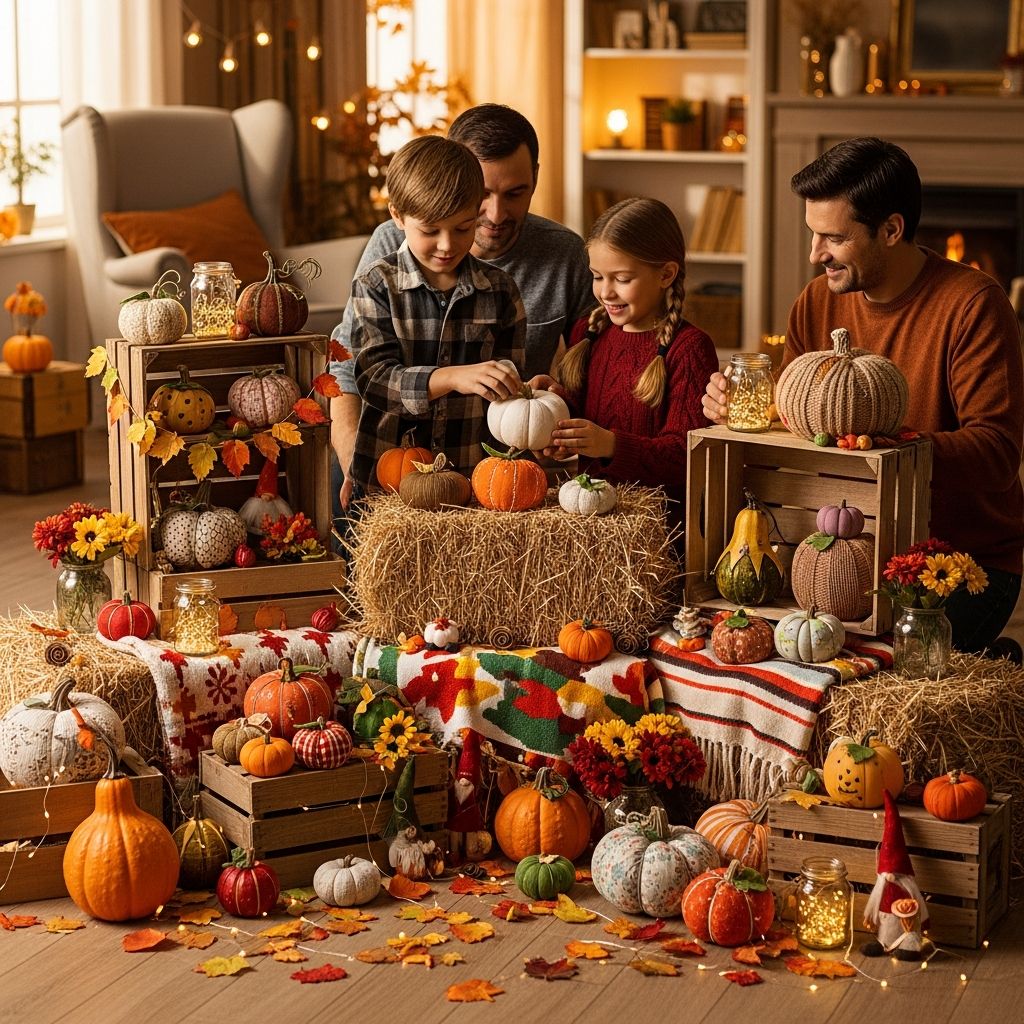
- Rustic farm: Burlap, wooden crates, plaid blankets, straw or raffia, and classic orange pumpkins.
- Whimsical storybook: Pastel pumpkins, fairy lights, hand-drawn signs, and friendly scarecrows.
- Spooky-but-silly: Goofy faces, purple and green accents, friendly bats and ghosts, glow sticks.
- Nature-focused: Real leaves, pinecones, twigs, and other natural materials with muted fall colors.
Once you choose the mood, picking colors, props, and activities becomes much easier.
Step 3: Gather Supplies
Use what you already have first, then fill in gaps with low-cost or reusable items. Here is a flexible starter list to adapt to your space.
- Real pumpkins and/or foam craft pumpkins in different sizes.
- Markers, stickers, kid-safe paint, or paper cutouts for decorating pumpkins.
- Blankets, hay bales, cardboard boxes, or cushions for seating and display.
- String lights, paper leaves, garlands, and fall-colored fabric.
- Plastic bins or baskets for sensory play and pumpkin “display” areas.
- Index cards or cardstock for simple signs (price tags, patch rules, welcome signs).
- Optional: small chalkboard, toy wheelbarrow or wagon, play cash register, or pretend market items.
| Budget Level | Focus Items | Tips |
|---|---|---|
| Shoestring | Paper pumpkins, hand-drawn signs, repurposed blankets, cardboard boxes | Trace pumpkin shapes from cereal boxes and color; use fallen leaves as décor. |
| Moderate | Mix of real and foam pumpkins, simple string lights, a few themed props | Buy after-season décor on clearance to reuse each year. |
| Splurge | Hay bales, large backdrop, themed tableware, lights, costumes | Create storage bins labeled “Fall” so you can build on the collection annually. |
Designing the Layout
Think of your DIY patch as a tiny, walkable story. Children should be able to enter, explore, play, and rest as they move from one area to another.
Create Distinct Zones
Even in a single room, defining zones keeps things organized and sparks imaginative play. Use rugs, tables, or tape lines on the floor to create sections.
- Welcome area: A sign that says “Pumpkin Patch” or your family name, plus a small table for tickets or pretend money.
- Picking field: The main area where pumpkins are displayed for children to “pick” and carry.
- Activity corner: A table or blanket for crafts, drawing, or sensory play bins.
- Photo spot: A chair or hay bale with a backdrop, where you can take seasonal photos.
- Snack station: Optional table for apple slices, popcorn, or warm drinks for older kids and adults.
Simple Indoor and Outdoor Layout Ideas
- Living room layout: Pumpkins arranged along a wall as the “field,” coffee table as craft space, couch as photo area with a fall blanket draped across the back.
- Backyard layout: Pumpkins clustered on the lawn, a folding table for crafts, string lights across a fence, and a corner for active games like a ring toss.
- Classroom layout: Dramatic play corner as the patch, a small rug as the picking field, a low shelf as the market stand, and a table group reserved for pumpkin-related centers.
Pumpkin-Themed Activities and Games
Once your space feels like a pumpkin patch, add activities that encourage movement, creativity, and cooperation. Rotate options if hosting multiple groups or a long event.
Active Games for High Energy
- Pumpkin Relay: Divide children into teams. They race while gently carrying a small pumpkin from one basket to another. Add silly variations like walking backward or holding the pumpkin between knees for older kids.
- Ring the Stem: Set several pumpkins in a line and give children rope rings or glow-stick rings. They stand behind a line and try to toss rings over the pumpkin stems.
- Patch Pathway: Place paper or foam pumpkins on the floor like stepping stones. Children hop from pumpkin to pumpkin without touching the “mud” (the floor), practicing balance and coordination.
- Wheelbarrow or Wagon Rides: Use a toy wagon or small laundry basket on a blanket. Kids take turns pulling or gently pushing each other through the “field” with stuffed pumpkins.
Creative Corners and Quiet Play
- Pumpkin Decorating Table: Provide markers, stickers, tape, paper shapes, and googly eyes. For mess-free fun, skip paint and use removable adhesive dots.
- Paper Pumpkin Craft: Let kids cut and assemble paper pumpkins, then tape them to a wall to grow a “community patch” of their own artwork.
- Pumpkin Story Nook: Set out a basket of fall books and soft pillows. An adult or older child can read pumpkin-themed stories while younger kids cuddle up.
- Pumpkin Market Pretend Play: Use play money, baskets, and a toy cash register. Children take turns being farmer, customer, and cashier, practicing social and math skills.
Sensory and Fine-Motor Stations
- Seed Exploration Bin: For older toddlers and up, offer a bin of clean pumpkin seeds mixed with dry lentils or beans plus scoops and small cups.
- Mini Pumpkin Wash: Fill a shallow tub with warm water, a few drops of soap, and small brushes. Kids “wash” their pumpkins and then dry them with towels.
- Texture Discovery Tray: Lay out smooth pumpkins, bumpy gourds, crunchy leaves, rough burlap, and soft fabric for children to touch and describe.
Learning Opportunities in the Pumpkin Patch
Your homemade patch can double as a themed classroom, supporting early math, literacy, and science through play.
Math Through Pumpkins
- Counting and grouping: Ask children to count how many pumpkins are in the patch, then group them by small, medium, and large.
- Simple addition and subtraction: Prompt questions like “If you pick two pumpkins and then add one more, how many do you have?”
- Measurement: Provide measuring tapes or pieces of string so kids can compare pumpkin heights and circumferences.
Language and Storytelling
- Sign-making: Let children create signs with words or drawings such as “Open,” “Pumpkins for Sale,” or “Hay Ride This Way.”
- Labeling game: Label baskets with words like “big,” “small,” or “striped” and ask children to sort pumpkins accordingly.
- Short stories: Invite kids to dictate or write mini stories about a pumpkin’s adventure from field to front porch.
Science and Nature Connections
- Life cycle chart: Show pictures or drawings of seed, sprout, vine, flower, and pumpkin stages.
- Seed observation: Open one pumpkin (with adult help) and look closely at the fibers and seeds, discussing how new plants form.
- Composting conversation: Talk about how leftover pumpkin parts can be composted to feed soil for future plants.
Sample Pumpkin Patch Day Schedule
| Time | Activity |
|---|---|
| 00:00–00:15 | Welcome, tickets, and a short tour of the pumpkin patch zones |
| 00:15–00:35 | Free picking time and pretend market play |
| 00:35–00:55 | Active game (relay, ring toss, or pathway hopping) |
| 00:55–01:15 | Snack break and storytime in the reading nook |
| 01:15–01:35 | Pumpkin decorating or art project |
| 01:35–01:45 | Photo stop and free exploration before goodbye |
Decor and Safety Tips
- Secure loose rugs and cords to prevent tripping during energetic games.
- Keep lit candles and sharp carving tools out of reach; use battery-operated candles or glow sticks instead.
- Offer non-slip shoes or grippy socks if kids will be running or hopping indoors.
- Check for pumpkin rot or mold if you set up well in advance, and replace any that get too soft.
- Allergy-aware snacks and fragrance-free décor help ensure everyone can participate comfortably.
Making It Special Year After Year
- Keep a tradition: Take a photo in the same spot each year so you can watch children grow alongside the pumpkins.
- Rotate activities: Reuse core decorations, but change games or crafts to keep the experience fresh.
- Invite kids to help plan: Ask what they loved last time and what they would like to add this year.
Frequently Asked Questions
Do I need real pumpkins to make this work?
No. Real pumpkins are fun, but paper or foam versions can be just as magical, especially for small spaces or repeated classroom use. You can also mix real and pretend pumpkins so children get the sensory experience without needing dozens of fresh ones.
How can I do this in a very small space?
Focus on vertical décor and a few key props. A single wall can become the whole “field” by taping paper pumpkins and a hand-lettered sign, while one basket on the floor serves as the picking area and a small table hosts an art activity.
What ages is a DIY pumpkin patch best for?
This idea can be tailored for toddlers all the way to early teens. Younger children may enjoy sensory bins, simple games, and pretend market play, while older kids may prefer decorating more intricately, helping run stations, or turning the patch into a themed photo booth.
How can I keep costs low?
Reuse blankets, cardboard, and craft supplies you already own, and borrow items from friends or neighbors. Focus on one or two standout features, like a decorated photo corner or an engaging game, instead of buying many small decorations.
Can this work as a classroom or group party theme?
Yes. A DIY pumpkin patch works beautifully for fall open houses, preschool centers, homeschool co-ops, and birthday parties. Assign adults or older students to supervise different zones and rotate groups through activities to avoid crowding.
Bringing the Pumpkin Patch Home
With a bit of creativity and planning, a DIY pumpkin patch can transform an ordinary day into a cozy celebration filled with color, imagination, and family connection. Whether you build a tiny corner in your living room or a full backyard experience, the memories you make together will last well beyond pumpkin season.