Returning to work after welcoming a new baby presents unique challenges for breastfeeding mothers, particularly the need to express milk throughout the day. Creating an environment that accommodates pumping not only complies with federal law but also enhances employee satisfaction, retention, and productivity. This guide explores actionable strategies for employers to cultivate lactation-supportive cultures and tips for mothers navigating these spaces.
Understanding Legal Foundations for Lactation Accommodation
The cornerstone of workplace pumping support is rooted in U.S. federal legislation. The Fair Labor Standards Act (FLSA), amended by the Providing Urgent Maternal Protections (PUMP) for Nursing Mothers Act of 2022, mandates that most employers provide reasonable break time and a private, non-bathroom space for employees to pump breast milk for up to one year after their child’s birth. This applies to non-exempt employees under FLSA, with recent expansions closing previous gaps for exempt workers.
Key requirements include:
- Break time as frequently as needed, which could mean 2-3 sessions per 8-hour shift.
- A shielded space shielded from view, equipped for effective milk expression.
- No retaliation against employees using these accommodations.
Employers with fewer than 50 employees may qualify for exemptions only if compliance poses undue hardship, but many still opt to provide support voluntarily to attract talent.
Designing Functional and Welcoming Pumping Spaces
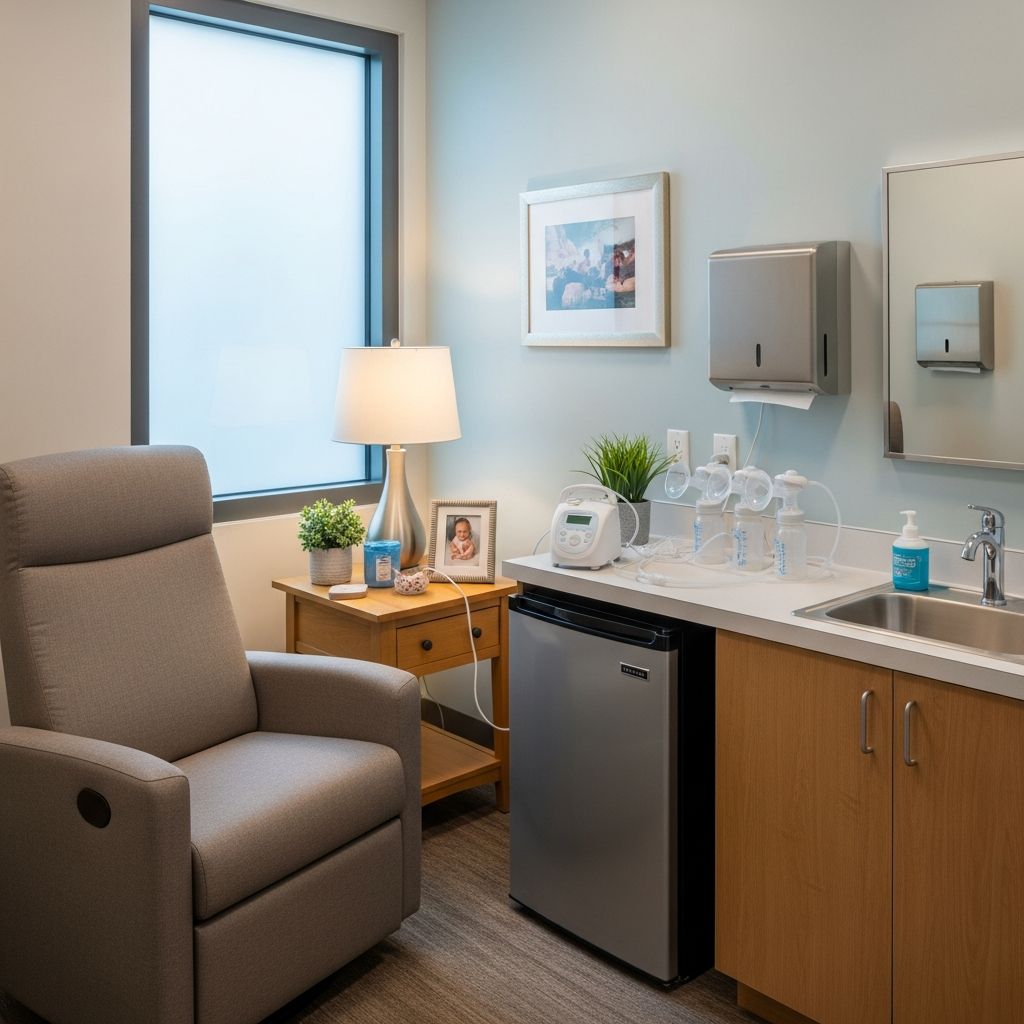
A compliant space goes beyond the basics— it should prioritize comfort and efficiency to reduce stress and encourage sustained breastfeeding. Ideal lactation rooms feature ergonomic seating, adjustable lighting, a power outlet, nearby refrigeration for milk storage, and a sink for cleaning equipment.
| Essential Feature | Benefits | Implementation Tips |
|---|---|---|
| Private, lockable door | Ensures privacy and security | Install keycard access integrated with scheduling systems |
| Comfortable chair and table | Supports posture during 15-20 minute sessions | Choose glider or rocking chairs for relaxation |
| Refrigerator and sink | Safe milk storage and hygiene | Dedicated mini-fridge; hands-free faucet |
| Hospital-grade pump | Reduces need to transport personal gear | Multi-user models sanitized between uses |
| Snacks and water station | Boosts milk supply and hydration | Stock lactation cookies, nuts, and electrolyte drinks |
Surveys from working mothers highlight that uncomfortable or inadequate spaces lead to skipped sessions and early weaning. Providing these amenities signals genuine investment in employee health.
Streamlining Scheduling and Time Management
Predictable access to pumping rooms prevents conflicts and stress. Integrate lactation spaces into company calendars with booking software, marking sessions as recurring and high-priority. Mothers should block time like any critical meeting, communicating availability to teams upfront.
- For Employers: Prioritize pumping bookings over non-essential meetings; offer flexible hours or remote options on high-demand days.
- For Mothers: Create a routine aligned with milk supply needs, typically every 3-4 hours; use wearable pumps for mobility if policy allows.
This structure fosters accountability and normalizes the practice, turning potential disruptions into seamless routines.
Fostering an Inclusive Company Culture
Beyond infrastructure, cultural buy-in from leadership, managers, and peers is vital. Negative comments or resentment can create hostile environments, prompting mothers to wean prematurely. Proactive education combats this: include lactation support in onboarding, benefits training, and all-hands meetings.
Strategies for cultural integration:
- Train supervisors on PUMP Act compliance and empathy-building.
- Launch employee resource groups for new parents to share experiences.
- Promote breastfeeding as a public health benefit, akin to wellness programs.
- Enforce zero-tolerance for jokes or harassment, with clear reporting channels.
Companies reporting high lactation program adoption see 20-30% better retention among new mothers, underscoring the business case.
Empowering Mothers: Preparation and Advocacy
Mothers play a pivotal role in shaping their experience. Before maternity leave, discuss needs with HR and supervisors, sharing resources from the CDC or Office on Women’s Health. Upon return, set expectations early and track usage to demonstrate value.
Practical tips include:
- Invest in quiet, portable pumps for discreet sessions.
- Prepare a ‘pumping kit’ with flanges, storage bags, and lanolin cream.
- Build a support network of colleagues who’ve pumped before.
- Document issues and escalate to HR if accommodations falter.
Self-advocacy ensures needs are met without apology—pumping sustains breastfeeding goals critical for infant health.
Enhancing Support Through Policies and Programs
Comprehensive policies amplify individual efforts. Offer paid lactation breaks, extended family leave, and partnerships with services providing pumps or consultants. Return-to-work check-ins help managers and employees align on schedules.
Sample policy elements:
- Guaranteed paid breaks (not deducted from other time off).
- Remote work flexibility for pumping.
- Access to international board-certified lactation consultants (IBCLCs).
Customizing to company size—virtual sessions for remote teams, in-person groups for offices—maximizes impact.
Frequently Asked Questions (FAQs)
What does the PUMP Act require from employers?
It mandates break time and a private non-bathroom space for pumping up to one year post-birth, with protections against retaliation.
Can small businesses exempt themselves?
Only if undue hardship is proven; most provide support anyway for recruitment advantages.
How often should I pump at work?
Every 2-3 hours to maintain supply, adjusting based on personal needs.
What if my workplace lacks a dedicated space?
Advocate by sharing CDC resources; temporary solutions like locked offices may suffice short-term.
Are lactation breaks paid?
Federal law doesn’t require pay, but many employers cover them as wellness time.
Measuring Success and Continuous Improvement
Track program effectiveness via anonymous surveys, retention rates, and feedback boxes. Celebrate milestones like ‘Lactation Support Month’ to reinforce commitment. Regular audits ensure spaces remain clean and accessible.
Success stories abound: firms with robust programs report happier teams and lower turnover. By prioritizing pumping, workplaces invest in a diverse, resilient workforce.
References
- Pumping at Work: What Every Manager Needs to Know — Listen to Your Mothers. 2023. https://listentoyourmothers.com/blog/pumping-at-work
- Creating A Positive Atmosphere for Pumping Mothers at Work — Healthy Horizons. Accessed 2026. https://www.healthyhorizons.com/blogs/blog/creating-a-positive-atmosphere-for-pumping-mothers-at-work
- Creating a Lactation-Friendly Work Culture — Acelleron. Accessed 2026. https://acelleron.com/blog/creating-a-lactation-friendly-work-culture/
- Navigating Pumping at Work: Easy, Quiet, Confident — VAVA. Accessed 2026. https://www.vava.com/blogs/news/navigating-pumping-at-work-easy-quiet-confident