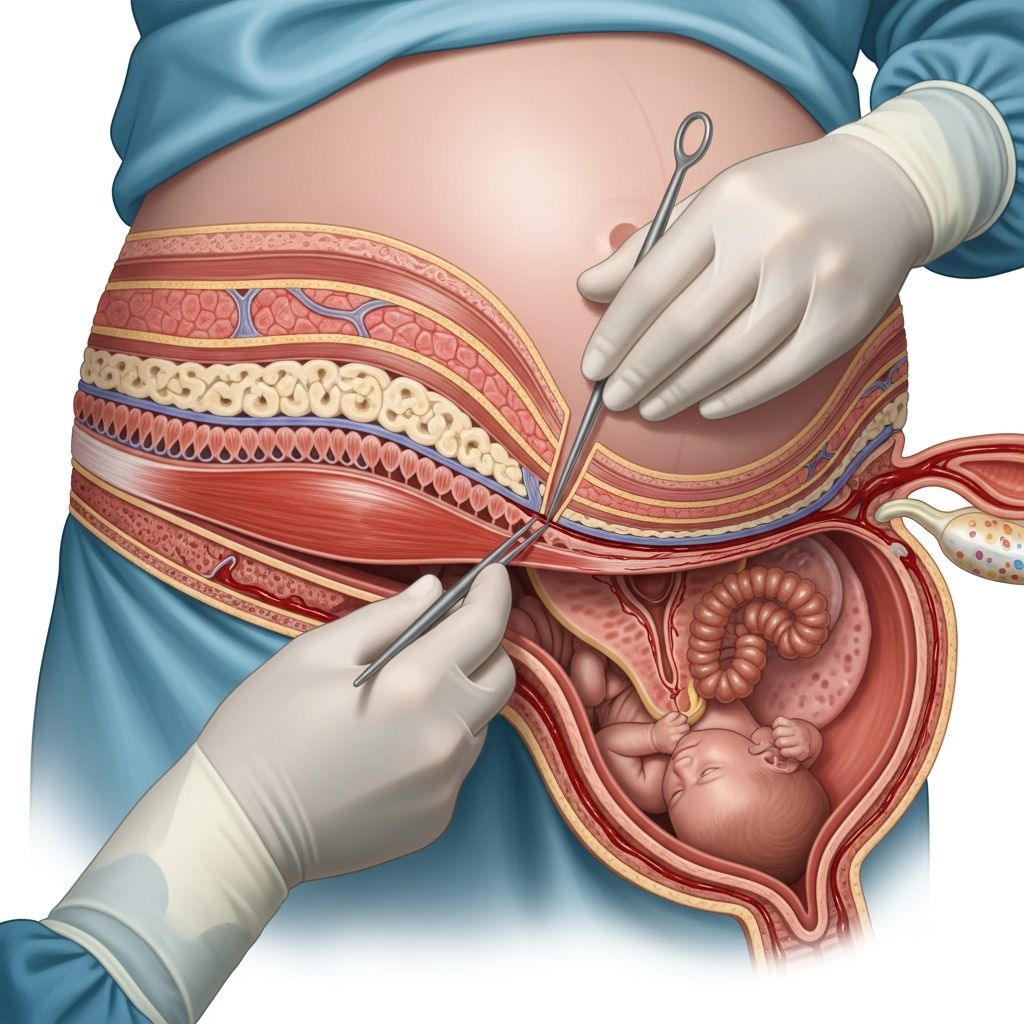
Recovering from a C-section is demanding enough without adding a bad cough, chest congestion, or seasonal illness into the mix. A single sneeze can feel like it threatens to undo all the careful surgical work, and many new parents find themselves afraid to take a deep breath or clear their throat because of the pain. This guide explains why coughing matters for your recovery, how to protect your incision while you do it, and what you can safely do at home to breathe more comfortably.
Why Coughing Hurts So Much After a C-Section
A C-section involves making an incision through skin, fat, and the tough abdominal wall, then carefully closing these layers again. In the early days after surgery, those tissues are still knitting together and are very sensitive to any sudden increase in pressure. When you cough, laugh, or even clear your throat forcefully, the abdominal muscles contract, the diaphragm moves sharply, and pressure rises inside your belly. That pressure pulls directly on the wound, stretching newly formed scar tissue and triggering sharp or burning pain around the incision.
On top of that, lying in bed, using pain medicines, and feeling nervous about breathing deeply can all make mucus pool in the lungs. That trapped mucus makes coughs more frequent and more forceful, which can turn into a frustrating cycle: the more you hurt, the less you want to breathe deeply, and the less you breathe deeply, the more congested you may feel. Understanding this cycle is the first step toward breaking it.
The Hidden Risk of “Babying” Your Breathing
It is completely understandable to hold your breath, take only shallow sips of air, or avoid coughing when every movement seems to tug on your belly. However, staying too still and breathing too shallowly can lead to problems such as low oxygen levels, stiff lungs, and a higher risk of infection in the chest. After abdominal surgery, many people are already at slightly higher risk for lung issues because of limited mobility and pain.
Gentle, regular deep breathing and effective coughing clear mucus out of the airways and keep the lungs expanded. Think of it as regular housekeeping for your chest: without it, dust collects in the corners. The goal is not to never cough, but to cough in a way that protects your incision and keeps your breathing as comfortable as possible.
Supported Coughing: Protecting Your Incision
Supported coughing is a simple technique that cushions the incision so you can clear your lungs without feeling as if your abdomen is tearing open. It does not weaken your stitches. When used correctly, it can make a huge difference in how manageable each cough feels.
How to Do Supported Coughing
Follow these steps whenever you feel a cough coming, or when doing planned breathing exercises:
- Sit upright or recline slightly with your back fully supported by pillows or the back of a chair.
- Bend your knees or place a pillow under them to soften the pull on your abdominal muscles.
- Place a folded towel, small blanket, or soft pillow firmly over your incision line.
- Use both hands to press the pillow gently but firmly into your belly as you cough.
- Take 2–3 slow, deep breaths through your nose, exhaling through your mouth.
- On the next breath out, give a strong, deliberate cough while keeping steady pressure on the pillow.
Some people prefer to lean slightly forward from the hips as they cough to further reduce strain on the incision. The key is firm, steady support rather than a last-second grab when the cough is already happening. Practice a few supported coughs when your pain medicine is working well so the movement feels more familiar when a sudden cough or sneeze sneaks up on you.
Gentle Breathing Exercises to Prevent Congestion
Deep breathing exercises help your lungs expand fully, move mucus out of smaller airways, and improve circulation around the healing tissues. Even just a few minutes every hour while you are awake can make a noticeable difference in how heavy or tight your chest feels.
- Diaphragmatic breathing: Place one hand on your upper chest and one over your belly (above the incision). Breathe in slowly through your nose, focusing on the hand over your belly rising more than the one on your chest. Exhale slowly through pursed lips, as if blowing gently through a straw. Repeat 5–10 times.
- “Smell the flowers, blow the candles”: Imagine smelling a flower as you inhale through your nose for a count of 3, then gently blowing out birthday candles as you exhale for a count of 4–5. This ratio encourages relaxation and helps you avoid sudden, forceful exhalations.
- Scheduled deep breaths: Set a timer or use feeding times as a reminder. Aim for a few rounds of deep breathing every hour while awake during the first several days after birth.
If your hospital provided a breathing device such as an incentive spirometer, use it according to the instructions. These devices give you a visual target and make it easier to track whether your lung expansion is improving day by day.
Smart Pain Management to Make Breathing Possible
Effective pain control is not a luxury after a C-section; it is a tool that allows you to walk, feed your baby, and breathe deeply enough to protect your lungs. When pain is reasonably controlled, you are more willing to practice supported coughing and to move around the house, both of which help reduce congestion.
- Take prescribed pain medicine on the schedule recommended rather than waiting until discomfort is severe.
- Ask your clinician which over-the-counter options are safe if you are breastfeeding, and whether you can alternate different types to keep pain level steady.
- Use non-medicine strategies such as warm (not hot) compresses around, but not directly on, the incision; loose clothing; and comfortable body positions for feeding and rest.
- Call your provider if your pain suddenly worsens, changes in character (for example, becomes sharp and stabbing), or is not improving over several days despite regular medicine.
Home Care for Mild Cough and Congestion
Mild upper-respiratory symptoms such as a dry tickle in the throat, a small amount of clear mucus, or an occasional cough are common, especially if your surgery happened during cold or allergy season. When symptoms are mild, home care and thoughtful self-care can often keep things from escalating.
- Humidify the air: Use a cool-mist humidifier or place a bowl of water near a heat source to add moisture to very dry indoor air. Clean any device regularly to avoid mold and bacteria growth.
- Stay hydrated: Warm drinks such as herbal teas, broth, or warm water with lemon can thin mucus and soothe a scratchy throat. Sip steadily rather than gulping, especially if you feel nauseated.
- Use saline: Saline nasal sprays or rinses can loosen congestion in the nose and sinuses without medication. Follow the product instructions and use distilled or previously boiled water for rinses.
- Elevate your upper body: Use extra pillows or a wedge cushion so that your shoulders and head are higher than your hips while resting. This position can reduce coughing fits at night and may make it easier to get in and out of bed.
Safe Positions for Sleeping, Feeding and Coughing
Your body position can either strain the incision or protect it. Finding a few “go-to” positions that feel safe and stable makes it less likely you will tense up or panic each time you feel congested or need to shift around.
| Activity | Position Tip | Why It Helps |
|---|---|---|
| Sleeping or resting | Recline on your back with knees bent over a pillow or lie on your side with a pillow between your knees. | Reduces direct pull on the incision and supports the lower back so abdominal muscles can relax. |
| Breastfeeding or bottle-feeding | Use a football hold or side-lying nursing to keep baby’s weight off your belly; place a firm pillow across your lap if seated. | Prevents direct pressure on the incision and allows you to support your core with pillows rather than muscle effort. |
| Coughing | Sit upright with feet flat on the floor, back supported, and a pillow pressed against your abdomen. | Stable alignment makes supported coughing easier and reduces sudden twisting or bending during a cough. |
| Getting out of bed | Roll to your side, drop your legs off the edge, then push up with your arms instead of doing a sit-up. | Uses arm and leg strength rather than the abdominal wall, reducing strain on healing tissues. |
When Cough or Shortness of Breath Is an Emergency
While many postpartum coughs are related to common colds or throat irritation, some symptoms signal more serious problems and need urgent medical attention. Post-surgical patients can be at risk for lung infections and blood clots, especially if they are not moving much or have other health conditions such as obesity, smoking history, or clotting disorders.
- Seek immediate care if you develop sudden or worsening shortness of breath, chest pain, coughing up blood, or a feeling that you cannot catch your breath.
- Contact your clinician promptly if your cough is accompanied by high fever, shaking chills, green or foul-smelling mucus, or pain that worsens when you take a deep breath.
- Watch for symptoms of a blood clot in the leg: swelling in one calf, warmth, redness, or pain that is worse when you walk or flex your foot.
- Call for help if you feel light-headed, faint, or unusually confused along with breathing symptoms.
Trust your instincts; if something feels seriously wrong, do not wait for symptoms to “settle down.” Early evaluation can make treatment easier and safer for you and your baby.
Medication Questions: What to Ask Your Clinician
Many over-the-counter cold and cough remedies are not well studied in the immediate postpartum period, especially for people who are breastfeeding or taking other medicines after surgery. Before starting any new cough suppressant, decongestant, or herbal preparation, discuss it with your obstetric or primary care provider.
- Ask which pain medicines, if any, can be taken at the same time as specific cough or cold drugs.
- Clarify whether certain ingredients, such as strong decongestants, might affect milk supply or raise your blood pressure.
- Review your full medication list, including prenatal vitamins, iron supplements, and any medicines for chronic conditions, so your clinician can check for interactions.
Building a Daily Recovery Routine
The early postpartum days can feel chaotic, but even a loose routine can offer structure and make it easier to remember important self-care tasks. Think of your day as a rhythm that alternates between rest, gentle movement, feeding your baby, and brief moments dedicated to your breathing and incision care.
- Morning: Pain medicine as prescribed, a few minutes of deep breathing, supported coughs, short walks to the bathroom and kitchen, and a quick incision check for redness, swelling, or drainage.
- Midday: Hydrating drinks, another round of breathing exercises, and a brief walk down the hall or around the room. Aim to change position at least every couple of hours.
- Evening: Gentle stretching within your provider’s guidelines, more deep breathing, and planning your sleep setup so that pillows, water, and tissues are within easy reach at night.
- Night: Try to cluster tasks around baby’s feeds so that you can return to rest quickly. If you wake coughing, sit upright, support your incision, and take a series of slow breaths before lying back down.
Emotional Strain: When Every Cough Feels Like a Setback
Painful coughing does not only affect the body; it can also increase anxiety, frustration, and even feelings of guilt. Some parents worry that their coughing is harming the baby or damaging the surgical repair. Others feel overwhelmed by the idea that recovery seems to be taking longer than they expected.
It can help to remember that healing is not a straight line. Having a day with more coughing or soreness does not mean you are “back at zero.” If worry is keeping you from sleeping or enjoying time with your baby, share your concerns with a trusted clinician, partner, or friend. Asking for reassurance, and for practical help with tasks like lifting, laundry, or older children, is part of good recovery, not a sign of weakness.
Frequently Asked Questions
Will coughing open my C-section incision?
C-section incisions are closed with strong sutures or staples designed to hold even when you cough, laugh, or move. It is very rare for an incision to reopen solely from coughing, especially if you support it with a pillow and follow activity guidelines. What you are most likely to feel is pain from stretching sensitive tissues, not actual tearing. If you notice new bleeding, gaping of the wound edges, or fluid leaking from the incision, contact your clinician quickly.
How often should I do breathing exercises?
A useful goal is to take a series of deep, slow breaths and a few supported coughs at least every hour while you are awake during the first several days after surgery. This schedule may sound frequent, but each session can be very short. You can link breathing exercises to everyday moments such as after feeding your baby, after using the bathroom, or before going to sleep.
Is it normal to feel more pain at night when I cough?
Many people notice their pain more at night because they are more tired, have gone longer between doses of medicine, and may have been lying in one position for a long time. Night-time air can also be drier and cooler, which may trigger more coughing. Adjusting your pain-relief schedule with your clinician’s guidance, using a humidifier, and propping yourself up with pillows may make night-time coughs more tolerable.
Can I use lozenges or herbal teas for my cough?
Simple throat lozenges and many herbal teas can be soothing, but “natural” does not always mean safe in the postpartum period. Some herbs can affect bleeding, interact with medicines, or transfer into breast milk. Check the ingredients list and discuss specific products with your clinician or a pharmacist, especially if you notice any unusual drowsiness, stomach upset, or changes in how you feel.
When should I worry that my cough is more than just a cold?
You should seek medical advice if your cough lasts longer than a week, is getting worse instead of better, or is accompanied by high fever, thick or discolored mucus, chest pain, or significant shortness of breath. Sudden, severe symptoms, especially if they appear along with leg swelling or chest tightness, deserve urgent evaluation. When in doubt, call your clinician or local emergency services and describe exactly what you are experiencing.
Key Takeaways for Safer, More Comfortable Recovery
Coughing and congestion after a C-section are uncomfortable but common, and in most cases they can be managed at home with incision support, smart pain control, and gentle breathing exercises. By protecting your wound with a pillow, keeping your lungs active, and knowing the red-flag symptoms that require medical attention, you give your body the best chance to heal well while you focus on bonding with your baby. Small, consistent actions taken throughout the day often matter more than any single big effort.