Parenting brings joy but also generates significant waste, especially from disposable diapers. Traditional diapers contribute heavily to landfills, taking centuries to decompose. Fortunately, advancements in compostable materials and specialized programs offer viable alternatives. This guide explores how to responsibly manage diaper waste through composting, focusing on plant-based products and structured services that make sustainability accessible for busy families.
Understanding Compostable Diapers and Their Benefits
Compostable diapers differ from standard disposables by using plant-derived materials like bamboo or cellulose instead of plastics. These diapers break down into nutrient-rich compost under proper conditions, typically within 2-3 months in industrial facilities. Unlike conventional diapers, which persist in landfills, compostable versions support circular waste systems, reducing environmental footprint.
- Material Composition: Primarily non-plastic elements that degrade naturally.
- Decomposition Time: Faster breakdown compared to synthetic diapers.
- Environmental Impact: Lowers methane emissions from landfills.
Key benefits include minimized plastic pollution and potential soil enrichment from resulting compost. Parents choosing these options align with broader sustainability goals without sacrificing convenience.
Challenges in Diaper Composting
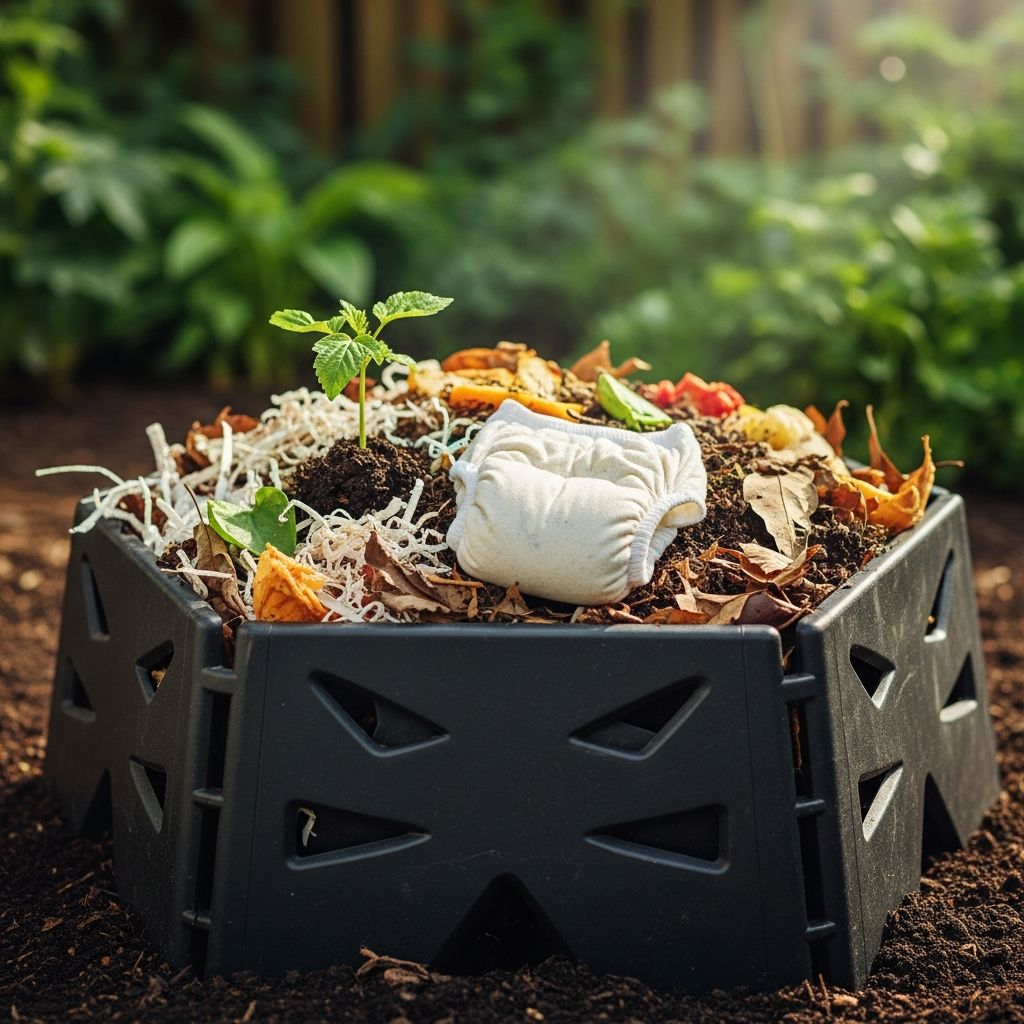
Despite promise, composting diapers faces hurdles due to biosolids content. Human waste requires high-temperature industrial processes to eliminate pathogens, which backyard piles cannot achieve. Municipal programs often exclude diapers, citing regulatory and safety concerns.
| Challenge | Explanation | Solution |
|---|---|---|
| Pathogen Risk | Insufficient heat in home compost kills bacteria | Commercial facilities with regulated temperatures |
| Regulatory Barriers | Permitting for biosolids composting is strict | Partner with certified services |
| Availability | Few facilities accept diapers | Subscription programs like ReDYPER |
| Odor Control | Potential smells during collection | Compostable bags and sealed bins |
These issues highlight why professional services are essential for safe, effective composting.
Plant-Based Diaper Brands for Composting
Several brands produce over 90% compostable diapers. Dyper, based in Scottsdale, Arizona, leads with sustainable, plant-based designs certified for industrial composting. Other options include bamboo-based products that prioritize biodegradability.
- Dyper: Highly rated for eco-materials and composting partnerships.
- Similar brands: Focus on non-plastic cores and topsheets.
Selecting certified products ensures compatibility with composting protocols, maximizing waste diversion.
ReDYPER Program: Effortless Composting Solution
Dyper’s ReDYPER initiative simplifies diaper composting for parents. Subscribers receive compostable bags, such as 13-gallon biodegradable rolls, for soiled diapers and wipes. Filled bags are collected curbside or via mail, then processed by partners like Recyclops or TerraCycle.
The welcome kit includes essentials to start immediately, making transition seamless. Programs operate in select areas, expanding as demand grows.
- Enroll online and receive starter bags.
- Line diaper pail with compostable bag.
- Seal full bag and place in designated pickup.
- Professional composting handles the rest.
This service diverts thousands of diapers from landfills annually, proving scalable sustainability.
Step-by-Step Guide to Home Composting Preparation
While full composting requires industrial setups, parents can prepare diapers at home for service drop-off. Use dedicated pails to contain waste hygienically.
Gathering Supplies
- Compostable liners or bags from programs like ReDYPER.
- Air-tight diaper pail to minimize odors.
- Plant-based diapers for best results.
Daily Routine
1. Deposit soiled diaper in lined pail.
2. Sprinkle baking soda or use deodorizers.
3. Empty into compostable bag when full.
4. Store bag securely until pickup.
These steps ensure waste is prepped for professional processing, maintaining home cleanliness.
Commercial Composting Processes Explained
Industrial facilities like those partnered with Dyper shred diapers, mix with bulking agents, and compost at 140-160°F for pathogen destruction. Testing follows for safety, confirming compost suitability for non-edible plants. Processes last 30+ days, yielding safe humus.
Challenges include site permitting and odor management, but innovations like enclosed systems address them. Facilities test for heavy metals and biodegradability to meet standards.
Regional Availability and Future Expansion
Composting options vary by location. Washington state lacks public facilities due to regulations, though initiatives like Diaper Stork explore solutions. Programs like Recyclops serve urban areas, with mail-back options broadening access.
Future growth depends on parental demand and policy support. Parents can advocate for local biosolids composting to expand infrastructure.
Comparing Composting to Other Sustainable Options
| Method | Pros | Cons | Best For |
|---|---|---|---|
| Composting Services | Hands-off, pathogen-safe | Subscription fees | Busy families |
| Cloth Diapers | Reusable, cost-effective long-term | Laundering effort | Water access |
| Elimination Communication | No waste | Learning curve | Patient parents |
| Landfill | Convenient | Environmental harm | Last resort |
Composting strikes a balance between convenience and eco-impact for disposable users.
Health and Safety Considerations
Proper composting eliminates E. coli and other pathogens through heat and time. Resulting compost suits ornamental gardens, not food crops. Parents should follow service guidelines to avoid contamination risks.
Tips for Maximizing Program Success
- Sign up early for welcome kits.
- Separate solids if required by local rules.
- Track pickup schedules via app.
- Educate household on process.
- Combine with reusable wipes.
Frequently Asked Questions (FAQs)
Can I compost diapers in my backyard?
No, home compost piles lack heat to kill pathogens safely.
What materials are in compostable diapers?
Plant-based like bamboo and cellulose, over 90% biodegradable.
How long does composting take?
2-3 months in industrial settings.
Is ReDYPER available everywhere?
Expanding; check Dyper site for locations.
Can I use the compost on vegetables?
Best for non-edible plants due to biosolids history.
What’s in the ReDYPER starter kit?
Compostable bags to begin disposal.
Adopting composting transforms diaper waste management, fostering sustainable habits. Programs like ReDYPER empower parents to contribute to planetary health effortlessly.
References
- The Dirt on Compostable Diapers — Diaper Stork. Accessed 2026. https://www.diaperstork.com/Articles.asp?ID=343
- This company wants to start composting your diapers — Mother.ly. Accessed 2026. https://www.mother.ly/life/how-to-compost-baby-diapers-with-dyper/
- REDYPER™ Welcome Kit — Dyper. Accessed 2026. https://dyper.com/products/free-redyper-welcome-kit
- DYPER + Recyclops Partner to Compost Dirty Baby Diapers — Dyper. Accessed 2026. https://dyper.com/blogs/news/dyper-recyclops-partner-to-compost-dirty-baby-diapers