Choosing the Right Sunless Tanner for Your Skin and Lifestyle
For many people, a sun-kissed glow is a seasonal staple, but not everyone wants to spend hours in the sun or risk UV damage from tanning beds. Sunless tanners offer a safer, more controlled way to achieve that golden look, but with so many options on the market, it can be overwhelming to know where to start. The real question isn’t just which brand is the most popular, but which formula, shade, and price point actually work for your skin type, routine, and expectations.
Understanding How Sunless Tanners Work
Sunless tanners rely on dihydroxyacetone (DHA), a colorless sugar compound that reacts with amino acids in the outermost layer of the skin to produce a temporary brown pigment. This reaction happens over several hours and doesn’t involve UV exposure, making it a much safer alternative to sunbathing or tanning beds.
The depth and tone of the tan depend on:
- The concentration of DHA in the product
- Your skin’s natural pH and moisture level
- How long the product is left on before rinsing
- Whether it’s a gradual or express formula
Because DHA only affects dead skin cells, the tan fades as those cells naturally shed, usually within 5–10 days. This means regular maintenance is needed for a consistent look, but it also means you can adjust or stop the tan at any time without long-term skin damage.
Types of Sunless Tanner Formulas
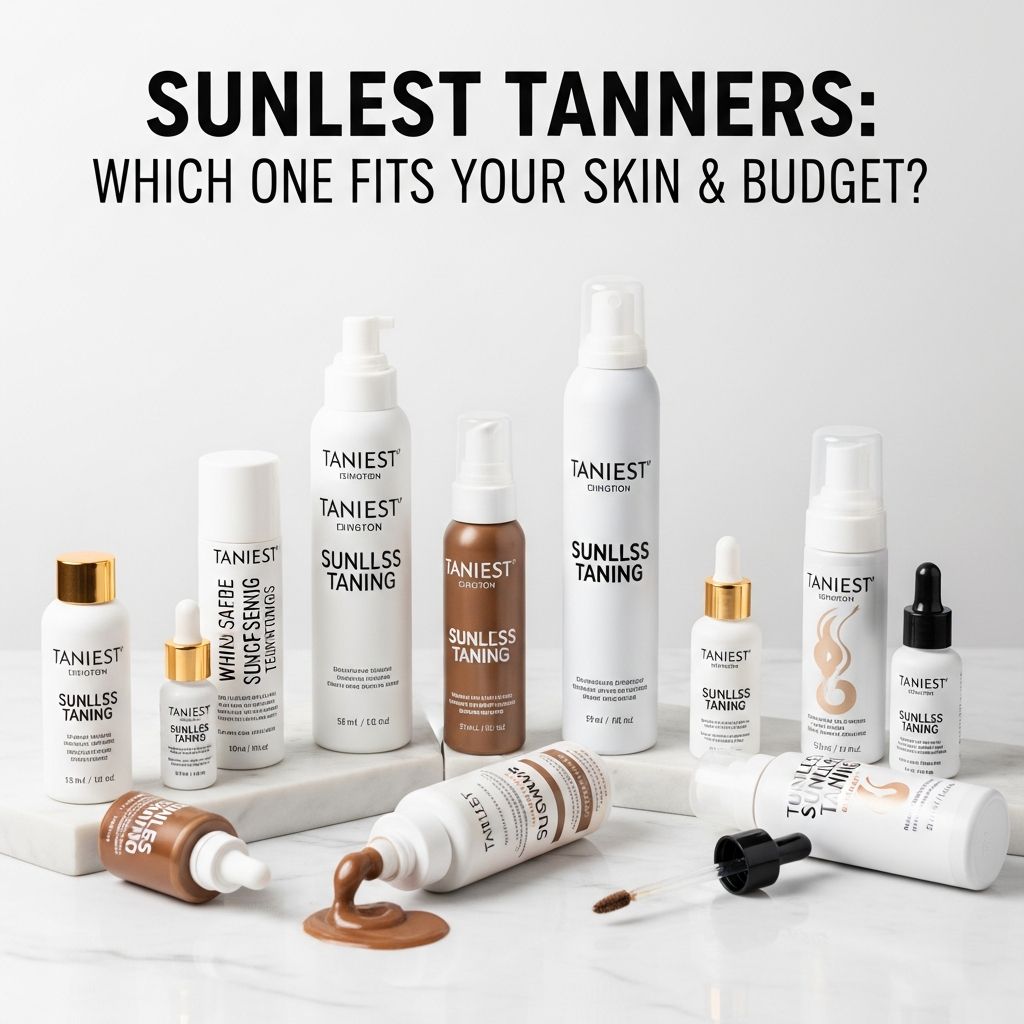
Not all self-tanners are created equal. The texture and delivery method can dramatically affect the ease of application, the final look, and how long the tan lasts. Here’s a breakdown of the most common types:
Self-Tanning Mousse
Mousse formulas are lightweight, fast-drying, and designed to give a more intense, even tan in a single application. They’re ideal for:
- Those who want a deeper, more noticeable tan quickly
- People with normal to oily skin who prefer a non-greasy feel
- Anyone who wants a streak-free finish with minimal transfer onto clothes
Because mousses are often more concentrated, they require careful, even application and a good tanning mitt. They’re less forgiving of missed spots or uneven blending, but when applied correctly, they can deliver a very natural, salon-like result.
Gradual Tanning Lotion
Gradual tanners are moisturizers infused with a low concentration of DHA. They’re meant to be used daily or every other day to build up a subtle, sun-kissed glow over time. They’re best for:
- Beginners who are nervous about going too dark
- People who want a low-maintenance, everyday glow
- Those with dry or sensitive skin who benefit from added hydration
These lotions are less likely to result in streaks or an unnatural orange tone, but they won’t give an instant dramatic tan. They’re more about enhancing your natural skin tone than creating a bold, beachy look.
Self-Tanning Drops
Tanning drops are a customizable option that can be mixed into your regular moisturizer, body lotion, or even foundation. They’re perfect for:
- People who want full control over how dark their tan becomes
- Those who already have a favorite moisturizer and don’t want to switch products
- Anyone looking for a seamless, natural-looking glow without a separate tanning step
Drops are great for fine-tuning your shade, but they require some trial and error to get the right ratio of drops to moisturizer. They’re also usually more expensive per ounce, though a little goes a long way.
Spray Tanners (At-Home and Professional)
Spray tanners, whether in aerosol cans or professional salon booths, deliver a fine mist of tanning solution over the body. They’re ideal for:
- Special occasions when you want a flawless, even tan
- People who struggle with streaks from manual application
- Those who want a more natural, airbrushed finish
Professional spray tans are more expensive but often provide the most consistent results. At-home sprays are more affordable but require careful technique to avoid overspray, uneven coverage, or inhalation of the mist.
How to Match Shade to Your Skin Tone
One of the biggest mistakes people make with self-tanners is choosing a shade that’s too dark for their natural skin tone. A shade that’s too intense can look orange, streaky, or unnatural, especially in photos or under bright light.
Here’s a simple guide to help match shade to skin tone:
| Skin Tone | Recommended Shade Range | Notes |
|---|---|---|
| Fair / Light | Light to Medium-Light | Avoid dark or ultra-dark shades; opt for gradual or light express formulas |
| Medium / Olive | Medium to Medium-Dark | Most brands offer a good range; test on a small area first |
| Tan / Deep | Medium-Dark to Dark | Can handle higher DHA concentrations; still avoid going too dark too fast |
When in doubt, it’s always safer to start with a lighter shade and build up over a few applications. You can always go darker, but it’s much harder to fix a tan that’s too intense.
Price vs. Performance: What’s Worth the Investment?
Sunless tanners range from drugstore basics to high-end luxury products, and the price difference can be significant. But does a higher price always mean better results? Not necessarily. Here’s how to think about value:
Budget-Friendly Options
Drugstore and mid-range brands often offer excellent performance for the price. Many of these products:
- Use effective DHA concentrations
- Come in multiple shades for different skin tones
- Include moisturizing ingredients to prevent dryness
These are great for everyday use, especially if you’re building a gradual tan or using tanner occasionally for events. They may not have the most luxurious textures or scents, but they can still deliver a natural-looking glow.
Premium and Luxury Tanners
Higher-end sunless tanners often justify their price with:
- More refined textures (lighter mousses, silkier lotions)
- Better fragrance profiles (less of the classic “fake tan” smell)
- Added skincare benefits like hyaluronic acid, antioxidants, or SPF
- More precise shade ranges and undertone matching
If you use self-tanner regularly or want a more salon-quality result at home, a premium product can be worth the investment. However, it’s still important to choose the right formula and shade for your skin, not just the most expensive one on the shelf.
Professional Spray Tans
Professional spray tans are the most expensive option, but they offer several advantages:
- Custom-blended solutions tailored to your skin tone and undertones
- Even, streak-free application from head to toe
- Longer-lasting results when paired with proper aftercare
For weddings, vacations, or other special events, a professional tan can be a smart splurge. For everyday use, it may not be practical or cost-effective, but it’s a great benchmark for what a well-applied sunless tan should look like.
Prepping Your Skin for the Best Results
No matter which product you choose, how you prep your skin is just as important as the tanner itself. A poorly prepped surface can lead to patchiness, streaks, and an uneven fade.
Follow these steps for a smooth, natural-looking tan:
- Exfoliate 24–48 hours before application, focusing on rough areas like elbows, knees, ankles, and feet
- Shave or wax at least 8–12 hours before tanning to avoid irritation and open pores
- Moisturize very dry areas (heels, elbows, knees) lightly the night before, but avoid heavy creams right before application
- Apply tanner to clean, dry skin with no residue from lotions, oils, or deodorant
- Use a tanning mitt for mousses and lotions to prevent stained palms and ensure even blending
After application, avoid sweating, showering, or swimming for the recommended development time (usually 4–8 hours for express formulas, longer for gradual ones). After rinsing, continue to moisturize daily to extend the life of your tan.
Common Mistakes and How to Avoid Them
Even experienced tanners can run into issues. Here are some of the most common problems and how to fix or prevent them:
- Orange or unnatural tone: Usually caused by using a shade that’s too dark or a formula with poor undertone matching. Stick to shades that are only one or two levels deeper than your natural skin tone.
- Streaks and patchiness: Often due to uneven application, skipping exfoliation, or using too much product in one area. Apply in thin, even layers and blend thoroughly, especially on joints and bony areas.
- Dark palms and soles: Caused by product buildup on hands and feet. Use a separate, lighter application on these areas or wipe excess product off with a damp cloth after applying to the rest of the body.
- Tan that fades too quickly: Can result from dry skin, frequent exfoliation, or swimming in chlorinated or salt water. Keep skin hydrated and avoid harsh scrubs between applications.
- Strong “fake tan” smell: Some DHA formulas have a distinct odor that fades after rinsing. Look for products labeled “low odor” or “fragrance-free” if this is a concern.
How to Maintain Your Tan Between Applications
A sunless tan doesn’t last forever, but with the right care, you can make it fade evenly and smoothly. Here’s how:
- Moisturize daily with a fragrance-free, non-oily lotion to keep skin hydrated
- Avoid long, hot showers and harsh soaps that strip natural oils
- Limit time in chlorinated pools and salt water, which can accelerate fading
- Use a gentle exfoliant 2–3 days after your tan starts to fade to remove dead skin cells evenly
- Consider using a gradual tanner between deeper applications to maintain a consistent glow
With consistent care, a well-maintained tan can look fresh for up to a week or more, depending on your skin and lifestyle.
Frequently Asked Questions
Can I use self-tanner on my face?
Yes, but it’s best to use a product specifically formulated for the face. Facial skin is more sensitive and can react differently to DHA. Look for a gradual tanner or a facial mousse with a lower DHA concentration and added skincare ingredients.
How often should I reapply self-tanner?
Most sunless tans last 5–10 days. Reapply when your tan starts to fade noticeably, usually every 4–7 days for a consistent look. Gradual tanners can be used daily or every other day to build and maintain color.
Is self-tanner safe for sensitive skin?
Most self-tanners are safe for sensitive skin, but it’s important to patch test first. Avoid products with alcohol, strong fragrances, or known irritants. Gradual tanners and fragrance-free formulas are often gentler options.
Do I still need sunscreen with a self-tanner?
Absolutely. Sunless tanners do not provide UV protection. Always apply broad-spectrum sunscreen when spending time outdoors, even if you have a tan.
Can I mix different self-tanner brands or formulas?
Yes, but be cautious. Mixing formulas can affect how the DHA develops and how the tan fades. It’s usually safest to stick with one brand or formula at a time, especially if you’re new to self-tanning.
References
- Dihydroxyacetone (DHA) in Sunless Tanning Products — U.S. Food and Drug Administration (FDA). 2023-08-15. https://www.fda.gov/cosmetics/cosmetic-ingredients/dihydroxyacetone-dha-sunless-tanning-products
- UV Radiation and Skin Cancer — World Health Organization (WHO). 2023-06-20. https://www.who.int/news-room/fact-sheets/detail/ultraviolet-radiation
- Guidelines of Care for the Management of Actinic Keratosis — American Academy of Dermatology Association. 2022-11-01. https://www.aad.org/public/dermatologic-disorders/actinic-keratosis