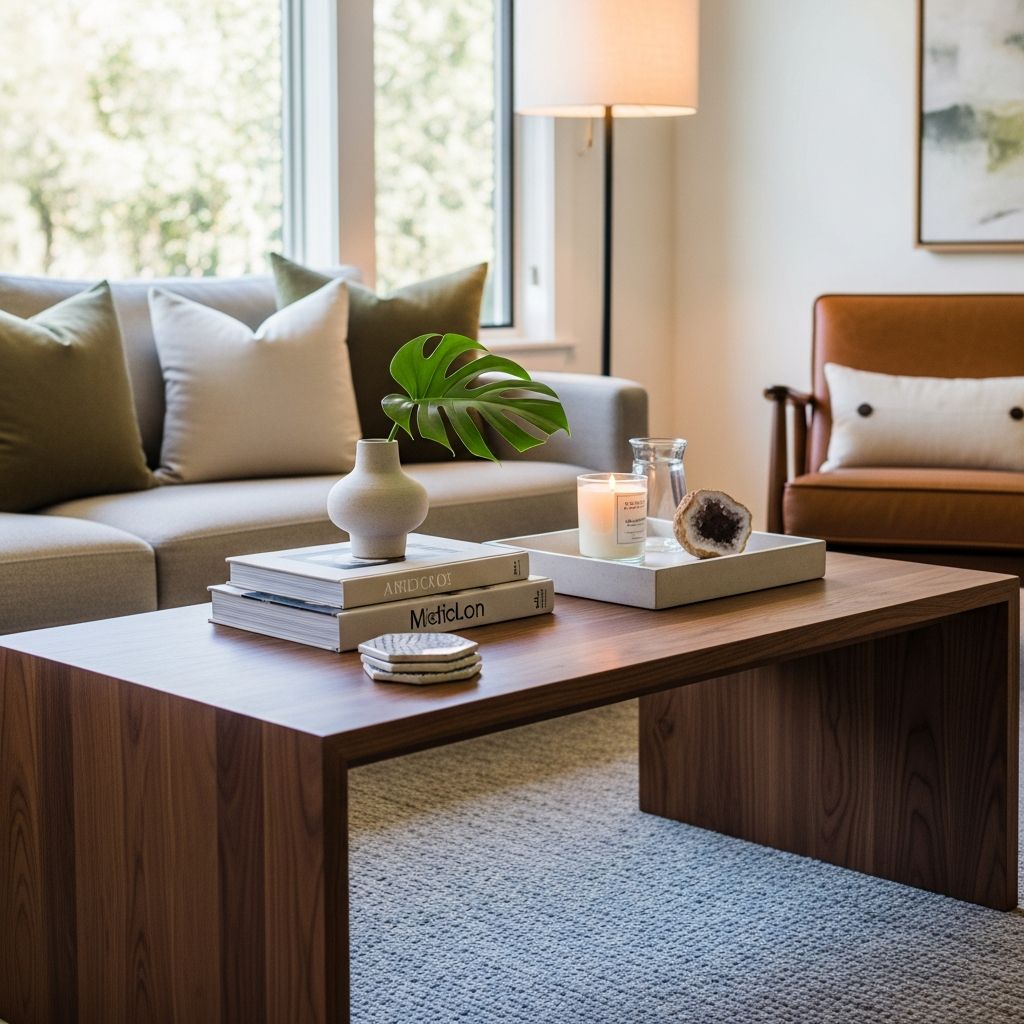
A coffee table is more than a flat surface for drinks and remote controls. It anchors your seating, creates a visual focal point, and quietly sets the tone for how your living room looks and feels every day.
Why Your Coffee Table Matters More Than You Think
The right coffee table can make a room feel finished, comfortable, and intentional, while the wrong one can throw off proportions or create daily frustration. Instead of treating it as an afterthought, treat it as a key design decision.
A well-chosen coffee table balances three priorities: how it looks, how it functions, and how it fits your lifestyle. When all three align, your living room starts working harder for you, not the other way around.
Step 1: Clarify How You Really Use Your Living Room
Before thinking about shapes or finishes, get honest about how you actually live in the space. Your daily habits should drive the features you prioritize.
- Movie-night loungers: You need a table that can handle snacks, drinks, and plenty of remotes.
- Parents and pets: Rounded corners, durable materials, and wipeable surfaces become essential.
- Work-from-sofa life: Consider lift-top tables, nested tables, or a generous surface for a laptop and notebook.
- Minimalist at heart: Clean lines and hidden storage help keep surfaces clutter-free.
- Design enthusiast: Sculptural bases, unique materials, and bold shapes can turn the table into an art piece.
Make a quick list of what happens in your living room on a typical weekday and a typical weekend. That list is your design brief.
Step 2: Get Size and Proportion Right
Even a beautiful coffee table will feel wrong if the proportions are off. Use a few simple guidelines as starting points, then adjust based on your space.
- Length: Aim for about one-half to two-thirds the total width of your sofa.
- Height: Ideally level with the top of the seat cushions, or within a couple of inches above or below.
- Distance: Leave comfortable walking and legroom between the table and seating, usually 35–45 cm (14–18 inches).
When in doubt, tape out the footprint of a potential table on the floor using painter’s tape. Walk around it, sit down, and imagine living with that size for a week.
Step 3: Choose a Shape That Suits Your Space
The shape of your coffee table affects how people move through the room, how safe it feels for kids, and how visually soft or structured the space appears.
Popular Coffee Table Shapes at a Glance
| Shape | Best For | Pros | Considerations |
|---|---|---|---|
| Rectangle | Standard sofas, narrow rooms | Straightforward, lots of usable surface, easy to align with rugs and sofas | Can feel rigid; sharp corners in tight spaces |
| Round | Small spaces, families with kids | No sharp corners, great for flow, softens boxy rooms | Less surface against long sofas; needs thoughtful styling to avoid clutter |
| Oval | Sectionals, rooms with heavy traffic | Combines linear length with softer edges; easy to walk around | Can be tricky to match with very compact seating |
| Square | Large rooms, symmetrical layouts | Feels balanced; works between two facing sofas or in large seating groups | Overwhelming in small spaces; can be hard to reach the middle |
| Organic / freeform | Design-driven, relaxed interiors | Visually interesting, softens strict lines, feels modern and playful | Requires planning to keep traffic flow comfortable |
If your living room has lots of straight lines—boxy sofas, linear media units, sharp-edged rugs—an oval or round table can gently counterbalance the geometry. In more traditional or formal rooms, a rectangular or square option might underline symmetry and order.
Step 4: Pick the Right Materials and Finish
Materials influence not just the look of your coffee table, but how it ages, how much maintenance it needs, and how forgiving it is with kids, pets, or frequent guests.
- Wood: Warm, timeless, and easy to mix with other finishes. Lighter species feel airy; darker tones add drama and coziness.
- Glass: Visually light and great for small rooms, but smudges easily and may not be ideal for very young kids.
- Metal: Works well in modern or industrial spaces. Brushed or matte finishes hide fingerprints better than polished ones.
- Stone or ceramic: Adds luxury and weight. Great for heat-resistant surfaces, but heavy to move and can chip if handled roughly.
- Upholstered or ottoman style: Soft edges and multifunctional seating. Often pairs well with a tray to create a flat surface for drinks.
Think about contrast: a light sofa often looks better with a slightly darker table and vice versa. Combining textures—like a smooth stone top with a wood or metal base—can keep a neutral palette from feeling flat.
Step 5: Plan for Storage and Everyday Clutter
A coffee table can be a powerful organizing tool if you choose one with storage in mind. This is especially helpful in small homes or open-plan spaces where clutter is always in view.
- Shelves: Lower shelves are ideal for books, baskets, game boxes, or folded throws.
- Drawers: Perfect for remotes, chargers, coasters, and other small items that otherwise float around the room.
- Lift-top mechanisms: These convert your table into a raised desk or dining surface while revealing hidden storage.
- Nesting tables: Smaller pieces tuck under a main table and slide out when you need extra surfaces.
If you crave a tidy look but live a busy life, aim for at least one hidden storage feature. You can style the top beautifully and still have a place to tuck away the real-life mess.
How to Style a Coffee Table Like a Designer
Once the right table is in place, styling turns a basic surface into a curated vignette that reflects your personality. The goal is balance: visually interesting but still functional.
Use the “High–Low–Long” Formula
A simple way to start is by layering three main elements—height, low objects, and something elongated.
- High: A vase with branches, a sculptural object, or a tall candle holder.
- Low: A small bowl, decorative box, or cluster of coasters.
- Long: A stack of books, a rectangular tray, or a narrow planter.
Arrange them in a subtle triangle, leaving at least one clear landing zone for a mug or plate. This structure keeps the table practical and polished at the same time.
Layer Trays, Books, and Objects
Trays are the secret weapon of coffee table styling. They gather smaller items so the surface feels organized instead of scattered.
- Choose a tray that contrasts with the table—light on dark, round on rectangle, or woven on smooth.
- Stack two or three coffee table books with interesting covers to add color and height.
- Top the stack with a small object: a candle, a decorative stone, or a small plant.
Think of your table as a mini gallery: each piece should earn its spot by being useful, beautiful, or meaningful.
Ideas for Different Room Sizes and Layouts
Your ideal coffee table changes dramatically depending on whether you’re decorating a compact city apartment or a spacious family home.
Small Spaces and Studio Apartments
- Opt for round or oval tables to keep circulation smooth in tight quarters.
- Look for glass tops or slim metal bases to avoid visually shrinking the room.
- Choose designs with built-in storage or a secondary shelf to reduce the need for extra furniture.
Large Living Rooms and Open Plans
- Consider a large square or oversized rectangle to suit big sectionals.
- Use two smaller tables side by side or a pair of matching ottomans for flexibility.
- Add a bolder material—stone, richly grained wood, or sculptural bases—to ground the furniture grouping.
Safety, Durability, and Maintenance Tips
Practical details can determine whether you love your coffee table years from now or regret it after the first scratch. A little planning upfront prevents daily headaches.
- With children: Prioritize rounded corners, sturdy bases, and finishes that can handle markers, crumbs, and bumps.
- With pets: Avoid delicate fabrics or easily tipped designs; choose scratch-resistant finishes where paws might land.
- For easy cleaning: Look for sealed wood, tempered glass, or non-porous stone, and keep coasters within arm’s reach.
Before committing, imagine worst-case scenarios: hot mugs without coasters, a dropped toy, or a spilled drink. If the table can’t reasonably survive your real life, keep looking.
Quick Coffee Table Styling Formulas You Can Copy
Use these plug-and-play ideas as starting points, then personalize them with your own objects and colors.
- Calm and minimal: One tray, a single stack of books, a candle, and a small plant, with half the surface left open.
- Cozy and layered: Two stacks of books, a woven tray with a candle and matches, a small lidded box, and a soft throw folded on the lower shelf.
- Artful and bold: Sculptural bowl, tall vase with branches, colorful art book, and an unexpected object from travels or thrift stores.
- Family-friendly: Large tray for remotes and coasters, a lidded basket or box for small toys, and a sturdy plant or faux greenery.
Refresh your styling seasonally by swapping small items while keeping the basic formula intact. A quick change of books, greenery, or candle scents can make the entire room feel new.
Frequently Asked Questions About Coffee Tables
How high should a coffee table be compared with the sofa?
As a general rule, aim for a coffee table that is close to the height of your seat cushions—either level or within a couple of centimeters above or below. This makes it comfortable to reach for drinks, books, or a laptop without awkward bending.
Do I need a coffee table if I have an ottoman?
No, but combining the two can be practical. Many people use an upholstered ottoman for comfort and add a large tray on top to create a stable surface when needed. If you prefer a softer look and extra seating, an ottoman-first approach can be a great choice.
What if my living room is very narrow?
In long, tight rooms, consider slim rectangular tables, narrow benches, or two small nesting tables you can move around. The priority is keeping a clear walking path while still providing enough surface for daily use.
How much decor is too much?
If you struggle to put down a plate, cup, or book without moving something, it is likely over-decorated. Try leaving at least one-third of the surface open and reserve a designated landing zone for everyday items.
Can I mix metal, wood, and stone in one room?
Yes. Mixing materials often looks more intentional than matching everything. The key is repetition: let each material appear at least twice in the room—in the coffee table, lighting, side tables, or decor—so the mix feels cohesive rather than random.
Bringing It All Together
Choosing a coffee table is less about following strict rules and more about aligning your space with the way you live. When proportions, materials, and styling all support your daily routines, the table naturally becomes the friendly center of the room.
Start with function, refine with form, and finish with a few meaningful objects. The result will feel both beautiful and effortlessly useful—exactly what a living room deserves.