Picking a potty training seat seems simple until you start shopping and discover dozens of styles, features, and price points. Parents quickly realize that the “right” seat is the one that fits their child, their bathroom, and their lifestyle – not just the cutest option on the shelf.
This guide walks you through everything you need to know about potty training seats: the main types, essential safety and comfort features, how to match a seat to your child’s personality, and practical tips for setup and use. The goal is to help you choose once, use it with confidence, and support your toddler’s growing independence.
Why the Potty Seat Matters More Than You Think
A good potty training seat does more than catch pee and poop. It helps your child feel secure, reduces accidents, and turns a stressful milestone into a manageable routine. The wrong seat, by contrast, can make your child anxious and resistant, stretching out the training process.
- Stability equals confidence: When a seat doesn’t wobble, toddlers are far more willing to climb up and sit down.
- Comfort encourages consistency: A comfortable seat helps your child sit long enough to actually relax and “go.”
- Fit affects follow-through: If adults find the seat annoying to move, store, or clean, it is more likely to sit unused in a corner.
Main Types of Potty Training Solutions
Most families end up choosing between three main approaches, or combining them over time. Understanding the differences will make it easier to narrow your options.
Standalone Potty Chair
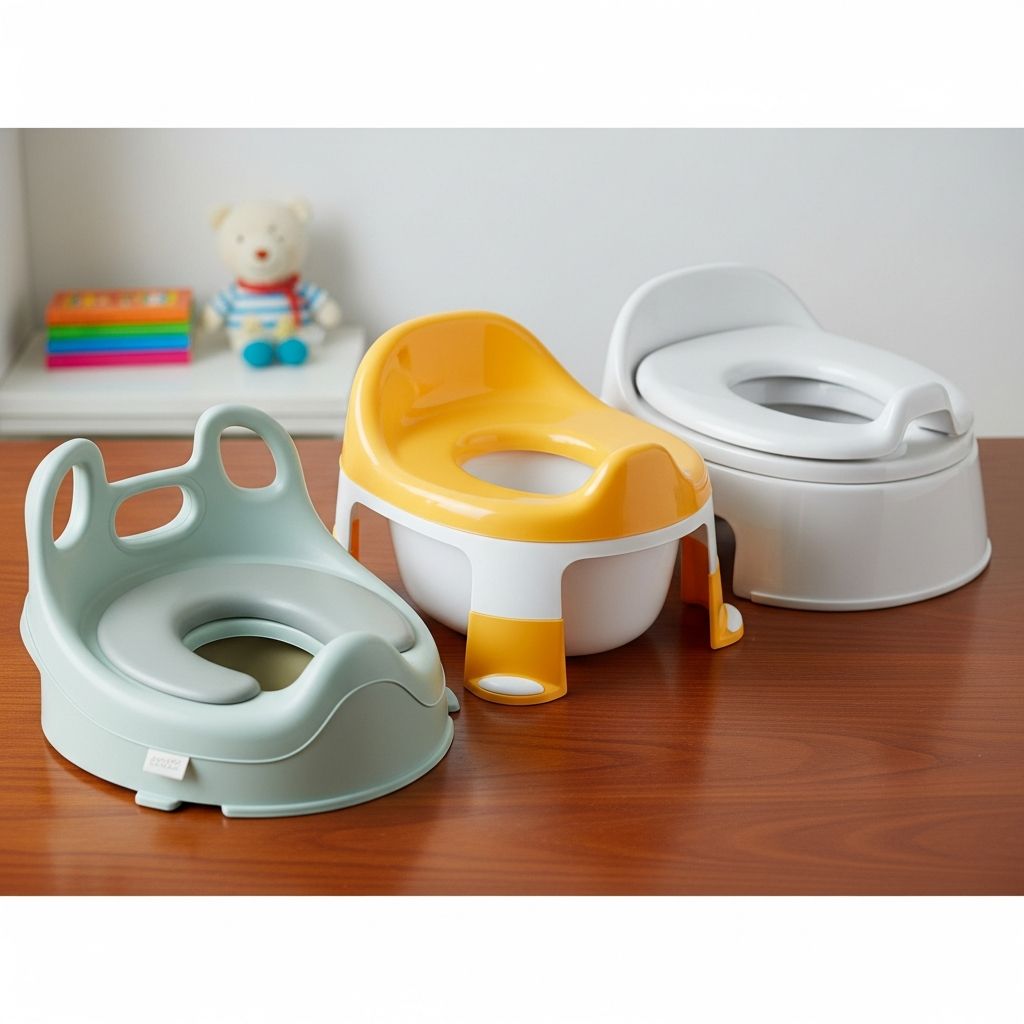
A potty chair is a small, child-sized toilet that rests directly on the floor. Many parents start with this option because it feels less intimidating to toddlers than the big toilet.
- Pros: Toddler-sized, easy to climb on independently, can be placed anywhere in the house, often with supportive backrests and armrests.
- Cons: Requires emptying and cleaning after every use, takes up floor space, and later you still need to transition to the regular toilet.
Toilet Seat Reducer (On-Top Potty Seat)
A toilet seat reducer is a smaller seat that sits on top of your regular toilet seat, shrinking the opening so your child does not feel like they will fall in. Some are cushioned, some are rigid plastic, and some clip or dial into place.
- Pros: Uses your existing toilet, no bowl to empty, great for small bathrooms, helps children get used to the big toilet from the start.
- Cons: Usually needs a separate step stool, the height of the toilet can scare some toddlers, and poor-fitting models can slide.
Seat With Integrated Step or Ladder
These are toilet seat reducers attached to a small ladder or step system. Your child climbs up the built-in steps and holds side handles to get into position.
- Pros: Encourages independence, often more stable than a separate stool, built-in handles help with balance, and many fold for storage.
- Cons: Larger footprint than a simple seat, not ideal for very tiny bathrooms, and usually fits only one toilet size or shape well.
Dual-Fit Family Toilet Seat
A dual-fit seat replaces your regular toilet seat with a design that includes an adult-sized ring and a smaller, child-sized ring that drops down when needed.
- Pros: Always ready to use, no extra seat to store, looks neat, and feels sturdy for the child.
- Cons: Requires actual installation, not portable for travel, and costs more than a basic reducer.
Quick Comparison of Common Potty Options
| Type | Best For | Key Benefits | Main Drawbacks |
|---|---|---|---|
| Standalone potty chair | Nervous beginners and very young toddlers | Child-sized, low to the ground, can be used in any room | Requires frequent emptying, later transition to toilet still needed |
| Toilet seat reducer | Toddlers ready to use the main toilet | No extra dumping, smaller footprint, easy for travel | Needs step stool, height may be intimidating for some kids |
| Seat with steps/ladder | Independent toddlers who like to climb | Built-in access, handles for stability, confidence-boosting | Takes more space, might not fold flat enough for tiny bathrooms |
| Dual-fit family seat | Families wanting a permanent solution on one toilet | Always available, no extra setup, looks streamlined | Not portable, requires installation and compatibility check |
How to Match the Seat to Your Child
Your child’s age, personality, and body size should strongly influence which style you choose. Two toddlers of the same age can respond very differently to the same potty.
- Shy or anxious children: Often feel safer starting with a low, standalone potty in a quiet space.
- Curious imitators: Kids who want to “do what parents do” may take to a toilet seat reducer quickly.
- High-energy climbers: A seat with sturdy steps and handles can turn using the toilet into an empowering ritual.
Body size matters too. A very petite toddler may need a smaller opening and more side support, while a taller child might outgrow a tiny potty chair almost immediately.
Essential Safety Features to Look For
Safety is non-negotiable when your child is climbing on bathroom fixtures. A safe potty seat reduces falls, pinched fingers, and wobbly moments that can lead to sudden potty refusal.
- Non-slip base: Look for rubber grips or suction points on the underside of the seat or potty so it stays in place on tile and the toilet rim.
- Secure attachment: Seats that latch, dial, or clip around the existing toilet seat are less likely to shift during use.
- Stable step or stool: If a stool or ladder is involved, it should have a wide base and non-slip feet.
- Smooth edges: Rounded, finished edges help prevent scratches and pinched thighs.
Always test the setup yourself: press on the seat, wiggle it side to side, and step on the stool before your child uses it. If it moves more than a little, adjust or reconsider.
Comfort Details That Make a Big Difference
Adults would not want to sit on a cold, hard, unstable seat either. Small tweaks in comfort can transform your child’s willingness to sit and stay put.
- Cushioning: A padded ring can feel warmer and more inviting, especially in cooler climates or tiled bathrooms.
- Back support: A subtle backrest on chairs helps smaller toddlers sit upright without constantly adjusting.
- Right-sized opening: Too large and kids feel like they might fall in; too small and it can feel cramped.
- Space for feet: Whether it is a floor-based potty or a stool, stable foot support helps kids relax their pelvic muscles, making it easier to go.
Fitting the Seat to Your Bathroom
Even the best-designed potty seat will be frustrating if it does not fit your toilet or your space. Before you buy, take a quick look at your bathroom layout and toilet shape.
- Toilet shape: Some toilets are round, others elongated. Check product descriptions or packaging to confirm compatibility.
- Available floor space: Measure the area in front of the toilet if you plan to use a stool or ladder-style seat.
- Shared bathroom considerations: In a busy bathroom, a slim, easily removable seat may be more practical than a bulky ladder setup.
If you have multiple bathrooms, you might choose a permanent dual-fit seat in the main bathroom and a simple removable reducer or small potty in another.
Cleaning and Hygiene Considerations
Potty training is messy by nature, but your choice of seat can make hygiene much easier to manage. Look for designs that minimize crevices and maximize quick wipe-downs.
- Removable inner bowl: For standalone potties, a smooth, removable bowl makes emptying and rinsing simpler.
- Minimal seams: Fewer seams and decorative grooves mean fewer places for urine to collect.
- Wipe-friendly materials: Hard plastic surfaces clean faster than textured or fabric-covered areas.
Consider storing a small caddy with wipes, toilet paper, hand soap, and spare underwear close to the potty area. This turns each attempt into a complete bathroom routine: sit, wipe, flush or empty, wash hands, and move on.
Budget, Durability, and How Many Seats You Need
Potty training gear ranges from very affordable to surprisingly expensive. The right budget depends on your priorities, how many bathrooms you have, and whether you expect to use the items with multiple children.
- Basic vs. deluxe: Extra features like music, lights, or pretend flushing sounds can be fun but are not essential. Many families prefer simple, durable designs.
- Multiple seats: If you have a two-story home or several caregivers, a main seat and a cheaper backup can reduce stress.
- Hand-me-down potential: Plain, sturdy models in neutral colors are easier to reuse with future siblings or resell.
When comparing prices, factor in any extras you may need, such as a step stool, travel potty, or disposable liners for road trips.
Practical Setup Tips for Success
Once you have chosen your potty seat, a few simple setup decisions can significantly influence how smoothly training goes. Think of it as preparing a mini “bathroom classroom” for your child.
- Keep the seat accessible: Store removable seats on a hook or beside the toilet so your child sees and remembers to use it.
- Practice dry runs: Let your toddler sit fully clothed first to get used to climbing and positioning without pressure.
- Make it part of the routine: Link sitting on the potty with predictable moments like after meals, before bath, and before bed.
- Have cleanup ready: Towels, wipes, and extra underwear within reach help you stay calm when accidents happen.
Common Mistakes to Avoid With Potty Seats
Even well-meaning parents can unintentionally make potty training harder by how they use (or do not use) the seat. Avoid these frequent pitfalls to keep progress moving.
- Switching styles too often: Constantly changing from chair to reducer to ladder can confuse some children. Try to stick with one main solution once your child has accepted it.
- Ignoring your child’s fears: If your toddler is genuinely scared of the big toilet, forcing the issue can backfire. Consider starting with a small potty or making slow introductions.
- Overcomplicating the setup: If the seat is hard to attach or store, adults are less likely to use it consistently.
- Skipping the foot support: Dangling legs make it harder for kids to relax and may lead to constipation or rushing.
Frequently Asked Questions About Potty Training Seats
When should I introduce a potty seat?
Most children show readiness signs between 18 months and 3 years, such as staying dry for longer stretches, showing interest in the bathroom, or wanting to be changed immediately when wet. Instead of focusing on age alone, watch for these cues and introduce the seat as a friendly new option, not a demand.
Should we start with a potty chair or go straight to the toilet?
Both paths work. Families who want to skip the extra cleaning often choose a toilet seat reducer from the beginning. Others prefer a potty chair to reduce fear and give children full control. You can also blend approaches, starting with a chair and keeping a toilet seat in the main bathroom for later.
How can I help my child feel safe on the big toilet?
Use a stable seat that does not move, offer a solid step or stool for their feet, and stay nearby at first. Reading a short book or singing a quiet song can turn the experience into calm, predictable together time instead of a rushed task.
What about potty seats for travel?
Lightweight, foldable seats or compact travel potties can save the day on road trips and visits to places without child-friendly bathrooms. Keep one in your car or diaper bag along with spare underwear, wipes, and small plastic bags for messes.
How long will we actually use a potty seat?
Every child is different, but many families find that a dedicated potty chair is used heavily for several months, then rarely once the child switches fully to the toilet. A toilet seat reducer or dual-fit seat may remain useful longer, especially for children who need extra time to feel steady on the regular opening.
Final Thoughts: Focus on Fit, Not Perfection
No single potty training seat works for every toddler or every home. Instead of searching for a magic product, focus on finding a safe, comfortable option that fits your space and respects your child’s temperament. With the right seat, a bit of patience, and a consistent routine, your toddler can approach this big milestone feeling supported and proud.