Toilet training feels like a huge milestone, and the potty you choose can make the process easier, calmer and even a little fun. The goal is not to find a “perfect” product, but a seat that fits your child’s body, your bathroom, and your family’s routine.
Why the Potty Itself Matters
Some children are ready and motivated, and will learn to use almost any potty. Others are more sensitive, and a wobbly, uncomfortable or noisy seat can quickly turn into a power struggle. The right setup can:
- Help your child feel safe and stable, so they are willing to sit long enough to relax and actually go.
- Reduce messes and accidents by giving proper support for legs, hips and feet.
- Make daily life easier for you, with faster cleanup and fewer battles.
Two Main Categories of Potties
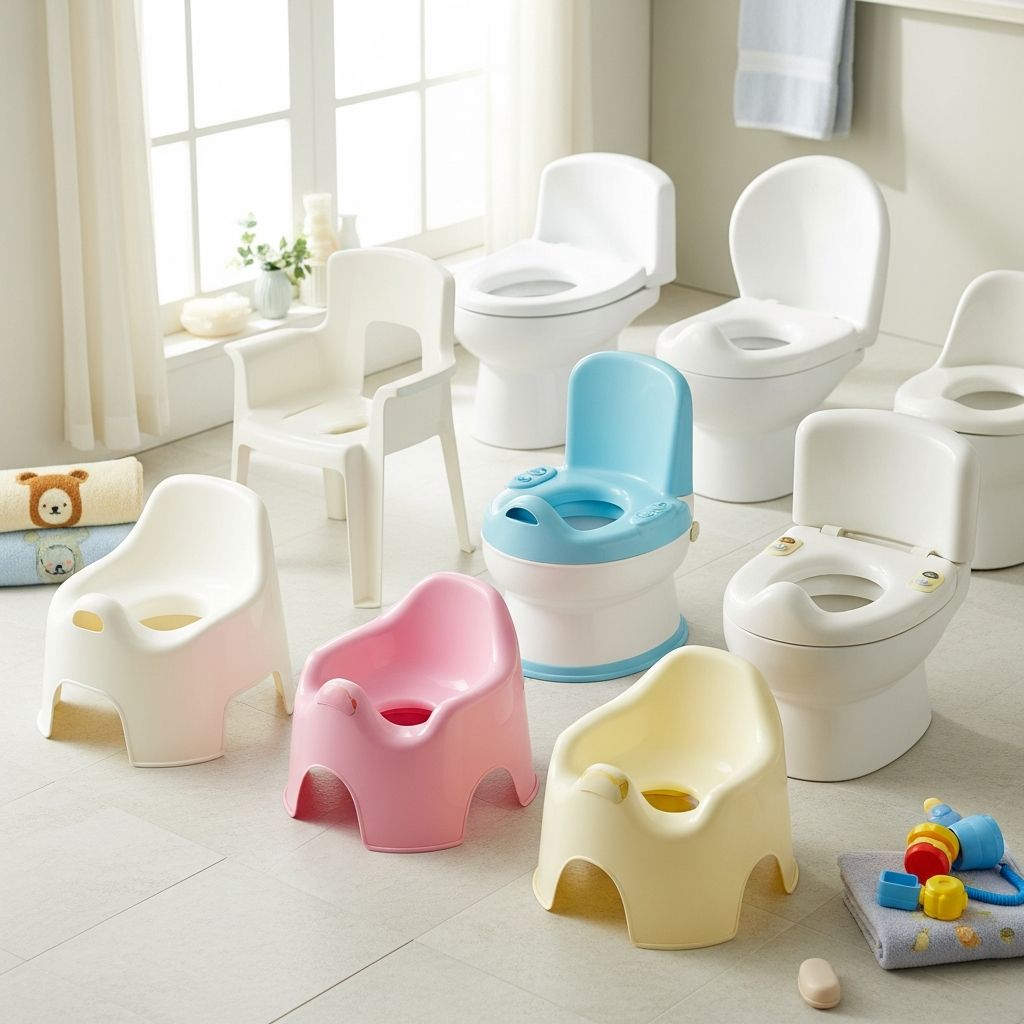
Most products fall into one of two groups: standalone potty chairs or seats that sit on top of the regular toilet. Many families end up using both at different stages.
Standalone Potty Chairs
These are small, low potties that sit directly on the floor. Children climb on and off by themselves, and their feet rest flat for stability.
- Best for: Early training, toddlers who are nervous about the big toilet, or homes with enough space for a dedicated kids’ potty.
- Typical features: Removable inner bowl, built-in splash guard, backrest, sometimes a lid or step-stool function.
Toilet Seat Inserts and Rings
These are smaller seats that rest on top of the adult toilet, shrinking the opening so your child does not feel like they will fall in.
- Best for: Families who want less cleaning, limited bathroom space, or children already curious about using the same toilet as adults.
- Typical features: Non-slip underside, adjustable dial or sliders to fit different toilet shapes, built-in splash guards, sometimes handles or a foldable design.
Pros and Cons at a Glance
| Type | Main Advantages | Main Drawbacks | Ideal Situation |
|---|---|---|---|
| Standalone potty chair |
|
| Children just starting out or anxious about flushing and height. |
| Toilet seat insert |
|
| Families with smaller bathrooms or parents who want minimal cleaning. |
| Seat with attached ladder |
|
| Confident climbers who want to “do it all by myself.” |
Key Features to Look For
Instead of chasing a specific brand, focus on ergonomics and practicality. A simple, comfortable potty your child likes is far more valuable than a fancy design they refuse to sit on.
1. Comfort and Body Position
A relaxed body makes it easier to release urine and stool. Look for a design that keeps your child’s hips, knees and feet supported.
- Feet supported: Either flat on the floor (standalone potty) or on a sturdy step stool/ladder (toilet insert).
- Knees slightly higher than hips: This gentle squat-like angle helps the pelvic floor relax and reduces straining.
- Back and sides supported: A small backrest or armrests prevent wobbling and help children stay seated.
2. Stability and Safety
A potty that slides across the floor or shifts on the toilet can instantly destroy your child’s confidence. Safety details are non-negotiable.
- Non-slip base or rubber grips so the potty stays put.
- Smooth edges without sharp corners or pinch points.
- For ladder-style seats, wide steps and easy-to-grip handles.
- Weight limit clearly listed, especially for older or taller toddlers.
3. Cleaning and Odor Control
Potty training already requires patience; scrubbing crevices should not be a daily chore. Simple construction wins here.
- Removable inner bowl with a smooth surface and pour spout, so you can empty it without spills.
- Few seams, stickers, and textured grooves where residue can hide.
- Materials that tolerate regular washing with mild soap and warm water.
- Optional liners if you absolutely hate rinsing, understanding they add ongoing cost.
4. Size, Storage and Portability
Measure your bathroom and think about where the potty will live most of the time. A great product that blocks the doorway will quickly become annoying.
- Check the footprint of floor potties and ensure nearby adults can still move easily.
- Look for hooks or holes if you prefer to hang a seat insert on the wall.
- Consider a foldable travel seat for outings, vacations, and daycare bags.
5. Extra Features (That Actually Help)
Some extras are genuinely useful, while others are just marketing. Decide what will support your child rather than distract them.
- Handles for little hands to hold when sitting or standing.
- Splash guard, especially helpful for children who urinate standing or tend to aim forward.
- Step-stool function if the closed potty can double as a stool for handwashing.
- Subtle sounds like a soft flush button, if your child finds that motivating rather than overstimulating.
Matching Potty Style to Your Child’s Personality
No potty works for every child. Consider temperament, sensory preferences, and how much independence your toddler demands.
For the Cautious or Sensitive Child
- Start with a low, simple potty chair kept in a familiar, quiet spot.
- Avoid loud flushing sounds, bright lights, or musical features that might overwhelm.
- Let your child practice sitting fully dressed at first, so the seat becomes familiar.
For the Independent “Do It Myself” Toddler
- Consider a toilet seat with ladder and handles so they can climb independently.
- Keep underwear and pants easy to pull up and down without help.
- Show them how to move the seat into place, flush, and wash hands step by step.
For the Busy, Easily Distracted Child
- Choose a comfortable seat but keep the design relatively plain to reduce distractions.
- Use short, predictable potty breaks connected to routines (after meals, before bath).
- A timer or simple visual schedule can be more helpful than toys on the potty itself.
Where to Put the Potty
Location matters as much as the product. The right spot makes it easier to respond quickly to “I have to go!” while preserving some privacy.
- Main bathroom: Ideal for long-term habits. Keeps water and soap close by.
- Secondary potty in living area or bedroom: Helpful in the first few intense days when your child is learning signals.
- Avoid hidden corners where you might forget to empty the bowl or where a younger sibling or pet can play with it.
Budget-Friendly vs. Premium Potties
Potty chairs range from very basic plastic bowls to deluxe mini-toilets with lids, sound effects and built-in storage. Price alone does not predict success; what matters is fit, comfort and consistency in your approach.
| Price Level | What You Typically Get | Who It Suits Best |
|---|---|---|
| Budget |
| Families who want a backup potty, are on a tight budget, or are unsure how long training will take. |
| Mid-range |
| Most households looking for a balance of comfort, durability and price. |
| Premium |
| Families planning to use the potty for multiple children or who value extra convenience and aesthetics. |
Simple Checklist Before You Buy
Use this quick list to narrow your options when comparing products online or in-store.
- Can my child’s feet be firmly supported?
- Does it feel solid when I gently push or wiggle it?
- Is the bowl or seat easy to remove and rinse without splashing?
- Will it fit comfortably in our bathroom without blocking doors or drawers?
- Is the design calm enough for my child’s personality?
Using the Potty Effectively (Beyond the Product)
Even the best potty cannot replace patience, repetition, and realistic expectations. Think of the product as a helpful tool, not the star of the show.
- Introduce the potty calmly, without pressure to perform on the first day.
- Offer regular “try” times and praise effort, not just successful pees or poops.
- Stay nearby at first so your child does not feel abandoned on the potty.
- Expect accidents and treat them as part of learning, not a failure.
Frequently Asked Questions
1. Is a potty chair better than going straight to the toilet?
Neither option is universally better; it depends on your child and home. Potty chairs can feel less intimidating and are often easier for small toddlers to use independently, while toilet seat inserts involve less cleaning and skip the step of transitioning from a mini-potty to the main toilet. If you are unsure, you can start with a floor potty and add a seat insert later.
2. How many potties does a family really need?
Many families manage with one main potty in the bathroom. Others like to have a second one in a frequently used room during the first few days of training or a compact travel seat for outings. If budget is tight, focus on a single comfortable option and build routines around it rather than scattering too many choices.
3. Are musical or talking potties a good idea?
Some children love sounds and see them as a reward, while others become overstimulated or only want to push buttons instead of paying attention to their body. If your child is easily distracted or sensitive to noise, a quieter, simpler model may work better. If you do try a musical potty, think of the sounds as a bonus, not the main source of motivation.
4. How often should the potty be cleaned?
Empty and rinse the bowl after every use, even if it is just a little urine. A quick wash with mild soap and warm water once or twice a day keeps odors down and surfaces hygienic. If multiple children share the same potty, consider slightly more frequent cleaning and drying between uses.
5. When should we move from the potty chair to the regular toilet?
There is no fixed age, but many families transition once their child is steady on a step stool and tall enough to climb safely. Signs of readiness include asking to use the same toilet as adults, handling clothes independently, and showing curiosity about flushing. You can overlap both options for a while so your child feels in control of the change.
6. What if my child is afraid of flushing?
Fear of noise is common. You can start by flushing only after your child leaves the room, then gradually invite them to watch from a distance, and eventually let them press the handle themselves. Reassure them that the toilet only takes away pee and poop, not toys, and avoid tossing objects into the bowl for “fun” demonstrations if that increases anxiety.
7. Do we need a different potty for boys and girls?
Most designs work for any child. A higher splash guard can be helpful for children who urinate forward, and removable parts let you experiment with sitting vs. standing when they are ready. Beyond that, focus on body fit, stability and your child’s comfort rather than marketing labels aimed at one gender.
Final Thoughts for Parents
The best potty is the one your child will willingly sit on, in a space where you can consistently support them. Keep your expectations flexible, your language positive, and your sense of humor handy. With time, practice and the right setup, toilet training shifts from a stressful mystery to just another skill your child proudly masters.