Shopping for nursing bras can feel surprisingly stressful: your body is changing, your size is unpredictable, and everyone seems to have a different opinion. This guide walks you through how to choose nursing bras that support your breastfeeding goals and your day-to-day comfort.
Why Nursing Bras Matter More Than You Think
A good nursing bra is more than a cute accessory; it is a functional tool that can make breastfeeding easier, reduce discomfort, and help you feel more put together during a time that often feels anything but. The right bra gives enough support without digging in, allows quick access for feeds or pumping sessions, and adapts as your size fluctuates.
Choosing bras intentionally before and after birth can save you from rushed late-night online orders, painful underbands, and the temptation to give up and live in stretched-out sports bras. Think of your nursing bras as part of your postpartum care kit, not an afterthought.
How Your Breasts Change: Pregnancy Through Postpartum
Understanding what your body is doing makes bra shopping far less confusing. During pregnancy, the rib cage often expands, cup size usually increases, and many people notice sensitivity or tenderness that makes underwires and stiff fabrics uncomfortable. After birth, breasts tend to swell further as milk comes in, then settle into a more stable size weeks or months later.
Because of this ongoing transition, you may not want to invest in a large collection right away. Instead, plan for different phases: a few stretchy, forgiving bras late in pregnancy and the early days, then more structured, well-fitted options once your supply and breast size are more predictable.
Core Types of Nursing Bras (And When to Use Them)
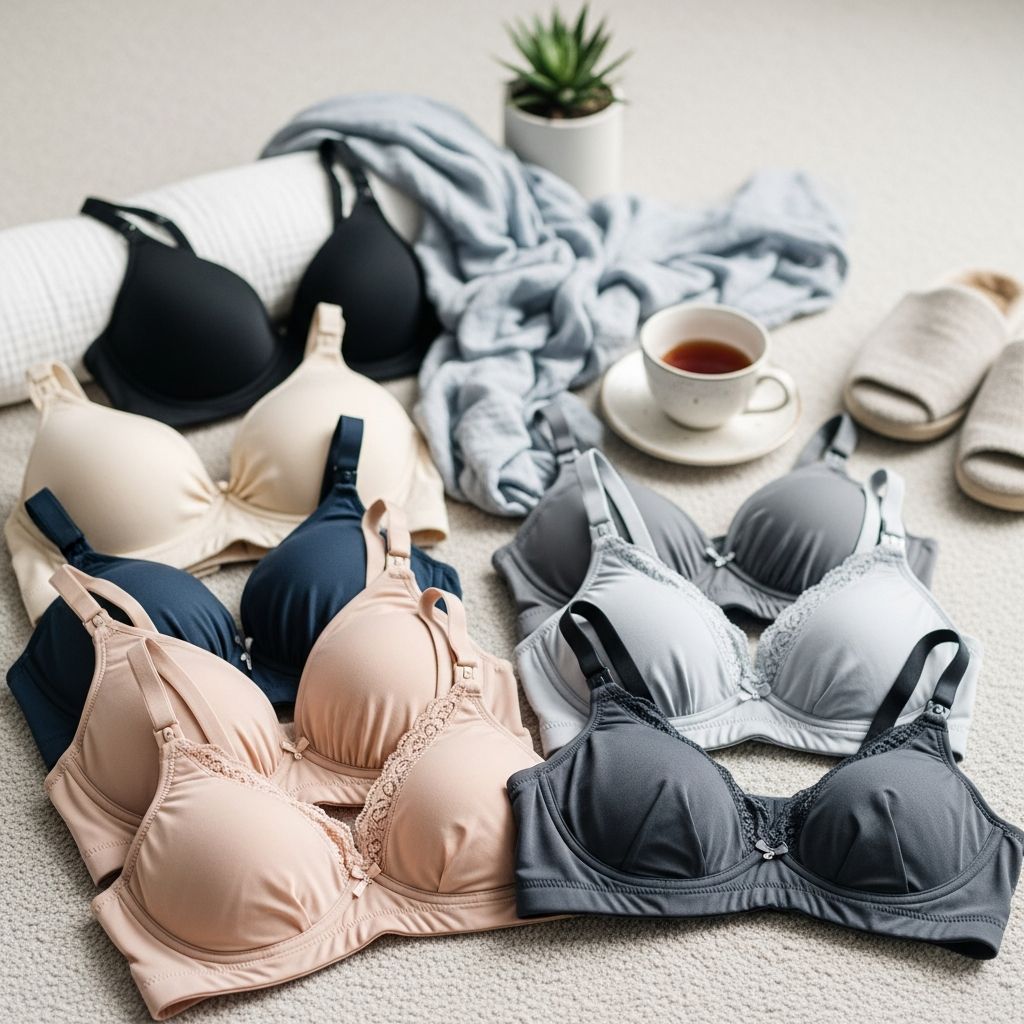
Not all nursing bras serve the same purpose. Mixing a few styles gives you flexibility for sleep, errands, work, and exercise. Below is a simple overview of the most common categories.
| Type | Main Features | Best For |
|---|---|---|
| Seamless / Stretchy | Wire-free, soft fabric, flexible sizing, often with drop-down clips. | Late pregnancy, early postpartum, everyday wear when comfort is top priority. |
| Sleep Bra | Very soft, light support, often pull-aside cups instead of clips. | Night feeds, holding nursing pads in place, lounging at home. |
| Structured / Contour | Molded cups, more shaping, sometimes light padding, usually with clips. | Work, outings, fitted tops, when you want a smoother silhouette. |
| Pumping Bra | Openings or layers to hold pump flanges in place, often hands-free. | Exclusive pumpers, working parents, frequent daytime pumping. |
| Sports Nursing Bra | Higher support, moisture-wicking fabric, nursing access via clips or panels. | Walking, yoga, light workouts, later higher-impact exercise with proper support. |
How Many Nursing Bras Do You Really Need?
The number depends on how often you nurse or pump, how much you leak, and how frequently you do laundry, but most people feel comfortable with a small, intentional capsule. You can always add more later if a favorite style becomes your go-to.
- 2–3 soft or seamless bras: For everyday wear in late pregnancy and the first months postpartum.
- 1–2 sleep bras: To contain pads and provide gentle support overnight.
- 1–2 structured or “going out” bras: Helpful once your size stabilizes and you want shaping under clothing.
- 1 pumping bra (if you plan to pump often): Especially useful for work or exclusive pumping.
Think of this as a starting framework, not a rule. If you tend to leak heavily, live in a hot climate, or just dislike re-wearing bras, you may want a few extras in your favorite style.
Fit First: Measuring and Sizing for Nursing Bras
Fit is the most important factor in comfort and breast health. A band that is too tight can dig into tissue and cause pain, while a cup that is too small may contribute to blocked ducts or persistent pressure. You do not need a perfect boutique fitting to get close, but taking a few measurements at home is worth the effort.
Simple At-Home Sizing Steps
- Measure around your rib cage directly under the bust while wearing a lightly supportive bra or no bra. Round to the nearest whole number for your band.
- Measure around the fullest part of your bust, again standing straight but relaxed.
- Subtract the band measurement from the bust measurement. The difference roughly corresponds to cup size (for example, a difference of about 1 inch is typically an A cup, 2 inches a B cup, and so on).
- Use this as a starting point only. Expect to try a couple of neighboring sizes since pregnancy and postpartum bodies rarely follow charts perfectly.
When trying a bra, fasten it on the loosest hooks. The band should be snug but not painful, because you want room to tighten as elastic naturally loosens with wear and washing. Straps should provide lift without digging into shoulders; if the straps do all the work, the band is probably too loose.
Wireless vs Underwire: What’s Safest and Most Comfortable?
Many lactation professionals recommend starting with wireless bras, especially in the early weeks when breasts are very full, sensitive, and prone to engorgement. Soft, wire-free designs accommodate size fluctuations and are less likely to place firm pressure on ducts or swollen areas.
Underwire nursing bras can be an option later on, particularly if you have a larger cup size and prefer more structure, but they need to fit precisely. The wire should sit behind and under the breast tissue, not on top of it, and should never dig into your armpits or breast. At the first sign of localized pain or blocked ducts, it is wise to switch back to wireless until things calm down.
Fabric, Closures, and Features That Make Life Easier
Small details can make daily wear much more comfortable when you are feeding a baby around the clock. Paying attention to fabric, hardware, and construction helps you prioritize what actually matters to you.
- Soft, breathable fabrics: Cotton blends, modal, and smooth microfiber allow airflow and can be kinder to irritated skin than stiff synthetics.
- Stretch with recovery: You want fabric that flexes as your size changes but springs back instead of becoming baggy after a few wears.
- Easy-access clips: One-handed clips at the strap can make on-the-go feeds less fiddly. Try to open and close the clip using only one hand before committing.
- Drop-down vs pull-aside cups: Drop-down styles provide more structure and coverage, while pull-aside cups are common in sleep bras and feel more relaxed.
- Removable pads: Light padding or removable inserts can conceal nipples or reusable pads and help disguise minor leaks under clothing.
- Wide bands and straps: A broader band distributes weight better and can be more supportive, particularly in larger sizes.
Planning for Different Scenarios: Home, Work, and Exercise
A single nursing bra rarely meets all needs. Thinking through your daily routine makes it easier to choose which styles are worth buying first and which can wait until later in your breastfeeding journey.
For Home and Night Feeds
During the first weeks, you may spend most of your time at home recovering and feeding frequently. For this phase, prioritize softness and simplicity over looks. Stretchy, wire-free bras and sleep bras that you can pull aside without fuss are ideal, particularly when you are half asleep in the dark.
For Work and Pumping
If you plan to pump at work or in public, a hands-free pumping bra or a nursing bra compatible with a pumping attachment can free your hands for typing, eating, or just resting. Many people like a more structured bra under work clothes to feel polished, so look for a style that combines shaping with discreet clip or panel access.
For Movement and Exercise
High-impact workouts are usually off the table for a while, but gentle movement often feels good earlier than expected. For walking and low-impact exercise, a supportive nursing sports bra with moisture-wicking fabric can help reduce bounce and soreness. If you run or do higher-impact activities later, consider a style specifically marketed as high-support for nursing or pumping parents.
Common Nursing Bra Problems and How to Fix Them
Even a thoughtfully purchased bra can cause issues if the fit is slightly off or your body changes faster than expected. Recognizing what each problem means makes it easier to troubleshoot instead of suffering through.
- Problem: Band rides up in the back.
Likely cause: Band is too loose.
Fix: Try fastening on a tighter hook or sizing down in the band while possibly sizing up in the cup. - Problem: Spillage over the top or sides of cups.
Likely cause: Cup is too small.
Fix: Move up at least one cup size; do not rely on ultra-stretchy fabric to compensate. - Problem: Deep red marks or pain where the band or wires sit.
Likely cause: Band is too tight or wire placement is wrong.
Fix: Adjust straps first; if that does not help, try a larger band size or a fully wireless style. - Problem: Straps dig into shoulders.
Likely cause: Band is not doing enough of the support work.
Fix: Check that the band fits snugly around the rib cage and is parallel to the ground; you may need a smaller band. - Problem: Bra feels fine when empty but painful when full.
Likely cause: Not enough room for milk volume changes.
Fix: Keep a stretchier bra for times of day when you are typically fuller (for example, mornings) and use more structured bras when you are more emptied out.
Budgeting and Prioritizing: Where to Spend and Where to Save
Nursing bras range from extremely affordable multipacks to high-end designs with premium fabrics. You do not need to break the bank to be comfortable, but it helps to think strategically about where to invest a little more.
- Spend a bit more on: The bra you will wear most often, such as a supportive everyday wireless style or a work-appropriate bra that doubles for nursing and pumping.
- Save on: Sleep bras and simple lounge styles that do not need complex construction to do their job.
- Try first, then stock up: If a particular cut or brand feels amazing, consider buying a second color once you know it holds up through several washes.
Remember that comfort is part of postpartum recovery. If a slightly higher-quality bra prevents back pain or constant adjusting, that investment can pay off every single day you wear it.
Frequently Asked Questions About Nursing Bras
When should I start buying nursing bras?
Many people switch to soft, wire-free bras during the second or third trimester, when regular bras begin to feel tight and uncomfortable. It often works well to buy one or two stretchy styles before birth, then wait a few weeks postpartum before purchasing more fitted, structured bras so you are not guessing at your final size.
Can I just use regular bras while breastfeeding?
Some parents do make regular bras work by pulling the cup down, but this can stretch the bra out and may place awkward pressure on breast tissue. Nursing bras include features like clips, flexible cups, and extra support where you need it most, which usually makes feeding in public and at night much simpler and more comfortable.
Do nursing bras affect milk supply?
A well-fitted nursing bra should not reduce milk supply. Problems arise when a bra is too tight or presses firmly on one specific area, potentially contributing to blocked ducts or mastitis, which can indirectly disrupt feeding patterns. Choosing soft, forgiving bras in the early weeks and avoiding overly tight bands or wires is a practical way to minimize this risk.
How often should I replace my nursing bras?
Elastic naturally loosens with wear and washing, especially when you are wearing the same few bras on heavy rotation. As a general guideline, if the band no longer feels supportive on the tightest hook, the straps slip constantly, or the fabric has lost its shape, it may be time to replace that bra or retire it to sleep-only duty.
What if my breasts end up different sizes?
It is extremely common for one breast to be larger or fuller than the other, particularly during breastfeeding. Fit your bras to the larger side so that tissue is not compressed, then use removable pads or inserts on the smaller side if you want a more symmetrical look under clothing.
Building a Nursing Bra Wardrobe That Works for You
The goal is not perfection; it is having a small rotation of bras that make daily life easier while your body does the intense work of nourishing a baby. A thoughtful mix of soft, structured, and task-specific styles will carry most people comfortably from the late stages of pregnancy through the breastfeeding or pumping journey.
As your needs change, give yourself permission to adjust your lineup. Donate or recycle bras that no longer fit, replace worn-out favorites, and remember that your comfort and health are just as important as your baby’s feeding schedule.