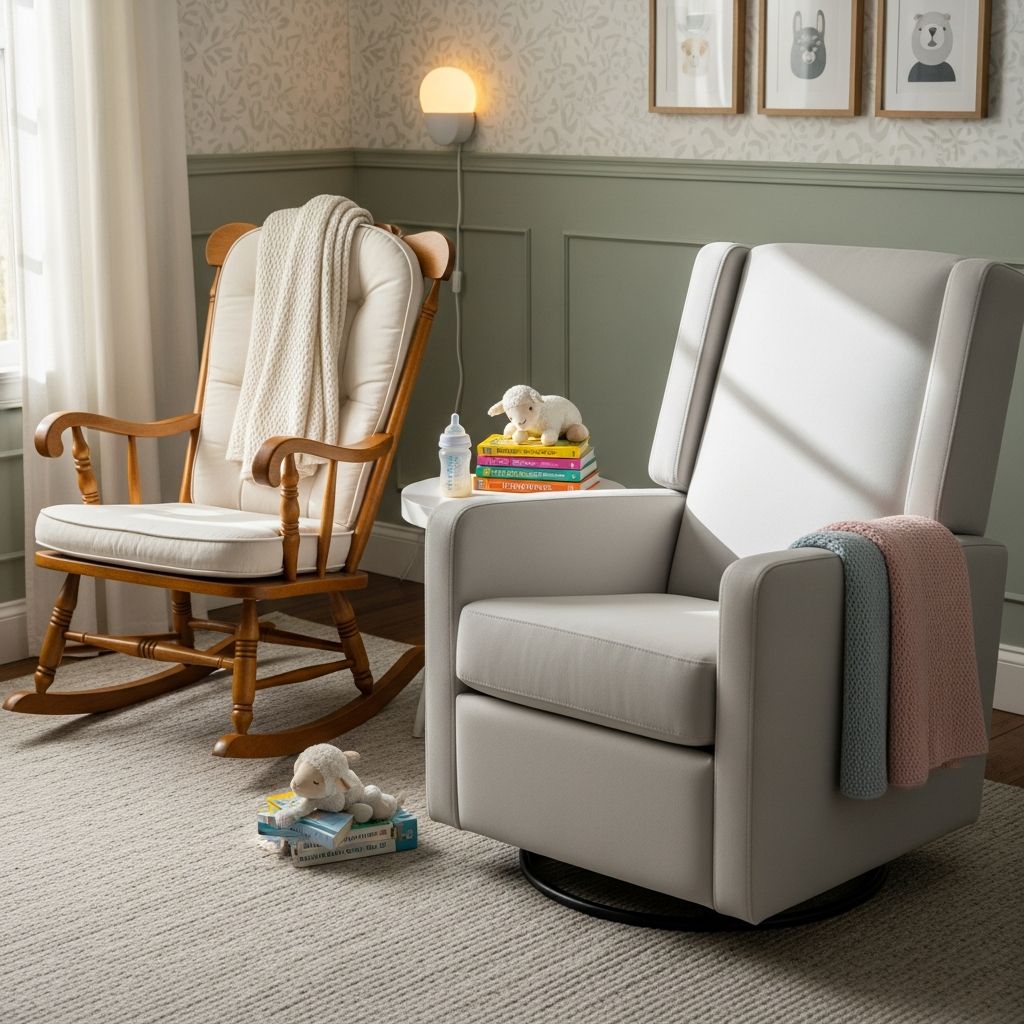
Long before the baby arrives, there is one piece of nursery furniture that quietly becomes the center of your life: the chair you feed, rock, and nap in. Get that choice right and the nights feel a bit softer; get it wrong and every 2 a.m. feed becomes a countdown to back pain.
Why a Nursery Chair Matters More Than You Think
Many new parents focus on the crib, the stroller, and the car seat, but underestimate how much time they will spend in a single seat with their baby. The nursery chair quickly becomes a command center for feeding, soothing, scrolling, crying, and sometimes even sleeping. Choosing the right one is less about matching décor and more about protecting your body and your sanity.
A thoughtfully chosen glider, rocker, or recliner supports your back, arms, and legs so that feeding sessions and bedtime routines are sustainable, not something you dread. Done well, this chair remains useful long after the baby stage: as a reading nook, a homework corner, or the most popular seat in the house.
The Three Main Types of Nursery Chairs
Most nursery seating falls into three broad categories. Understanding the differences helps you narrow choices before you walk into a store or fill an online cart.
1. Traditional Rocking Chairs
Rocking chairs move on curved legs, creating that familiar forward-and-back motion grandparents swear by. They often feel nostalgic and can look beautiful in photos, but they are not always the most forgiving during long, late-night sessions.
- Pros: Classic look, simple mechanism, often lighter and easier to move.
- Cons: Can drift across the floor, may tip more easily if an older child pushes, and sometimes lack padding and lumbar support.
- Best for: Parents who value a timeless style and shorter rocking sessions, or who already own a rocker and want to make it work with cushions.
2. Glider Chairs
Gliders move on a fixed track, creating a smooth, straight-line glide instead of an arc. Many parents find this gentler on the body and easier to control, especially when standing up while holding a sleeping baby.
- Pros: Smoother motion, stable base that stays in one spot, often with padded arms and higher backs.
- Cons: Mechanism can squeak over time; cheaper models may feel loose or wobbly after heavy use.
- Best for: Frequent feeding, soothing colicky babies, and smaller spaces where you do not want a chair wandering across the room.
3. Recliners and Glider-Recliners
Recliners combine a comfortable seated position with the ability to lean back and elevate your feet. Some models also glide or swivel, turning them into multitasking thrones for exhausted caregivers.
- Pros: Footrest for circulation, multiple positions, great for overnight contact naps and cluster-feeding marathons.
- Cons: Bulkier, often more expensive, and require more space behind and in front for full recline.
- Best for: Parents with back issues, those expecting long nights in the nursery, or anyone planning to use the chair as a long-term household piece.
Quick Comparison of Nursery Chair Types
The table below offers a birds-eye view of how common chair types stack up on the features that matter most to tired parents.
| Feature | Rocking Chair | Glider | Recliner / Glider-Recliner |
|---|---|---|---|
| Motion style | Arcing forward-back rock | Straight-line glide on track | Recline + possible glide or swivel |
| Typical comfort level | Moderate; depends on cushions | High; often padded with support | Very high; full body support |
| Space requirements | Small to medium | Medium | Medium to large |
| Best for long night feeds | Sometimes | Often | Yes |
| Average price range | Low to medium | Medium | Medium to high |
| Longevity beyond baby years | Good, if style matches home | Good, especially neutral designs | Excellent as a living room chair |
Comfort Features You Will Actually Notice at 2 A.M.
In a showroom, every chair feels acceptable for a quick sit. The real test happens in the middle of the night, with a heavy, sleepy baby and a spine that has already worked all day. Prioritizing comfort from the beginning protects you from aches that can creep up slowly over the first months.
- Lumbar support: Look for a chair where the lower back touches the backrest without effort. If there is a gap, a small lumbar pillow can help, but a built-in curve is better.
- Seat depth: Your feet should rest flat on the floor while your back is supported. If you are swinging your legs like a child or leaning forward to rock, the seat is too deep.
- Armrest height: When you hold an imaginary baby, your elbows should relax on the arms without hunching your shoulders. This single factor can make or break breastfeeding and bottle-feeding comfort.
- Head support: A tall back that supports your head lets you lean back while holding a sleeping baby instead of straining your neck forward.
- Motion feel: Some people love a strong rock; others prefer a barely-there glide. Try to imagine the motion for 30 minutes straight, not 30 seconds.
Fabric, Cleaning, and Real-Life Messes
Babies do not care that you selected a delicate cream fabric that matches the curtains; they will generously decorate it with milk, spit-up, and snacks. Planning for messes upfront keeps your future self from regretting an impulse purchase.
- Stain resistance: Performance fabrics or tightly woven materials tend to repel spills and are easier to spot-clean.
- Color strategy: Mid-tone colors (greige, denim blue, charcoal) hide everyday smudges better than bright white or very dark fabrics that show lint and dust.
- Removable cushions: If you can unzip and remove cushion covers, you gain options for washing, spot-treating, or even replacing a single piece.
- Texture: Very rough or scratchy fabrics may irritate your skin when you spend hours in nursing-friendly clothing with fewer layers.
Safety Considerations for Babies and Siblings
While a chair seems like simple furniture, it becomes a moving object around tiny fingers and curious toddlers. A few basic safety checks can prevent pinched hands and tipped chairs.
- Stable base: Make sure the chair does not feel tippy when you lean forward to stand up with a baby in your arms.
- Locking mechanisms: Some gliders and recliners offer locks to reduce motion when not in use, which can be helpful with older siblings who like to push the chair.
- Clearance from walls: Leave enough space behind and around the chair so it does not hit walls or furniture when moving or reclining.
- Finger safety: Check for exposed moving parts that could tempt small hands under the chair or ottoman.
Space, Layout, and Making It Fit
Even the coziest chair is a mistake if it overwhelms your room or constantly bumps into the crib. Before buying, measure your space and think about how the room will actually be used at night, not just how it looks in daylight.
- Measure before you shop: Note the width and depth available, including extra room for a recliner or ottoman.
- Check doorways and hallways: Some larger recliners are hard to maneuver into small nurseries or apartments.
- Think about pathways: Leave a clear, safe route from crib to chair to door for sleepy walks with a baby in your arms.
- Consider multi-use furniture: An ottoman with storage can hide blankets, burp cloths, or extra diapers and save space.
Budget: Where to Spend and Where to Save
Nursery chairs range from budget-friendly to eye-watering luxury. The good news: comfort does not always correlate perfectly with price. Knowing your priorities helps you spend wisely and avoid paying for features you will never use.
Smart Places to Spend
- Ergonomics: A supportive chair can reduce back pain, shoulder strain, and wrist issues from awkward feeding positions.
- Durable frame: A solid frame means the chair will not loosen, squeak, or wobble after a few months of heavy use.
- Quality fabric: Stain-resistant and durable upholstery can survive spills, markers, and snack crumbs well into the toddler years.
Where You Can Save
- High-tech extras: Power recline, built-in USB ports, and massage features are nice, but not strictly necessary for a functional chair.
- Brand prestige: Lesser-known brands or store labels can offer comparable comfort without designer pricing.
- Color trends: Timeless neutrals often come at standard pricing, while “it color” fabrics may command a markup you do not need.
Personal Scenarios: Which Chair Fits Your Life?
Sometimes the right choice depends less on the furniture and more on the people using it. Use these scenarios as a guide to narrow your options.
- If you are recovering from a c-section: A recliner or glider with a supportive back and easy stand-up motion can make getting in and out less painful.
- If your partner is much taller or shorter than you: Look for a chair that both of you can sit in without slouching or dangling feet, or plan to add cushions that can be adjusted.
- If you expect twins: A wider seat with sturdy arms and strong lumbar support becomes crucial for feeding two babies or holding more than one child at once.
- If you are in a very small apartment: A compact glider or sleek swivel chair may offer comfort without dominating the whole room.
Setting Up a Feeding-Friendly Corner
The chair is the star, but the supporting cast matters. A thoughtful setup can turn a good chair into a true sanctuary during long stretches of early parenthood.
- Side table: Keep water, snacks, burp cloths, and your phone or e-reader within easy reach.
- Soft lighting: A dimmable or low-watt lamp prevents over-stimulating the baby during night feeds while keeping you awake enough to stay safe.
- Foot support: Even if your chair does not recline, a small ottoman or stool can relieve pressure on hips and lower back.
- Textiles: A washable throw blanket and small lumbar pillow can help adjust comfort for different caregivers.
FAQ: Nursery Gliders, Rockers, and Recliners
Do I really need a special nursery chair, or can I use any armchair?
You can technically use any comfortable, supportive armchair, especially if your budget is tight or you already own one you love. The advantages of dedicated nursery chairs include soothing motion, armrests shaped for feeding, and higher backs designed for long sessions with a baby. If you repurpose an existing chair, consider adding a footrest and extra cushions to support your back and arms.
Is a glider safer than a rocking chair?
Both can be safe when used thoughtfully, but gliders tend to stay in one spot and move on a track, which reduces the chance of the chair scooting across the room. Rockers move on curved legs and can travel or tip more easily if pushed from the side or front, especially by an enthusiastic older sibling. Whichever you choose, supervise children around the moving parts and keep little fingers clear of the base.
Should I buy a power recliner or a manual one?
Power recliners offer the luxury of changing positions with the touch of a button, which can be helpful when your arms are full of sleeping baby. However, they cost more, need an outlet, and can be harder to move. Manual recliners are simpler and usually less expensive, and they work during power outages. If your budget allows and your room has outlets in the right place, power can be worth it, but it is not essential.
What if my partner and I are different heights—how do we pick one chair?
When caregivers differ in height, focus on a chair with a tall back and a moderate seat depth so both people can adjust with pillows. Sitting test-style, check that the shortest person can keep feet flat on the floor without leaning forward, and the tallest person’s shoulders do not rise above the backrest. Add a small lumbar pillow and perhaps a footstool so each person can tweak the setup to their body.
Can a nursery chair be reused after the baby years?
Yes, and planning for that from the start can help justify your investment. Neutral fabrics and simple silhouettes transition easily into a living room, playroom, or bedroom reading nook. Chairs with durable frames and quality fabric can become family favorites for story time, sick days, and quiet evenings long after diapers and night feeds are over.
Final Thoughts: Choosing What Works for You
The perfect nursery chair is not the one with the longest feature list or the highest price tag; it is the one you can sit in at 3 a.m. without counting the seconds until you can get out. Pay attention to how your back feels, how your arms rest, and whether your feet touch the ground. Imagine your most exhausted version of yourself, then choose the chair that will be kindest to that person.
Nursery trends will change, but a supportive, well-placed chair will always be worth it. If you choose well now, you will build not only a comfortable feeding station, but a cozy little island where some of your family’s sweetest memories will quietly unfold.