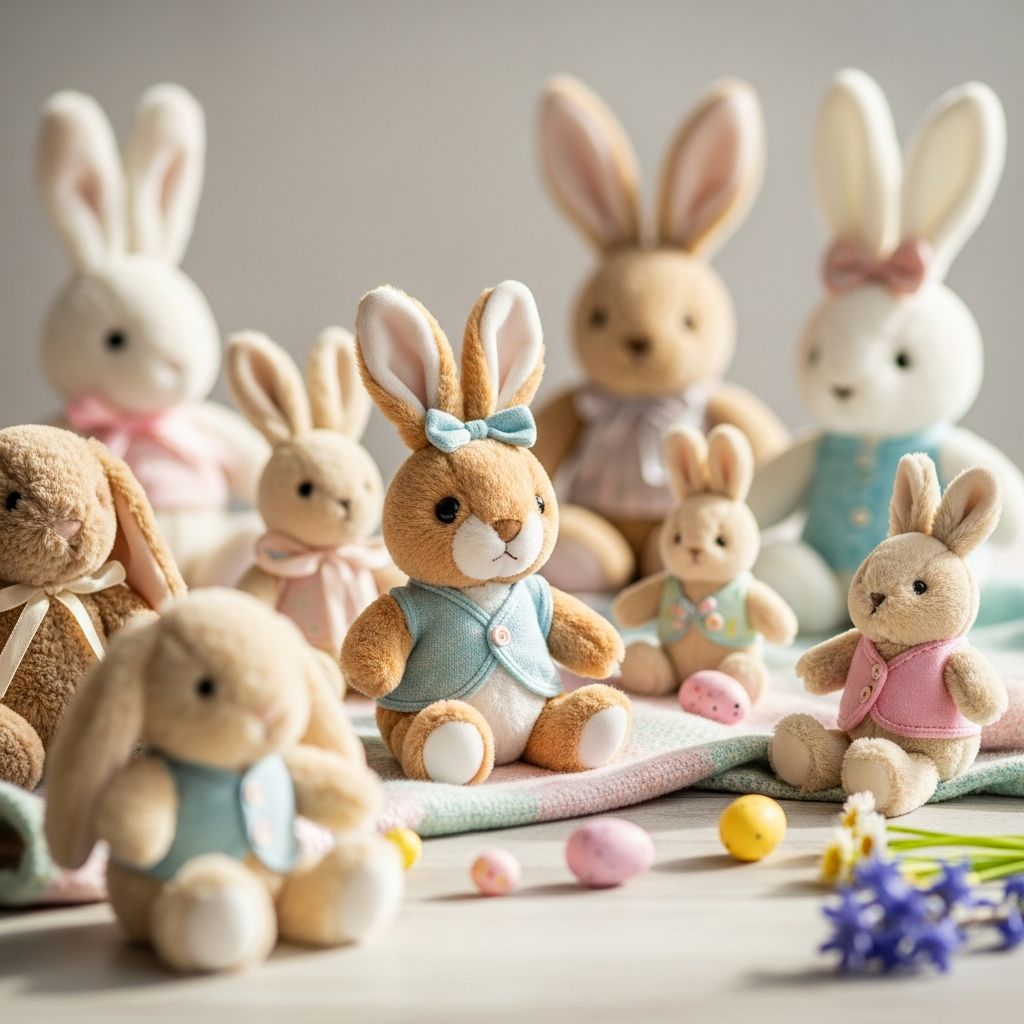
Stuffed bunny toys are an Easter classic, but the best ones do more than fill a basket for a single morning. A well-chosen plush rabbit can become a calm-down buddy, bedtime companion, and imaginative play partner for years. This guide walks you through what matters most when picking an Easter bunny plush for babies, toddlers, and big kids.
Why Bunny Plush Toys Make Such Great Easter Gifts
Rabbits have long been associated with spring, new life, and the Easter holiday, which makes a soft bunny toy feel instantly seasonal without being disposable or gimmicky. For children, plush animals are more than decorations—they are comfort objects, pretend friends, and tools for emotional regulation.
- Comfort and security: Many children form strong attachments to stuffed animals, using them as transitional objects that help them cope with separation and stress.
- Imaginative play: Plush bunnies can become characters in stories, doctors’ patients, classmates, or tea-party guests, supporting pretend play that is linked to language and social development.
- Seasonal but timeless: A neutral, well-made bunny design works for Easter yet still feels appropriate in July or December.
- Photo-ready and sentimental: A bunny that appears in yearly Easter photos may become part of your family’s traditions and memories.
Key Factors to Consider Before You Buy
When you pick out a stuffed bunny for a child, you are balancing cuteness with safety, durability, and real-world practicality. The checklist below can help you evaluate any plush rabbit quickly.
1. Safety Standards and Age Recommendations
For babies and toddlers especially, toy safety is non-negotiable. In the United States and European Union, plush toys are covered by strict safety standards that limit choking hazards, toxic materials, and flammability.
- Look for labels that state compliance with ASTM F963 (United States) or EN71 (Europe).
- Check the manufacturer’s age grading. A toy marked “3+” is not appropriate for infants, even if it looks baby-friendly.
- Inspect the bunny for small parts that could come loose, such as buttons or hard plastic eyes. For babies, embroidered features are safer.
- Gently tug on ears, arms, and attached accessories in the store or when it arrives to test how securely they are sewn.
2. Materials, Texture, and Fill
Because plush toys spend a lot of time near a child’s skin and face, the materials used really matter. Research on infant products shows that soft, breathable fabrics reduce the risk of skin irritation and are more comfortable against sensitive skin.
- Outer fabric: Most bunny plush toys use polyester or a polyester blend. Look for descriptions like “ultra-soft” or “velour-like” and check that the fur does not easily shed when you rub it.
- Fill: Polyester fiberfill is common. A medium level of stuffing offers both softness and shape. Very loosely stuffed bunnies may feel cozy but can clump over time.
- Hypoallergenic claims: While no plush is completely allergen-free, tightly woven synthetic fabrics tend to harbor fewer dust mites than some natural fibers if washed regularly.
- Fragrances and additives: Avoid bunnies that are heavily scented or treated with strong chemicals, especially for infants with sensitive skin or respiratory conditions.
3. Size and Shape for Different Ages
The perfect bunny size depends on the child’s age, motor skills, and how the toy will be used.
| Child’s Age | Recommended Bunny Size | Why It Works |
|---|---|---|
| 0–12 months | Small (6–10 inches), lightweight | Easier to grasp and cuddle; less risk of covering nose and mouth during supervised snuggles. |
| 1–3 years | Small to medium (8–16 inches) | Good for carrying around, napping, and using in simple pretend play. |
| 4–7 years | Medium to large (12–24 inches) | Big enough to feel like a real “friend” but not too bulky for everyday play. |
| 8+ years | Any size, including jumbo | Children may enjoy large, dramatic bunnies as decor or cozy reading companions. |
4. Design Details: Floppy Ears, Long Legs, and More
Beyond size and fabric, small design choices can change how a child interacts with a bunny plush.
- Floppy ears: Long, soft ears are easy for little hands to grasp and can be soothing to stroke while falling asleep.
- Weighted bottoms or paws: A bit of weight helps the bunny sit upright on a shelf or bed, which some kids love for pretend play.
- Simpler faces for infants: Babies often prefer high-contrast or simple facial features; older kids may enjoy more detailed, expressive faces.
- Neutral vs. bright colors: Soft neutrals blend into a nursery, while bold colors stand out in a toy room and can match a child’s personality or favorite hues.
5. Cleanability and Everyday Care
Plush toys inevitably meet drool, crumbs, and outdoor dirt. Easy cleaning extends the life of a favorite bunny and can reduce allergens such as dust mites and pet dander.
- Check whether the bunny is machine-washable and at what temperature.
- If surface-wash only, look for shorter fur and fewer sewn-on accessories that might trap stains.
- Keep a backup of an especially beloved bunny when possible; rotating them makes cleaning less stressful.
Matching Bunny Plush Styles to Your Child
No single bunny is right for every kid. Thinking about your child’s temperament, interests, and sensory preferences can help you pick a plush that feels like it was made just for them.
For Babies: Soft, Simple, and Safe
When shopping for infants, prioritize gentle fabrics and minimal extras. Pediatric guidance suggests avoiding loose bedding and large soft toys in cribs; bunnies should be used for supervised snuggles and play until a child is old enough for safe overnight use.
- Choose bunnies with embroidered eyes and noses instead of small attached parts.
- Opt for a lightweight, flat-bodied bunny or lovey that is easy for a baby to grasp.
- Favor neutral or soft pastel colors that won’t overwhelm a nursery’s calm feel.
- Confirm the toy is specifically labeled safe from birth or for the baby’s age group.
For Toddlers: Huggable, Durable, and Washable
Toddlers drag their bunny through the house, into the stroller, and occasionally into the sandbox. A more robust design matters at this stage.
- Look for reinforced seams at the neck, arms, and ears to withstand daily tugging.
- Pick a medium-sized bunny that a toddler can easily carry but still feels substantial for hugs.
- Make sure the plush is machine-washable, ideally on a gentle cycle.
- Consider bunnies with shorter fur to collect fewer crumbs and tangles.
For Preschoolers and Young Kids: Personality and Play Value
Once kids are old enough for imaginative storytelling, the bunny’s personality starts to matter as much as its softness.
- Select a bunny whose facial expression matches your child’s style—shy, goofy, calm, or adventurous.
- Look for designs that stand or sit on their own so they can become students, audience members, or guests in pretend scenarios.
- Think about clothes and accessories that are securely attached or appropriately sized to avoid choking risks.
- If your child has a favorite color, a bunny in that shade can feel instantly special.
For Older Kids and Collectors: Aesthetic, Quality, and Story
Older children and tweens may gravitate toward specific brands known for distinctive designs or luxurious fabrics. Some plush companies have built reputations for soft textures, whimsical characters, or realistic animal details.
- Consider premium plush brands if your child enjoys collecting or displaying their toys.
- Look for unique textures (corduroy, extra-furry ears, or patterned linings) that distinguish the bunny from others.
- Some kids enjoy reading the character stories or tags that come with branded plush toys, which can inspire creative writing or drawing.
Ideas for Including Bunny Plush in Easter Traditions
A stuffed bunny can be more than just a basket filler. With a little planning, it becomes part of your family’s yearly celebrations.
- “From the Bunny” gift: Let the plush rabbit be the main gift from the Easter Bunny, possibly with a small note or tag.
- Storytime buddy: Introduce the bunny during an Easter or spring-themed picture book, then bring it out each year to recreate the moment.
- Scavenger hunt finale: Hide small clues around your home or yard and let the big prize be the stuffed bunny waiting at the end.
- Growth photo series: Take an annual picture of your child holding the same bunny each Easter to show how both child and toy have changed over time.
Caring for a Beloved Bunny: Cleaning and Repairs
Once a child bonds with a bunny, life without it can feel unthinkable. Preventive care helps keep the plush safe, clean, and huggable for as long as possible.
Cleaning Tips
- Read the label first: Follow the manufacturer’s washing instructions closely to avoid damaging the fur or stuffing.
- Use gentle detergents: Choose fragrance-free, mild detergent, especially for babies and kids with sensitive skin.
- Protect in a laundry bag: Wash in a mesh bag or pillowcase on a delicate cycle to reduce wear and tear.
- Air-dry when possible: High heat can melt or warp synthetic fibers, so air-drying is often safer.
Minor Repairs
- Keep a small mending kit handy for loose seams or partially detached ears.
- Use strong polyester thread and tight stitches to reinforce high-stress areas.
- For serious tears, consider contacting the manufacturer; some offer repair or replacement policies.
Checklist: How to Evaluate an Easter Bunny Plush in Seconds
When you are browsing in-store or online and want a quick decision, run through this short checklist:
- Is it age-appropriate and clearly labeled with safety standards?
- Are the eyes, nose, and accessories secure and free of tiny detachable pieces?
- Does the fabric feel soft and non-scratchy, with no obvious shedding?
- Is it a manageable size for the child to carry and sleep with?
- Can you wash it easily, and will it dry thoroughly?
- Does the design match the child’s personality—color, expression, and overall vibe?
Frequently Asked Questions (FAQs)
Q: Are stuffed bunny toys safe for newborns?
A: Soft bunny toys that meet infant safety standards and have no small, detachable parts can be safe for supervised use with newborns. However, pediatric guidance recommends keeping loose soft toys out of cribs and sleep spaces for babies to reduce suffocation risk; reserve bunny cuddles for awake, supervised time.
Q: What should I avoid when choosing a bunny plush for a baby?
A: Avoid hard plastic eyes, buttons, or beads; long ribbons or cords; heavy or oversized bunnies that could cover the baby’s face; and toys not specifically labeled for your child’s age. Always check that seams are secure and fabric does not shed easily.
Q: How many stuffed animals is too many?
A: There is no strict limit, but clutter can make it harder for children to focus and may increase dust accumulation. Focus on a few well-loved, high-quality plush toys—such as a special Easter bunny—rather than a large pile of similar items.
Q: Can older kids still benefit from stuffed animals?
A: Yes. Research suggests that even older children and adults may use comforting objects, such as plush toys, to manage stress and support emotional regulation. A soft bunny can become a reading companion, decorative piece, or sentimental keepsake rather than just a “baby toy.”
Q: Is it worth spending more on a premium bunny brand?
A: Higher-priced plush toys often use softer fabrics, sturdier stitching, and distinctive designs. If you expect the bunny to become a long-term favorite or keepsake, paying more for quality can be worthwhile. For occasional play or large group gifts, a well-made but more affordable bunny can be perfectly adequate.
References
- ASTM F963-17: Standard Consumer Safety Specification for Toy Safety — ASTM International. 2017-10-01. https://www.astm.org/f0963-17.html
- EN 71-1:2014+A1:2018 Safety of Toys – Mechanical and Physical Properties — European Committee for Standardization (CEN). 2018-12-19. https://standards.cen.eu
- Soft Toys: Advice for Parents — The Royal Society for the Prevention of Accidents (RoSPA). 2021-05-10. https://www.rospa.com/home-safety/advice/product/soft-toys
- Safe Sleep for Babies — American Academy of Pediatrics. 2022-08-01. https://www.healthychildren.org/English/safety-prevention/at-home/Pages/Sleep-Safety-for-Infants.aspx
- 16 Best Stuffed Animals for Babies and Toddlers — The Bump. 2022-03-15. https://www.thebump.com/a/best-stuffed-animals
- 20 Best Stuffed Animal Brands You Need to Know — Plush This. 2025-08-01. https://plushthis.com/blogs/how-to/best-stuffed-animals-brands
- 20 Best Stuffed Animal Brands (2025 Updated) — Toynk Toys. 2025-04-10. https://www.toynk.com/blogs/news/best-stuffed-animal-brands