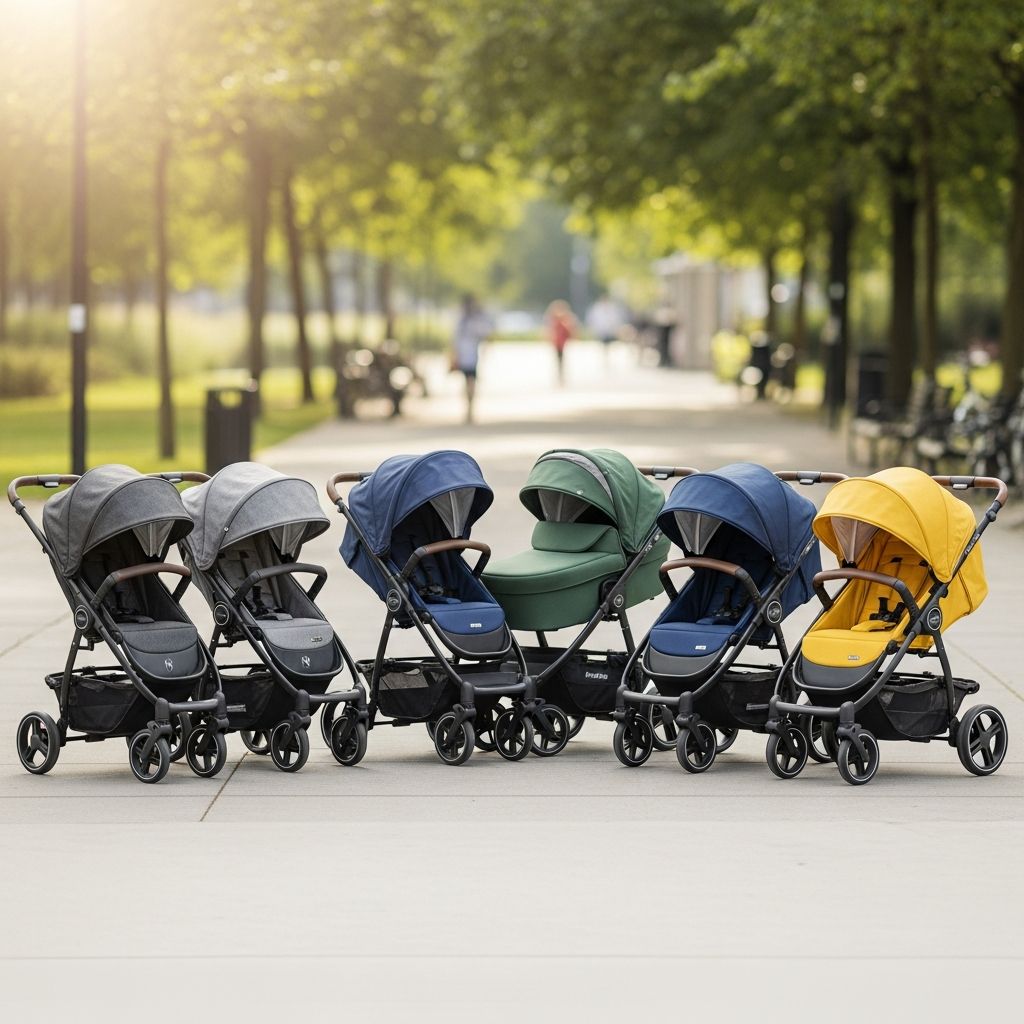
Managing life with two little ones can feel like a full-body workout, and the right double stroller can make the difference between a stressful outing and a smooth, enjoyable day. This guide walks you through everything you need to know about double strollers so you can invest in a model that truly works for your family.
Why a Double Stroller Matters More Than You Think
A double stroller is more than just a bigger version of a single stroller; it becomes your rolling command center for walks, errands, and travel with two kids. The right choice can save your back, reduce meltdowns, and even encourage you to get out of the house more often.
Before you fall in love with a single model, it helps to understand the major types of double strollers and how they fit different lifestyles, budgets, and age gaps.
Key Questions to Ask Before You Shop
Start by clarifying how and where you will actually use your stroller. Asking the right questions up front will narrow your options quickly and prevent expensive regret later.
- How old are your children? Newborns need full recline or car-seat compatibility, while toddlers need roomy seats and higher weight limits.
- Do you live in the city, suburbs, or rural area? City parents may prioritize maneuverability and narrow frames, while suburban families might need great suspension for parks and long walks.
- Will you use public transportation? If you often use buses or trains, a lighter, compact-fold stroller will matter more than extra storage.
- How much trunk space do you have? Some double strollers can dominate the entire cargo area of a small car.
- What is your budget? Double strollers range from budget-friendly basics to premium models that rival high-end bicycles in price.
Main Types of Double Strollers
Most double strollers fall into a few broad categories. Understanding these will help you quickly eliminate styles that do not fit your daily reality.
Side-by-Side Double Strollers
Side-by-side models place both seats next to each other, giving kids equal visibility and usually equal space. Parents often love the balanced feel and easy access to both children.
- Pros: Great visibility for both kids, often excellent maneuverability, and typically better for taller or older children.
- Cons: Wider footprint can be challenging in narrow doorways, small shops, and tight sidewalks.
- Best for: Twins, close-in-age siblings, and families who take long walks outdoors or to parks.
Tandem (Inline) Double Strollers
Tandem strollers place one seat in front of the other, keeping the overall width closer to that of a single stroller. This design is useful in crowded cities or older buildings with narrow doorways.
- Pros: Narrower profile for easier navigation in stores, elevators, and public transit.
- Cons: Can feel longer and harder to turn; one child may have a more restricted view, especially in stadium-style seating.
- Best for: Families who run errands frequently, rely on elevators, or live in compact urban spaces.
Convertible Single-to-Double Strollers
Convertible systems start as a single stroller but adapt to carry two children via extra seats, bassinets, or car-seat adapters. They are ideal for families who plan ahead but do not need two seats immediately.
- Pros: Flexible configuration; good investment if you plan to grow your family; often compatible with multiple infant car-seat brands.
- Cons: Can be heavier and more expensive; some configurations are better on paper than in daily use.
- Best for: Parents expecting their first child who know or suspect a second will follow soon.
Travel and Lightweight Double Strollers
Lightweight doubles are designed for portability, quick trips, and travel. They usually fold compactly and weigh less than traditional models, though they may sacrifice some features.
- Pros: Easier to lift, carry, and gate-check; more compact fold; often budget-friendly.
- Cons: May offer less padding, weaker suspension, smaller sun canopies, and lower weight limits.
- Best for: Families who travel often, use rideshares, or want a secondary stroller for quick errands.
Jogging and All-Terrain Double Strollers
Jogging and all-terrain doubles feature larger wheels and better suspension for running or rough surfaces. They tend to be side-by-side and quite sturdy.
- Pros: Smooth ride on gravel, grass, or uneven sidewalks; excellent stability; often very comfortable for children.
- Cons: Usually heavier and bulkier; may not fit easily in small trunks or tight indoor spaces.
- Best for: Active parents who jog, hike, or spend a lot of time outdoors.
Feature Comparison at a Glance
The table below compares key characteristics across the major types of double strollers. Use it to match your real-life needs with the strengths of each design.
| Stroller Type | Typical Width | Typical Weight | Best For | Common Trade-Offs |
|---|---|---|---|---|
| Side-by-side | Wider than standard doors in some models | Medium to heavy | Outdoor walks, twins, equal seating | Harder to navigate tight indoor spaces |
| Tandem (inline) | Similar to single stroller width | Medium to heavy | City errands, narrow aisles, elevators | Longer frame, trickier turns, uneven views |
| Convertible single-to-double | Variable by configuration | Often heavy | Growing families, flexible seating | Higher price, more complex setup |
| Lightweight/travel double | Narrow to moderate | Light | Travel, quick trips, backup stroller | Less padding, basic suspension, fewer extras |
| Jogging/all-terrain | Moderate to wide | Heavy | Running, trails, rough sidewalks | Bulky fold, may not suit small cars |
Essential Features to Look For
Once you know which type suits your lifestyle, it is time to evaluate specific features. Paying attention to these details helps you distinguish between a stroller that merely works and one that you truly love using.
Safety and Stability
Safety should always come first. Look for a sturdy frame, reliable brakes, and a harness system that keeps each child securely seated without being complicated to use.
- Five-point harnesses with easy adjustment and buckles that toddlers cannot open alone.
- Parking brake that you can quickly engage and release, ideally with a clear on/off indicator.
- Wide wheelbase and low center of gravity to reduce the chance of tipping, especially on slopes or curbs.
Weight Limits and Longevity
Double strollers are an investment, and you will likely want yours to last several years. Check both the individual seat limits and the total stroller capacity, particularly if you have older toddlers or children with a higher weight percentile.
- Look for higher weight limits per seat if your kids are already large for their age.
- Consider whether you want a stroller that is newborn-ready or requires an infant car seat or bassinet.
- Think ahead two to three years: Will your children still fit comfortably?
Fold, Size, and Storage Space
Even the most feature-packed stroller will sit unused if you dread folding or lifting it. Evaluate how the stroller fits into your car and home before purchasing.
- Practice folding and unfolding in person if possible; check whether it can be done one-handed while holding a baby.
- Measure your trunk and compare it to the folded dimensions listed by the manufacturer.
- Check if the stroller stands upright when folded or if it needs to lie flat, which matters in small entryways.
Maneuverability and Wheel Design
A double stroller carries a lot of weight, so maneuverability becomes a critical comfort factor. Wheel type and suspension heavily influence how the stroller feels to push.
- Larger wheels and suspension systems help absorb bumps and make curbs easier to handle.
- Swiveling front wheels improve turning in tight spaces; some models offer a lockable front wheel for jogging.
- Test-driving with weight in the stroller (or imagining it fully loaded) can reveal whether it will feel heavy or light to push.
Comfort for Your Children
Comfortable kids are more likely to relax or nap on the go, extending the length of outings without meltdowns. Evaluate each seat as if it were the only seat; both children should have a good experience.
- Multi-position recline, including near-flat positions suitable for naps.
- Adjustable footrests to support shorter legs and prevent dangling feet from getting tired.
- Independent canopies so one child can nap in the shade while the other sits up to look around.
Parent Convenience Features
Small convenience features can dramatically improve daily use. When you are juggling snacks, water bottles, and diapers, clever design can be a lifesaver.
- Large storage basket that is easy to access even when both seats are reclined.
- Parent console or cup holders for drinks, keys, and phone.
- Peek-a-boo windows in the canopy to check on each child without stopping.
Matching a Double Stroller to Your Family Scenario
Every family has different priorities. Use the examples below as a shortcut to narrow down which type and feature combination might be the best fit for your situation.
Twins from Birth
Parents of twins need a stroller that can safely carry two infants right away. Focus on newborn compatibility and equal seating for both children.
- Choose a stroller that accepts two infant car seats or has two fully flat, newborn-ready seats.
- Look for identical canopies and recline options so both babies have similar comfort.
- Consider long-term use: will the stroller remain practical when the twins are preschool age?
Toddler and Newborn
If you already have a toddler and are adding a newborn, flexibility and seating options are key. Your older child may want to ride sometimes but also walk or use a ride-on board as they grow.
- Convertible strollers that pair a toddler seat with an infant car seat or bassinet can work well.
- Check that the older child’s seat is comfortable and not treated as “secondary” in terms of legroom or canopy size.
- Look for a configuration that allows eye contact between you and your toddler to support connection during walks.
Two Toddlers or Preschoolers
When both children are mobile and opinionated, durability, comfort, and high weight limits matter most. Even if they can walk, you may still need the stroller for longer outings.
- Focus on sturdiness and higher seat capacity to avoid outgrowing the stroller too soon.
- Side-by-side models usually give both kids more room and a better view, which can reduce squabbles.
- If one child often wants to walk, choose a model that works well with a ride-on board or has an easy in-and-out design.
Budgeting and Value Considerations
Double strollers span a wide price range, and the most expensive option is not always the best fit. Think in terms of value over time instead of the sticker price alone.
- Calculate cost per year (or per month) of expected use to compare budget and premium models fairly.
- Decide which features are non-negotiable and which ones are nice-to-have but not essential.
- Consider buying gently used from reputable sources if your preferred stroller is outside your budget, but always inspect for safety and recalls.
Common Mistakes to Avoid
Many parents discover the downsides of their stroller only after a few months of use. Learning from common pitfalls can save you money and frustration.
- Underestimating size and weight: A stroller that looks great online might be overwhelming to lift into your car multiple times a day.
- Ignoring lifestyle fit: Choosing a jogging stroller when you rarely run or a basic stroller when you live near unpaved paths can both lead to regret.
- Skipping test drives: Pushing a floor model (ideally with added weight) can reveal whether it pulls to one side, creaks, or feels heavy.
- Not planning for growth: Infants are small, but toddlers grow quickly; a stroller that barely fits them at two years old will not last long.
Practical Buying Checklist
Use this quick checklist while browsing in-store or online to keep your priorities in focus.
- ✔ Fits your trunk with room for other essentials.
- ✔ Seat and weight limits accommodate your children now and in two years.
- ✔ Harness and brakes feel secure and simple to operate.
- ✔ Pushes smoothly with one hand, even when loaded.
- ✔ Fold is intuitive and reasonably light for you to lift.
- ✔ Basket and pockets provide enough storage for your typical outing.
- ✔ Canopies provide real shade in your local climate.
Double Stroller FAQs
Do I really need a double stroller?
If you have two children who both need to be contained or may tire easily, a double stroller can turn chaotic outings into manageable ones. Families with a larger age gap sometimes manage with a single stroller plus a ride-on board, but many still appreciate having seats for both kids on long days.
Is a side-by-side or tandem stroller better?
There is no universal winner; it depends on where you spend most of your time. Side-by-side strollers generally offer better comfort and visibility for kids, while tandems are easier in narrow spaces, crowded sidewalks, and small stores.
Can I jog with any double stroller?
No. Only models specifically designed as jogging strollers with appropriate wheels, suspension, and safety features should be used for running. Using a non-jogging model for running can be unsafe and may void the manufacturer’s warranty.
At what age can my baby use the regular stroller seat?
Most babies are ready for the standard stroller seat when they have good head and neck control and can sit with minimal support, often around six months. Until then, many families use a fully reclining seat, infant car seat, or bassinet attachment, depending on the stroller’s design.
How long will I realistically use a double stroller?
Many families use a double stroller from the newborn stage until the oldest child is around four or five years old, especially for full-day outings. The exact timeline will depend on your children’s personalities, walking endurance, and how frequently you rely on the stroller for transportation.
Is it worth splurging on a premium double stroller?
Premium strollers often offer smoother maneuverability, better suspension, and more refined features, which can matter a lot if you use the stroller daily. If you only plan occasional use, a mid-range or budget-friendly option with solid safety features may serve you just as well.