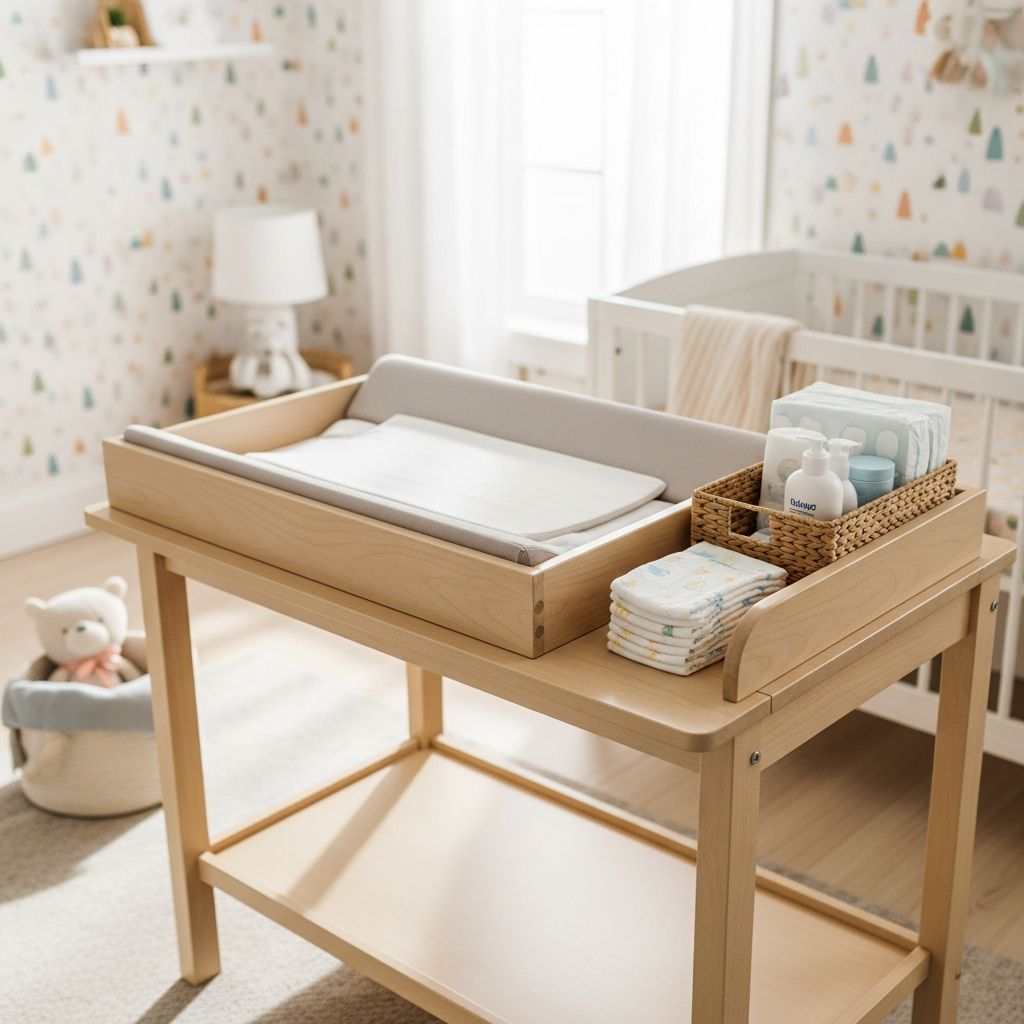
Selecting the right changing table is a key decision for new parents, balancing safety, comfort, and practicality during the frequent diaper changes of infancy. These nursery staples elevate caregiving to waist height, reducing strain while incorporating features to prevent falls and enhance organization. This guide delves into essential considerations, from structural integrity to modern innovations, empowering you to create a secure diaper-changing routine.
Why Invest in a Dedicated Changing Table?
A dedicated changing table transforms a daily necessity into an efficient process. Unlike improvising on a bed or floor, it provides ergonomic height to protect your back from repetitive bending, a common cause of parental discomfort. Safety rails and straps keep active infants secure, minimizing rollover risks during wiggly moments. Storage compartments keep wipes, diapers, and creams within arm’s reach, streamlining changes and reducing clutter in small nurseries.
Beyond convenience, these tables promote hygiene with waterproof surfaces and contoured pads that contain messes. For families, multifunctional designs convert into dressers post-diaper phase, offering longevity up to toddlerhood and beyond. Parents report less stress and fewer accidents when using purpose-built stations, making it a worthwhile investment for the first 18-24 months.
Core Safety Features Every Table Must Have
Safety is non-negotiable; prioritize tables meeting standards like ASTM or EN for infant furniture. Key elements include:
- Sturdy Construction: Wide bases prevent tipping, even with movement. Test for wobble-free stability on uneven floors.
- Guardrails: At least 2-inch (5 cm) high on all sides to block rolls. Concave surfaces center baby securely.
- Safety Straps: Adjustable, snug fasteners resistant to infant tampering, always used with one hand on baby.
- Smooth Edges: Rounded corners and no exposed hardware to avoid injuries.
- Weight Limits: Clearly marked, typically up to 30-50 lbs, to ensure support for growing infants.
Never leave baby unattended; supervision trumps all features. Avoid overloading shelves to prevent imbalance.
Types of Changing Tables for Every Home and Lifestyle
Options abound to fit space constraints and budgets. Here’s a breakdown:
- Freestanding Tables: Standalone units with open shelves for quick access. Ideal for spacious nurseries, often convertible to shelves later.
- Dresser-Toppers: Pads on existing dressers for dual-purpose use. Space-savers with built-in drawers for clothes and supplies.
- Wall-Mounted/Folding: Compact for apartments; fold away when unused. Common in public spaces with tamper-proof locks.
- Portable Stations: Lightweight, travel-friendly with carry bags. Great for grandparents’ homes or outings.
- Commercial-Grade: Height-adjustable for caregivers, with antimicrobial coatings for hygiene in daycares.
Choose based on room size—measure twice for dresser compatibility—and future needs like Montessori-inspired steps for toddlers.
Selecting the Perfect Changing Pad
The pad is the table’s workhorse, warranting equal scrutiny:
- Contoured Design: Raised edges and dips prevent sliding; firm for spinal support.
- Waterproof Material: Vinyl or TPU covers wipe clean, resisting stains from creams or leaks.
- Secure Fit: Snaps or straps anchor to table, eliminating gaps where fingers could pinch.
- Non-Toxic: Free of harmful chemicals, with breathable cores for comfort.
Replace if worn; minimal bedding only to avoid suffocation risks. Pair with dispensers for seamless hygiene.
Ergonomics and Parental Comfort
Height matters—aim for 28-36 inches to match adult waistlines, cutting bend-induced back pain. Adjustable models accommodate partners of varying statures. Ample surface area (at least 16×32 inches) allows space for supplies without crowding baby. Anti-tip kits secure units to walls, vital in earthquake-prone areas or with curious siblings.
Storage and Organization Solutions
Efficient storage turns chaos into calm:
- Baskets or drawers for diapers, wipes, lotions.
- Hooks for bags, hampers nearby.
- Modular shelves for lotions, ointments.
Keep essentials stocked pre-change; position away from cords or heavy items to maintain balance.
Comparing Changing Tables to Alternatives
| Feature | Changing Table | Dresser + Pad | Bed/Floor |
|---|---|---|---|
| Safety Rails | Yes, full surround | Partial | None |
| Ergonomics | Optimal height | Variable | Poor, straining |
| Storage | Dedicated | Drawers | Limited |
| Longevity | Convertible options | Long-term | Short |
| Best Use | Dedicated station | Multi-use | Emergency |
Tables excel in safety and ease, while toppers save space; floors pose highest risks.
Maintenance, Cleaning, and Longevity
Weekly wipes with mild soap preserve surfaces; antimicrobial treatments curb bacteria. Inspect straps monthly for wear. Transition off by 2 years or 30 lbs. Donate sturdy units after use, ensuring cleanliness.
Public and Commercial Changing Stations
Beyond home, seek facilities with EN-compliant tables: fold-down with belts for up to 15kg infants, child seats for siblings, antibacterial wipes. Universal designs accommodate all caregivers, powered lifts for accessibility.
Frequently Asked Questions (FAQs)
What is the best age to stop using a changing table?
Around 18-24 months or when baby exceeds weight limit and can climb off safely. Transition to floor pads for independence.
Are changing tables worth the cost?
Yes, for back health and safety; multifunctional ones provide years of value over makeshift setups.
Can I use a regular table with a pad?
Not recommended without rails and straps; lacks baby-specific safety.
How do I prevent tipping?
Anchor to walls, distribute weight evenly, avoid climbers nearby.
What materials are safest?
Solid wood or metal with non-toxic finishes; avoid particleboard for durability.
Final Tips for Smart Selection
Read reviews, check certifications, test in-store. Budget $100-400 for quality. Your choice safeguards baby while simplifying parenthood—prioritize safety first.
References
- Do You Need a Changing Table for Your Baby? — Nurture& Glider. 2023. https://nurtureand.com/blogs/posts/do-you-need-a-changing-table
- Baby Changing Table Buying Guide: Safety, Size, and Storage — May Dolly Baby. 2024. https://www.maydollybaby.com/blogs/baby/changing-table-buying-guide
- Types of Changing Tables: The Best Baby Changing Station — Berls. 2023. https://www.berls.com/blog/types-of-changing-tables
- Daycare Changing Table: Top Features to Look For — Kinderhuis. 2024. https://kinderhuis.co/blogs/news/daycare-changing-table-top-features-to-look-for
- Preventing Accidental Falls: Ensuring Baby Changing Table Safety — Miller Children’s & Women’s Hospital. 2023-10-15. https://www.millerchildrens.memorialcare.org/blog/preventing-accidental-falls-ensuring-baby-changing-table-safety
- The Business Benefits of Commercial Baby Changing Tables — PHS. 2024. https://www.phs.co.uk/resources/the-business-benefits-of-commercial-baby-changing-tables/