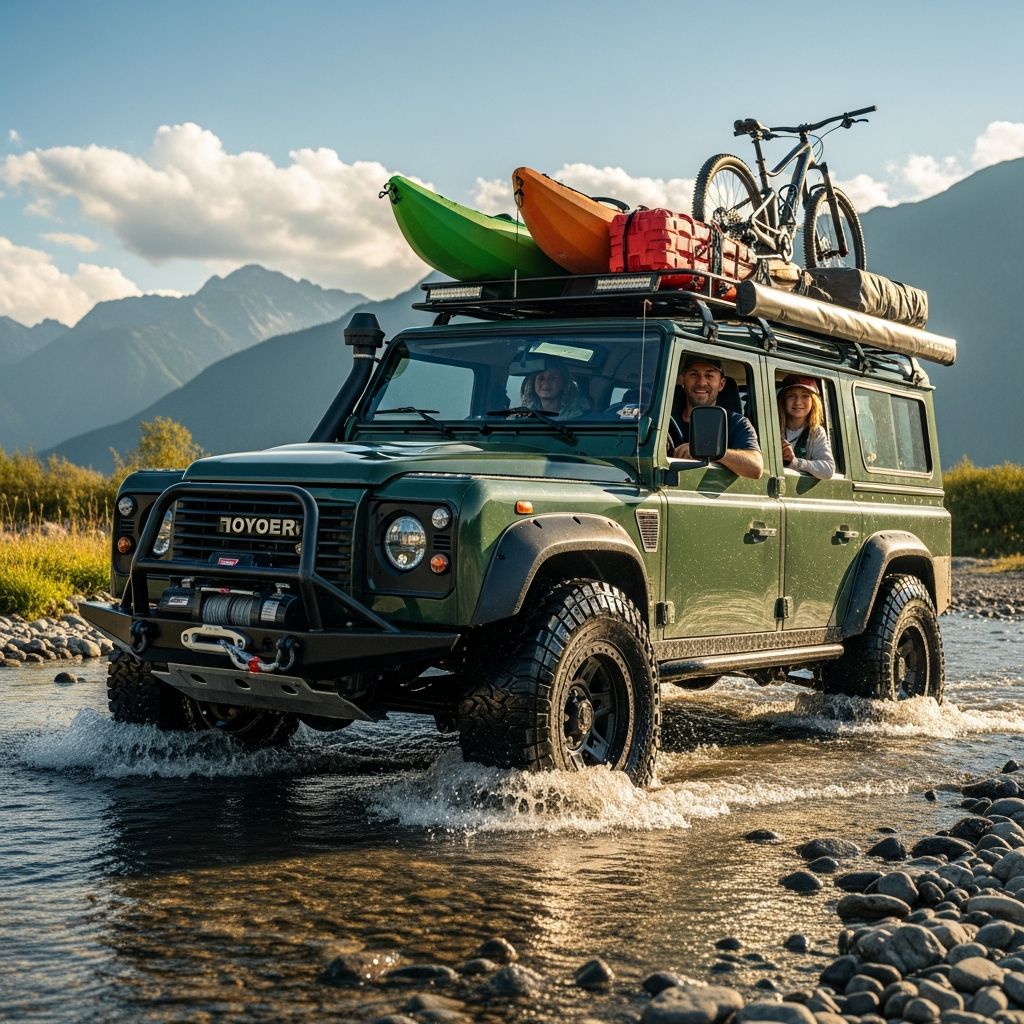
More families than ever want a vehicle that can do it all: commute during the week, carry kids and cargo on weekends, and confidently leave the pavement behind on vacations. Automakers have responded with a wave of SUVs, crossovers, and trucks that blend comfort, safety, and genuine off-road capability.
This guide explains how to choose an adventure-ready family vehicle, which features matter most, and how different types of vehicles fit different lifestyles.
Understanding Your Family’s Adventure Style
Before you start comparing specific models, get clear on how you actually use your vehicle. That will shape everything from drivetrain choice to cargo space needs.
- Weekend explorers: Mostly paved roads with the occasional dirt or gravel forest road, light mud, or snow.
- Camping and road-trip families: Long highway drives plus rough access roads to trailheads, campsites, lakes, and ski areas.
- Overlanding and remote travel: Multi-day trips on unpaved, often technical terrain with heavy gear loads.
- Daily drivers first, off-road second: School runs, commuting, and errands are the priority, but you want the security of traction and extra ground clearance in bad weather.
Most families fall somewhere between “weekend explorer” and “camping and road-trip” usage. Choosing a vehicle designed for extreme rock crawling may mean unnecessary compromises in fuel economy, noise, and comfort if you rarely leave easy trails.
Core Features That Matter for Families
Adventure vehicles for families must balance trail performance with safety and livability. The following features tend to have the biggest real-world impact.
1. Safety and Driver Assistance
Modern SUVs and crossovers can be equipped with extensive active safety systems designed to reduce crash risk and protect occupants.
- Crash-test ratings: Look for strong scores from organizations such as the Insurance Institute for Highway Safety (IIHS) and the U.S. National Highway Traffic Safety Administration (NHTSA).
- Standard driver aids: Automatic emergency braking, lane-keeping assistance, blind-spot monitoring, and rear cross-traffic alert are especially valuable with kids and gear onboard.
- All-LED lighting: Brighter headlights and good high-beam performance improve visibility on unlit rural or forest roads.
- Airbag coverage: Side curtain airbags for all rows help protect children in outboard seats.
2. Seating, Car Seats, and Family Comfort
Off-road bragging rights mean little if installing a rear-facing seat is a wrestling match. Pay attention to:
- Second-row space: Enough legroom to place child seats without forcing front occupants into cramped positions.
- LATCH locations: Clear, easy-to-access lower anchors and top tether points make child seat installation simpler and safer.
- Third-row usability: If you need three rows, test how easy it is for kids to climb past child seats to reach the back.
- Ride quality: Off-road suspensions can feel firm. Adaptive dampers or well-tuned shocks can keep things comfortable over broken pavement and corrugated dirt roads.
3. Cargo Capacity and Practical Storage
Adventure gear adds up quickly: tents, coolers, sports equipment, strollers, and sometimes pets. Consider:
- Behind-the-third-row space: Critical if you have three-row seating and still need room for luggage.
- Flat-folding seats: A nearly flat load floor makes it easier to slide in bulky items like bikes or camping bins.
- Roof load capacity: Useful for roof boxes, kayaks, or rooftop tents. Check manufacturer roof weight ratings.
- Interior storage: Covered bins for valuables, cup holders for all rows, and hooks or rails to secure bags.
4. Off-Road Hardware That Actually Helps
Not every family needs locking differentials or rock-crawl gearing. Focus on the essentials that make unpaved travel safer and less stressful.
- All-wheel drive (AWD) or four-wheel drive (4WD): AWD is typically automatic and optimized for on-road traction, while traditional 4WD systems offer low-range gearing for more serious terrain.
- Ground clearance: Extra height reduces the chance of scraping underbody parts on ruts or rocks.
- Approach and departure angles: Steeper angles help avoid bumper contact on steep driveways, washouts, and trail obstacles.
- Off-road traction modes: Many modern vehicles offer selectable modes for snow, mud, sand, or rocks that adjust throttle, transmission, and traction control settings.
- All-terrain tires: Even a modest SUV can feel much more sure-footed off pavement with more aggressive, properly rated tires.
Vehicle Types: Matching Form to Function
Adventure-ready family vehicles generally fall into four broad categories, each with trade-offs in capacity, comfort, and capability.
| Type | Best For | Key Advantages | Main Trade-Offs |
|---|---|---|---|
| Rugged body-on-frame SUVs | Families who prioritize serious trails | Excellent durability, towing, traditional 4WD | Higher fuel use, firmer ride, taller step-in |
| Soft-road crossovers | Light off-pavement and daily comfort | Better fuel economy, car-like handling | Limited extreme off-road capability |
| Pickup trucks with crew cabs | Families towing boats, campers, or trailers | High towing and payload, open bed | Parking size, bed security and weather exposure |
| Adventure wagons | Drivers who want car-like feel with extra clearance | Low roof for loading, often better efficiency | Less total interior volume than larger SUVs |
Rugged SUVs for Frequent Off-Road Use
Traditional body-on-frame SUVs share construction with pickup trucks and are built to withstand rough treatment. Many of the most capable off-road SUVs today, such as ladder-frame models with sophisticated 4WD systems and off-road drive modes, are in this category.
Families who regularly encounter:
- Deep ruts or erosion-prone forest roads
- Long snow seasons or unplowed backroads
- Towing duties plus off-pavement travel
may appreciate the durability and cooling capacity engineered into these vehicles for heavy use.
Crossovers: Everyday Comfort with Light Trail Skills
Crossovers are built on unibody platforms similar to passenger cars but can still offer meaningful off-pavement capability when equipped with appropriate AWD systems and off-road-oriented trims.
They are ideal if your typical “off-road” driving includes:
- Gravel forest service roads to campsites
- Snowy suburban streets and ski trips
- Washboard desert roads and light sand
Look for models that offer specialized “trail” or “wilderness” trim levels with improved ground clearance, off-road drive modes, skid plates, or all-terrain tires.
Pickup Trucks for Gear-Heavy Families
Crew-cab pickups combine family seating with significant towing and hauling capability, making them attractive for families with boats, campers, or utility trailers.
- Pros: Large beds for dirty or bulky gear, off-road packages from manufacturers, wide range of aftermarket accessories.
- Cons: Overall length and height can make urban parking and tight trails challenging; open beds require covers or shells to secure cargo from weather and theft.
Adventure Wagons: Low-Roof Utility
All-wheel-drive wagons with raised suspensions can be an under-appreciated option. They often feel more nimble and efficient than large SUVs while still handling mild to moderate off-pavement conditions.
They work well for families who:
- Drive mostly on paved roads but frequently visit trailheads or mountain towns
- Prefer a lower step-in height for young children or older family members
- Need good fuel economy but want added security in bad weather
How to Evaluate an Adventure Vehicle on a Test Drive
Once you have a shortlist, a careful test drive and walk-around can reveal whether a vehicle fits your family’s daily and adventure needs.
Check Real-World Family Usability
- Install a car seat: Bring at least one of your child seats to the dealership to verify fit, tether routing, and door opening size.
- Open all the doors and hatch: Consider how easy it will be to help kids climb in with a car seat in place, or to load bulky gear through the tailgate.
- Fold and unfold seats: Test how many steps are required and whether kids can operate the mechanisms safely.
- Noise levels: On the highway, listen for wind and tire noise, which can be higher on vehicles with off-road tires or roof racks.
Simulate Your Typical Adventures
On your test route, try to include:
- A steep hill or ramp to feel how the transmission and brakes respond.
- A rough or patched road to evaluate suspension comfort.
- A tight parking lot to assess turning radius and visibility.
If possible, ask about a brief drive on a maintained gravel or dirt road to test chassis composure and traction systems.
Budgeting for Ownership: Beyond the Sticker Price
Adventure-ready vehicles can cost more to purchase and maintain than basic sedans, especially when equipped with off-road packages. Planning for total ownership costs helps avoid surprises.
- Fuel economy: Larger SUVs and trucks typically use more fuel than smaller crossovers, and all-terrain tires can further increase consumption. Official fuel economy ratings from regulators such as the U.S. Environmental Protection Agency can be a helpful benchmark.
- Tire replacement: Off-road-oriented tires often wear faster and cost more than standard passenger tires.
- Insurance: Vehicles with higher replacement costs, specialty parts, or strong engines may carry higher premiums.
- Maintenance: More complex 4WD systems and air suspensions may involve additional upkeep compared with simpler drivetrains.
- Accessory costs: Roof racks, cargo systems, skid plates, and tow hitches add cost but may be essential for your use case.
Preparing Your Family Vehicle for the Trail
Even a factory-stock family SUV can become more adventure-capable with thoughtful preparation and a few key accessories.
Essential Upgrades
- Quality all-terrain tires: Often the single biggest performance upgrade for dirt and gravel.
- Full-size spare: Especially important when traveling away from major highways where roadside assistance may be slow.
- Basic recovery gear: Rated tow straps, a portable air compressor, tire pressure gauge, and work gloves.
- Cargo organization: Boxes or drawer systems keep food, tools, and kids’ items accessible and prevent loose objects from becoming hazards.
Family-Focused Safety Prep
Organizations that study road safety emphasize the importance of preparation, appropriate speed, and seat belt use when traveling on rural or unpaved roads.
- Ensure every passenger has an appropriate restraint (child seat or seat belt) and that child seats are installed according to manufacturer instructions.
- Carry extra water, snacks, and blankets in case a minor vehicle issue becomes a longer delay in remote areas.
- Use offline maps or printed directions when exploring areas with weak network coverage.
- Inform a friend or relative of your route and expected return time on more remote trips.
Frequently Asked Questions (FAQs)
Do I really need 4WD for family camping and light trails?
For maintained gravel roads and good-weather trips, a capable all-wheel-drive crossover with appropriate tires is often sufficient. Traditional 4WD with low range becomes more important for steep, loose, or heavily rutted terrain, deep snow, or when towing heavy loads on unpaved surfaces.
Are lifted suspensions safe for family vehicles?
Moderate factory-engineered lifts, especially those included in manufacturer off-road packages, are tested to meet safety and stability standards. Very large aftermarket lifts can raise the center of gravity, increasing rollover risk and altering crash performance, so families should approach extreme modifications with caution and seek professional advice.
How important are official safety ratings for off-road-focused SUVs?
Crash-test ratings and active safety features remain critical even for rugged vehicles. Many modern SUVs combine advanced 4WD systems with strong safety performance, so there is usually no need to sacrifice crash protection in order to gain trail capability.
Will all-terrain tires hurt fuel economy and comfort?
All-terrain tires typically have more aggressive tread patterns that can increase rolling resistance and road noise. The impact varies by tire design, but drivers often see a modest decrease in fuel economy in exchange for improved traction and puncture resistance on rough surfaces.
Is a three-row SUV always better than a two-row for families?
Not necessarily. If you rarely carry more than four or five occupants, a two-row SUV or crossover can offer more cargo space, better maneuverability, and lower running costs. A third row becomes valuable for larger families, carpools, or situations where you frequently transport extra passengers.
References
- The Best Off-Road Vehicles for 2025 — Road & Track. 2024-10-21. https://www.roadandtrack.com/rankings/g6793/best-off-road-vehicles/
- IIHS Vehicle Ratings — Insurance Institute for Highway Safety. 2024-01-10 (updated). https://www.iihs.org/ratings
- The Best Off-Road SUVs: Get Rowdy in These Rugged Rides — MotorTrend. 2024-06-05. https://www.motortrend.com/features/best-off-road-suvs
- Best 4×4 SUVs for 2025 — Car and Driver. 2024-09-12. https://www.caranddriver.com/rankings/best-suvs/4×4
- Fuel Economy Guide — U.S. Environmental Protection Agency & U.S. Department of Energy. 2024-01-01. https://www.fueleconomy.gov/
- Rural Roadway Safety — National Highway Traffic Safety Administration (NHTSA). 2023-08-15. https://www.nhtsa.gov/road-safety/rural-areas