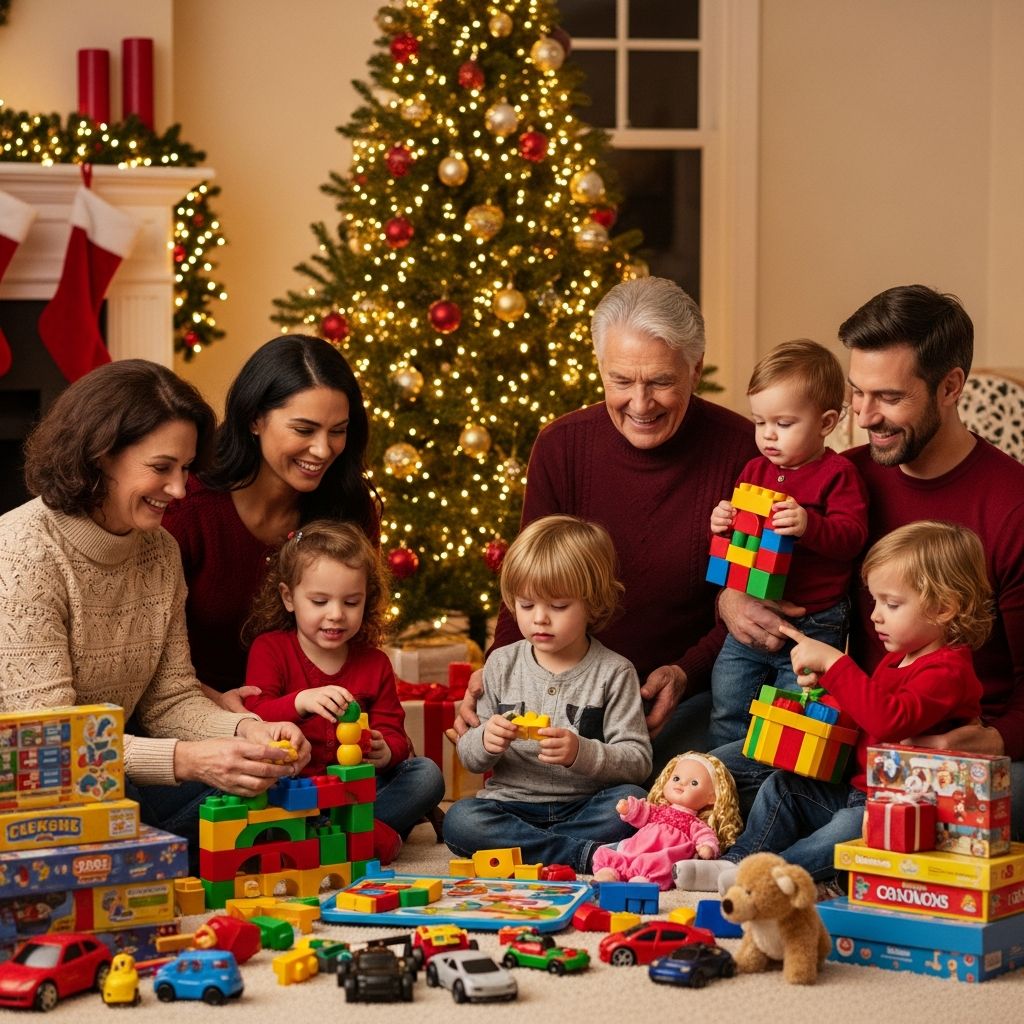
Holiday toy shopping does not have to mean overflowing closets, exhausted parents, and kids surrounded by boxes they forget in a week. This guide walks you through choosing toys that match your child’s real life, not just the commercials, so your gifts bring joy long after the wrapping paper is gone.
Start With How Your Child Really Plays
Before you even think about brands, trends, or sales, step back and watch what your child does when no one is directing them. Notice where they naturally spend their time and what they repeat day after day. Those patterns tell you far more about the right toy than any holiday catalog ever will.
- Observer mode: For a few days, simply observe your child at home, at the park, or during playdates. Do they line things up, pretend to be characters, build towers, or move constantly?
- Translate behavior into toy types: A kid who loves pretending to cook will likely get more from a play kitchen than from yet another puzzle, while a child who endlessly stacks objects may thrive with building sets.
- Match energy level: High-energy kids often benefit from toys that invite movement, while contemplative kids may prefer detailed sets, crafts, or strategy-based games.
Four Toy Categories That Earn Their Keep
Most toys fall into four big buckets: movement, imagination, building, and creativity. Filling each bucket with one or two solid options can create a small-but-mighty collection that keeps kids busy across the entire year.
| Category | What Kids Practice | Simple Examples |
|---|---|---|
| Movement | Balance, coordination, strength, risk assessment | Ride-on toys, balance bikes, balls, tunnels, kid-friendly sports gear |
| Imagination | Storytelling, empathy, language, problem-solving | Dolls, figurines, play food, dress-up, puppets, simple playsets |
| Building & Logic | Spatial skills, planning, persistence, cause and effect | Blocks, magnets, interlocking bricks, marble runs, gears |
| Creativity | Fine motor skills, self-expression, focus, experimentation | Art supplies, modeling clay, craft kits, music toys, beginner instruments |
When you look at your list, aim to choose toys that reinforce how your child already likes to play while gently introducing new skills. A balance of comfort-zone and stretch-zone play keeps kids engaged while supporting development.
Age-by-Age Holiday Toy Ideas
No single list fits every child, but age ranges can guide you toward what tends to work well. Adjust up or down a level depending on your child’s temperament, interests, and developmental profile.
Babies (0–12 Months)
For babies, the “toy” is often the interaction between caregiver and child. Look for items that support shared play, sensory exploration, and basic motor skills, rather than complex functions they cannot control yet.
- Simple sensory toys: Soft rattles, fabric books, textured balls, and crinkle blankets that can be mouthed safely.
- High-contrast visuals: Black-and-white or simple color images to prop up during tummy time.
- Movement helpers: Play gyms, floor mirrors, and push-behind toys for early cruisers.
Toddlers (1–3 Years)
Toddlers want to do what adults do, over and over. Offer sturdy toys that invite repetition, pretend play, and large motor movement.
- Pretend play gear: Mini kitchens, tool benches, doctor kits, shopping carts, or cleaning sets.
- Big, safe builders: Large blocks, chunky stacking toys, simple magnetic tiles.
- Movement toys: Ride-on cars, scooters designed for toddlers, foam climbers, tunnels.
Preschoolers (3–5 Years)
Preschoolers usually mix storytelling, building, and early games. They are ready for toys with slightly more rules or steps, as long as adults keep expectations loose and playful.
- Figurines and worlds: Animal sets, people figures, vehicles, and compact play environments.
- Open-ended builders: Standard blocks or bricks, magnetic tiles, beginner marble runs.
- First games and puzzles: Cooperative board games, matching games, large-piece jigsaw puzzles.
Early School Age (5–8 Years)
Kids in this range can handle projects, rules, and more detailed building. Lean into their current obsessions, whether that means space, animals, fantasy worlds, or sports.
- STEM and project kits: Beginner robotics, simple circuits, kid-safe science experiments with clear instructions.
- More complex builders: Theme-based construction sets, gears, bridges, or vehicles that take time to complete.
- Strategy & cooperative games: Card games, family board games with light strategy, escape-room style puzzles designed for kids.
Tweens (9–12 Years)
Tweens often straddle the line between toys and hobbies. Respect their desire to feel older by choosing items that feel more like gear or tools than “little kid toys.”
- Hobby supplies: Real art materials, photography accessories, beginner woodworking or sewing kits.
- Advanced STEM & building: Programming robots, engineering sets, intricate construction kits.
- Social games: Party games, team-based board games, and trivia-style formats they can enjoy with friends.
Choosing Toys for Different Personalities
Children with the same age and access to the same trends still play in wildly different ways. Matching toys to personality reduces frustration and increases the chance that your gift becomes a long-term favorite.
For the Big-Feelings Kid
Some children experience emotions intensely and need ways to move, squeeze, or create to feel calmer. Focus on toys that absorb big feelings rather than escalate them.
- Sensory tools: Squishy balls, kinetic sand, putty, weighted stuffed animals, textured fidget toys.
- Cozy play: Tents, reading nooks, soft blankets, and plush characters that invite retreat and quiet.
- Expressive outlets: Journals, drawing supplies, and music-makers that help kids channel emotions.
For the High-Energy Mover
Kids who cannot sit still do not need to be “fixed” with quieter toys; they need safe ways to move their bodies. Prioritize equipment that fits your living situation and weather.
- Indoor movement: Mini trampolines, stepping stones, balance boards, soft indoor balls.
- Outdoor adventures: Bikes, scooters, sports goals, jump ropes, or obstacle course sets.
- Movement-plus-brain: Dance games, active video games with strict time limits, or scavenger-hunt style activities.
For the Deep Thinker
Analytical kids enjoy patterns, strategies, and prolonged projects. They may not own a huge number of toys but will return to the same few favorites for months.
- Logic puzzles: Single-player puzzle games, mazes, pattern blocks, code-breaking kits.
- Layered building: Sets that can be rebuilt into different designs, especially those tied to real-world structures.
- Long-form projects: Model kits, complex crafts, or multi-step science experiments with a clear payoff.
Balancing Screen-Based Gifts and Traditional Toys
Digital gifts are here to stay, but they do not have to replace hands-on toys. The key is balance and intentional boundaries so that screens enhance learning and connection rather than crowding everything else out.
- Pair tech with real objects: Coding apps plus a robot, drawing tablets plus paper sketchbooks, music software plus a real keyboard.
- Set expectations early: Decide how much screen time feels right for your family and communicate it before the holidays, not after the tablet is opened.
- Use digital gifts socially: Choose games that siblings or friends can play together instead of only solo experiences.
Practical Strategies to Avoid Toy Overload
Even the best toys lose their charm if there are simply too many. A few simple systems, introduced before gift season, can keep your home livable and help kids value what they own.
- Pre-holiday declutter: Invite kids to donate or pass along toys they have outgrown. Explain that making space lets new treasures shine.
- Gift rhythm: Some families use a loose framework like “something to wear, something to read, something you want, something you need” as a sanity check.
- Toy rotation: Store some toys in bins and swap them out every few weeks. What disappears and is never requested again likely can be donated later.
- Experience add-ons: Balance physical toys with experience gifts like zoo memberships, museum passes, or lessons.
Smart Shopping Tips for Busy Parents
Holiday shopping often happens between work emails, school events, and bedtime routines. A little planning upfront can save money, reduce stress, and make the actual holiday far more enjoyable.
- Make a short, specific list: Identify one main gift and one or two small supporting gifts per child instead of wandering store aisles hoping for inspiration.
- Check for replay value: Ask, “Will this still be fun on day ten?” If the answer feels uncertain, keep scrolling.
- Watch size and storage: Oversized toys can be fun but may quickly become a burden. Measure your space and think through where the toy will live.
- Read between the reviews: Focus less on star ratings and more on repeat comments about durability, easy cleanup, and how long kids stay engaged.
Frequently Asked Questions About Holiday Toys
How many toys is too many for the holidays?
There is no universal number, but once kids stop noticing individual items, it is usually a sign of overload. Many families find that one standout gift plus a few smaller, thoughtful items feels special without being overwhelming.
Should every gift be educational?
All play is educational when it is safe, engaging, and age-appropriate. A toy does not need a STEM label to build important skills; pretend play, movement, and creative toys all support healthy development.
What if grandparents give noisy, flashy toys we would not choose?
Consider setting gentle guidelines ahead of time, such as sharing a wish list or emphasizing experience gifts. If something still arrives that does not match your values, you can allow kids to enjoy it for a short season and quietly rotate it out later.
Are character-branded toys a bad idea?
Character toys can inspire rich pretend play if the child already loves the story or show. The key is choosing items that still invite imagination—like figures, role-play gear, or building sets—rather than single-function plastic pieces that do only one thing.
How can we avoid sibling fights over new toys?
When possible, give each child at least one clearly individual item and at least one thing meant to share. Label shared toys as such from the start, and plan time to introduce them together, setting simple turn-taking expectations.
Creating a Holiday Toy Tradition That Fits Your Family
Ultimately, the “right” toys are the ones that reflect your child’s personality and your family’s real life. When you focus less on checking off a list of trendy items and more on how your child loves to play, the result is less clutter, fewer meltdowns, and more genuine joy.
Over time, your holiday tradition might become less about the pile of boxes and more about the stories, projects, and games those gifts spark in the months that follow.