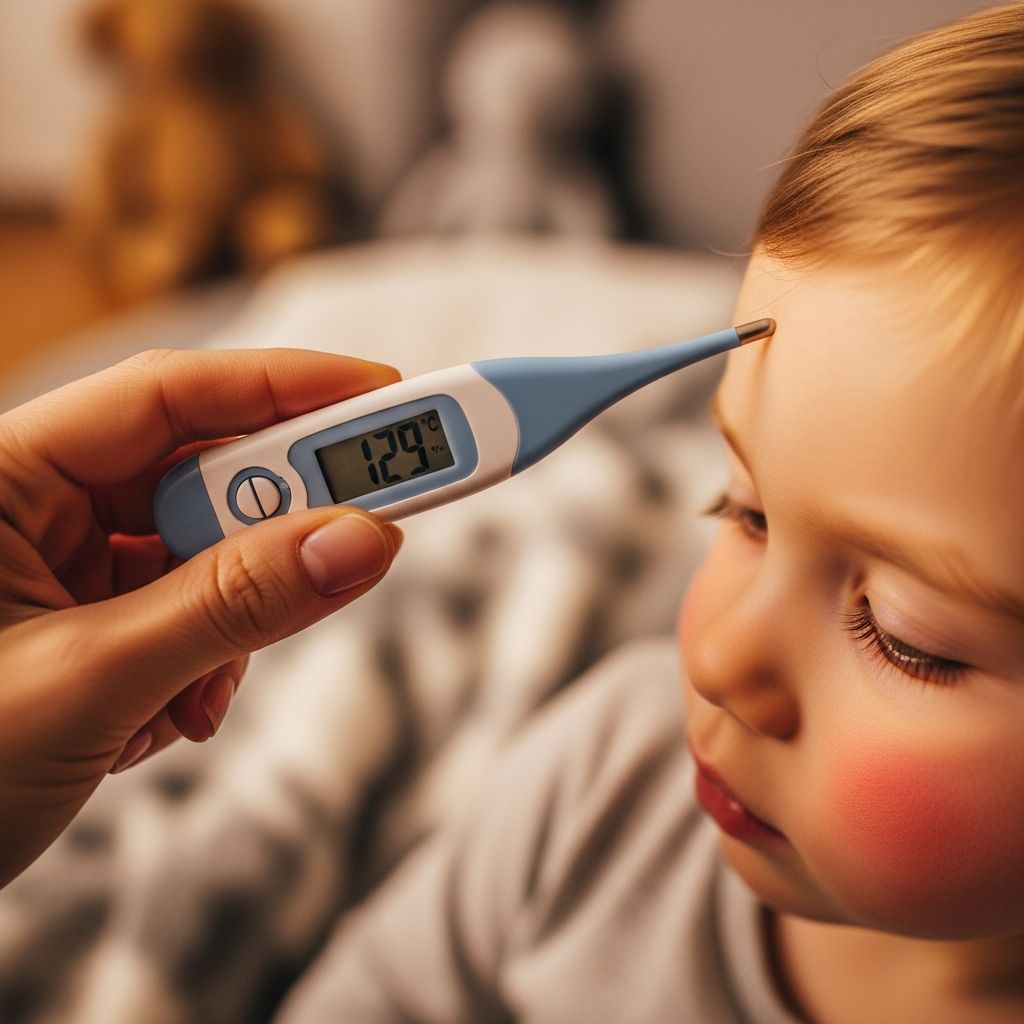
Knowing how to check your child’s temperature correctly helps you spot fever early, decide when to call the doctor, and track how your child is doing over time. This guide explains the different types of thermometers, where and how to use them, how to get the most accurate reading, and what the numbers usually mean in children.
Why Checking Temperature Matters in Children
Body temperature is one of the most important vital signs. A reliable reading can help you:
- Recognize when your child has a fever, which can signal infection or illness.
- Monitor whether a fever is rising, stable, or improving after medicine.
- Share specific numbers with your child’s healthcare provider to guide decisions.
- Avoid unnecessary worry when your child feels warm but temperature is actually normal.
Medical organizations define fever in children slightly differently depending on where the temperature is taken, because readings from different body sites are not identical.
Normal Temperature Ranges and Fever Basics
Normal body temperature is often quoted as 98.6°F (37°C), but healthy children can run slightly lower or higher. Temperature also changes during the day and after activity.
| Measurement site | Approx. normal range* | Fever (about) | Comments |
|---|---|---|---|
| Rectal (in the bottom) | 97.9–100.4°F (36.6–38.0°C) | ≥100.4°F (38.0°C) | Usually the most accurate in infants and young children. |
| Oral (by mouth) | 95.9–99.5°F (35.5–37.5°C) | ≥100.0°F (37.8°C) often used | Good for older children who can keep mouth closed. |
| Axillary (underarm) | Typically ~0.5–1°F lower than rectal | Fever if close to 99.0–100.0°F, confirm with better method | Least accurate; often a screening method. |
| Ear / Forehead | Varies with device | Use manufacturer’s fever guidance | Accuracy depends heavily on correct use and device quality. |
*Ranges are approximate and may vary by source, device, and child’s age. Always follow your thermometer’s instructions and your child’s clinician’s advice.
Types of Thermometers You May Use
Modern thermometers for home use include several designs. Always read and follow the instructions that come with your specific device.
1. Digital contact thermometers
These are common, battery-powered thermometers with a small probe. They can be used:
- Rectally (in the bottom)
- Orally (in the mouth)
- Axillary (under the arm)
Digital thermometers usually beep when the reading is complete. They are generally accurate when used correctly and are recommended by most major health organizations.
2. Tympanic (ear) thermometers
Ear thermometers use infrared sensors to read heat from the eardrum. They provide readings within seconds. However, accuracy can be reduced if:
- The probe is not aimed properly at the ear canal.
- There is a lot of earwax.
- The device is not used according to instructions.
3. Temporal artery (forehead) thermometers
Forehead thermometers use infrared technology to measure temperature at the forehead or over the temporal artery.
- Quick and noninvasive, useful for sleeping or fussy children.
- Accuracy is generally better than ear readings in many studies, but can be affected by sweat or environmental conditions.
- Always follow manufacturer-specific directions.
4. Plastic strip thermometers
These flexible strips placed on the forehead change color with temperature, but they measure skin temperature, not core body temperature. Reliable sources note they are less accurate and usually should not be used to make important decisions about a child’s health.
Choosing the Best Method by Age
The safest and most accurate site for temperature measurement depends heavily on your child’s age and cooperation. Healthcare organizations commonly recommend:
- Babies under 3 months: Rectal temperature with a digital thermometer is generally preferred for accuracy. Call your child’s clinician right away if your baby’s rectal temperature is 100.4°F (38°C) or higher unless you already have specific instructions.
- Babies 3–36 months: Rectal readings remain very accurate. Some clinicians also accept accurate forehead readings, depending on the device and situation.
- Children 4–5 years and older: Oral readings with a digital thermometer are usually reliable if the child can keep their mouth closed and follow directions.
- Any age when rectal/oral is not possible: Forehead or ear thermometers, or underarm readings, can be used, with the understanding that underarm temperatures are least accurate and may need confirmation.
Before You Take Your Child’s Temperature
Simple preparation steps help you get a more accurate reading.
- Read the instructions for your thermometer the first time you use it and review as needed.
- Clean the thermometer before and after use with rubbing alcohol or cool soapy water, following manufacturer guidance.
- Wait after food or drink: If you will check an oral temperature, wait at least 20–30 minutes after hot or cold drinks or food.
- Wait after bathing or heavy exercise: Allow about an hour after a hot bath or vigorous activity, which can temporarily change temperature.
- Keep the child calm: Crying, shivering, or being tightly wrapped in blankets can affect readings.
Step-by-Step: Rectal, Oral, Underarm, Ear, and Forehead
Below are general instructions; always confirm the details in your device’s manual.
Rectal temperature (often best for babies)
- Use a digital thermometer labeled for rectal use only, and do not share it for oral temperatures.
- Apply a small amount of water-based lubricant to the tip if recommended.
- Place your baby on their back or stomach on a firm, safe surface, or on your lap.
- Gently insert the tip only about 1/2 inch (1–1.5 cm) into the anus. Stop if you feel resistance; never force.
- Hold the thermometer steady until it beeps, then remove and read the number.
- Clean the thermometer thoroughly before storage.
Oral temperature (for older, cooperative children)
- Use a clean digital thermometer intended for oral use.
- Make sure your child has not eaten, drunk, or chewed gum in the previous 20–30 minutes.
- Place the probe under the tongue, slightly off to one side, and ask your child to close their lips around it without biting.
- Have your child breathe through the nose and keep the thermometer in place until it beeps.
- Remove, read, and record the temperature and time.
Underarm (axillary) temperature
- Use a digital thermometer; this can be an oral thermometer used under the arm.
- Remove clothing so the probe touches skin, not fabric.
- Place the tip in the center of the armpit.
- Lower the arm firmly against the body, sometimes crossing the arm over the chest to hold the thermometer in place.
- Hold until it beeps, then read and record.
Underarm readings are usually lower and less accurate than rectal or oral readings, so they may serve as a screening check. If you get a high or concerning value, confirm with a rectal or oral reading when appropriate.
Ear (tympanic) temperature
- Use a device made specifically for ear measurements.
- Gently pull the ear back (and slightly up in older children) to straighten the ear canal.
- Insert the probe as directed, aiming toward the eardrum, not the side of the canal.
- Hold in place until the thermometer signals that it is finished.
- Remove and read the temperature. Repeat in the other ear if recommended by your device’s instructions.
Forehead (temporal) temperature
- Wait for the thermometer to power on and be ready.
- Ensure the forehead is dry and free of heavy sweat or lotions.
- Depending on the device, either gently slide it across the forehead or hold it at the recommended distance in front of the forehead.
- Hold still for the required seconds until you hear a beep or see a solid reading.
- Read and record the result.
Tips for Accurate, Consistent Readings
Consistency often matters more than the exact number when you are monitoring trends.
- Use the same method each time (rectal, oral, etc.) whenever possible so readings can be compared over time.
- Measure at similar times of day when tracking an illness.
- Write down the temperature, the method used, and the time. This record is very helpful if you call or visit a healthcare provider.
- Keep batteries fresh and replace them when readings seem inconsistent or when the device warns you.
- Do not estimate by touch alone; a child can feel very warm and still not have a true fever.
When to Call the Doctor About a Fever
Guidance varies by age and health condition, so always follow your child’s specific care plan. In general, parents are often advised to seek medical help urgently if:
- Your baby under 3 months has a rectal temperature of 100.4°F (38°C) or higher.
- Your child of any age looks very ill, is difficult to wake, has trouble breathing, has a stiff neck, a seizure, or a purple rash.
- Fever lasts more than a few days, or your child seems to be getting worse rather than better.
- You are worried, unsure how to interpret the numbers, or your child has chronic medical problems.
Remember that how your child appears and behaves is often as important as the number on the thermometer. A child with a mild fever who is drinking, playing in short bursts, and interacting may be less concerning than a child with a similar temperature who is very lethargic or in distress.
Frequently Asked Questions (FAQs)
How often should I check my child’s temperature when they are sick?
Most clinicians suggest checking when your child feels warmer than usual, seems unwell, or before giving fever-reducing medicine. If a healthcare provider is following your child for a specific illness, they may ask you to measure and write down temperatures at regular intervals. Avoid checking every few minutes; focus on trends and how your child is acting.
Can I use the same thermometer for rectal and oral readings?
No. For safety and hygiene, thermometers used rectally should be clearly marked and never used in the mouth. Many families keep one thermometer only for rectal readings and another for oral or underarm use.
Are ear or forehead thermometers good enough?
Ear and forehead thermometers can give useful readings when used correctly and with a quality device. However, they may be less accurate in certain situations (for example, very young infants, a lot of earwax, or heavy sweat on the forehead). In babies and high-risk children, clinicians often prefer rectal measurements for the most precise result.
My child’s underarm temperature is high. Do I need to recheck in another spot?
Because underarm readings are the least accurate, a high underarm temperature usually needs confirmation with a more reliable method (rectal in infants or oral in older children), especially if you are deciding about urgent care.
What if my child is shivering or bundled in blankets?
Shivering and heavy blankets can raise skin temperature and affect certain readings. Remove extra layers, wait a few minutes, and then recheck. If your child is very chilled or shaking, focus on comfort and seek medical advice if you are concerned.
Does a higher fever always mean a more serious illness?
Not always. Some mild viral infections can cause high fevers, while serious illnesses may cause only low-grade fevers. The overall picture—your child’s age, behavior, medical history, and other symptoms—matters more than the number alone. Use the thermometer as one piece of information, not the only one.
References
- Temperature measurement — MedlinePlus Medical Encyclopedia, U.S. National Library of Medicine. 2022-01-20. https://medlineplus.gov/ency/article/003400.htm
- How to take your temperature — Mayo Clinic Staff, Mayo Clinic. 2020-04-07. https://www.mayoclinic.org/healthy-lifestyle/adult-health/in-depth/how-to-take-temperature/art-20482578
- Thermometers: Understand the options — Mayo Clinic Staff, Mayo Clinic. 2020-09-15. https://www.mayoclinic.org/diseases-conditions/fever/in-depth/thermometers/art-20046737
- Temperature: Digital and Glass Thermometers — Nationwide Children’s Hospital. 2021-06-01. https://www.nationwidechildrens.org/family-resources-education/health-wellness-and-safety-resources/helping-hands/temperature-digital-and-glass-thermometers
- Taking Your Temperature – What Is the Best Way? — Sepsis Alliance. 2020-10-05. https://www.sepsis.org/news/taking-your-temperature-what-is-the-best-way/
- Non-contact Infrared Thermometers — U.S. Food and Drug Administration (FDA). 2022-09-22. https://www.fda.gov/medical-devices/general-hospital-devices-and-supplies/non-contact-infrared-thermometers
- How to check and record a patient’s body temperature — R. J. Mallett & G. Doherty, Nursing Times (via PubMed Central). 2013-12-04. https://pmc.ncbi.nlm.nih.gov/articles/PMC3864059/