Diaper changing is one of the most frequent tasks new parents encounter, often occurring 8 to 12 times daily for newborns. Mastering this skill ensures your baby’s comfort, prevents skin issues, and builds parental confidence. This guide provides detailed, practical instructions drawn from reliable health authorities, covering preparation, execution, and advanced tips.
Essential Supplies for Every Diaper Change
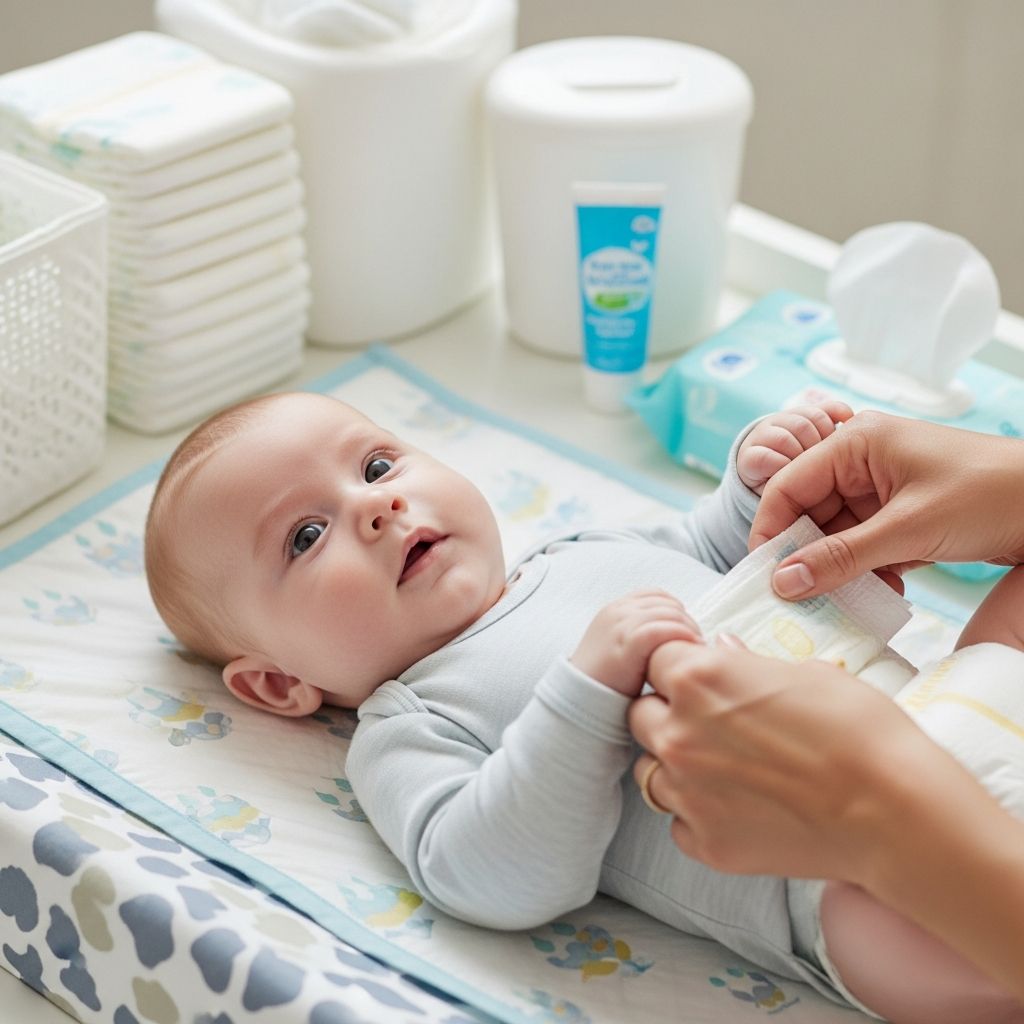
Before starting, assemble all items to minimize disruptions and maintain safety. A well-stocked changing station reduces stress during the process.
- Clean diapers (disposable or cloth)
- Fragrance-free baby wipes or warm washcloths
- Diaper rash ointment or barrier cream
- Changing pad or waterproof mat
- Diaper disposal bag or pail
- Hand sanitizer or soap for cleanup
Keep these within arm’s reach on a stable, elevated surface like a dedicated changing table. For portability, use a portable mat for on-the-go changes.
Choosing the Right Changing Location
Select a flat, firm surface away from edges to prevent falls. Ideal spots include a changing table with guardrails, a padded dresser top, or even the floor covered by a mat for added security. Never leave your baby unattended, even for a second, as infants can roll unexpectedly.
Ensure the area is well-lit, ventilated, and at a comfortable height (about waist-level for adults) to avoid back strain. For travel, opt for public changing stations with straps or use your car backseat with supervision.
Core Step-by-Step Diaper Changing Process
Follow this sequence for every change to promote hygiene and efficiency. The process takes under two minutes with practice.
- Prepare and Position: Wash your hands thoroughly. Lay your baby on their back on the pad, removing lower clothing. Speak soothingly to keep them calm.
- Open the Dirty Diaper: Unfasten tabs or snaps without fully removing it yet. Fold the front down to expose the area, using the clean back section as a barrier against mess.
- Lift and Clean: Grasp ankles gently with one hand, lifting legs slightly. Wipe from front to back—crucial for girls to prevent infections. Use multiple wipes for thoroughness, especially with stools. For boys, point the penis downward and cover if uncircumcised to avoid sprays.
- Remove and Dispose: Slide out the soiled diaper, tuck wipes inside, roll it up, and secure with tabs. Place in a disposal unit immediately.
- Apply Protection: Pat the skin dry or let air-dry briefly. Apply a thin layer of cream if redness appears, focusing on folds.
- Position New Diaper: Slide a fresh, unfolded diaper under the bottom, centering it with the graphic facing front (tabs on back).
- Fasten Securely: Pull the front up between legs to belly button level. Secure tabs snugly but comfortably—two fingers should fit at the waist. Ensure leg cuffs fan outward to prevent leaks.
- Final Checks and Dress: Redress the baby, wash their hands if possible, and clean the surface with disinfectant wipes.
Age-Specific Diaper Changing Adjustments
Babies evolve quickly, requiring tailored techniques at each stage.
| Age Group | Key Adjustments | Frequency |
|---|---|---|
| Newborn (0-1 month) | Fold top waistband down over umbilical stump. Use newborn-sized diapers with notches. Extra gentle lifts. | 10-12 times/day |
| Infant (1-6 months) | Incorporate distractions like toys. Watch for rolling. Standard sizing begins. | 8-10 times/day |
| Toddler (6+ months) | 5-8 times/day |
Hygiene and Safety Priorities
Proper hygiene safeguards against infections and rashes. Always wipe girls front-to-back to avoid urinary tract issues, as emphasized by health experts. For boys, clean under the foreskin if applicable and direct urine away during cleaning.
Safety rules: One hand on baby at all times. Use restraint straps only with constant supervision. Avoid lotions with alcohol near genitals. Change promptly when wet or soiled to maintain skin health—every 2-3 hours or after each poop.
Preventing and Treating Diaper Rash
Rash affects up to 35% of infants monthly, often from prolonged wetness or irritation. Prevention starts with frequent changes, breathable diapers, and barrier creams like zinc oxide at first redness signs.
- Allow diaper-free time (10-15 mins post-change) for air circulation.
- Use super-absorbent diapers and pat—don’t rub—dry.
- For treatment, apply prescription-strength cream if persistent, and consult a pediatrician.
Pro Tips for Smooth, Stress-Free Changes
Distractions work wonders: Sing songs, make faces, or use a mirror above the table. Warm wipes in your hand first for comfort. The “double diaper” trick—place the clean one under before removal—saves time.
For squirmy babies, swaddle arms during changes or change during alert playtime. Eco-tip: Cloth diapers reduce waste but require double rinsing.
Common Diaper Change Challenges and Fixes
Challenge: Explosions during change. Solution: Keep a cloth handy over genitals, especially boys.
Challenge: Baby rolls or kicks. Solution: Change on floor or use a curved mat to contain movement.
Challenge: Sensitive skin. Solution: Fragrance-free products and hypoallergenic wipes.
Frequently Asked Questions
How often should I change a newborn’s diaper?
Newborns need changes every 2-3 hours or immediately after soiling, totaling 10-12 daily.
What’s the correct wipe direction for girls?
Always front to back to prevent bacteria transfer to the urethra.
Can I use baby powder?
Avoid powders due to inhalation risks; opt for creams instead.
How do I know if the diaper fits right?
Waist snug with two-finger gap, legs free-moving, no redness from cuffs.
What if my baby hates diaper changes?
Use distractions, warm wipes, and consistent routines; it improves with familiarity.
References
- Diaper Changing 101: A Step-by-Step Guide for Parents — Dr. Talbot’s. 2023. https://drtalbots.com/blogs/dr-talbots-blog/diaper-change
- Diaper Changing 101: How to Change a Diaper with Ease — Trainual. 2024. https://trainual.com/manual/diaper-changing-101-how-to-change-a-diaper-with-ease
- How to Change a Diaper: Your Step-by-Step Guide — Pampers. 2025-01-10. https://www.pampers.com/en-us/baby/diapering/article/how-to-change-a-diaper
- How to Change a Diaper — Taking Cara Babies. 2024. https://www.takingcarababies.com/blogs/newborn/how-to-change-a-diaper
- Diapering 101 – Tips for How to Master Baby Diaper Changes — Lambs & Ivy. 2023. https://lambsivy.com/blogs/news/diapering-101-tips-for-how-to-master-baby-diaper-changes
- Tips for Dad: Changing a Diaper Step by Step — Dummies.com. 2022. https://www.dummies.com/article/body-mind-spirit/relationships-family/parenting/tips-dad-changing-diaper-step-step-225776/
- Healthy Habits: Diaper Changing at Home — Centers for Disease Control and Prevention (CDC). 2024-05-15. https://www.cdc.gov/hygiene/about/healthy-habits-diaper-changing-steps-at-home.html