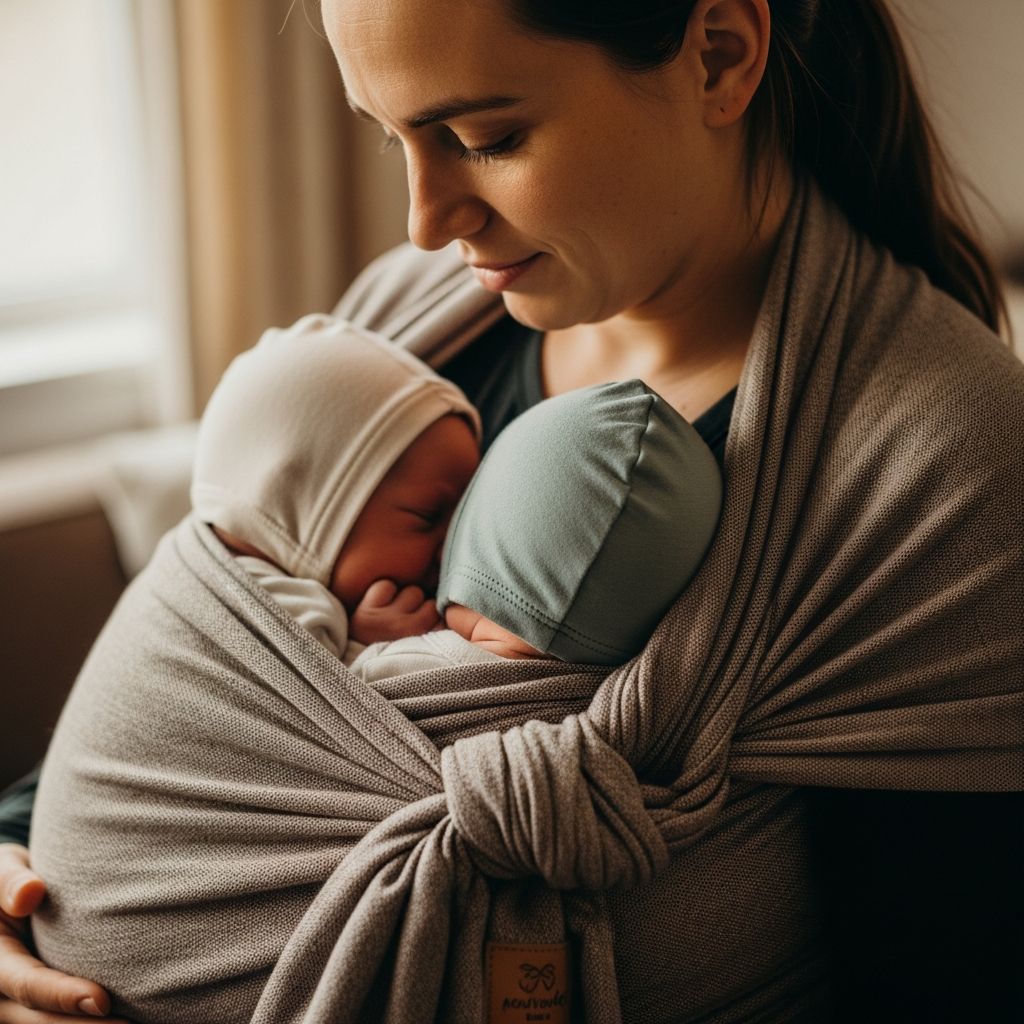
Bringing home newborn twins is joyful and overwhelming, and many parents quickly realize that having only two arms feels wildly insufficient. A stretchy baby wrap can give you a way to keep both babies close while reclaiming your hands for everyday life. This guide offers an original, practical approach to carrying newborn twins in a wrap, focusing on safety, comfort, and realistic expectations.
Why Consider Wearing Newborn Twins?
Carrying twins in a stretchy wrap is not about perfection or elaborate techniques; it is about creating a safe, snuggly place for both babies while lightening the load for the caregiver. Used thoughtfully, a wrap can soothe fussy babies, support bonding, and make simple tasks like getting a glass of water or answering the door much more manageable.
- Twins are often born smaller and may crave extra contact, warmth, and motion.
- Babywearing can help synchronize their sleep and feeding cues over time.
- Hands-free time helps parents attend to household needs or older siblings without leaving a baby to cry alone.
Key Safety Principles for Twin Babywearing
Before learning any specific wrapping method, it is essential to understand the safety basics. When carrying two newborns, each baby’s airway and body position must remain visible, clear, and supported at all times.
- Airway first: Each baby’s chin should stay off their chest, with their nose and mouth completely visible and unobstructed.
- Face in view: You should be able to see each baby’s face without moving fabric out of the way.
- Close enough to kiss: Both babies should sit high enough on your chest that you could tilt your head forward and kiss their heads.
- Tight but not restrictive: The wrap should hold them firmly against your body without slumping, but their chest should still move easily with each breath.
- Supported hips: Their legs should be in an “M” shape, with knees slightly higher than bottom, not dangling straight down.
- Listen to your body: If you feel strain in your back, shoulders, or pelvis, take a break and readjust.
Choosing the Right Wrap and When to Start
Most parents who carry newborn twins in front use a stretchy knit wrap several meters long. This type of fabric provides gentle stretch, allowing one pre-tied base to support both babies without rigid buckles or panels.
- Fabric: Look for a breathable, soft, stretchy material that feels comfortable against bare skin.
- Length: A longer wrap (often 5+ meters) gives enough fabric to cross, layer, and tie securely for two babies.
- Timing: Many parents begin twin babywearing once they feel steady on their feet and babies are medically stable, often after the first week or two at home.
- Health checks: Speak with a pediatric provider before babywearing if your twins were premature, low birth weight, or have breathing, heart, or muscle tone concerns.
Preparation: Setting Up for a Calm, Safe Wrap
Successful twin babywearing starts before the wrap goes on. A few minutes of preparation can prevent frustration and mid-wrap meltdowns.
- Wrap up in a calm moment, not in the peak of a crying storm.
- Change diapers and offer a feeding first so babies are comfortable.
- Choose a firm, clear surface nearby (bed, couch, changing pad) to place one twin while you lift the other.
- Wear supportive, non-slip shoes if you plan to walk around once both babies are in.
- Use a mirror the first few times to check positions and fabric placement.
Understanding the Basic Front Carry Structure
Many twin setups are variations of a simple front cross carry. The idea is to create a snug series of fabric “rails” across your torso that form two seats for the babies. When both babies are newborn size, they generally sit side by side, each on your chest, with their legs tucked in or only slightly spread.
| Element | Purpose | What To Check |
|---|---|---|
| Horizontal pass across your waist or chest | Acts as a wide belt that supports the babies’ bottoms from below. | Fabric is flat, not twisted, and snug around your torso. |
| Two diagonal passes (forming an “X”) | Create individual pockets for each baby’s body. | Each pass can be tightened separately; fabric crosses high on your chest. |
| Back tie or knot | Anchors tension so the wrap doesn’t loosen as you move. | Knot is secure and comfortable, not digging into your spine. |
Step-by-Step: Pre-Tying the Wrap for Two
The advantage of a stretchy wrap is that you can pre-tie a single structure and then place both babies into it, rather than juggling loose fabric with a wiggly newborn under each arm. The following is a generalized method; always adapt positions to what feels safe for your body and your babies.
- Find the center: Hold the middle marker of the wrap at your stomach or slightly higher on your chest.
- Create the belt: Bring the center of the fabric around your waist or under your bust, crossing the two ends behind your back and bringing them forward again. Keep the fabric flat and snug.
- Form the X on your chest: Cross the two ends over each other at the front so that one end goes over the other, forming an “X” across your upper torso.
- Anchor beneath: Tuck the ends down through the horizontal belt you created at the beginning, one on each side, then pull to tighten.
- Secure with a knot: Bring the ends behind your back again and tie a double knot where it feels comfortable (back or hip) so the structure stays firm.
- Check snugness: Slide your hands under each diagonal pass and gently pull outward. The fabric should resist but still allow you to fit your flat hand underneath.
At this point you have three supportive layers across the front of your body: one horizontal band and two diagonal crosses. These will become the seats and backrests for both babies.
Placing the First Twin in the Wrap
Always start by placing just one baby so you can pay close attention to their position and breathing. When the first baby feels secure and you are confident in the setup, you can bring in the second.
- Pick a side: Decide which side of your chest will hold the first baby; this helps you remember which diagonal strap belongs to which twin.
- Position baby on your shoulder: Place the first baby upright against the side of your chest, with their head resting high near your collarbone.
- Open the inner diagonal panel: With your opposite hand, gently pull the diagonal fabric closest to your chosen side away from your body to form a pocket.
- Slide baby into the pocket: Lower baby’s bottom onto the horizontal belt while you guide their legs into a comfortable curled or frog-leg position, then draw the diagonal fabric over their back and shoulders.
- Create a deep seat: Pull the fabric up between the baby’s knees and bottom so the cloth supports from knee to knee, forming that safe “M” position.
- Check alignment: Make sure their chin is off their chest, their nose is free, and their head is close enough to kiss.
Once the first twin is seated, place a steadying hand on their back for a moment and take a slow breath. Notice any pulling or sagging and gently tighten the fabric if needed before you reach for the second baby.
Adding the Second Twin Beside the First
Placing the second twin is similar to placing the first, but now you are balancing and checking two babies at once. It often helps to have another adult present the first few times you attempt this.
- Lift the second baby: Bring the second twin to your other shoulder, again in an upright burping position.
- Open the remaining diagonal pass: With your free hand, pull open the diagonal fabric on that side, creating another pocket.
- Lower baby onto the belt: Gently guide their bottom onto the horizontal pass, keeping them very close to your chest.
- Spread the fabric: Draw the diagonal strap across the baby’s back, shoulders, and up to the back of their neck, then fan it from knee to knee to support their legs.
- Adjust spacing: Nudge the babies slightly toward or away from each other so both have space to breathe freely and neither face is pressed into the other’s body.
- Use the horizontal layer as reinforcement: Pull the bottom horizontal band up over both babies’ lower backs and bottoms, stopping beneath their necks, for extra support.
In a well-adjusted twin carry, both babies rest high on your torso, roughly at the level of your heart, facing inward, with their heads turned slightly to the side. You should feel the weight centered and close to your body rather than pulling forward.
Fine-Tuning Comfort for You and the Babies
Once both babies are in place, take a moment to fine-tune details so the carry feels sustainable. Small adjustments can make a big difference in comfort for your back, shoulders, and recovering postpartum body.
- Spread fabric on your shoulders: Fan the wrap material out to distribute weight and prevent digging or pressure points.
- Reposition knots: If a knot presses on your spine, untie and re-secure at your side or front instead.
- Micro-tighten: Gently pull any extra slack from the diagonals toward the knot to keep babies from slumping.
- Heat awareness: Twins plus a thick wrap can get warm. Dress everyone in light layers and check for damp hair or flushed skin.
Realistic Expectations: What Twin Babywearing Can and Cannot Do
Babywearing is a tool, not a magic solution. Knowing its strengths and limits helps prevent disappointment and keeps everyone safer.
- It can: Soothe crying spells, free your hands briefly, help you move around the house, and support bonding.
- It cannot: Replace naps in a safe flat sleep space, guarantee longer stretches of night sleep, or remove the need for breaks when your body feels tired.
- Movement limits: When carrying two newborns, stick to walking on level surfaces. Avoid bending at the waist, cooking over hot surfaces, or engaging in vigorous activity.
Common Mistakes and How to Fix Them
Every family fumbles the wrap a few times. Recognizing common pitfalls helps you correct them early and avoid unsafe or uncomfortable carries.
- Babies sit too low: If they are down near your stomach, loosen the knot, pull the fabric upward on your torso, and retie higher so they rest on your chest.
- Fabric twisted or bunched: Twists create pressure points and weak spots. Smooth out each pass before adding the babies.
- Chin-to-chest slumping: This can compromise breathing. Gently tilt each baby’s pelvis upward, support behind the shoulders, and tighten the fabric until they sit upright.
- Uneven weight: If one side feels much heavier, recheck how deep each baby’s “seat” is and adjust so both are equally supported by the belt and diagonals.
Adapting as Twins Grow
The twin setup that works well at two weeks may feel very different at two months. As babies grow and gain head control, some families transition to carrying one baby on the chest and one on the back using different carriers. In the earliest phase, however, most parents stick to a dual front carry in a stretchy wrap.
- Revisit safety: Once babies begin pushing strongly with their legs or trying to roll, reassess whether the wrap style still keeps them secure.
- Consider weight limits: Check the manufacturer’s guidelines for maximum total weight and age recommendations for the wrap.
- Explore other carriers: Soft-structured carriers, woven wraps, or ring slings can offer new configurations once babies are older and sturdier.
Practical Tips for Everyday Twin Wrap Use
Small habits in daily life can make twin babywearing smoother and less stressful. Think of the wrap as one part of your larger routine with two newborns.
- Practice first with a partner at home instead of trying it for the first time right before an appointment.
- Limit early sessions to 15–30 minutes and gradually lengthen as your body adjusts.
- Keep a burp cloth or small towel nearby for spit-ups while babies are in the wrap.
- Plan breaks: Set a timer to check in with your body and the babies, especially if you are tired or recovering from surgery.
Sample Use-Cases for a Twin Wrap
To imagine how this technique might fit into your life, consider a few everyday scenarios where carrying both babies can be a real help.
- Late-afternoon fussy hour: Strapping both babies in the wrap and walking slowly around the home or yard may shorten or soften the daily meltdown window.
- Solo parent mornings: With twins securely wrapped, you can prepare a simple breakfast or pack a bag for appointments without juggling two crying infants in bouncy seats.
- Soothing one while feeding the other: Sometimes one twin naps peacefully in the wrap while you sit down and feed the other in your arms.
FAQs About Carrying Newborn Twins in a Wrap
Is it safe to carry premature twins in a stretchy wrap?
Premature or medically fragile babies can be especially sensitive, so always ask your healthcare provider before using any carrier. If you receive the green light, be extra vigilant about airway position, body temperature, and time limits in the wrap.
How long can I wear both babies at once?
There is no single rule that applies to every family. Many parents start with short sessions of 20–30 minutes and extend as their comfort and strength improve, always checking that both babies remain alert, pink, and breathing comfortably.
Can I breastfeed while both twins are in the wrap?
Feeding inside a twin wrap can be complicated and is rarely recommended for the earliest attempts. It is generally safer to remove at least one baby and sit down to latch them, then re-secure the wrap afterward.
What if one baby hates the wrap and the other loves it?
Some babies instantly relax in a carrier, while others need time to adjust. If one twin protests, try very short practice sessions, rhythmic movement, and lots of soothing. You can also wear one baby and hold the other, gradually building up tolerance over several days.
Do I need a special twin-specific wrap?
Many families successfully carry twins in a standard long stretchy wrap rated for appropriate weight. Twin-specific carriers exist, but they are not strictly necessary as long as you respect the wrap’s guidelines and prioritize safety in your chosen position.
Closing Thoughts
Learning to carry newborn twins in a stretchy wrap is like learning a new dance while sleep-deprived: awkward at first, but gradually more fluid with practice. With patience, careful attention to safety, and realistic expectations, a wrap can become one of your most trusted tools for soothing two babies at once while preserving a small but precious measure of independence in your day.