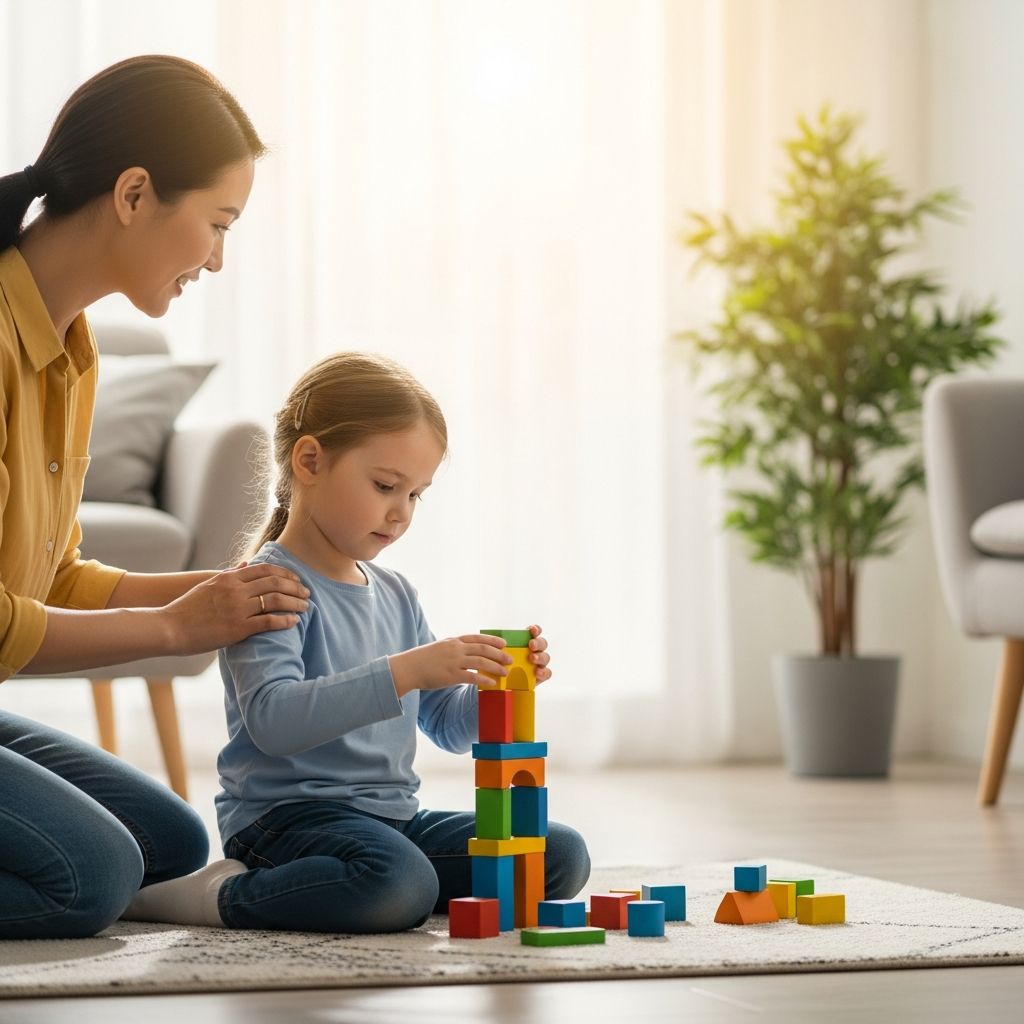
Every parent wants a child who is confident, responsible, and capable of navigating life’s challenges. Yet in daily life, this wish can collide with rushed mornings, unfinished homework, messy rooms, and emotional meltdowns. The heart of the challenge is not just behavior; it is how we help our children develop real competence while also feeling secure and loved.
This article explores how to grow your child’s competence without harshness or constant rescuing, and how strengthening your own sense of parental competence changes the entire family climate. Research consistently shows that parents who feel more capable tend to use warmer, more effective strategies and raise children with fewer emotional and behavioral difficulties.
What “Competence” Really Means in Parenting
In everyday language, we often confuse competence with perfection. A competent child is not one who never makes mistakes; it is one who can learn, try again, and handle increasing responsibility over time.
Key elements of child competence
- Practical skills: Dressing themselves, managing schoolwork, handling money, contributing to chores.
- Emotional skills: Naming feelings, calming down, asking for help appropriately.
- Social skills: Taking turns, resolving conflicts, listening, and expressing needs respectfully.
- Thinking skills: Planning, problem-solving, evaluating choices, and learning from mistakes.
Psychologists often describe this as a mix of abilities and the belief that “I can handle this.” That inner belief—known as self-efficacy—develops when children repeatedly try, struggle a bit, and eventually succeed with supportive guidance.
Parental competence vs. parental control
Parents sometimes use control to feel competent: tight schedules, strict rules, or doing everything for the child “so it gets done right.” In the short term, this can reduce chaos. Over time, though, excessive control can undermine both the child’s and the parent’s sense of competence.
| Control-Focused Parenting | Competence-Focused Parenting |
|---|---|
| Emphasis on obedience and short-term compliance | Emphasis on learning, growth, and long-term skills |
| Parent does most of the thinking and deciding | Child is invited into age-appropriate decisions and problem-solving |
| Mistakes are treated mainly as rule-breaking | Mistakes are treated as information and learning opportunities |
| High stress when behavior is not perfect | More flexibility, curiosity, and calm coaching |
Why Your Own Sense of Parental Competence Matters
Research on parenting shows that a parent’s belief in their ability to handle parenting challenges—known as parental self-efficacy or parenting sense of competence—is a powerful driver of what actually happens at home.
How parental competence shapes daily life
- Calmer reactions: Parents who feel more competent use less harsh or inconsistent discipline and show more warmth and responsiveness.
- More connection: They are more likely to stay engaged with their child instead of withdrawing during tough moments.
- Better follow-through: They tend to stick with routines and problem-solving rather than giving up when behavior is challenging.
- Protective effect for children: Higher parental self-efficacy is associated with fewer child behavior problems and better emotional adjustment.
At the same time, low parental confidence can spiral into more conflict. When you doubt yourself, you may swing between being overly strict and giving up, which confuses children and increases misbehavior.
What strengthens parental competence?
- Supportive co-parenting or social support: When parents feel backed up, understood, and not alone, they feel more able to cope with parenting demands.
- Learning specific parenting strategies: Well-designed parenting programs increase parents’ sense of competence and lead to warmer, more effective parenting.
- Noticing small wins: Recognizing progress—“My child calmed down faster today” or “We solved that problem together”—builds realistic confidence over time.
- Managing your own stress and mood: Parental depression and chronic stress are linked to lower self-efficacy and less effective parenting behaviors.
Core Principles for Growing Real Competence in Children
Several decades of research on positive parenting, attachment, and child development point to consistent principles that boost both competence and well-being.
1. Connection first, coaching second
Children learn best from adults they feel safe with. Warm, responsive parenting—sometimes called positive parenting—is linked to better behavior, stronger relationships, and healthier mental health into adulthood.
- Offer eye contact, touch, and genuine interest before correcting.
- Use a calm, steady voice, especially when your child is upset.
- Reflect simple feelings: “You’re frustrated; you really wanted that to work.”
Connection does not mean permissiveness. It simply creates the emotional safety that allows your child to hear your guidance and practice new skills.
2. Invite effort, not perfection
Competence is built through repeated attempts, not flawless performance. Children who are praised only for outcomes (“You’re so smart”) can become anxious about failure and avoid challenges. A focus on effort and strategies (“You kept trying different ways; that’s persistence”) supports a growth mindset and resilience.
- Normalize difficulty: “Learning hard things often feels messy at first.”
- Highlight strategies: “You asked for help and then tried again—that worked.”
- Cherish persistence more than speed or perfection.
3. Share responsibility gradually
Competence requires practice with real responsibility. Over-helping sends the message “You can’t do this.” Under-supporting can leave a child overwhelmed. The art is in gradually shifting more responsibility to your child while staying nearby as a coach.
A helpful rule of thumb:
- Do it for them when they are very young or genuinely cannot manage.
- Do it with them as they learn new skills.
- Watch them do it and offer feedback and encouragement.
- Trust them to do it, with occasional check-ins and problem-solving.
Practical Ways to Build Competence in Everyday Routines
You do not need elaborate charts or programs to grow competence. Ordinary routines—mornings, meals, homework, chores—are powerful training grounds if you approach them intentionally.
Morning and bedtime routines
Predictable routines reduce stress for both parents and children and are strongly associated with better behavior and emotional regulation.
- Create a simple visual sequence (words or pictures) for morning and evening tasks.
- Teach one step at a time—first practice getting dressed independently, then add teeth brushing, and so on.
- Let natural incentives work: “When you’re ready on time, we have a few extra minutes to read together.”
- When your child struggles, stay calm and break tasks into smaller steps instead of taking over immediately.
Chores as training, not punishment
Household tasks are one of the most practical ways to teach responsibility, persistence, and problem-solving. Children who regularly contribute at home often show stronger self-regulation and social skills later on.
- Start with small, concrete tasks: putting toys in a bin, setting napkins, feeding a pet.
- Work alongside your child at first; model how to do the task and narrate your thinking.
- Aim for “good enough” rather than perfect results to avoid discouraging effort.
- Use neutral reminders instead of criticism: “What’s next on your list?”
Homework and learning challenges
Academic tasks are not just about grades; they are a daily exercise in frustration tolerance, problem-solving, and asking for help.
- Agree on a regular homework time and place with minimal distractions.
- Coach problem-solving: “What have you tried? What else could you try?”
- Resist doing the work for your child; instead, help them break large assignments into smaller pieces.
- Teach self-advocacy: role-play how to ask a teacher for clarification.
Responding to Mistakes: The Crucial Competence Moment
How you respond when your child spills the milk, forgets an assignment, or speaks rudely can either shame them or help them grow. Research on positive parenting indicates that firm limits combined with warmth and guidance are linked to better behavior and mental health than harsh or inconsistent discipline.
Step-by-step: Turning missteps into learning
- Pause and breathe to manage your own reaction before you speak.
- Acknowledge the feeling: “You were really upset when that happened.”
- State the limit calmly: “It’s not okay to hit, even when you’re angry.”
- Guide repair: “What can we do to make this right?”
- Problem-solve: “Next time you feel this angry, what could you try instead?”
This approach teaches three core competence skills at once: emotional awareness, responsibility for actions, and problem-solving for the future.
Supporting Your Own Growth as a Parent
Your journey matters as much as your child’s. When you actively build your own skills and support network, you strengthen the foundation for your child’s development.
Build your parenting toolkit
Evidence-based parenting programs—often focused on positive, consistent, and warm approaches—have been shown to increase parents’ sense of competence and improve children’s behavior.
- Look for programs offered through hospitals, schools, or community organizations.
- Choose approaches that emphasize connection, positive reinforcement, and clear limits rather than fear or humiliation.
- Practice one new strategy at a time so you can see what works for your family.
Lean on supportive relationships
Co-parenting quality and broader social support are important predictors of how confident and effective parents feel.
- Have regular check-ins with your co-parent focused on teamwork, not blame.
- Share strategies that work instead of only discussing problems.
- Seek out other parents who value respectful, growth-oriented parenting.
Care for your own mental health
Parents who struggle with depression, anxiety, or chronic stress often feel less capable, even when they are doing many things well. Attending to your own well-being is a direct investment in your child’s environment.
- Notice signs that you are overwhelmed: constant irritability, hopelessness, or emotional numbness.
- Reach out to a healthcare provider or counselor if you notice persistent distress.
- Protect small moments for rest, movement, and activities that restore you.
Frequently Asked Questions (FAQs)
If I’m gentle and focus on connection, won’t my child become spoiled?
Warmth and connection do not spoil children; lack of boundaries and inconsistent follow-through do. Research supports parenting styles that combine warmth with clear expectations and reasonable limits as most beneficial for behavior and well-being.
My child resists every new responsibility. Should I push harder or back off?
Most children initially resist tasks that are new, hard, or boring. You can validate their feelings while still expecting participation: empathize, break the task into smaller steps, work together at first, and then gradually step back as skills grow. The goal is not to remove all discomfort but to keep it manageable and supported.
How do I handle it when I lose my temper and yell?
You can model competence by repairing: calm yourself, then acknowledge what happened (“I yelled; that wasn’t okay”), validate your child’s feelings, and share what you’ll try next time. This teaches your child that mistakes—even yours—can be owned and repaired, which is a key part of true competence.
What if my partner parents very differently from me?
Co-parenting differences are common. Focus first on finding small areas of agreement—such as routines or non-negotiable safety rules—and build from there. Calm, respectful conversations away from the children, and a shared commitment to avoiding undermining each other in front of the child, can gradually improve consistency and your mutual sense of competence.
How can I tell if my child is becoming more competent?
Look for signs such as needing fewer reminders for familiar tasks, bouncing back more quickly after disappointment, trying new strategies before asking for help, and taking some initiative to solve everyday problems. Progress is often slow and uneven, so track changes over weeks and months rather than day to day.
References
- Parental Sense of Competence as a Mechanism of Change in a Parenting Intervention — M. Deković et al., Journal of Child and Family Studies. 2010-08-01. https://pmc.ncbi.nlm.nih.gov/articles/PMC2904452/
- Co-parenting, parental competence and problem behaviours in preschool children — X. Wang et al., Humanities and Social Sciences Communications (Nature). 2024-05-21. https://www.nature.com/articles/s41599-024-03774-z
- Parental self-efficacy and competence — COPMI (Children of Parents with a Mental Illness), Emerging Minds. 2014-01-01. https://www.copmi.net.au/professionals-organisations/copmi-what-works/evaluating-interventions/parents-carers-families/parental-self-efficacy-and-competence/
- The Effect of Parenting Sense of Competence on Emotional and Behavioral Adjustment of Preschool Children — Z. Ding et al., Child Health Nursing Research. 2023-04-01. https://journals.sagepub.com/doi/full/10.1177/20965311231167196
- The Power of Positive Parenting — UC Davis Children’s Hospital. 2021-06-01. https://health.ucdavis.edu/children/patient-education/Positive-Parenting
- What is Positive Parenting? 33 Examples and Benefits — E. S. Kern et al., PositivePsychology.com. 2020-10-06. https://positivepsychology.com/positive-parenting/
- Types of Parenting Styles and Effects on Children — H. M. Akram & T. S. Yaseen, StatPearls (NCBI Bookshelf). 2023-07-03. https://www.ncbi.nlm.nih.gov/books/NBK568743/