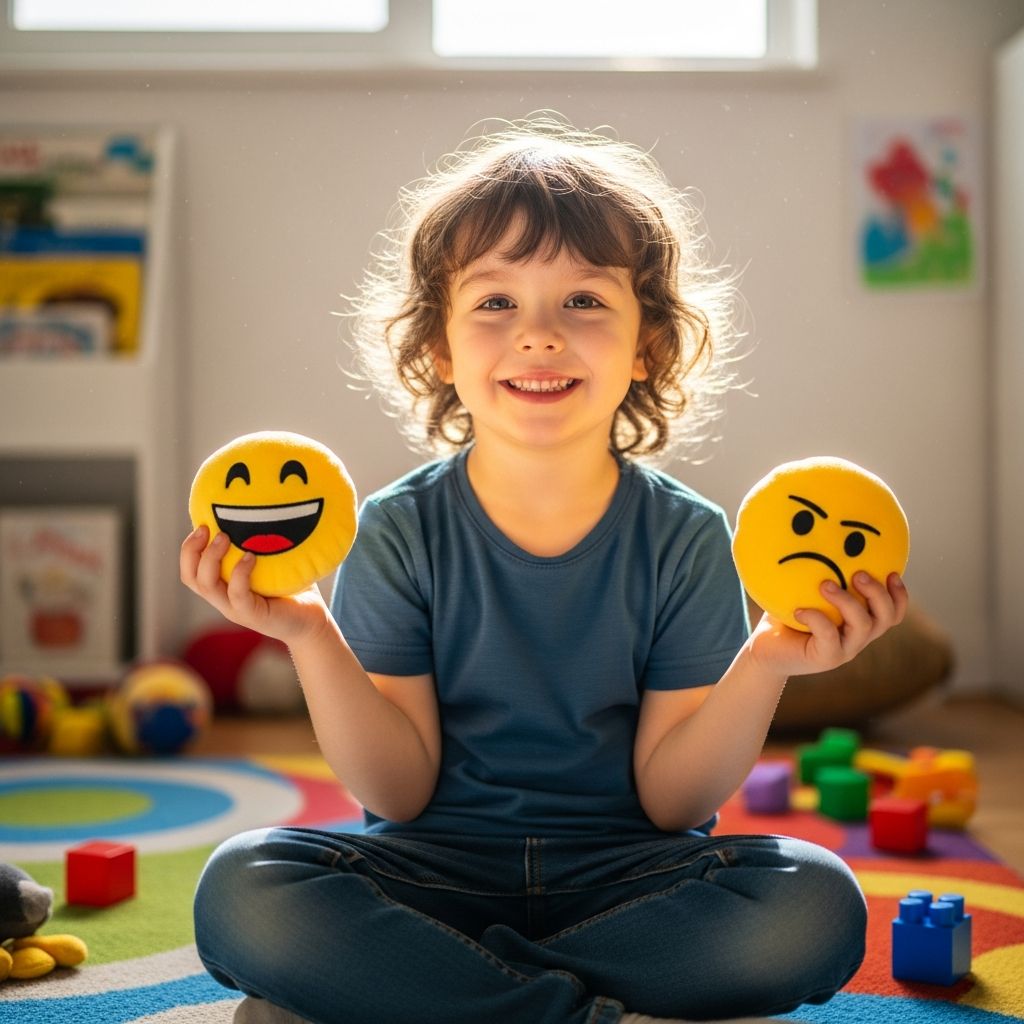
Preschoolers demonstrating sophisticated emotional awareness can transform family dynamics and set the foundation for lifelong success. Emotional intelligence, the ability to recognize, understand, and manage emotions, emerges early and predicts better social skills, academic performance, and health outcomes in children.
Building Blocks of Emotional Awareness in Toddlers and Preschoolers
From ages two to five, children begin developing key emotional skills that allow them to navigate feelings effectively. This period marks rapid growth in identifying personal emotions and those of others, which supports healthier interactions and self-control. Research shows that by age four, most children employ basic strategies like averting eyes from scary sights or covering ears during loud noises to self-regulate.
Core components include:
- Self-awareness: Recognizing one’s own emotional states as a prerequisite for management.
- Expression: Conveying feelings through appropriate verbal and nonverbal cues, such as hugs for comfort or clear statements of needs.
- Knowledge: Labeling emotions like joy, anger, or sadness and understanding their triggers and effects.
- Regulation: Coping with intense feelings without disruptive behaviors, fostering prosocial actions.
These elements interconnect; for instance, knowing a peer’s delight can soothe one’s own distress, enhancing empathy and regulation.
Real-Life Example: A Preschooler’s Profound Emotional Articulation
Imagine a four-year-old calmly dissecting a moment of distress: explaining how physical sensations like a tight chest signal deeper unease, then tracing it to unmet needs or relational tensions. This level of insight isn’t innate but cultivated through consistent parental guidance, mirroring emotion coaching techniques that validate feelings while teaching coping mechanisms.
Such maturity enables children to communicate boundaries and seek resolution proactively, reducing tantrums and building resilience. Studies link this early proficiency to fewer peer conflicts and stronger teacher relationships in kindergarten.
Proven Strategies for Parents to Foster Emotional Skills
Parents play a pivotal role in emotional development by modeling and coaching. Dr. John Gottman’s five-step emotion coaching process provides a structured approach.
| Step | Description | Benefits |
|---|---|---|
| 1. Notice emotions | Observe subtle cues without requiring exaggeration. | Builds trust and sensitivity. |
| 2. View as teaching moment | Treat feelings as chances to connect and learn. | Turns challenges into growth opportunities. |
| 3. Listen actively | Provide undivided attention and reflect back. | Validates the child’s experience. |
| 4. Name the emotion | Use precise vocabulary to expand awareness. | Enhances emotional literacy. |
| 5. Guide problem-solving | Set behavior limits while brainstorming solutions. | Promotes self-regulation and decision-making. |
Implementing these daily can significantly boost a child’s emotional intelligence, leading to better impulse control and goal achievement.
Why Emotional Intelligence Outshines IQ for Long-Term Success
Landmark longitudinal research reveals self-control, a cornerstone of emotional intelligence, surpasses IQ, family background, and socioeconomic status in forecasting adult outcomes. High self-control children in youth grew into healthier, wealthier adults with fewer legal issues. In early childhood, emotional competence correlates with peer success, school readiness, and reduced aggression.
Children with strong emotional skills engage more in class, form positive bonds, and show greater empathy, all predictors of academic and social thriving.
Practical Daily Activities to Nurture Emotional Growth
Incorporate emotion-building into routines for lasting impact:
- Mood check-ins: Use a simple chart with faces to discuss daily feelings at meals.
- Storytime reflections: Pause books to identify characters’ emotions and causes.
- Role-playing scenarios: Practice responses to frustration or conflict through play.
- Mirroring exercises: Imitate expressions to teach recognition in self and others.
- Calm-down toolkit: Offer deep breaths, squeezing toys, or drawing for regulation.
These activities embed skills like recognizing causes of emotions and appropriate expression, vital for cultural and situational adaptability.
The Role of Family Environment in Emotional Development
A supportive home climate accelerates emotional competence. Positive emotional exchanges promote prosocial behaviors, while negative ones hinder peer relations. Parental reactions—validating versus dismissing—shape how children process feelings.
Beyond parents, teachers contribute via classroom practices like mood meters, integrating emotional learning into lessons for sustained gains.
Overcoming Common Challenges in Emotional Coaching
Parents often struggle with their own unregulated emotions during high-stress moments. Strategies include pausing to self-regulate before responding and reflecting on past reactions to improve future ones. Accept that all emotions are valid, but guide behaviors toward constructive outlets.
Mild negative feelings, like frustration, can build perseverance if managed well, while excessive suppression risks emotional illiteracy.
Long-Term Benefits Across Life Stages
Early emotional intelligence yields dividends: reduced behavioral issues, higher motivation, and empathetic decision-making. In school, it enhances focus and relationships; in adulthood, it supports career and health success.
Social-emotional learning (SEL) programs formalize this, teaching empathy and problem-solving for holistic development.
Frequently Asked Questions
What age do children start regulating emotions?
By age four, most use simple strategies like avoiding stimuli, improving with coaching.
Can emotional intelligence be taught?
Yes, through modeling, labeling, and problem-solving, with measurable improvements in attention and relationships.
How does family affect emotional growth?
Positive climates and validating responses foster competence; negative ones lead to peer difficulties.
Why prioritize emotional over cognitive skills?
Self-control predicts life success better than IQ.
What if my child has outbursts?
Validate feelings, label them, and co-create solutions to build regulation.
Empowering the Next Generation Through Emotional Mastery
By prioritizing emotional coaching, parents equip children with tools for resilient, fulfilling lives. Start small—notice one emotion today—and watch maturity unfold.
References
- How to Strengthen Your Child’s Emotional Intelligence — Gottman Institute. 2019-05-15. https://www.gottman.com/blog/strengthen-childs-emotional-intelligence/
- Teaching Emotional Intelligence in Early Childhood — NAEYC. 2017-03-01. https://www.naeyc.org/resources/pubs/yc/mar2017/teaching-emotional-intelligence
- Emotional Intelligence in the First Five Years of Life — Child Encyclopedia. 2023-01-10. https://www.child-encyclopedia.com/emotions/according-experts/emotional-intelligence-first-five-years-life
- Emotional Intelligence in Children — International Journal of Trend in Research and Development. 2022-06-20. https://www.ijtrd.com/papers/IJTRD22090.pdf
- 6 Tips for Helping Your Child Build Emotional Intelligence — Understood.org. 2024-08-12. https://www.understood.org/en/articles/6-tips-for-helping-your-child-build-emotional-intelligence
- Why ‘Social and Emotional Learning’ Is So Important for Kids — Yale Medicine. 2023-09-05. https://www.yalemedicine.org/news/social-emotional-child-development