Understanding the Foundation of Intentional Wardrobing
The concept of a streamlined, multifunctional wardrobe has gained considerable attention among those seeking to reduce decision fatigue and enhance their daily experience of getting dressed. Rather than accumulating pieces that rarely see daylight, a strategically curated collection focuses on versatility, quality, and personal alignment. This approach recognizes that clothing serves both practical and psychological purposes—it protects us from the elements while simultaneously shaping how we present ourselves to the world.
Many individuals find themselves trapped in a paradoxical situation: despite owning numerous garments, they struggle to assemble outfits they feel confident wearing. This often stems from misalignment between purchased items and actual lifestyle needs, poor quality foundations that limit mixing and matching, or a disconnection between clothing choices and personal aesthetic preferences. Understanding these root causes becomes essential before embarking on any wardrobe reorganization journey.
Evaluating Your Current Closet Inventory
The initial step involves honest assessment rather than immediate disposal. Before making decisions about what to keep or remove, take time to understand your existing wardrobe composition. This process requires patience and self-reflection rather than rushing through elimination.
Begin by physically examining each piece in your closet. Note which items you reach for repeatedly and which remain untouched for months. Pay attention to the reasons behind these patterns—do certain pieces fit better, feel more comfortable, or align more closely with your lifestyle? Understanding these preferences reveals valuable information about your authentic style preferences versus aspirational choices you’ve made based on trends or others’ recommendations.
As you review your wardrobe, observe recurring patterns:
- Color tones that appear frequently in your preferred pieces
- Silhouettes and cuts that make you feel most confident
- Fabric textures you naturally gravitate toward
- Outfit combinations you naturally repeat
- Gaps where you struggle to create complete looks
This observational phase provides essential data for building a cohesive collection moving forward. Rather than imposing external standards onto your wardrobe, you’re identifying patterns that genuinely reflect who you are and how you live.
Establishing Your Color Framework
Color selection forms the backbone of any functional wardrobe system. While neutral tones offer undeniable versatility and mixing capability, your personal color palette should reflect both practicality and your individual preferences. The most successful wardrobes typically feature a foundation of neutral or muted tones that allow multiple combinations, with strategic accent colors that bring personality and visual interest.
Rather than adhering to restrictive color theories, consider your lifestyle and climate. Someone living in a warm region might find bright, saturated hues more aligned with their environment than heavy earth tones. Similarly, if your professional environment requires conservative presentation, your palette might center on classics like navy, charcoal, and white, while creative professionals might incorporate bolder options.
An effective color strategy typically includes:
- A primary neutral (often black, navy, gray, or beige) that anchors the majority of pieces
- A secondary neutral that provides contrast and variation
- One to three accent colors that reflect your personality and appear in statement pieces or accessories
- Consideration for how colors perform under your typical lighting conditions
Defining Your Essential Clothing Categories
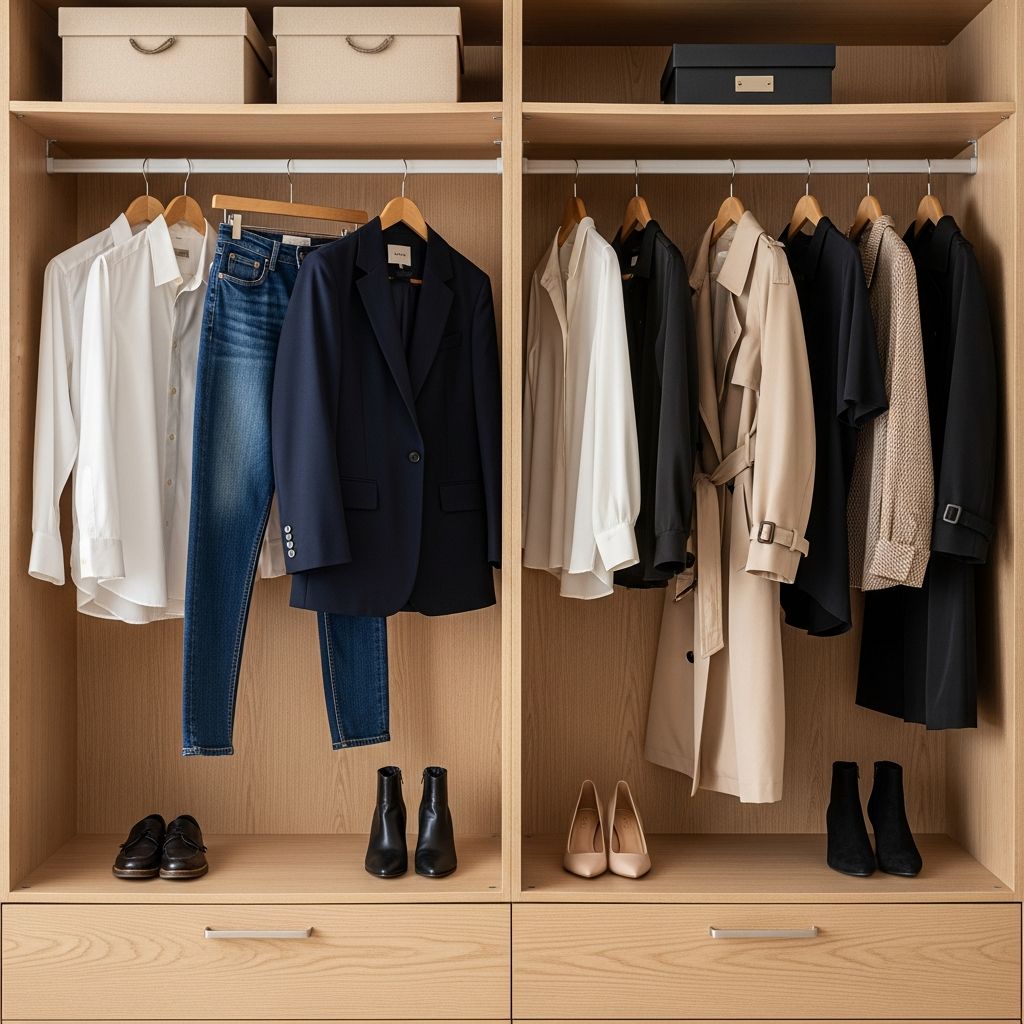
Rather than viewing all clothing as equal, consider organizing your wardrobe into functional modules. This modular approach, built around interchangeable combinations, allows you to maximize outfit possibilities while maintaining a manageable total number of pieces. Each module typically consists of foundational items that work together: bottoms, tops, outerwear, and footwear.
A practical organizational framework might include:
- Casual Foundation Module: Everyday pieces suitable for regular activities, errands, and leisure time
- Professional Module: Pieces appropriate for workplace environments and business-casual settings
- Polished Module: More refined pieces for social occasions, dinners, or events requiring elevated presentation
- Seasonal Layers: Weather-appropriate outer layers that transition with seasons
Each module should contain enough variety to create multiple complete outfits while maintaining internal coherence. This structure prevents the creation of isolated pieces that serve no purpose and ensures that additions to your wardrobe serve a genuine function.
Strategic Selection of Versatile Basics
The foundation of any functional wardrobe rests on versatile basics that form the building blocks for endless combinations. These pieces should be neutral in color, classic in silhouette, and high in quality to withstand regular wear. However, “basics” doesn’t mean boring—it means foundational pieces upon which more interesting items can be layered.
Essential bottom pieces typically include:
- Well-fitting dark denim that transitions from casual to dressier settings
- Neutral-toned trousers suitable for professional or polished casual environments
- Comfortable everyday pants in neutral shades
- A neutral skirt appropriate for your lifestyle and climate
For tops, prioritize pieces that offer flexibility in styling:
- White or cream-colored button-up shirts that layer and dress up easily
- Neutral basic t-shirts in quality materials
- Lightweight sweaters or knit tops for layering
- A structured cardigan that functions as both top and outerwear
Outerwear deserves particular attention, as these pieces often form the visual foundation of an outfit and represent significant investment:
- A classic blazer in neutral tone for professional occasions
- A versatile denim jacket for casual styling
- A neutral coat suitable for your climate that layers over most items
- An additional lightweight layer for transitional seasons
Incorporating Personal Style Elements
While basics provide the foundation, incorporating pieces that reflect your individual taste prevents your wardrobe from feeling generic or restrictive. This might include printed items, interesting textures, unexpected colors, or pieces with distinctive details that align with your aesthetic preferences.
The key to successfully incorporating personal style pieces lies in ensuring they coordinate with your foundational items. A patterned or textured piece becomes exponentially more useful when it shares color tones with your basics and can be styled multiple ways. Rather than treating style pieces as isolated additions, consider how they integrate with existing items to create new outfit possibilities.
Personal style incorporation might include:
- Patterned tops that feature your base neutral color plus an accent tone
- Textured pieces that add visual interest while maintaining color coordination
- Statement outerwear that reflects personality while functioning practically
- Interesting shoes or accessories that showcase individual taste
Identifying and Addressing Wardrobe Gaps
Once you’ve selected your foundational pieces, inevitable gaps emerge where additional items would expand outfit possibilities. Rather than randomly shopping, approach gap-filling systematically by identifying specific needs: perhaps you lack professional outerwear, don’t have enough evening options, or need footwear suitable for particular activities.
Before purchasing anything new, ensure it serves a genuine purpose and coordinates with existing pieces. Ask whether a potential addition creates multiple new outfit combinations or fills a specific functional need. A single new piece should ideally integrate with at least three to five existing items to justify its place in your wardrobe.
Common wardrobe gaps include:
- Limited formal or semi-formal options
- Insufficient transitional season layering pieces
- Inadequate footwear for specific occasions or activities
- Lack of pieces suitable for professional or business environments
- Missing accent colors or pattern options
Building Outfit Combinations
The ultimate measure of wardrobe success is the number of distinct, wearable combinations you can create from your pieces. Rather than focusing on total number of items, concentrate on outfit versatility. A practical approach involves targeting between seven and ten everyday outfit combinations plus additional formal or occasion-specific looks.
An effective formula for building combinations includes consideration of:
- Different bottom options (jeans, trousers, skirts) in neutral shades
- Multiple top choices that pair with different bottoms
- Outerwear and layering pieces that complete looks without overwhelming them
- Footwear options suitable for various activities and formality levels
Visually mapping these combinations before finalizing your wardrobe helps identify whether pieces genuinely work together. This might involve photographing items, using design software, or sketching outfit combinations to visualize what’s actually achievable with your selected pieces.
Seasonal Rotation and Storage
Rather than maintaining an enormous year-round closet, strategic seasonal rotation simplifies daily choices and maximizes space efficiency. Remove off-season pieces from your active wardrobe, storing them appropriately so they remain in good condition while seasonal pieces take priority.
This approach offers multiple advantages:
- Reduced visual clutter in your closet and reduced decision fatigue when getting dressed
- More visible space for currently relevant pieces
- Opportunity to assess seasonal pieces when rotating them back in
- Better protection of off-season items through proper storage
Organize storage using clear containers that allow visibility of contents without opening boxes, and ensure storage areas remain climate-controlled and free from moisture to protect fabric quality.
Quality Considerations and Longevity
Building a functional wardrobe centers on owning fewer, higher-quality pieces rather than accumulating numerous low-quality items. Quality construction, appropriate fabric weight, and thoughtful design directly impact how long pieces remain wearable and how successfully they integrate into your wardrobe system.
When evaluating quality, consider:
- Seam construction and consistency
- Fabric weight and composition appropriate for intended use
- Finishing details and hem quality
- Brand reputation and construction standards
- Price-per-wear value considering expected durability
Frequently Asked Questions
How many pieces should an ideal wardrobe contain?
Rather than a specific number, focus on creating seven to ten everyday outfit combinations plus additional pieces for professional, formal, or seasonal needs. The ideal size depends on your lifestyle, climate, and personal preferences rather than adhering to rigid formulas.
Can capsule wardrobes include colorful or patterned pieces?
Absolutely. Personal style pieces should absolutely be incorporated as long as they coordinate with your foundational items and integrate into existing outfit combinations. This prevents wardrobes from feeling restrictive or generic.
What should I do with clothes that don’t fit into my new system?
Consider donation, clothing swaps with friends, consignment, or storage containers for pieces you’re uncertain about. Removing non-functional items creates space and clarity in your closet.
How often should I reassess my wardrobe?
Reassess seasonally or whenever you notice difficulty creating outfits, changes in lifestyle or body, or accumulation of pieces that don’t coordinate with your system. Regular assessment prevents stagnation and ensures continued relevance.
Is it necessary to follow a specific color palette formula?
No. While color coordination significantly improves versatility, your specific palette should reflect your climate, lifestyle, and personal preferences rather than following rigid formulas.
References
- How to Build a Capsule Wardrobe for Women (+ Free Checklist) — Modern Minimalism. 2024. https://modernminimalism.com/how-to-build-a-capsule-wardrobe/
- How to Build a Capsule Wardrobe You Don’t Hate — Laurieloo. 2024. https://thelaurieloo.com/blog/how-to-build-a-capsule-wardrobe
- TOOLKIT: HOW TO CREATE A CAPSULE COLLECTION — Earth Day Network. 2024. https://www.earthday.org/toolkit-how-to-create-a-capsule-collection/
- How I Finally Made a Capsule Wardrobe Work — The Mom Edit. 2024. https://themomedit.com/how-to-build-a-capsule-wardrobe/
- How to Build a Capsule Wardrobe — The Slow Label. 2024. https://www.theslowlabel.com/blogs/stories/how-to-build-a-capsule-wardrobe
- How to Build a Capsule Wardrobe for Real Life — YouTube. 2026. https://www.youtube.com/watch?v=xCUF0Ioi3uw
- 20 Essentials for Building the Perfect Capsule Wardrobe — Molly Sims Newsletter. 2024. https://mollysims.substack.com/p/20-essentials-for-building-the-perfect