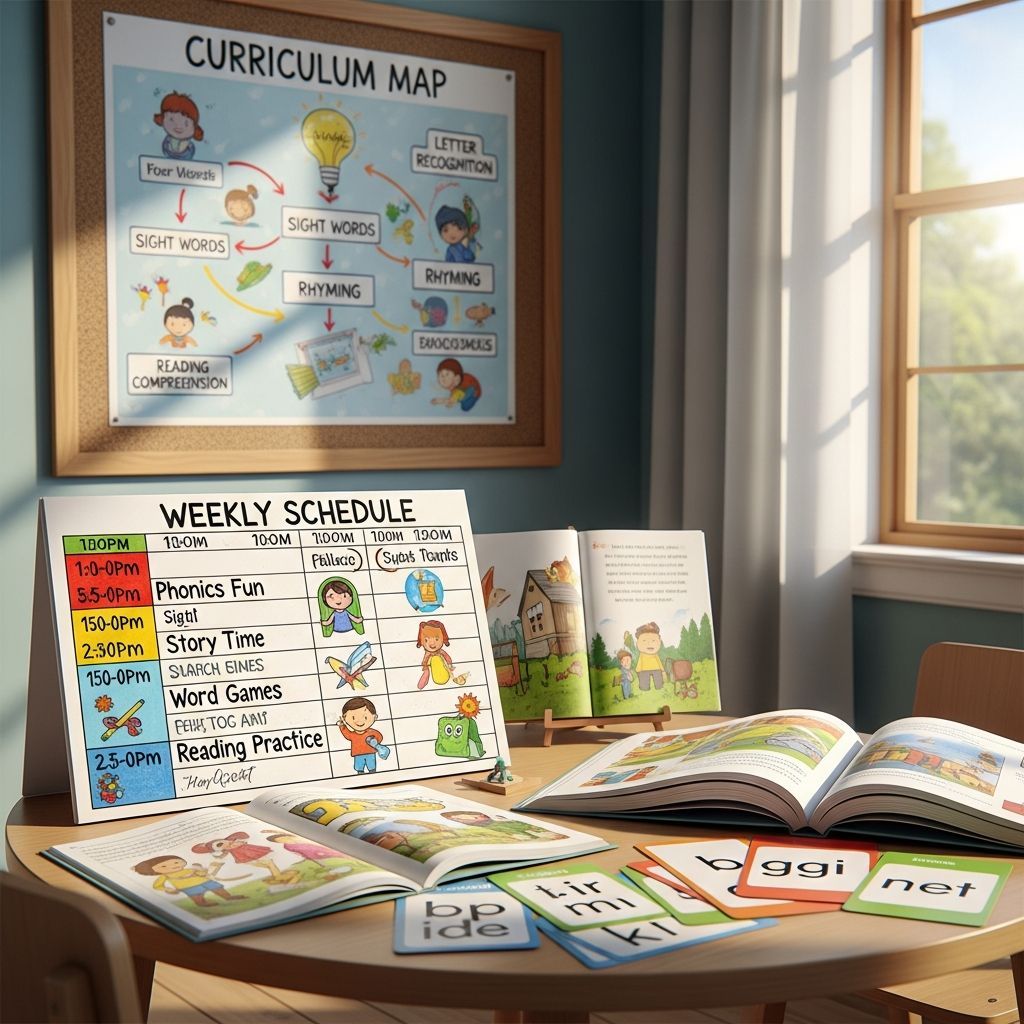
Creating a consistent reading tutoring schedule for a kindergartner or first grader helps young learners grow confident with letters, sounds, and simple books. A well-planned session balances structured skill practice with enjoyable, meaningful reading and writing activities. This guide walks through how to design a 45–60 minute tutoring block, choose materials, and build a flexible curriculum you can adjust over time.
Why a Structured Tutoring Schedule Matters
Early readers thrive on predictable routines. When each session follows a familiar pattern, children know what to expect and can focus their energy on learning rather than guessing what comes next. A clear schedule also ensures that essential skills like phonemic awareness, phonics, fluency, vocabulary, and comprehension all receive regular attention.
For kindergarten and first grade, the goal is not to rush children into hard books but to build a strong foundation of skills that make reading feel achievable and fun. The right mix of repetition and variety keeps sessions from becoming boring while still giving plenty of practice.
Overview of a 60-Minute Tutoring Session
The following is a sample structure for a 60-minute reading tutoring session. You can shorten each part proportionally for a 30–45 minute session if the child has a shorter attention span.
| Segment | Time | Main Focus |
|---|---|---|
| Warm-Up & Review | 5–10 minutes | Revisit letters, sounds, or sight words from previous sessions. |
| Phonemic Awareness & Phonics | 10–15 minutes | Sound games, blending, segmenting, and decoding simple words. |
| Guided Reading or Decodable Text | 10–15 minutes | Reading leveled or decodable books with support. |
| Fluency & Comprehension | 10–15 minutes | Rereading, oral reading, and simple questions about the text. |
| Writing & Word Work | 5–10 minutes | Sentence writing, spelling, and quick response activities. |
| Read-Aloud & Closing | 5–10 minutes | Enjoyable read-aloud and reflection on what was learned. |
Warm-Up and Review (5–10 Minutes)
Begin every session with a short warm-up that reviews familiar material. This helps the child transition into learning mode and builds confidence by starting with tasks they can usually do successfully.
- Letter and sound flashcards: Quickly review known letters, focusing on matching letters to sounds.
- Sight word review: Show a small set of previously learned high-frequency words and ask the child to read them.
- Quick re-read: Have the child reread one page or a short passage from a book used in the last session.
Keep this part energetic and positive. Praise effort and accuracy, and note any skills that still need reinforcement so you can revisit them during the session.
Phonemic Awareness and Phonics (10–15 Minutes)
Phonemic awareness is the ability to hear and manipulate individual sounds in spoken words, while phonics connects those sounds to letters and spelling patterns. For early readers, this is the core of decoding.
- Sound games: Ask the child to identify the first, middle, or last sound in simple words (for example, “What sound do you hear at the beginning of map?”).
- Blending and segmenting: Say separate sounds and have the child blend them into a word, or give a word and have the child split it into its sounds.
- Letter-sound practice: Introduce or review a small set of letters and have the child match each letter to its sound.
- Decoding practice: Use word cards or a whiteboard to build and read simple consonant-vowel-consonant (CVC) words like cat, dig, and sun.
As the child improves, move from single letters to common spelling patterns such as word families (-at, -an, -op) and simple digraphs like sh, ch, and th. Keep the focus on mastery of a small set of patterns before moving on.
Guided Reading with Decodable or Leveled Texts (10–15 Minutes)
Guided reading is a time when the child reads a text at an appropriate level with support from the tutor. For beginning readers, decodable books that match the phonics patterns they have learned are especially useful.
- Select books that mostly use phonics patterns the child already knows, with just a few new words.
- Preview the book by discussing the cover, pictures, and any important vocabulary words.
- Have the child read aloud, prompting them to use letter sounds and picture clues to figure out unknown words.
When the child struggles with a word, encourage strategies such as stretching out the sounds, looking for familiar chunks, or rereading the sentence. Avoid simply telling the word unless the child is very frustrated, and frame every correction as a chance to learn.
Fluency and Comprehension Practice (10–15 Minutes)
After or during guided reading, take time to build fluency (reading with accuracy, appropriate speed, and expression) and comprehension (understanding and thinking about what is read). This can be brief but powerful.
- Have the child reread a short passage or page to practice smoother, more expressive reading.
- Use simple questions: who, what, where, when, why, and how, tailored to the child’s level.
- Ask the child to retell the story in their own words, using sequence language such as “first,” “next,” and “finally.”
For non-fiction texts, focus on identifying the main idea and a few key details. Encourage the child to connect the text to their own experiences to deepen understanding and make the reading more meaningful.
Writing and Word Work (5–10 Minutes)
Writing reinforces reading skills because it requires children to think carefully about sounds, spelling patterns, and sentence structure. Even a few minutes of writing in each tutoring session can have a big impact.
- Sentence dictation: Say a simple sentence aloud and have the child write it, listening for each sound.
- Story response: Ask the child to draw and write about a favorite part of the story or a character.
- Word building: Use letter tiles, magnets, or paper slips to build new words from familiar patterns.
Focus on content and effort first rather than perfect spelling or handwriting. Gently correct one or two key errors that match the skills you are targeting in reading.
Read-Aloud and Closing (5–10 Minutes)
End each tutoring session with a short, enjoyable read-aloud chosen by you or the child. The book can be above the child’s independent reading level, since you are doing the reading, and may include richer vocabulary and more complex ideas.
- Use expressive reading to model how fluent readers sound.
- Pause occasionally to ask prediction or connection questions: “What do you think will happen next?” or “Does this remind you of anything?”
- Invite the child to share a favorite part or something new they learned.
Close by briefly reviewing what the child practiced that day, highlighting specific successes. This helps the child leave feeling capable and proud, which builds motivation for the next session.
Weekly Planning for a Tutoring Curriculum
A single session is just one piece of a longer-term plan. To create a curriculum, think week by week about which skills you want to introduce, practice, and review over time.
- Limit new phonics patterns to one or two per week for most young learners.
- Cycle sight words slowly, introducing a small set while still revisiting older ones.
- Rotate book types: simple fiction, repetitive patterned texts, and basic non-fiction.
Keep simple records of what you teach each session: which letters and sounds, which books, which sight words, and any notable struggles or achievements. These notes make it easier to plan logical next steps and avoid gaps or unnecessary repetition.
Materials to Use in Tutoring Sessions
You do not need an expensive or complicated collection of materials to run effective reading tutoring sessions for kindergarten and first grade. A focused set of tools, used consistently, is enough.
- Alphabet cards or tiles for letter recognition and word building.
- Decodable or leveled readers that match the child’s current skills.
- Sight word cards or charts for regular practice.
- A small whiteboard and markers for quick writing and drawing.
- Simple notebooks for the child’s writing, drawings, and progress notes.
You can supplement these basics with literacy games, magnetic letters, or digital tools, but the core of effective tutoring comes from clear goals, consistent routines, and responsive teaching.
Adapting the Schedule for Different Learners
Every child learns differently, so the sample schedule is only a starting point. Some children may need shorter, more frequent breaks, while others may thrive with longer, focused blocks of reading. Pay attention to signs of fatigue or frustration, and adjust timing as needed.
- For children who struggle with attention, alternate brief academic tasks with movement breaks.
- For advanced readers, spend more time on comprehension, vocabulary, and writing about reading.
- For children who are just beginning with letters, shift more time into phonemic awareness and letter recognition.
Flexibility is key: the schedule should serve the learner, not the other way around. Regularly check in with parents or classroom teachers to align tutoring goals with what the child is doing in school.
Sample 4-Week Skill Progression
The table below shows an example of how a four-week tutoring sequence might look for an early kindergartner or first grader. Adjust the pace up or down depending on the child’s readiness.
| Week | Phonics Focus | Sight Words | Text Type | Writing Focus |
|---|---|---|---|---|
| 1 | Letter sounds for a, m, s, t, p | I, a, see | Patterned picture books with repeated phrases | Drawing and labeling single words |
| 2 | CVC words with a (cat, map, sat) | the, and, to | Simple decodable books with short sentences | Writing one simple sentence from dictation |
| 3 | Letter sounds for i, n, d, g | is, it, in | Mix of decodable and familiar patterned texts | Short responses about favorite characters |
| 4 | CVC words with i (dig, pin, sit) | you, we, go | Very short non-fiction texts about animals or seasons | Writing a two-sentence story with support |
Frequently Asked Questions
How long should a tutoring session be for a kindergartner?
Many kindergartners do well with 30–45 minute sessions, especially at the beginning. As they grow more comfortable and develop stamina, you can gradually extend sessions to 60 minutes, keeping different activities varied and interactive.
How often should reading tutoring take place?
Two to three sessions per week usually provide enough frequency for solid progress while still allowing time for rest and other activities. More frequent but shorter sessions can sometimes be better than a single long session each week.
What if the child resists reading or says it is too hard?
Start with texts that are easier than you think the child needs to build confidence, and weave in games, choice, and high-interest topics. Celebrate small successes, and avoid turning every mistake into a major correction so that reading feels safe rather than stressful.
Should I focus more on phonics or sight words?
Both are important, but for most early readers, a strong focus on phonics provides the best foundation, with a modest number of common sight words taught alongside. Phonics gives children tools to decode many new words, while sight words help them read more smoothly and understand common text quickly.
How do I know when to move on to more difficult books?
When a child can read most words in a book accurately and with reasonable smoothness, and can talk about what they read, they may be ready for slightly more challenging texts. Increase difficulty slowly, checking that the child still feels successful and supported.
Using This Framework to Build Your Own Plan
The sample schedule and curriculum ideas here are meant to be a flexible framework rather than a rigid script. Combine the components that best match the child’s needs, interests, and school expectations, and adjust regularly based on their progress. Over time, this consistent, thoughtful approach to reading tutoring can help young learners move from sounding out letters to enjoying books with confidence and curiosity.