Every parent wants to act quickly and calmly when a child gets hurt or suddenly feels sick. A well-stocked, easy-to-find first aid kit turns small panicked moments into manageable situations, giving you tools and confidence when your child needs help.
Why Every Family Needs a First Aid Kit
Kids explore, bump, climb, fall, and test limits. Most of the time, the result is nothing more than a scrape, bug bite, or minor burn, but having supplies at your fingertips can prevent small problems from becoming bigger ones. A first aid kit keeps the basics in one place so you are not searching through drawers when seconds matter.
Beyond bandages, a thoughtful kit helps you clean wounds properly, reduce pain and swelling, track fevers, and manage common childhood illnesses until you can see a healthcare professional. It is less about having medical expertise and more about being prepared with the right tools and information.
Planning Your Family First Aid Kit
Before buying supplies, take a moment to think about your family’s specific needs. A kit for a toddler, a teen with allergies, and an elderly grandparent under the same roof will look a bit different than a kit for a single college student.
- Consider ages: Babies, toddlers, school-age kids, teens, and adults may need different formulations or dosages of medications.
- Review health conditions: Asthma, severe allergies, diabetes, seizure disorders, or chronic illnesses may require extra equipment or emergency medicines.
- Think about lifestyle: Outdoor families, sports-heavy schedules, camping trips, or frequent travel all influence what you should prioritize.
- Check your space: Decide where you will store the kit at home and whether you also need smaller travel or car versions.
Choosing the Right Container
Your kit’s container should protect its contents, make supplies easy to see, and be simple to grab in a hurry. It does not have to be fancy or expensive, but it should be sturdy and clearly labeled.
- Good container options: A plastic toolbox, craft organizer, tackle box, or zippered bag with internal pockets.
- Features to look for: Durable material, handle for carrying, secure closure, and compartments or dividers to separate items.
- Visibility: Clear lids or transparent pouches help you find items without dumping everything out.
- Labeling: Mark the container with “First Aid” in large letters so family members and babysitters can locate it quickly.
Core Supplies Every Home Kit Should Have
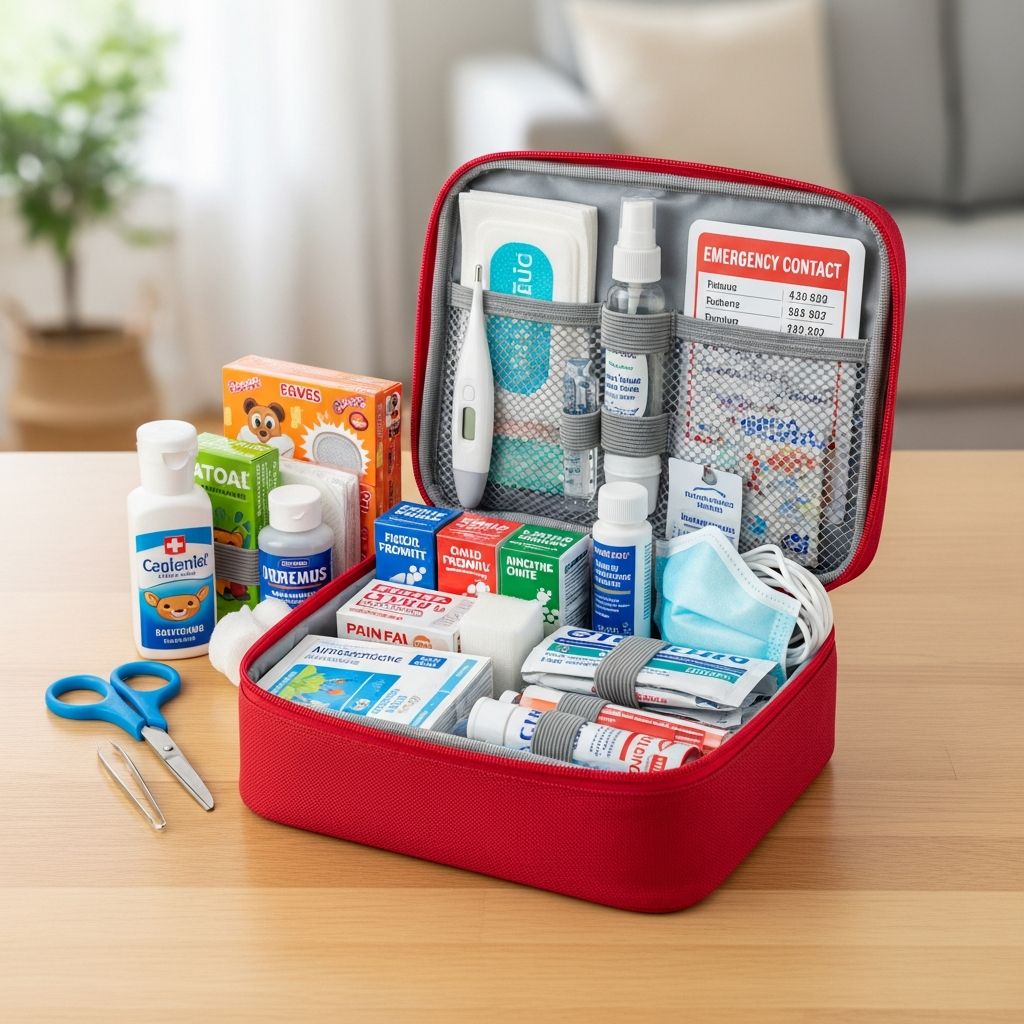
While every family will customize its kit, certain basic items are useful in almost every household. These cover minor cuts, scrapes, burns, sprains, and common illnesses.
Wound Care Essentials
- Adhesive bandages in multiple sizes for small cuts and blisters.
- Sterile gauze pads for covering larger scrapes or deeper wounds.
- Roller gauze or elastic bandages to hold dressings in place.
- Medical adhesive tape that sticks well to skin.
- Antiseptic wipes or wound-cleaning solution for cleaning skin around the injury.
- Antibiotic or protective ointment as recommended by your child’s healthcare provider.
Pain, Fever, and Discomfort
- Age-appropriate pain and fever reducers (for example, pediatric acetaminophen or ibuprofen with clear dosing tools).
- Digital thermometer (avoid glass thermometers; label one especially for rectal use if needed for infants).
- Cold packs (instant or reusable) for bumps, sprains, and bruises.
- Heat pack or warm compress (for muscle aches, cramps, or older kids and adults).
Skin and Allergy Support
- Hydrocortisone cream or child-safe anti-itch products for rashes and insect bites (if approved by your healthcare professional).
- Calamine or similar lotion for itchy bites or mild plant reactions.
- Child-safe antihistamine for mild allergic reactions, if recommended by your doctor.
- Aloe vera gel or a burn relief product for minor sunburns and superficial burns.
Tools You Will Use Again and Again
- Tweezers for removing splinters and debris.
- Small scissors with blunt tips for cutting tape, bandages, or clothing away from a wound.
- Disposable gloves (preferably non-latex) to protect you and reduce infection risk.
- Flashlight or small headlamp for power outages or nighttime emergencies.
- Small notepad and pen for writing times, symptoms, or medicine doses if you need to call a professional or go to urgent care.
Customizing for Babies, School-Age Kids, and Teens
As your child grows, the contents of your kit should grow too. The same basic categories apply, but sizes, dosages, and typical injuries change from one life stage to another.
| Age Group | Common Needs | Items to Emphasize |
|---|---|---|
| Babies (0–2 years) | Fever checks, diaper-area irritation, teething discomfort, minor bumps. | Rectal-appropriate thermometer, bulb syringe, infant pain reliever (with syringe), soft adhesive bandages, nasal saline drops, cream for diaper rash. |
| Preschool & early school-age | Scraped knees, playground falls, bug bites, mild tummy upsets. | Plenty of small bandages, antiseptic wipes, cold packs, child-safe pain reliever, oral rehydration solution or packets. |
| Older kids & teens | Sports injuries, sprains, muscle pain, headaches, menstrual cramps. | Elastic wraps, athletic tape, instant cold packs, heat pack, pain relievers appropriate for age, supplies for blister care, menstrual products. |
For children with special medical needs, ask their healthcare team what emergency items you should always have on hand and how to store or label them. Include written instructions so that other caregivers understand how and when to use those supplies.
First Aid Information to Keep With Your Kit
A kit is only as useful as your ability to use it. Written information can guide you during stressful moments, especially if you feel flustered or if another caregiver is helping your child.
- Emergency phone numbers: Local emergency services, poison control, pediatrician or family doctor, and after-hours nurse line.
- Medical information sheets: Allergies, medications, relevant health history, and preferred hospital for each family member.
- Consent and care instructions: If relatives or babysitters watch your child, include a brief consent note allowing them to seek emergency care.
- Basic first aid guide: A small booklet or printed summary of what to do for common injuries and warning signs that mean “call for help now.”
Where to Store First Aid Kits at Home and On the Go
Accessibility and safety must be balanced. Adults should quickly access the kit, but young children should not be able to play with medications, scissors, or small items that could be choking hazards.
- At home: Choose a central location (such as a kitchen pantry or hallway closet) that adults can reach easily but small children cannot. Use a childproof latch if needed.
- In the car: A smaller kit can live in the glove compartment or trunk, protected from extreme heat when possible. Include items for travel-specific issues like motion sickness bags and extra water.
- On outings: Pack a lightweight pouch with the essentials—bandages, wipes, small ointment, gloves, and a few pain relief tablets or liquid packets appropriate for your children.
- Label locations: Make sure babysitters, grandparents, and older children know exactly where to find the home kit.
Safe Use of Medications in Your Kit
Medicines can be extremely helpful when used correctly and dangerous when used carelessly. First aid kits often contain multiple products that look similar but have different strengths or age limits.
- Always read the label before giving any medicine, even if you use it regularly.
- Use the dosing tool that comes with the medication, not kitchen spoons.
- Record what you gave, how much, and what time so you do not accidentally repeat a dose too soon.
- Store medications in their original containers with child-resistant caps.
- Ask a healthcare professional which over-the-counter medicines are appropriate for your child’s age and health conditions, and which ones to avoid.
Keeping Your First Aid Kit Up to Date
Once your kit is built, it needs regular attention. Supplies get used, medications expire, and your child’s needs change over time. A simple maintenance routine prevents unpleasant surprises during emergencies.
- Check expiration dates on medicines and ointments two to four times a year.
- Replace opened or used items right away, especially bandages, gloves, and cleaning wipes.
- Update written medical information whenever your child changes medications or is diagnosed with a new condition.
- Review the kit at the beginning of each season and adjust for activities (for example, more sun and insect protection in summer).
Teaching Kids About First Aid and Safety
Involving children in age-appropriate ways can reduce their fear during accidents and help them develop lifelong safety habits. The goal is not to turn kids into medics but to help them understand what the kit is for and how to behave in emergencies.
- Explain to younger children that the kit is special equipment for grown-ups that helps when someone is hurt or sick.
- Teach older kids how to call emergency services, say their address, and describe what is happening.
- Practice simple scenarios, such as bringing the kit to a grown-up or holding a clean cloth on a scraped knee.
- Emphasize that medicines are not candy and should never be taken without adult permission and supervision.
What a First Aid Kit Cannot Replace
A home kit is designed for minor problems and to provide temporary support until professional care is available. It is not a substitute for emergency services when symptoms are severe or quickly getting worse.
Always seek immediate medical help if your child has trouble breathing, severe bleeding, signs of head or neck injury, chest pain, possible poisoning, severe allergic reaction (such as swelling of the face or difficulty swallowing), seizure, or sudden confusion. When in doubt, err on the side of calling for help.
Quick Checklist: Starter Family First Aid Kit
Use this condensed checklist as a starting point, then add items that suit your family’s unique needs:
- Adhesive bandages (variety of sizes)
- Sterile gauze pads and roller gauze
- Medical tape and elastic bandage wraps
- Antiseptic wipes and wound-cleaning solution
- Protective ointment or antibiotic cream if recommended
- Age-appropriate pain and fever medicine with dosing tools
- Digital thermometer
- Cold packs and, if useful, a heat pack
- Anti-itch cream or lotion and recommended allergy medicine
- Tweezers and blunt-tipped scissors
- Disposable non-latex gloves
- Flashlight, notepad, and pen
- Written emergency contact list and medical information sheets
FAQs About Family First Aid Kits
How many first aid kits does a family really need?
Most families benefit from one main kit at home plus at least one smaller kit for the car or frequent outings. If you spend time in multiple locations, such as a vacation home or shared custody households, consider creating a basic kit for each place to avoid forgetting or transporting supplies constantly.
Can I buy a pre-made kit instead of building my own?
Pre-made kits can be a helpful starting point, but they often include small quantities of key items and may lack age-appropriate medications for children. Many parents buy a commercial kit, then remove, add, or upgrade contents so that it matches their family’s needs and their healthcare provider’s recommendations.
How often should I replace items in the kit?
Bandages and gauze should be replaced when packaging is damaged or after use, while medications and creams must be discarded once they reach their expiration dates. A good routine is to schedule a reminder a few times a year—such as when you change clocks or during school breaks—to check everything in the kit.
Should kids be allowed to open the first aid kit?
Small children should not have unsupervised access because many kits contain medicines, sharp tools, and choking hazards. Older kids and teens can be taught how to use certain items safely, such as bandages and cold packs, while adults remain responsible for medications and decisions about when to call a healthcare professional.
What if I am not confident using the items in the kit?
Basic first aid classes, online tutorials from trusted health organizations, and written instructions kept with your kit can build your confidence. Practicing simple skills, like applying a bandage or reading a thermometer, before an emergency makes it easier to stay calm and effective when your child truly needs help.