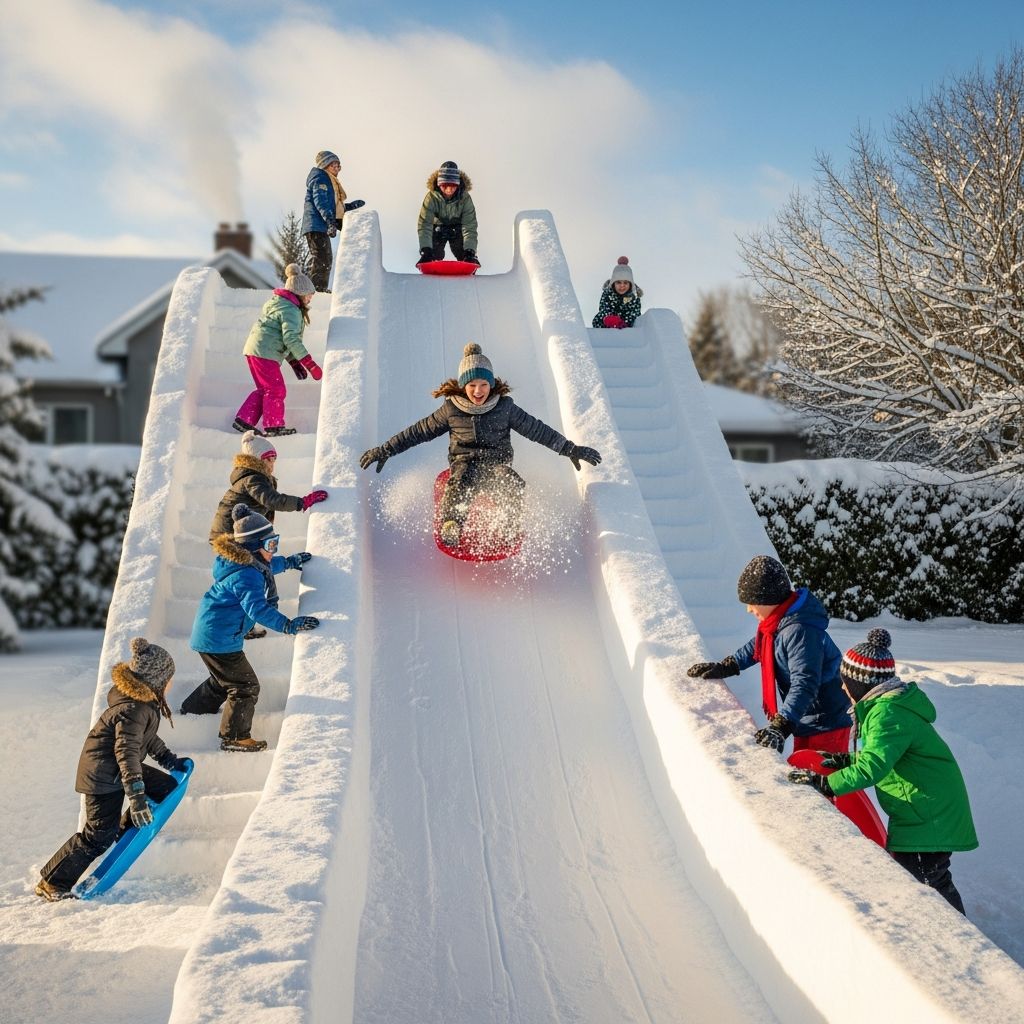
Winter’s deep snowfalls offer prime opportunities to create custom play structures right in your own yard. Rather than trekking to crowded hills, construct towering snow slides that let family members sled anytime. These homemade chutes provide hours of high-energy play, helping kids burn off boundless energy while fostering teamwork in construction. With basic tools and abundant snow, anyone can engineer a slide rivaling public parks.
Why Build Your Own Snow Playground?
Custom snow slides beat generic snowmen or forts by combining creativity with practical fun. They encourage repeated visits without travel hassles, turning downtime into active adventures. Families report stronger bonds from collaborative building, plus the physical labor tires out even the most rambunctious children. Ideal for backyards with at least 20-50 feet of open space, these structures scale from gentle kid ramps to ambitious multi-turn tracks.
- Convenience: No lines or car trips needed.
- Customization: Tailor height, width, and curves to skill levels.
- Cost-Effective: Uses free snow and household shovels.
- Educational: Teaches physics of slopes, friction, and momentum.
Assessing Your Yard for Slide Construction
Before shoveling, evaluate terrain. Flat or gently sloped lawns work best, avoiding trees, fences, or obstacles within the slide’s path. Measure at least 25 feet for a basic 5-8 foot high slide, doubling for winding designs. Check snow depth—12+ inches ensures stability. Ideal temps hover around 20-30°F for packing without instant melt; sub-zero aids hardening but slows building.
| Space Requirement | Slide Type | Ideal Snow Depth |
|---|---|---|
| 20-30 ft | Straight chute | 12-18 inches |
| 40-60 ft | Curved ramp | 18+ inches |
| 100+ ft | Luge-style track | 24+ inches |
Clear debris under snow to prevent hidden hazards. For sloped yards, enhance natural drops; flat areas require taller piles.
Gathering Essential Tools and Materials
Stock up on sturdy shovels: one large scoop for piling, a smaller spade for shaping. Sleds or saucers pack surfaces effectively. A hose or spray bottle delivers water for icing. Optional: plywood for forms, ladders for height, lights for evening work. Recruit helpers—kids handle light shoveling, adults manage heavy lifting.
- Shovels (adult/kid sizes)
- Sleds or flexible saucers
- Garden hose with spray nozzle
- Plywood scraps or 2x4s for edges
- Bucket for water mixing
Step-by-Step Guide to Basic Slide Building
Step 1: Amass the Snow Pile
Select your build site and shovel snow into a central mound. Aim for 5-7 feet high initially, wider at base for stability (4-6 feet across). Use nearby drifts or snowblower-transferred snow. Kids can stomp loose powder while adults pile high. This forms the launch tower.
Step 2: Sculpt the Descent Path
Flatten the summit into a stable platform. Carve a smooth slope down one face, 8-15 feet long, 3-5 feet wide. Shovel excess to erect side barriers, 2-3 feet tall, preventing spills. Gentle 30-40 degree angle suits beginners; steeper for speed demons.
Step 3: Pack and Refine the Surface
Drag a sled loaded with snow down the chute repeatedly to compact. Test with light passes—fix bumps by adding/patting snow. For curves, use barrel or trash can pulls. Saucers excel at smoothing walls and beds.
Step 4: Add Access and Harden
Cut zigzag stairs into the tower’s rear for climbing. Spray lightly with water; freeze overnight firms the structure. Repeat daily for glassy speed, monitoring ice buildup.
Advanced Designs for Thrill-Seekers
Elevate basics with twists. Banked curves mimic luge tracks: pile snow walls 4-7 feet high, etch 4-foot wide grooves. Jumps add airtime—build 2-4 foot lips with soft landings. Multi-level slides stack chutes for replay value. Roof-sourced snow suits elevated starts, but ladder safely.
- Bobsled Loop: Circular troughs with plywood guides.
- Aerial Ramp: 3-foot kicker into deep fluff.
- Twin Tracks: Parallel for races.
Safety Protocols Every Builder Must Follow
Prioritize helmets, gloves, and layered clothing. Supervise young riders; limit to seated, forward-facing sledding on packed paths. Inspect for cracks pre-run. Avoid headfirst or standing. Set speed rules—no collisions. Clear landing zones of rocks. Warm up indoors frequently to prevent frostbite.
| Risk | Prevention |
|---|---|
| Ice buildup | Light sprays only; sand gritty spots |
| Structural fail | Overbuild walls; test incrementally |
| Crashes | Wide paths, soft barriers |
Weatherproofing and Daily Maintenance
Refresh packed areas post-thaw. Re-water evenings for overnight freeze. Shovel fresh snow atop wear spots. Dismantle before spring melt to avoid yard damage. Store tools dry.
Fun Variations to Keep It Fresh
Themify with colors: food dye snow blocks. Night slides glow under strings lights. Competitions score style points. Pair with forts for slide-accessible bases.
Frequently Asked Questions
What’s the minimum space needed for a kid-friendly slide?
A 20×15 foot area suffices for a 5-foot high, straight 8-foot chute. Expand for complexity.
Can I build without water for icing?
Yes, repeated sled packing works, though slower and less slick. Water boosts durability in dry cold.
How long does a well-built slide last?
2-4 weeks with maintenance, depending on temps and use. Daily checks extend life.
Is it safe for toddlers?
For ages 3+, on shallow slopes with spotters. Always helmets and supervision.
What if snow is powdery?
Pack more aggressively; wait for slight crust or add water mist.
Winter Memories in the Making
These slides turn ordinary snow into legendary play zones, creating tales kids retell for years. Start small, iterate boldly—your yard awaits transformation.
References
- Snow and Ice Safety Guidelines — U.S. Consumer Product Safety Commission. 2024-10-15. https://www.cpsc.gov/s3fs-public/2024-Snow-and-Ice-Recreation-Safety.pdf
- Winter Sports Injury Prevention — Centers for Disease Control and Prevention (CDC). 2025-01-20. https://www.cdc.gov/injury/features/winter-sports-safety/index.html
- Backyard Winter Activities for Families — National Recreation and Park Association. 2023-12-05. https://www.nrpa.org/publications-research/research-papers/backyard-winter-activities/
- Physics of Snow Sledding — American Physical Society. 2022-11-10. https://www.aps.org/publications/apsnews/202211/snowsledding.cfm
- Cold Weather Construction Safety — Occupational Safety and Health Administration (OSHA). 2025-02-01. https://www.osha.gov/winter-weather/construction