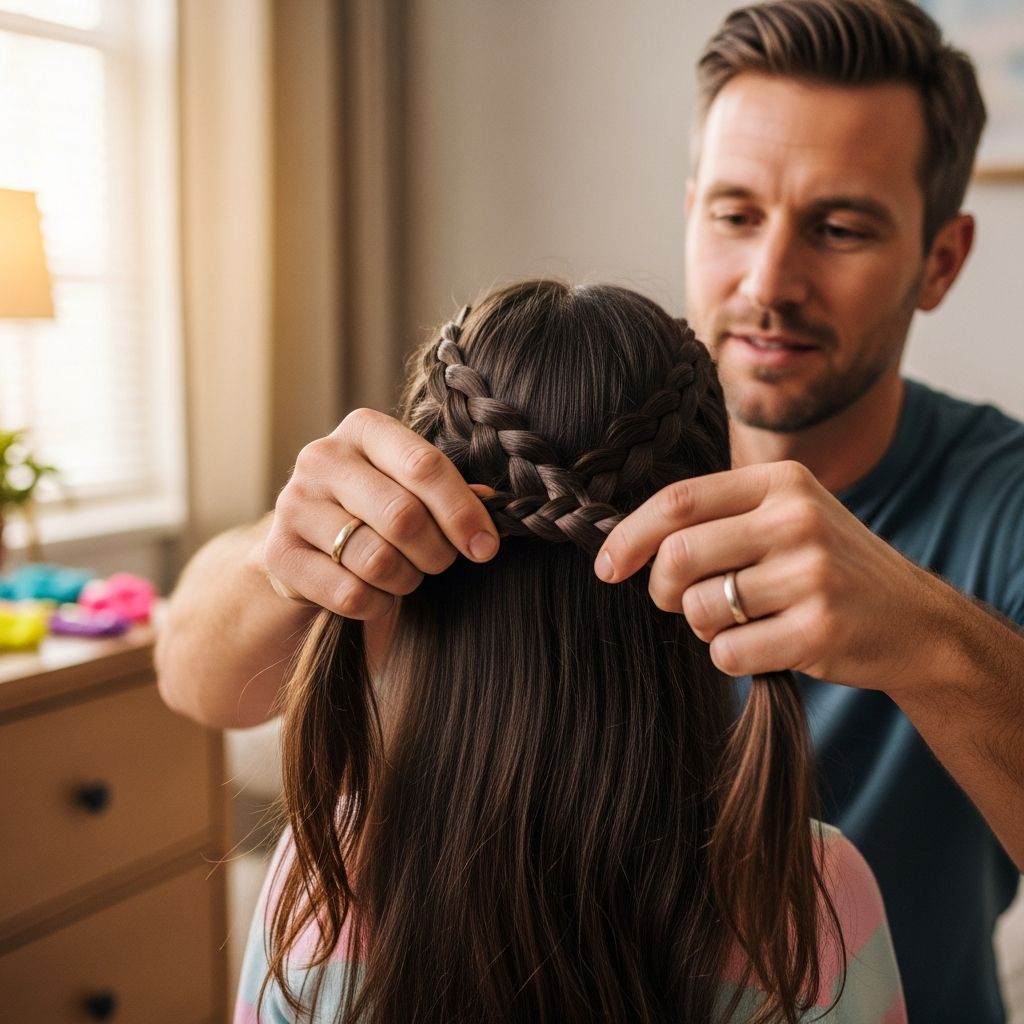
Learning to braid hair opens up a world of creative fun for parents and children alike. Whether you’re a dad stepping into hairstyling for the first time or looking to refine your skills, this guide provides clear, actionable steps to create beautiful braids. From simple everyday looks to intricate designs, you’ll gain confidence with practice. Braiding not only styles hair but also builds precious bonding moments.
Essential Tools for Successful Braiding
Before diving into techniques, gather the right supplies to make the process smooth. A wide-tooth comb detangles hair without pulling, while a fine-tooth comb or rat-tail comb creates precise sections. Use soft hair ties or scrunchies to secure ends without damage, and apply a lightweight leave-in conditioner or detangling spray for slippery-free handling, especially on fine or curly hair.
- Comb set: Wide-tooth for detangling, fine for parting.
- Hair elastics: Mini sizes in various colors for fun customization.
- Spray bottle: Filled with water to lightly dampen hair for better grip.
- Mirror setup: Handheld plus a large one for visibility when braiding others.
- Optional accessories: Bobby pins, hair clips, or ribbons for finishing touches.
These basics ensure even beginners achieve neat results. Practice on a mannequin head or willing volunteer to familiarize yourself with tools.
Building a Strong Foundation: The Basic Three-Strand Braid
The cornerstone of all braiding is the classic three-strand method. Start with clean, detangled hair brushed smooth. Gather all hair at the nape or sweep to one side for variety.
- Section evenly: Divide hair into three equal parts using your fingers or comb—label them left, middle, right.
- First cross: Take the right strand and cross it over the middle, so it becomes the new middle. Hold with your right hand.
- Second cross: Cross the left strand over the new middle, tightening gently to avoid slack.
- Repeat motion: Continue alternating right-over-middle, then left-over-middle, keeping tension consistent down the length.
- Secure end: Once at the bottom, wrap a hair elastic around the tail 2-3 times.
This technique, detailed in beginner tutorials, forms the base for more complex styles. Aim for uniform sections to prevent lumpy braids. With repetition, your fingers will memorize the rhythm.
Elevating Basics: Side-Swept and Fishtail Variations
Once comfortable, adapt the three-strand into a side-swept braid for casual elegance. Brush hair to one shoulder, divide into three, and braid while angling downward. For fishtails, split hair into two sections instead of three.
- Weave small pieces from the outer edges of each section over to the opposite side, alternating until the end.
- Pull gently on edges post-braiding for a fuller, wavy effect.
These variations add flair without extra complexity, ideal for school days or playdates.
Mastering the French Braid: A Timeless Classic
The French braid weaves sections from the scalp inward, creating a sleek, raised look. Perfect for active kids, it keeps hair secure.
Step-by-Step Breakdown:
| Step | Action | Hand Tip |
|---|---|---|
| 1. Prep top section | Grab a triangular section at the crown, divide into three strands (top, middle, bottom). | Hold top/middle in one hand, bottom in the other. |
| 2. Initial cross | Cross top over middle; then bottom over new middle. | Switch hands for control. |
| 3. Add hair | Pick up new hair from the top side, add to top strand, cross over middle. Repeat on bottom. | Use pinky for bottom, thumb/index for top. |
| 4. Continue weaving | Alternate adding and crossing until past ears, then finish as basic braid. | Keep scalp flat by pulling tight. |
| 5. Finish | Pancake edges by tugging sections outward for volume. | Spray lightly for hold. |
Tutorials emphasize smooth incorporation of new hair to avoid gaps. Practice on straight hair first, then experiment with waves.
Dutch Braid Techniques: The Inverted Power Style
Dutch braids pop outward from the head, offering a bold, athletic vibe. They mirror French braids but cross under instead of over.
- Take front section, split into three.
- Cross top strand under middle, then bottom under middle.
- Add new hair to top, cross under; add to bottom, cross under.
- Work symmetrically or single-sided, transitioning to regular braid at nape.
Key difference: under-crossing creates the 3D effect. Ideal for sports or festivals.
Advanced Twists: Waterfall, Rope, and Combo Braids
Combine skills for showstoppers. Waterfall braid mimics flowing strands: braid partially, release middle section to cascade, replace with new hair below.
- Rope braid: Divide into two, twist each clockwise, then together counterclockwise for a twisted look.
- Combo: Start with Dutch, switch to French halfway for dimension.
These build on basics, rewarding patience with stunning results.
Tips for Every Hair Type and Age
Curly hair? Detangle with fingers and use gel for hold. Fine hair needs dry shampoo for texture. For toddlers, distract with stories; teens love input on styles.
- Work in sections with clips for long hair.
- Braid slightly loose for comfort, tighten for longevity.
- Night braiding prevents tangles—opt for two French braids.
Patience trumps perfection; celebrate progress together.
Quick Fixes for Common Braiding Issues
Bumps? Undo and re-section evenly. Flyaways? Smooth with water-dampened hands. Uneven tension? Practice pulling all strands equally.
| Problem | Solution |
|---|---|
| Lumpy braid | Smaller, even sections; comb before starting. |
| Slipping strands | Texturizing spray or cornstarch at roots. |
| Arm fatigue | Sit child on a stool; take micro-breaks. |
Frequently Asked Questions
What if I have no prior experience?
Start with the three-strand braid on small pony sections. Visual tutorials accelerate learning.
How long until I can do French braids?
1-2 weeks of daily 10-minute practice yields pro results.
Best for thick vs. thin hair?
Thick: Larger sections; thin: Add texture products.
Can I braid wet hair?
Yes, for definition, but dry for easier undoing.
Why Braiding Matters: Beyond the Style
Hairstyling fosters trust and creativity. Dads mastering braids surprise daughters, creating memories. Experiment seasonally—bows for holidays, sleek for school.
Expand with playlists of techniques. Your growing skillset turns routines into rituals.
References
- Hair Braiding for Absolute Beginners — Instructables. Accessed 2026. https://www.instructables.com/How-to-Braid-Your-Own-Hair/
- How to Braid Hair For Complete Beginners — EverydayHairInspiration (YouTube). 2019-08-31. https://www.youtube.com/watch?v=QMW0bwYzaAM
- How To French Braid Step by Step For Beginners — Pretty Hair is Fun (YouTube). Accessed 2026. https://www.youtube.com/watch?v=oV6-2WiRRqs
- How To Dutch Braid Step by Step For Beginners — YouTube Tutorial. Accessed 2026. https://www.youtube.com/watch?v=J8kWJC23QWk
- 10 EASY Braids For Beginners — YouTube. Accessed 2026. https://www.youtube.com/watch?v=3xfqp8lLFfQ
- How To Braid For Beginners Playlist — YouTube. Accessed 2026. https://www.youtube.com/playlist?list=PLKr1OU5EnX8YbBYmW3kHQwehFHT9FAD7a